My Grandmother’s Dying Words Were ‘Don’t Open the Blue Box’—I Opened It and Found a Diary That Revealed a 50-Year-Old Murder
The hospice nurse had just stepped out for coffee when my grandmother, Eleanor Vance, grabbed my wrist with a grip that didn’t belong to a dying woman. Her eyes, clouded with cataracts and morphine, locked onto mine. “The blue box,” she rasped. “In the attic. Don’t open it. Promise me, Katie.” I promised. I lied. Three days after we buried her, I was in that attic with a crowbar and a flashlight, and what I found inside that rusted tin box would tear my family apart and force me to confront a truth that had been buried for fifty years.
The Promise I Never Should Have Made
My grandmother and I had always been close. She raised me after my mother left when I was seven, and she was the only person in my life who never let me down. When she got sick last spring, I moved back to her little house in Savannah, Georgia, to care for her. I was thirty-four, single, working remotely as a medical billing specialist. It was supposed to be six months of hospice care. It turned into nine months of watching the strongest woman I knew fade into someone I barely recognized.
But even as her body failed, her mind stayed sharp until the very end. That’s why the blue box warning scared me. Eleanor Vance didn’t believe in ghosts or curses. She was a retired schoolteacher who graded papers in red ink and balanced her checkbook to the penny. If she said don’t open something, she had a reason.
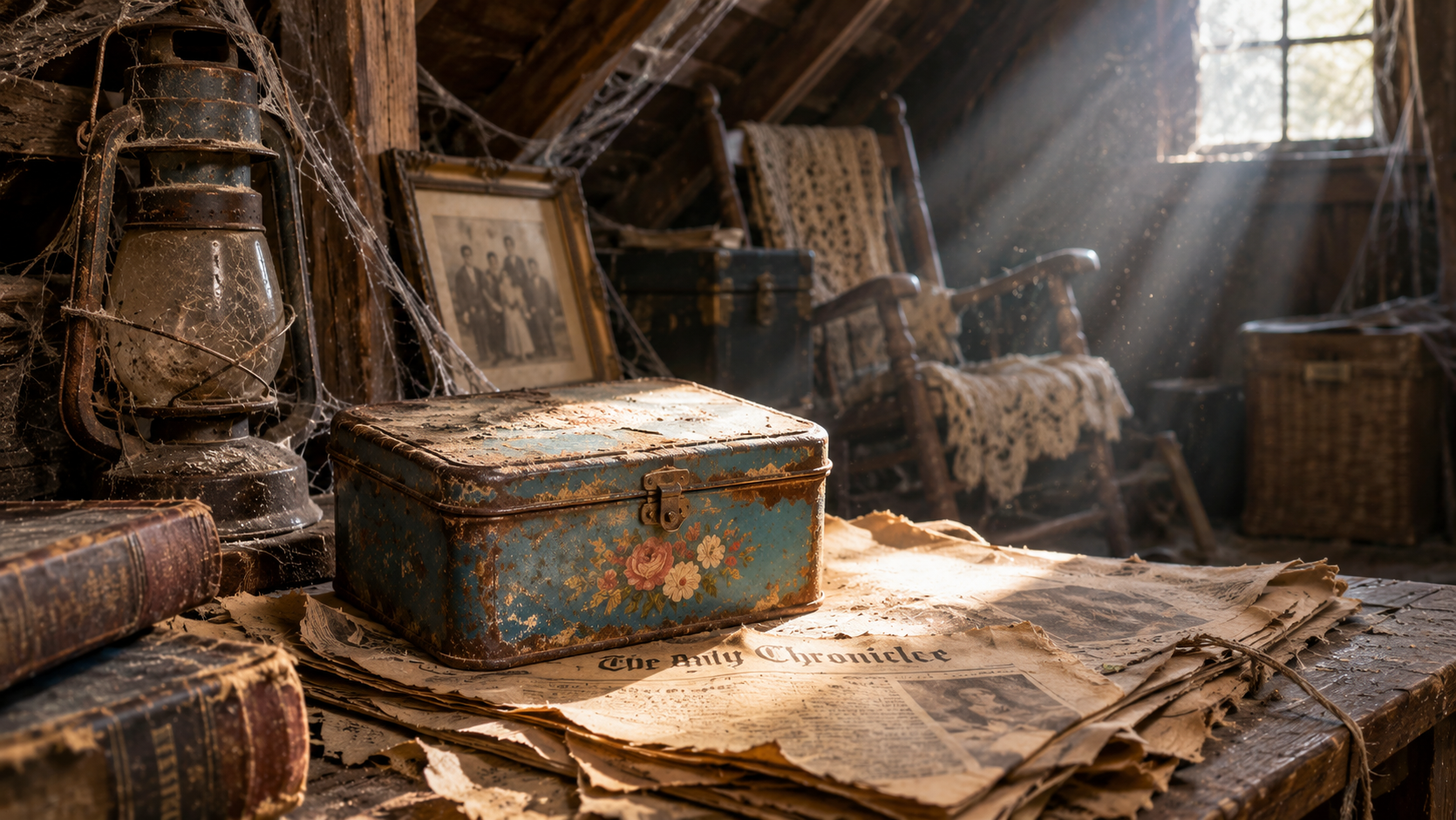
For two weeks after the funeral, I avoided the attic. I told myself it was grief. But curiosity is a stubborn thing, especially when it’s tied to a mystery. Finally, on a rainy Tuesday afternoon, I climbed the folding stairs, my heart hammering against my ribs.
The box was exactly where she said it would be—tucked behind a stack of 1970s encyclopedias. It was smaller than I expected, about the size of a shoebox, painted a faded robin’s egg blue. The lock had rusted away, and the lid opened with a groan.
What Was Inside Changed Everything
I expected jewelry. Maybe old love letters. Instead, I found a leather-bound diary and a single photograph. The photo showed my grandmother as a young woman, maybe twenty-two, standing next to a boy with her same dark hair and crooked smile. On the back, in her neat handwriting: Eleanor and Thomas, summer 1968. The last good day.
Thomas. I’d never heard that name. My grandmother had a brother?
I opened the diary, and within minutes, my hands were shaking so badly I had to set it down.
The entries started in June 1968. Eleanor was twenty-two, living in Savannah with her parents and her older brother Thomas, who was twenty-five and worked at the local shipyard. They were close—the kind of close that comes from shared bedrooms and shared secrets. Thomas was engaged to a girl named Ruthie, and Eleanor was dating a boy named Frank Callahan.
Frank. That name I knew. Frank Callahan had been my grandmother’s neighbor for as long as I could remember. He was eighty-two now, a widower who still mowed his own lawn and brought us tomatoes from his garden every summer. He’d been at the funeral. He’d hugged me and told me how much he’d miss Eleanor.
I kept reading.
The entries from July 1968 grew darker. Thomas had gotten into a dispute with Frank over money—a loan Frank had never repaid. The two men had argued publicly at a church picnic, and Frank had threatened Thomas. Eleanor wrote that she was scared. She wrote that Frank had a temper no one else saw.
Then came August 3, 1968. The entry was only three lines long, written in a hand so shaky it was barely legible: Thomas is dead. They say it was an accident at the dock. But I saw Frank’s truck there that night. I saw him. I know what he did.
I turned the page. The next entry was dated August 4. I told Mama what I saw. She said I was hysterical. She said Thomas fell. She said if I said anything, I’d ruin Frank’s life and the Callahans would sue us for slander. She made me promise to never speak of it again. I promised. God forgive me, I promised.
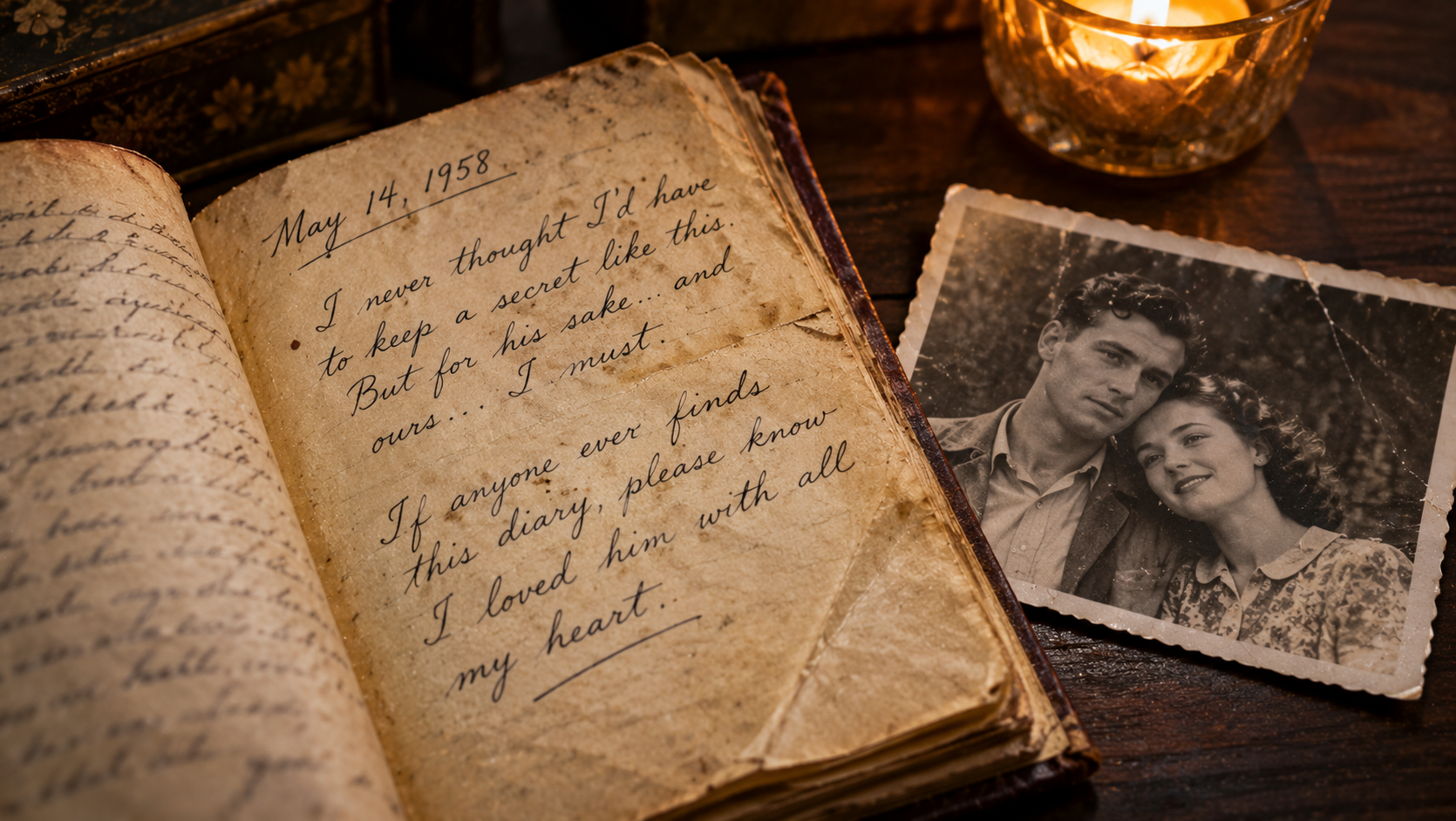
I sat back on my heels, the diary clutched to my chest. Thomas Vance. My great-uncle. Murdered. And my grandmother had known—had been forced to stay silent for fifty years.
The Neighbor Who Brought Us Tomatoes
For three days, I didn’t leave the house. I read the diary cover to cover. I learned that Thomas had been found at the bottom of a dry dock, his neck broken. The coroner ruled it an accident. No investigation. No charges. Frank Callahan had gone on to marry Ruthie—Thomas’s fiancée—just eighteen months later. They’d had three children and lived happily ever after in the house next door to my grandmother.
I thought about all the times Frank had come over for Thanksgiving. All the times my grandmother had smiled at him and asked about his kids. She’d lived next door to her brother’s killer for half a century, and she’d never said a word.
But why? Why keep the secret? Why not go to the police?
The diary answered that question on the final page, an entry dated December 24, 1968: Frank came by tonight. He knows I saw him. He told me if I ever spoke a word, he’d make sure the same thing happened to Mama. I believe him. I have to protect her. I have to protect us all.
My grandmother had been terrorized into silence. And she’d carried that burden for fifty years, until the night she grabbed my wrist and begged me not to open the box.
She wasn’t protecting Frank. She was protecting me. She knew that once I knew the truth, I’d have to decide what to do with it.
The Decision I Had to Make
I had evidence. The diary was detailed, specific, corroborated by dates and names. But it was also fifty years old. Thomas’s body was long buried. The dry dock had been demolished in the 1980s. The coroner was dead. Frank Callahan was an eighty-two-year-old man with a bad heart and a spotless reputation.
I called a lawyer—a family friend named Diane who’d known my grandmother for decades. She listened to the whole story without interrupting. When I finished, she was quiet for a long moment.
“Katie,” she finally said, “this is a criminal matter. You need to go to the police. But I have to warn you—it’s going to be hard. They might not believe you. Frank might deny everything. And your grandmother’s reputation could take a hit. People will ask why she didn’t speak up sooner.”
I thought about that. I thought about the fear in her handwriting. I thought about the way she’d flinch whenever Frank came to the door. I thought about the fact that she’d spent her whole life protecting a family that had silenced her.
I went to the police.
The detective assigned to the case was a patient woman named Sergeant Alvarez. She read the diary, looked at the photograph, and nodded slowly. “We’ll open an investigation,” she said. “But I’m not going to lie to you—this is a cold case with a living suspect. It’s going to take time.”
It took eight months.
What the Investigation Found
Sergeant Alvarez dug into the original 1968 police report. It was thin—just a few pages, with no witness statements and no follow-up. But she found something else: a maintenance log from the shipyard that showed Frank Callahan had clocked in for a shift the night Thomas died, but his supervisor had noted that he’d disappeared for two hours. No one had ever asked where he’d gone.
Then she found Ruthie. Thomas’s fiancée, Frank’s wife, had died in 2010, but her sister was still alive—a ninety-year-old woman named Margaret who lived in a nursing home in Macon. Sergeant Alvarez drove out to interview her.
Margaret remembered the summer of 1968. She remembered that Ruthie had been distraught after Thomas’s death—not just with grief, but with guilt. Ruthie had told Margaret that Frank had confessed to her. He’d told her he didn’t mean to kill Thomas—just to scare him—but things had gotten out of hand. Ruthie had been too scared to go to the police. She’d married Frank because she was pregnant and had no other options.
Margaret agreed to sign a statement.
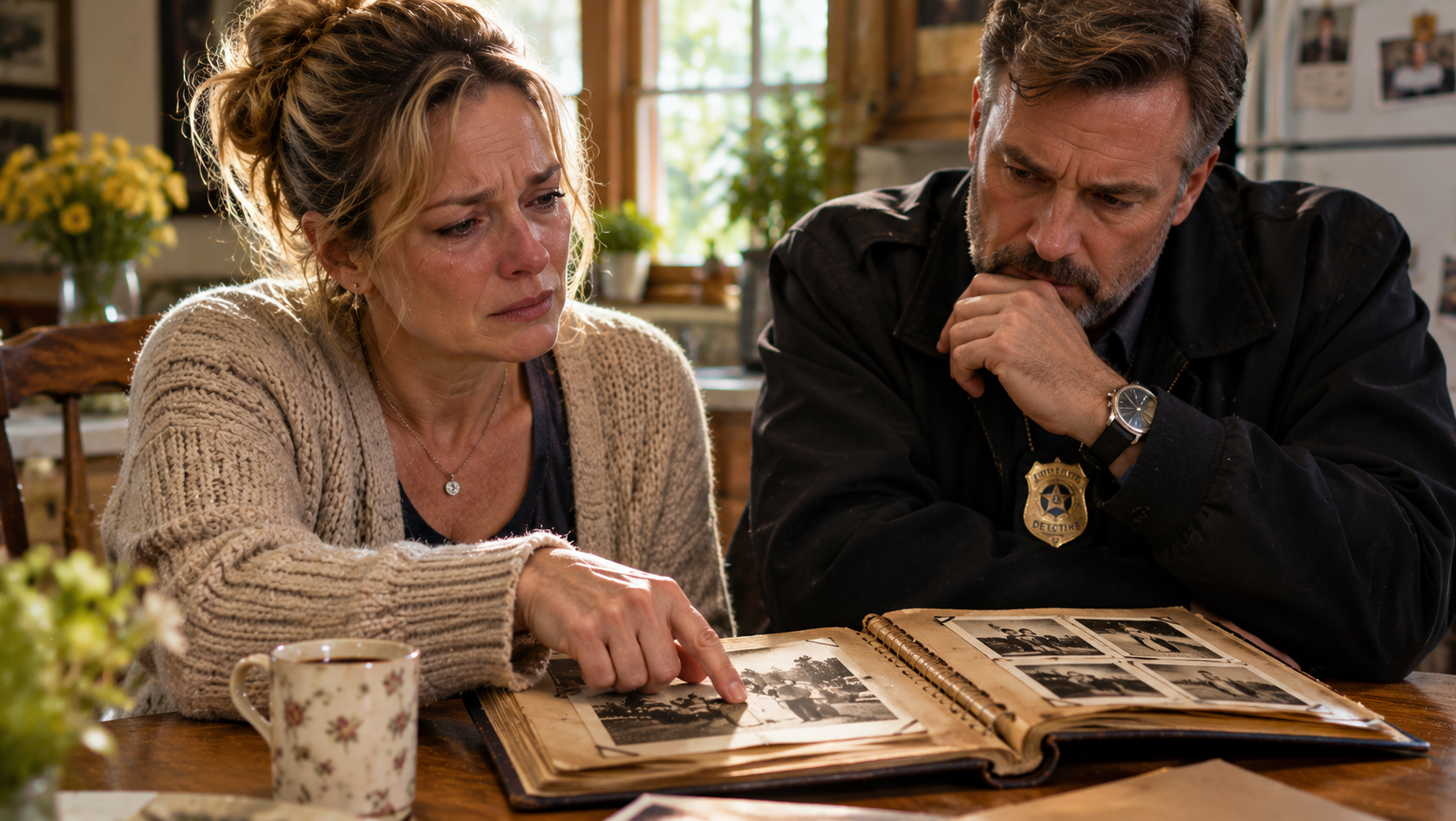
Frank Callahan was arrested on a Tuesday morning, three weeks shy of his eighty-third birthday. He was charged with second-degree murder. The prosecutor told me the case was strong, but not a slam dunk—the evidence was circumstantial, the witnesses were elderly, and the defense would argue that the diary was hearsay.
Frank’s lawyer offered a plea deal: voluntary manslaughter, five years probation, no jail time. The prosecutor called me to ask what I thought.
I thought about my grandmother, who’d spent fifty years carrying a secret that wasn’t hers to carry. I thought about Thomas, who’d never gotten justice. I thought about the fact that Frank had lived a full life—marriage, children, grandchildren—while my family had been fractured by silence.
“No deal,” I said. “Take it to trial.”
The Verdict
The trial lasted six days. Frank Callahan sat in the courtroom in a wheelchair, looking frail and confused. His children sat behind him, glaring at me. I didn’t blame them. They were about to learn that their father was a murderer.
Margaret testified by video from her nursing home. She repeated what Ruthie had told her. The maintenance log was entered into evidence. And then the prosecutor read from the diary—my grandmother’s words, written in her own hand, fifty years earlier.
I saw Frank’s truck there that night. I saw him. I know what he did.
The jury deliberated for two days. They found Frank Callahan guilty of second-degree murder. He was sentenced to fifteen years to life. At his age, he’ll likely die in prison.
After the verdict, one of his daughters approached me in the hallway. She was crying. “Why didn’t your grandmother say anything?” she asked. “Why did she let us grow up with him?”
I didn’t have an answer. Not a good one, anyway. “She was scared,” I said. “She was twenty-two years old and her mother told her to stay quiet. She did what she thought she had to do.”
The daughter nodded slowly. “I wish I’d known,” she said. “I wish someone had told us.”
I went home that night and sat in my grandmother’s living room, surrounded by her things. The blue box was on the coffee table, empty now. I’d given the diary to the police, but I’d kept the photograph—Eleanor and Thomas, summer 1968. The last good day.
I thought about all the secrets families keep. All the things we don’t say because we’re scared, or ashamed, or trying to protect someone. My grandmother had spent fifty years protecting a family that had failed her. She’d protected her mother, who’d silenced her. She’d protected Frank, who’d threatened her. She’d protected me, even from beyond the grave.
But she’d also given me the truth. And in the end, that was the greatest gift she could have given me.
Sometimes I wonder what would have happened if I’d kept my promise. If I’d left the box in the attic and never opened it. Would Frank have died peacefully in his sleep, surrounded by his family? Would my grandmother’s secret have died with me?
I don’t know. But I do know this: the truth doesn’t stay buried forever. It waits. It waits until someone is brave enough to open the box.
My grandmother was brave in her own way. She kept the diary. She kept the photograph. She kept the secret safe until she could give it to someone who could do something with it.
I like to think she’s proud of me. I like to think that somewhere, she and Thomas are together again, and she’s finally telling him she’s sorry.
And I like to think that Frank Callahan is exactly where he belongs.
Recommended Stories
My Father Disowned Me at 18 for Marrying Outside Our Faith—20 Years Later, His Will Named Me Sole Heir, and My Siblings Are Furious
Disowned at 18 for marrying outside our faith, I never expected to inherit a dime. But my father's will named...
At My Wedding, My Mother-in-Law Announced I Signed a Prenup I’d Never Seen—Then I Found a Hidden Recording in Her Purse
Her mother-in-law announced a prenup at the wedding—but the bride had never signed it. Then she found a recorder in...
My Sister Stole My Wedding Dress and Wore It to Her Own Wedding—When I Confronted Her, She Laughed and Said, ‘You’ll Never Prove It.’ Then the Photographer Sent Me the Original Negatives
She wore my wedding dress to her own wedding and laughed, 'You'll never prove it.' Then the photographer sent me...