My Father’s Secret Will Left Everything to a Woman We’d Never Heard Of—Then We Found Out She Was His First Wife
The Name That Didn’t Belong
My father, Richard, was a man of routine. Every morning for thirty-five years, he left our house in Naperville, Illinois, at 6:45 AM with a thermos of black coffee and a brown bag lunch. He worked as a structural engineer, loved his garden, and never missed Sunday dinner. When he died of a heart attack at sixty-eight, my brother Mark and I expected a straightforward estate: the house, a modest savings account, and his 1998 Ford F-150.
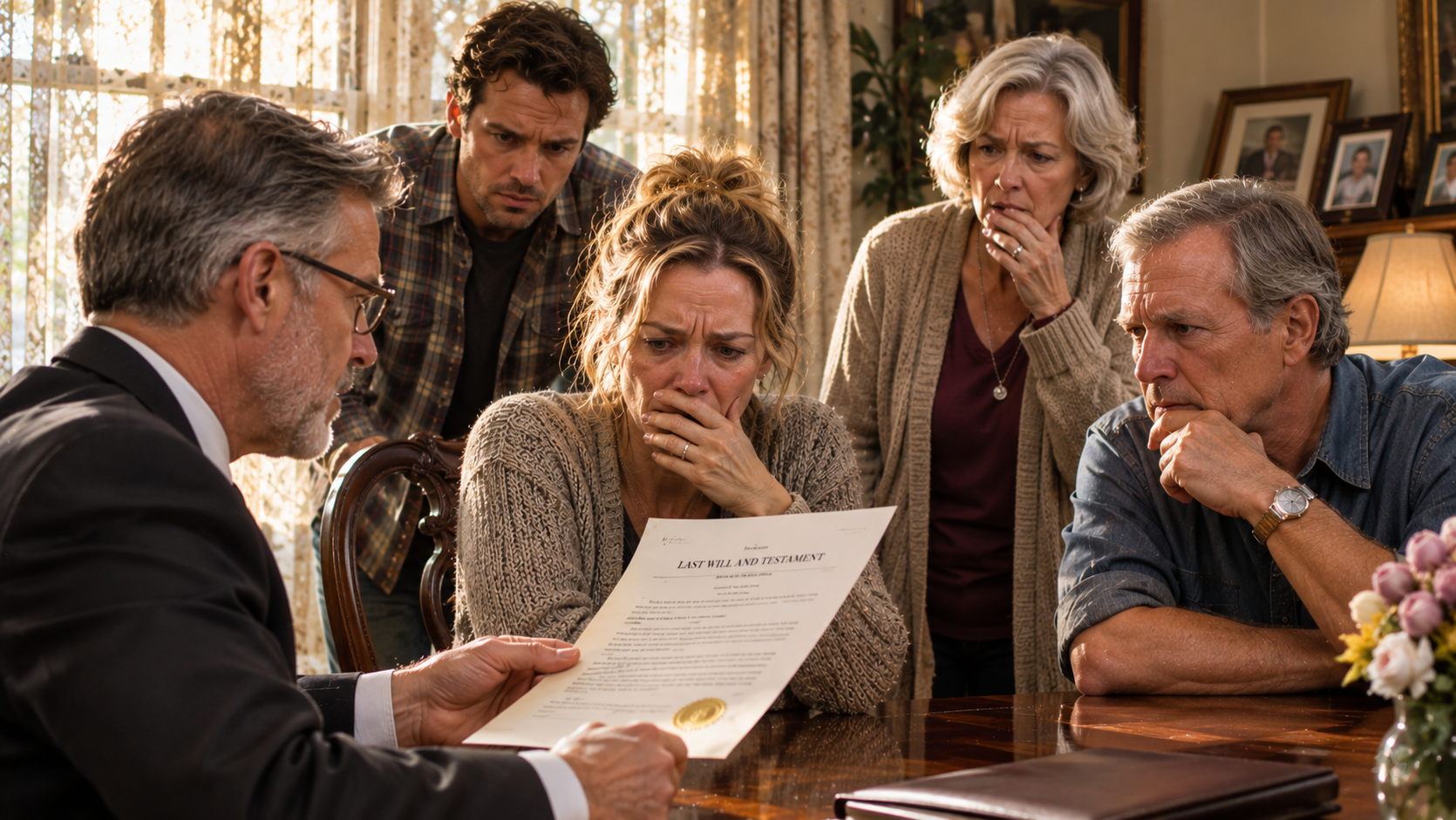
But at the reading of the will, our family attorney, Mr. Henderson, adjusted his glasses and said something that made the room go cold. “To Eleanor Vance, I leave the entirety of my estate—the house, the savings, and all personal property.”
My mother, Carol, gripped my arm. “Who the hell is Eleanor Vance?”
No one knew. Not my mother, not Mark, not even my father’s brother. But the will was ironclad, notarized, and dated just three months before Dad’s death. A woman we’d never heard of was about to take everything.
The Woman in the Photograph
I couldn’t let it go. I hired a private investigator, a no-nonsense woman named Denise who charged $75 an hour and found answers in three days. Eleanor Vance, she told me, lived in a small town in Wisconsin. She was seventy-one years old. And she had been married to my father for six years—before he ever met my mother.
“That’s impossible,” I said. “My parents were married for forty years.”
“They were,” Denise said. “But your father’s first marriage was never legally dissolved. He left Eleanor in 1975 and moved to Illinois. Back then, records were easier to lose. He just… started over.”
I drove to Wisconsin the next weekend. Eleanor’s house was a small bungalow with peeling paint and a wheelchair ramp. She answered the door with a cane and a tired smile. “You’re Richard’s daughter,” she said. “I wondered when someone would come.”
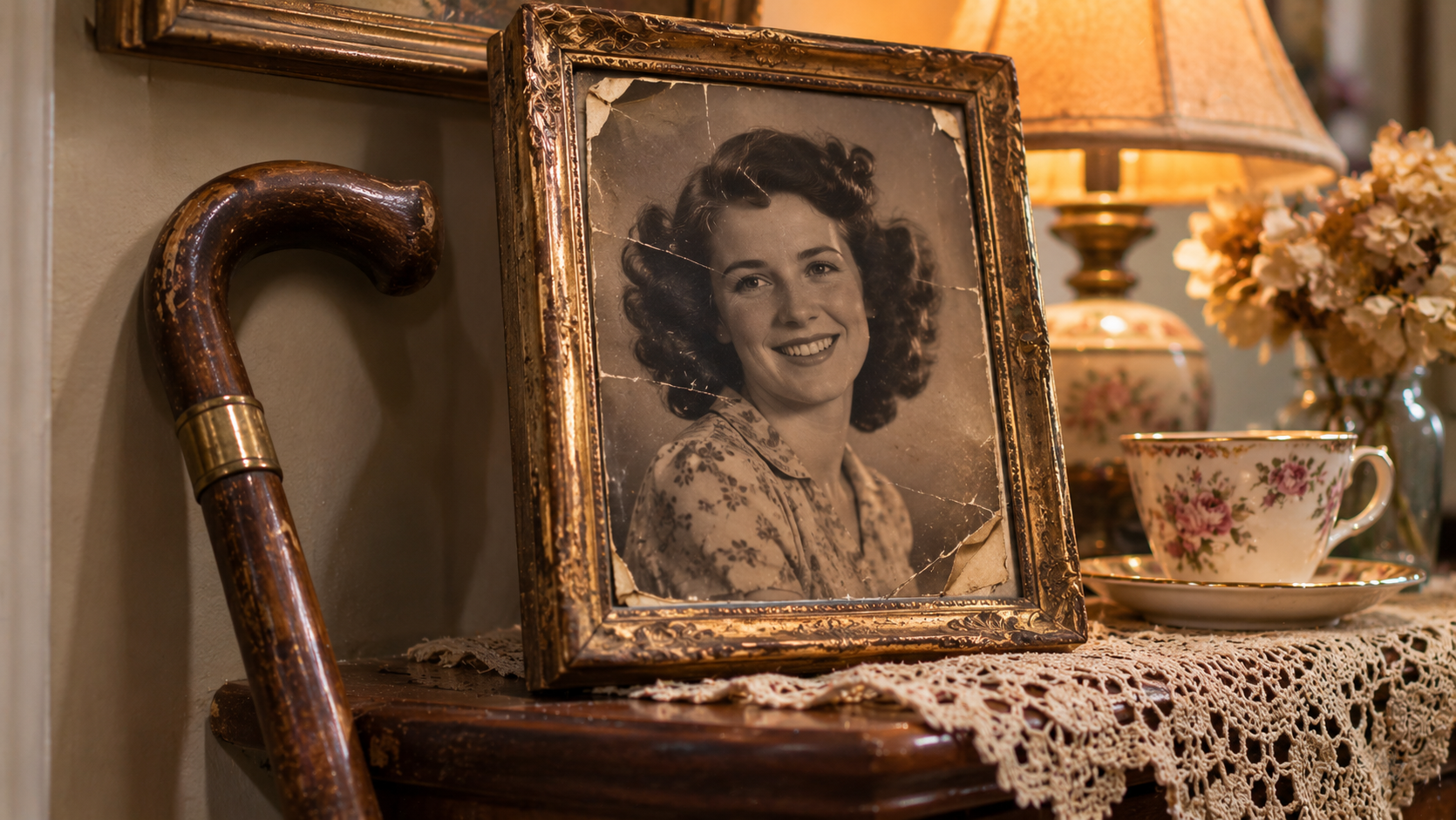
She invited me in. The living room smelled like peppermint tea and old books. On the mantel was a photograph of a young woman—not Eleanor—with dark curly hair and my father’s exact smile.
“Who is that?” I asked.
Eleanor’s eyes filled with tears. “That’s your sister, Hannah. She’s the reason I agreed to be the decoy.”
The Decoy and the Daughter
My head spun. “I don’t have a sister.”
Eleanor explained. In 1974, before my father left Wisconsin, he had a brief affair with a woman named Lorraine. She got pregnant. Lorraine didn’t want to raise a child, and my father—terrified of scandal—arranged for Eleanor to raise the baby as her own. But Eleanor couldn’t have children, and the arrangement fell apart. Lorraine took the baby back and disappeared.
“Your father spent years trying to find Hannah,” Eleanor said. “He finally did, about a year ago. She was living in a trailer park in Missouri, working two jobs, raising two kids alone. He wanted to help her, but he was ashamed. He didn’t want to hurt your mother or you kids.”
So he made a plan. He would leave everything to Eleanor—his legal first wife—with a secret instruction: Eleanor would sell the house and give every penny to Hannah. It was a way to provide for his forgotten daughter without shattering the family he’d built.
The Letter in the Safe
Eleanor handed me a sealed envelope. “He wrote this for you. He said you’d be the one to find him.”
I opened it in my car. My father’s handwriting was shaky but unmistakable.
My dear daughter,
I know you’re angry. You have every right to be. I spent my whole life trying to be a good man, but I made mistakes I couldn’t undo. Hannah is your half-sister. She doesn’t know about you. She thinks her father died when she was a baby. I couldn’t bear to tell her the truth while I was alive—I was a coward. But she deserves something. Please, don’t fight Eleanor. Let her do what I asked. And if you have any love for me left, find Hannah. Tell her I’m sorry.
Dad
I sat in the car and cried for twenty minutes. Then I called my brother Mark and told him everything.
The Sister I Never Knew
Mark was furious at first. “He lied to us for forty years?” But by the end of the week, he agreed to help. We hired a lawyer to ensure the estate transfer was legal, and we tracked down Hannah through the same investigator. She lived in a double-wide trailer outside Springfield, Missouri. She had no idea who we were.
I knocked on her door on a Tuesday afternoon. She opened it with a baby on her hip and a dish towel over her shoulder. Her face—God, it was my father’s face. The same eyes, the same jaw.
“Hannah?” I said. “My name is Claire. I think you’re my sister.”
She stared at me for a long moment. Then she started to cry.
We sat on her porch for three hours. She told me about her life—foster homes, dead-end jobs, a string of bad relationships. She’d never known her father. Her mother, Lorraine, had died of cancer when Hannah was nineteen, taking the secret to her grave. Eleanor had been sending her $200 a month for years, anonymously, just to keep her afloat.
“I thought it was a charity,” Hannah said. “I never knew.”
I told her about the will, the house, the money. She shook her head. “I don’t want to take your family’s home.”
“It’s not our home anymore,” I said. “It’s yours. Dad wanted it that way.”
The House on Maple Street
In the end, we sold the house for $340,000. Eleanor, true to her word, transferred every cent to Hannah. My mother was devastated at first, but when she met Hannah—when she saw the same smile, the same stubborn streak—she softened. “He was a fool,” she told me. “But he was a fool who loved you all.”
Hannah used the money to buy a small house and start a college fund for her kids. She didn’t take everything—she insisted on giving Mark and me $20,000 each. “Family’s family,” she said.
I still miss my father. I’m still angry at him. But I understand now that people are complicated, and secrets have a way of outliving the people who keep them. The woman we’d never heard of wasn’t a thief—she was a decoy, a guardian, and in the end, a bridge to a sister I never knew I had.
Sometimes I drive by the old house on Maple Street. A young couple lives there now. They’ve painted the shutters blue. But in my mind, I still see my father in the garden, pulling weeds, humming a tune. And I like to think he’s finally at peace, knowing that his secret didn’t destroy us—it just made our family a little bigger.
Recommended Stories

My Mother-in-Law Swapped My IVF Medication for Sugar Pills—When I Confronted Her, She Said, ‘You Don’t Deserve to Be a Mother’
She swapped my IVF meds for sugar pills to make me lose my baby. When I confronted her, she smiled...
My Mother Gave My Wedding Dress to My Ex-Sister-in-Law—Then I Found a Hidden Letter in the Seams That Revealed Her True Motive
When I saw my ex-sister-in-law wearing my $4,800 wedding dress, I thought my mother had betrayed me. Then I found...
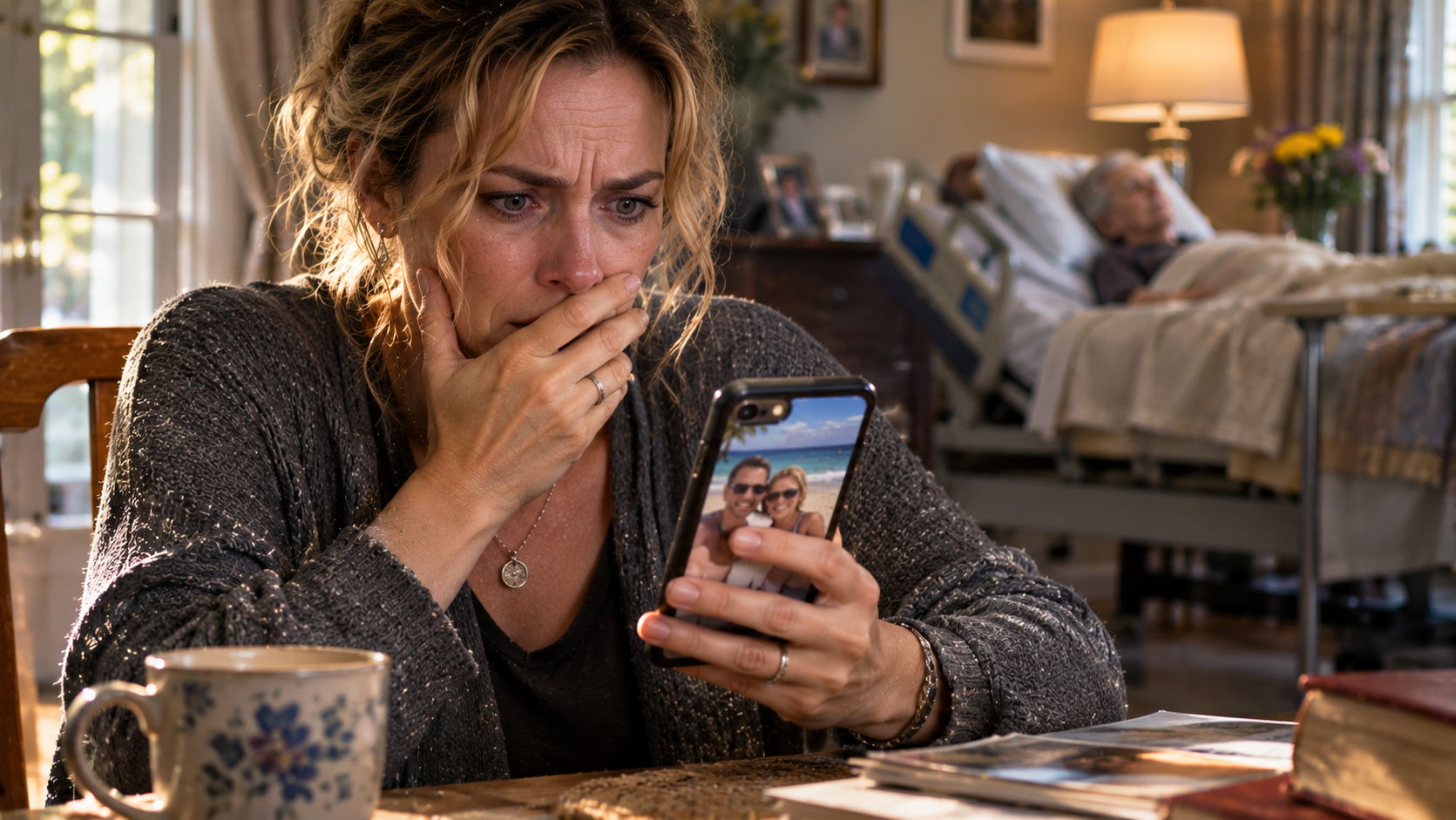
My Husband’s ‘Business Trip’ Photos Showed a Beach—But the Background Revealed He Was at My Sister’s Wedding
She thought her husband was on a business trip—until a photo revealed he was at her sister's wedding. A story...