At My Wedding, My Mother Stood Up and Objected—Then She Handed Me a Photo of My Fiancé with My Cousin
The Moment the Music Stopped
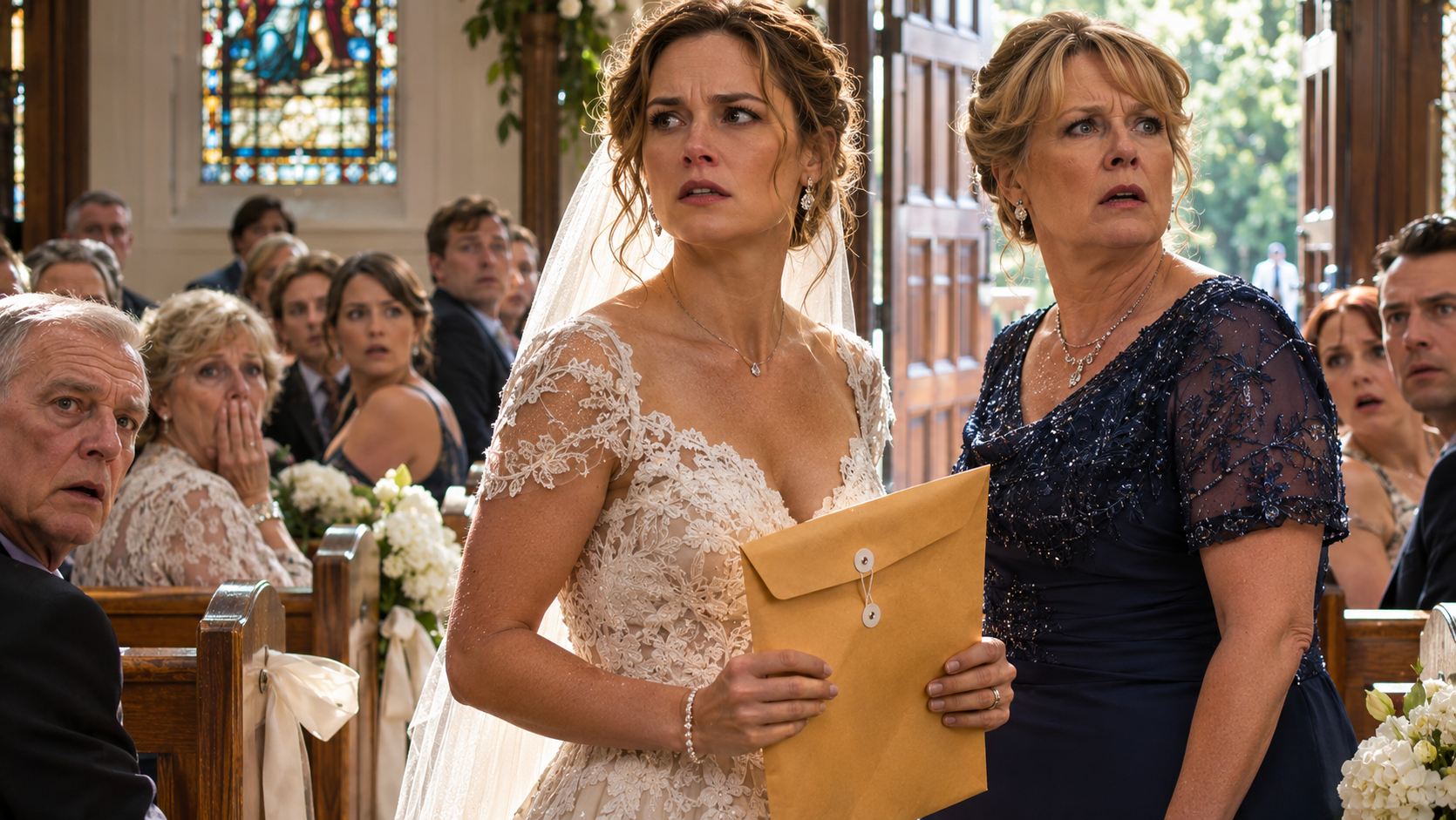
The string quartet had just begun the processional when my mother rose from the front pew. Her voice cut through the sanctuary like a fire alarm. “I object!” she shouted, holding a manila envelope above her head. Three hundred guests turned in unison. My fiancé, Daniel, froze at the altar. And I stood at the back of the church in my grandmother’s lace gown, watching my wedding collapse before I’d taken a single step.
I was thirty-two, a pediatric nurse in Asheville, North Carolina. Daniel was a contractor I’d met two years earlier when he remodeled our hospital’s playroom. He was steady, kind, and utterly devoted—or so I believed. My mother, Lorraine, had never warmed to him. She called him “a charmer” in that tone Southern women use to mean something far less flattering.
Now she was marching down the aisle, heels clicking like a metronome, and pressing the envelope into my hands. “Open it,” she said. “Before you say a word.”
The Photograph That Wasn’t What It Seemed
I pulled out a single glossy print. Daniel, my Daniel, sitting at a café table with his hand on the knee of a woman I recognized instantly: my cousin Rachel. They were laughing. Her head was tilted toward his shoulder. The timestamp read three weeks earlier—the weekend Daniel claimed he’d been in Charlotte bidding a job.
My knees buckled. My maid of honor, Priya, caught my elbow. Daniel was already striding down the aisle, face pale. “That’s not what it looks like,” he said. “I can explain.”
“Then explain,” my mother said, arms crossed.
He couldn’t. Not there, not with three hundred pairs of eyes. He stammered about “a business meeting” and “Rachel needing advice,” and every word made it worse. Rachel, seated two rows behind my mother, had gone the color of skim milk. She stood and fled the sanctuary, her heels echoing off the stone floor.
My father, a retired high school principal who’d been quietly weeping since the processional, stood and addressed the crowd. “I think we need to take this somewhere private,” he said. “The reception hall is paid for. There’s coffee. There’s a lot of coffee.”
Somehow, that broke the spell. Guests filed out, murmuring. I stood in the vestibule with my mother, Daniel, my father, and Rachel, who had been dragged back by her own mother. The photographer, a saint named Marcus, quietly asked if he should keep shooting. I told him to go home.
What My Mother Had Been Hiding
“How did you get this?” I asked my mother. My voice sounded like it belonged to someone else.
She pulled a second envelope from her purse. “Because I hired someone to follow him,” she said. “Three months ago, when he told you he was ‘working late’ six nights in a row. I didn’t trust him. I was right.”
Daniel’s jaw tightened. “You had me followed? That’s insane. That’s—”
“That’s a mother protecting her daughter,” my father said quietly. He looked at Daniel with something worse than anger: disappointment.
Rachel finally spoke. “It wasn’t romantic,” she whispered. “I swear, Aunt Lorraine. Daniel was helping me. I was—I was in trouble. I didn’t want anyone to know.”
“What kind of trouble?” I asked.
She looked at Daniel. He nodded, just slightly. “I borrowed money from a guy,” she said. “A bad guy. Eight thousand dollars. He was threatening to show up at my job. Daniel loaned me the cash and told me not to tell anyone because he knew your mother would—” She stopped.
“Would what?” my mother demanded.
“Would assume the worst,” Rachel finished. “Like you always do.”
The Truth Underneath the Truth
We sat in the reception hall for three hours. The caterer served chicken piccata to a family in crisis. I learned that Daniel had loaned Rachel $8,000 from his savings—money he’d been setting aside for our honeymoon. He hadn’t told me because he knew I’d be upset about the secrecy, not the money. Rachel hadn’t told me because she was ashamed of the gambling debt she’d accrued after her divorce.
“Why didn’t you just tell me?” I asked Daniel. “You could have said, ‘Rachel needs help.’”
“Because Rachel begged me not to,” he said. “And because I knew your mother was already looking for reasons to hate me. I thought if I handled it quietly, it would just go away.”
My mother sat rigid in her chair. “I saw what I saw,” she said. “A man with his hand on another woman’s knee.”
“His hand was on the table,” Rachel said. “The angle of the photo—the photographer caught the moment he reached for his coffee. Look at the shadow. Look at his hand.” She pulled out her phone and showed us a photo from the same afternoon—a selfie she’d taken with Daniel to document the loan, both of them giving a thumbs-up. “We were at a public café. In broad daylight. If we were having an affair, do you think we’d be posing for pictures?”
I studied the photo my mother had given me. The angle was strange—taken from across the street, through a window. Daniel’s hand was clearly reaching for his cup, not Rachel’s knee. The “intimate lean” was Rachel showing him her phone screen. The “laughing” was Daniel’s face when he heard a joke.
My mother had been so eager to believe the worst that she’d seen what she wanted to see.

The Confrontation That Changed Everything
“You ruined my wedding,” I said to my mother. “You stood up in front of everyone and accused my fiancé of cheating based on a photo you misread. You didn’t ask me. You didn’t ask him. You just—”
“I was trying to protect you,” she said, but her voice had lost its steel.
“You were trying to be right,” I said. “You’ve never liked Daniel. You’ve been waiting for a reason to get rid of him. And you found one, even if it wasn’t real.”
My father put his hand on my shoulder. “She’s not wrong, Lorraine,” he said. “You should have come to us first.”
My mother looked at the photo in my hand. Then at Daniel. Then at Rachel, who was crying silently into a napkin. “I saw—” she started.
“You saw a photo,” Daniel said. “You didn’t see the truth. There’s a difference.”
She was quiet for a long moment. Then she did something I didn’t expect. She stood, walked over to Daniel, and held out her hand. “I owe you an apology,” she said. “A real one. Not just for today. For every time I looked at you and saw a threat instead of a partner for my daughter.”
Daniel shook her hand. “I accept your apology,” he said. “But I need you to understand something. I love your daughter. I would never hurt her. And if you can’t trust that, then we’re going to have a problem.”
My mother nodded. “I know,” she said. “I’m beginning to.”
The Wedding That Happened Anyway
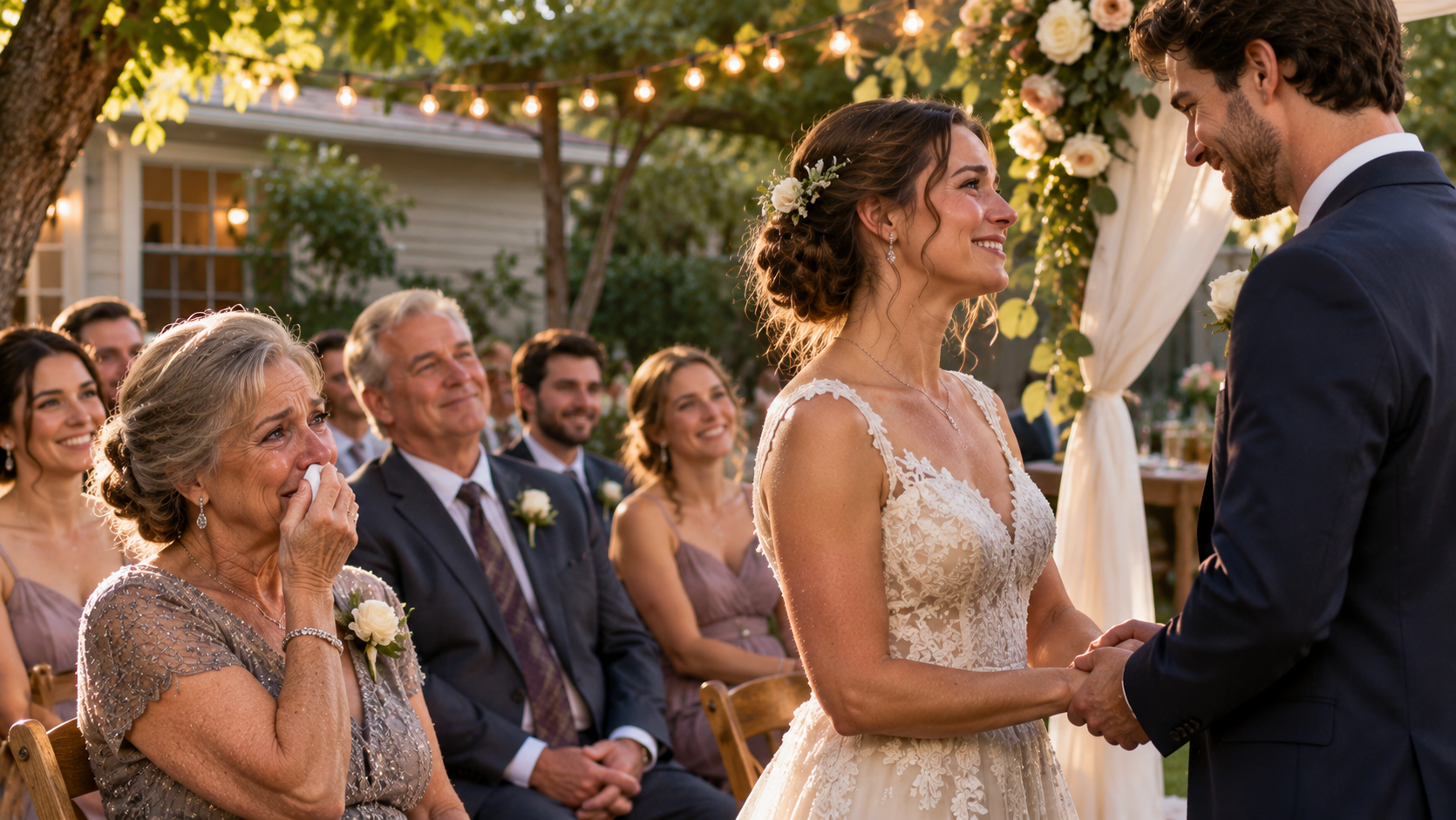
We didn’t get married that day. The church had been booked for a two-hour window, and we’d burned through it. But three weeks later, on a Saturday afternoon in my parents’ backyard, Daniel and I said our vows in front of forty people—just family and close friends. My mother sat in the front row and cried through the whole ceremony. Rachel was there too, sober and contrite, having started attending Gamblers Anonymous meetings the week after the wedding.
Daniel and I used the honeymoon money—the $8,000 he’d loaned Rachel—to take a belated trip to the Outer Banks. Rachel paid him back in installments over the next year. And my mother? She started seeing a therapist. Not because I asked her to, but because she said she was tired of seeing threats everywhere she looked.
Last month, at Thanksgiving, she pulled me aside. “I know I can’t undo what I did,” she said. “But I want you to know something. I was wrong about Daniel. Completely wrong. And I’m grateful every day that you didn’t listen to me.”
I hugged her. “I know,” I said. “That’s why I married him anyway.”
She laughed. “You always were stubborn.”
“I learned from the best.”
What I Learned About Trust
Here’s the thing about family: they can love you and still be wrong. My mother loved me. She still loves me. But love without trust is just control wearing a nicer dress.
The photo was real. The interpretation was not. And the lesson I carry now—the one I’ll teach my own daughter someday—is this: before you accuse someone, ask them. Before you believe the worst, look for the best. And before you stand up in a church and object to a wedding, make sure you’re not just seeing what you’re afraid of.
Because sometimes the truth is sitting right there in the frame, waiting for someone to look closer.
Recommended Stories
My Father Gave My Inheritance to My Brother—Then My Brother Lost It All, and My Father Expected Me to Bail Him Out
When my father called after 11 years of silence, it wasn't to apologize. It was to ask me to bail...
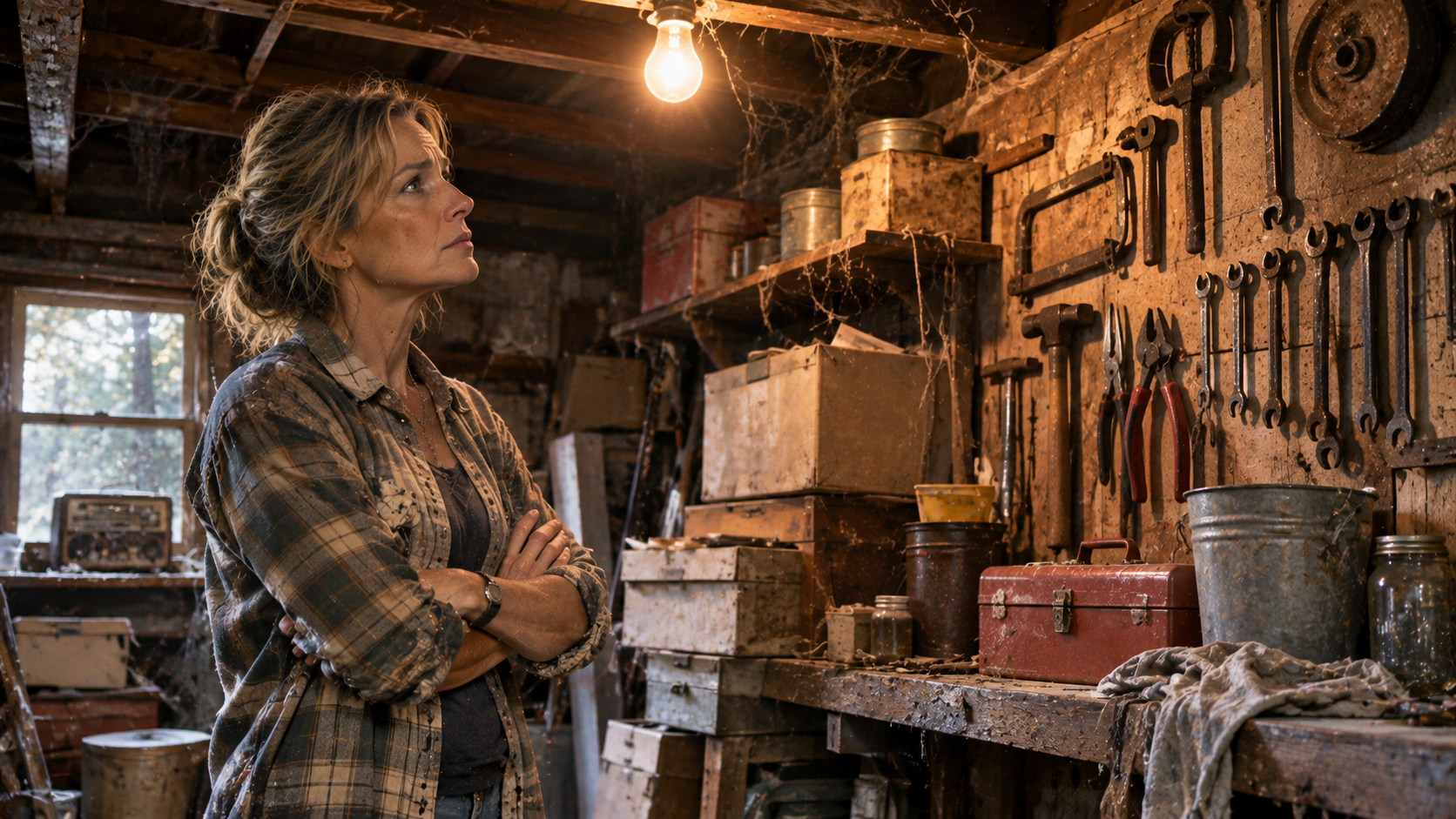
My Father’s Dying Words Were ‘Check the Garage’—What I Found Behind the Drywall Made Me Call the Police
His dying words were a riddle. Behind the garage wall, I found a fake ID, $20,000, and a secret that...