My Brother Stole My Identity to Buy a House—Then the Real Owner Showed Up at My Door
The Knock That Shattered Everything
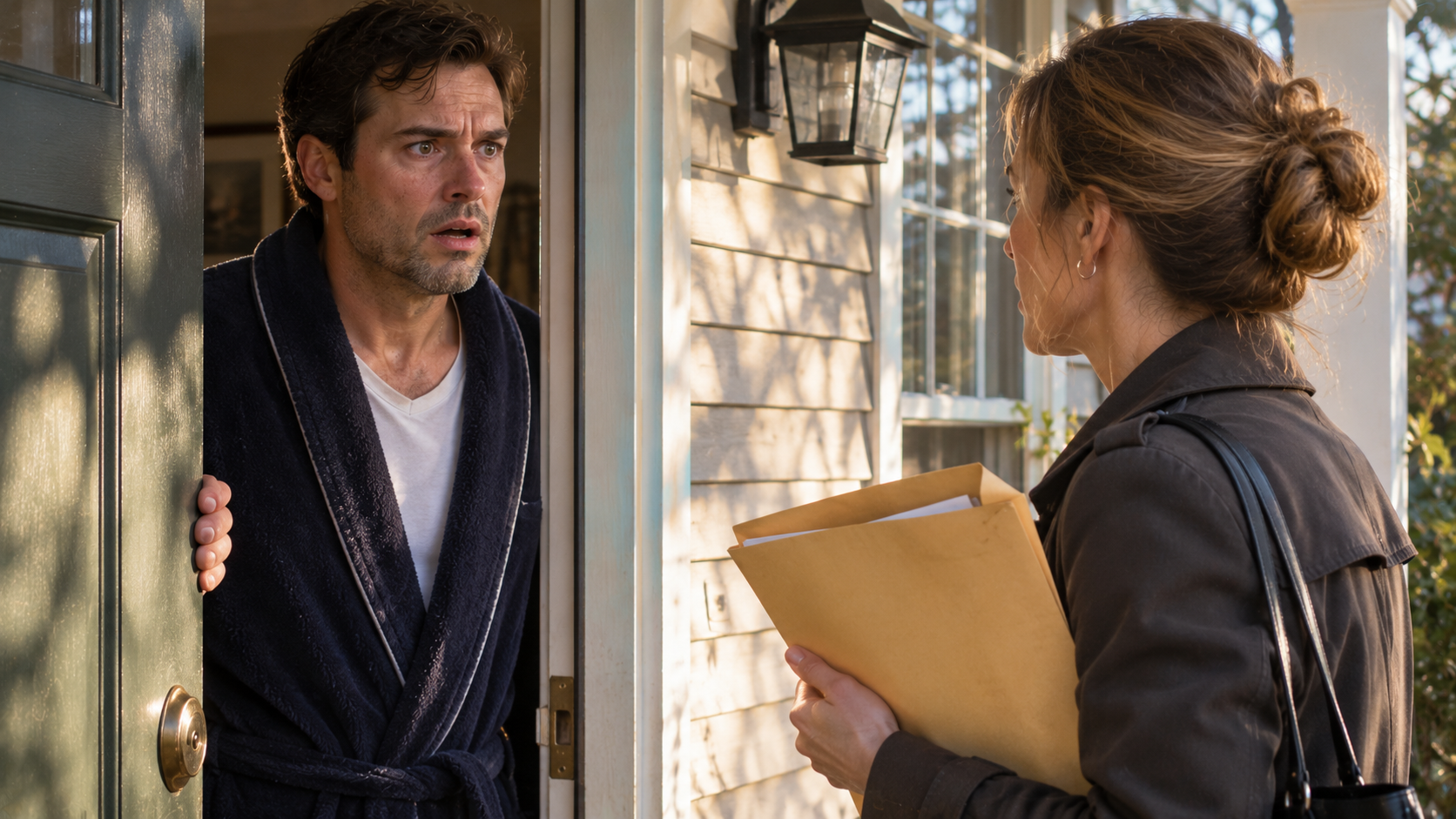
The knock came at 7:42 on a Tuesday morning in March. I remember the time because I was standing in my kitchen, waiting for the coffee maker to finish its slow, gurgling brew. I was still in my bathrobe, my hair a tangled mess, and my mind already halfway through the day’s lesson plans. I taught seventh-grade science at a middle school in Boise, Idaho, and mornings were my only quiet time.
When I opened the door, a woman I’d never seen before stood on my porch. She was in her late fifties, maybe, with silver-streaked hair pulled back in a neat bun and a manila folder clutched to her chest like a shield. Her eyes were red-rimmed, and her voice trembled when she spoke.
“Are you Daniel Reeves?” she asked.
“Yes,” I said slowly. “Can I help you?”
She thrust the folder toward me. “I’m Margaret Chen. And I think you’re living in my house.”
I blinked. “I’m sorry—what?”
She opened the folder and pulled out a deed. My address was printed at the top, my name listed as the owner. But so was hers. “This house was sold to me three months ago,” she said. “By a man named Daniel Reeves. He had your driver’s license, your Social Security number, your signature. Everything matched.”
My blood turned to ice. I hadn’t sold my house. I hadn’t signed anything. But as I stared at the forged signature on the deed—a near-perfect replica of my own—I knew exactly who had.
The Brother Who Always Needed a Little More
My brother, Nathan, was two years younger than me. Growing up in Twin Falls, we’d been close—or at least, I’d thought we were. I was the responsible one, the one who did his homework and mowed the lawn without being asked. Nathan was the charmer, the one who could talk his way out of anything. My parents called him “spirited.” I called him exhausting.
By the time we were adults, the pattern was set. Nathan borrowed money he never repaid. He crashed a car my parents co-signed for and left them with the payments. He bounced from job to job, always with a story about a terrible boss or a bad break. And every time, I was the one who cleaned up the mess.
The last straw came five years ago, when he asked me to co-sign a loan for a “can’t-miss” business venture—a food truck he swore would make us both rich. I said no. He didn’t speak to me for a year. When he finally called, it was to apologize. He’d changed, he said. He was in therapy. He wanted to rebuild our relationship.
I believed him. That was my mistake.
What I didn’t know was that Nathan had been quietly collecting pieces of my life for years. My mail, when I was out of town. My Social Security number, from an old tax document he’d “borrowed” to help me file. My signature, practiced on the back of napkins until he could replicate it perfectly. And my trust, which he’d been mining since we were kids.
The Paper Trail That Didn’t Add Up
Margaret Chen was not a scam artist. She was a retired schoolteacher from Portland who’d sold her own home to be closer to her grandchildren in Boise. She’d found my house through a real estate listing, met “Daniel Reeves” at a Starbucks, and handed over a cashier’s check for $287,000. The man she’d met had my driver’s license—a fake, I later learned, but good enough to fool a title company. He had my Social Security number. He had a story about needing to sell quickly because of a job transfer.
“He was so polite,” Margaret told me, her voice cracking. “He said the house had been in your family for years. He said you were sad to let it go.”
I felt sick. “I never met you,” I said. “I never sold this house. That man was my brother.”
Margaret’s face went pale. “Your brother?”
“Nathan Reeves. He’s been living in a studio apartment on the other side of town. Or at least, that’s what he told me.”
I pulled out my phone and called Nathan. It went straight to voicemail. I called again. Same thing. I sent a text: Call me. Now. No response.
Margaret and I sat in my living room for two hours, piecing together the timeline. The sale had closed on December 15th. The cashier’s check had been deposited into an account under my name—an account I’d never opened. The money had been withdrawn in a series of cashier’s checks, all made out to a shell company called “Reeves Ventures LLC.” Nathan had registered that company three years ago, using my address as the business address.
He hadn’t just stolen my identity. He’d built an entire shadow version of me.

The Confrontation at the Storage Unit
It took me three days to find him. Nathan had been crashing at a friend’s place, but his car—a leased BMW he couldn’t afford—was parked outside a storage facility on the outskirts of town. I waited until I saw him walk out of unit 114, carrying a duffel bag.
“Nathan!” I shouted.
He froze. When he turned around, his face cycled through surprise, guilt, and then—infuriatingly—a kind of resigned annoyance, like I was a bill collector he’d been dodging.
“Danny,” he said. “Hey. I was gonna call you.”
“You sold my house,” I said. “You forged my signature. You stole my identity. And you took almost three hundred thousand dollars from a woman who trusted you.”
He had the nerve to look wounded. “It’s not what you think.”
“Then what is it?”
He set the duffel bag down. “I was gonna pay you back. All of it. I just needed a little time to get the business off the ground.”
“What business?”
“Reeves Ventures. It’s a real estate investment thing. I was gonna flip houses, make a profit, and then buy you a new place. A better place.” He smiled, that same charming smile that had gotten him out of trouble his whole life. “You always said you wanted a bigger yard.”
I stared at him. “You committed a felony. You stole from a retired teacher. And you think a bigger yard makes it okay?”
His smile faded. “Don’t be dramatic, Danny. Nobody got hurt.”
“Margaret Chen got hurt,” I said. “She’s out two hundred and eighty-seven thousand dollars. She’s living in a hotel because you sold her a house you didn’t own. And I’m about to lose the only home I’ve ever had because of you.”
Nathan’s eyes darted to the side. “I can fix it.”
“How?”
He didn’t answer. That’s when I knew: the money was gone. All of it. He’d spent it on God knows what—probably the BMW, probably a few bad investments, probably a lifestyle he’d never been able to afford. He’d burned through a quarter of a million dollars in three months.
“I’m calling the police,” I said.
“Danny, wait—”
“No. You don’t get to talk your way out of this one.”
The Real Owner Steps Forward
Here’s the part I didn’t see coming. When the police investigated, they discovered that Nathan had pulled the same scam on at least three other people. He’d find a house owned by someone elderly or out of state, forge a deed, and sell it to a buyer who didn’t do enough due diligence. Margaret was just the first one who’d tracked down the real owner.
But the real twist came two weeks later, when a man named Gerald Foster showed up at my door. He was in his seventies, with a cane and a gentle voice.
“I heard about what happened,” he said. “I think I might be able to help.”
Gerald explained that he was the original owner of the house—or rather, his late wife was. They’d built it in 1978, raised their kids there, and sold it to my parents in 1995. But when the title company investigated the fraudulent sale, they found a clerical error from the original deed transfer. The property line had never been properly recorded, and a small strip of land at the back of my lot legally belonged to Gerald’s family.
“I’m not here to cause trouble,” Gerald said. “I just wanted you to know that if you need to sell, I’d be willing to buy that strip back. Fair price. Enough to help you cover your legal fees.”
I almost cried. This man, a stranger, was offering me a lifeline while my own brother had tried to destroy me.
Nathan was arrested three days later. He’s currently serving a five-year sentence for identity theft and wire fraud. My parents, who initially blamed me for “turning on family,” eventually came around after they saw the evidence. My mother still sends him letters. I don’t.
What I Learned About Trust
Margaret and I became friends. She bought a smaller house a few miles away, and we have coffee every Sunday. She says I remind her of her late husband—stubborn, but honest.
As for me, I still live in the house. The legal battle took eight months and most of my savings, but I got to keep it. Gerald’s offer helped more than he’ll ever know. And every time I walk through my front door, I remember the morning Margaret showed up with that manila folder—the morning my brother’s lies finally caught up with him.
Nathan once told me that family is about loyalty. But loyalty without honesty isn’t loyalty at all. It’s just a con.
I don’t know if I’ll ever forgive him. But I do know this: I’m not the one who has to live with what he did. That’s his burden now. And for the first time in my life, I’m not carrying it for him.
Recommended Stories
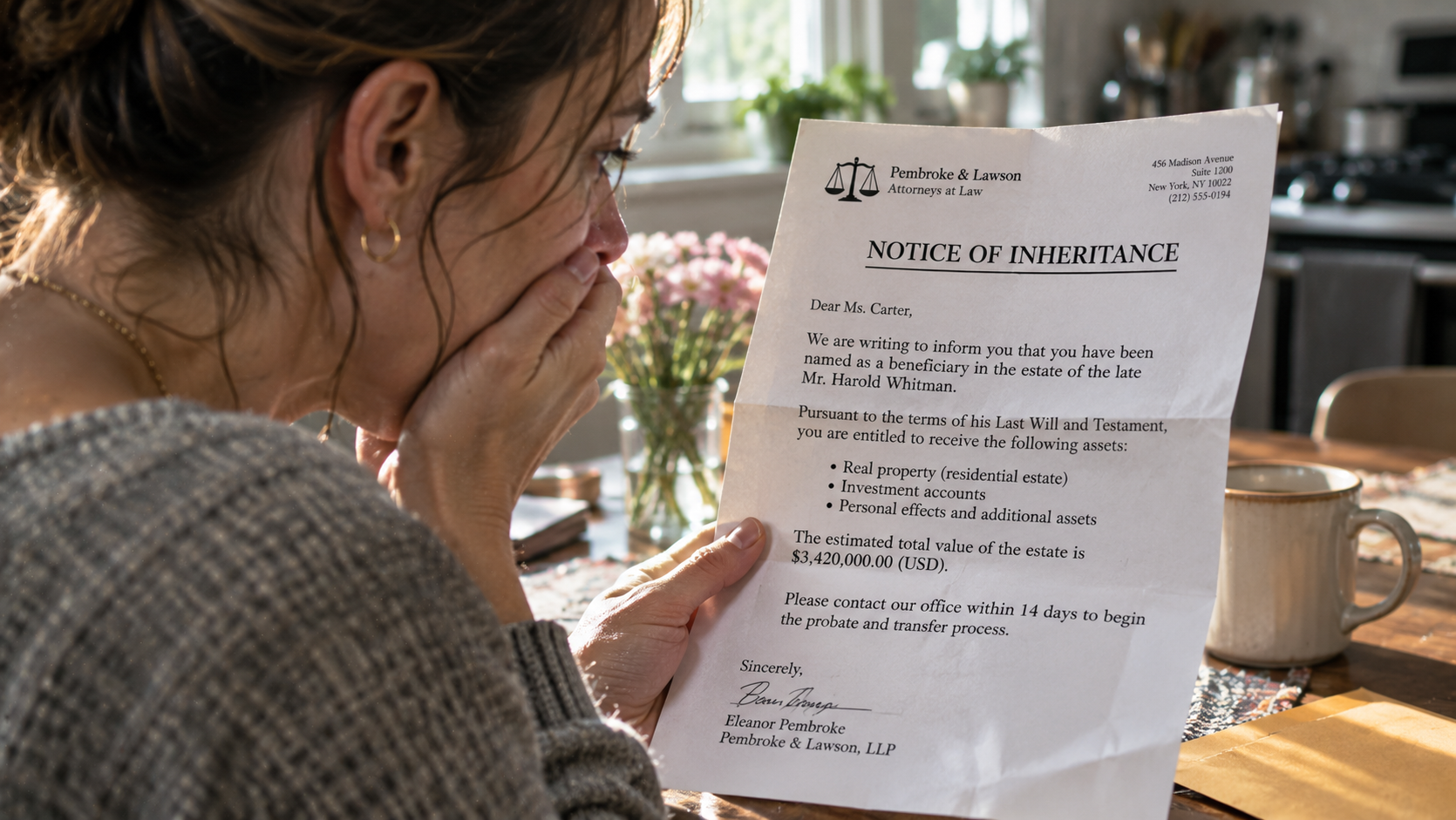
I Inherited a Million Dollars from a Stranger—Then His Family Showed Up with a Shocking Demand
I was a nurse with no connection to a wealthy stranger. When he left me his fortune, his family demanded...

At My Wedding, My Mother-in-Law Announced She Was Pregnant—Then My Father Stood Up
A wedding toast turns into a confession: my mother-in-law is pregnant, and my father is the father. The fallout shatters...

My Stepmother Gave Me a Cheap Locket for My Birthday—Years Later, a Jeweler Told Me What Was Inside
A stepmother's 'cheap' birthday gift hid a secret that took 20 years to unfold—and a jeweler's revelation changed everything.