PART 6 (THE END): The Secret Vanessa Couldn’t Keep 046
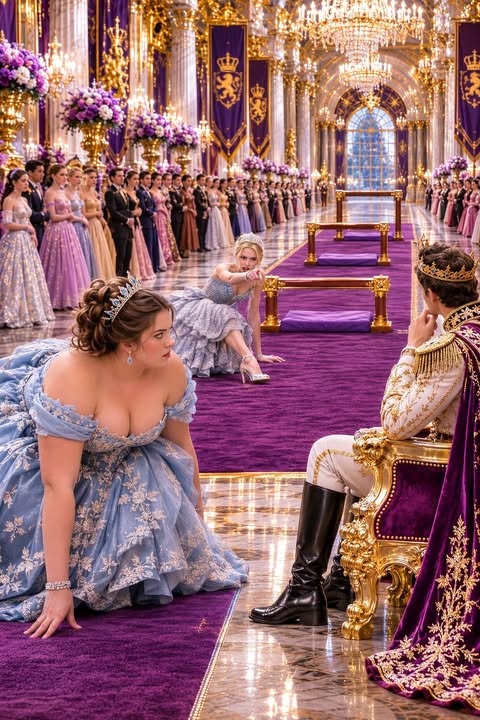
Part 6 – A Course Made for Everyone
“The record says the course was changed at the request of Beatrice Williams herself.”
For a moment, I heard nothing but the blood moving through my ears.
The final hurdle stood a few paces ahead, and the palace seemed to hold its breath around us.
“My mother asked for the alternate route to be removed?” I said.
The steward looked at the page again, as though the ink might rearrange itself into a kinder answer.
“That is what the approval record says,” he replied. “But we should read the whole document before deciding what it means.”
The archivist stepped closer, his face pale with concentration.
“There may be a second page,” he said. “The file was folded inside another folder, and I have not yet checked the back.”
Adrian looked toward me, not the document.
“Would you like to pause?”
I glanced at the hurdle, then at the small crowd waiting along the sides of the course.
“Yes,” I said. “But not because I’m giving up.”
The official lowered his whistle.
The steward and archivist brought the paper to the table beside the track, where the archivist unfolded it carefully.
I stepped away from the hurdle and joined them, with Vanessa beside me and Adrian just behind us.
The record was written in the neat, formal hand used by the household office.
It stated that Beatrice Williams had requested the alternate route be removed from the version intended for the royal selection ceremony.
Below that, in a different hand, someone had added a note referring to a “temporary presentation adjustment.”
The archivist turned the page over.
A second sheet was attached to the back, its edges hidden beneath the fold.
He eased it free and began to read.
“This is a letter from your mother,” he said.
My fingers curled against the edge of the table.
“Please read it aloud.”
The archivist looked at me to be sure.
When I nodded, he began.
“‘The course was designed to welcome people with different bodies, abilities, and ways of moving. I do not agree to the removal of its alternate route as a permanent change.’”
The room was silent.
He continued.
“‘I have agreed only to a temporary adjustment for the televised selection ceremony, after the household office assured me that the original course would be restored afterward and that the course’s purpose would be clearly explained.’”
The steward’s eyes lowered to the page.
The archivist read the final lines.
“‘Please keep my name with the plans. If the course is ever changed again, please tell my daughter why I made it.’”
My breath left me slowly.
The words did not erase the years of silence or the damage done to the course’s purpose.
But they changed the shape of the mystery.
My mother had not abandoned her belief in inclusion.
She had made a limited compromise, trusting that the palace would honor its promise.
The promise had not been kept.
“Was this letter recorded?” Adrian asked.
The archivist checked the folder.
“It was received and filed, but not attached to the public plan. The later maintenance records seem to have treated the temporary adjustment as permanent.”
The steward remained very still.
“The household office should have restored the original design,” he said. “And the note refusing Mrs. Williams’s request to keep her name must have been written after this letter.”
“Can we find out who wrote it?” I asked.
“We can investigate,” the archivist replied. “The office records may identify the clerk or the official who approved the filing.”
I looked at the letter again.
My mother’s handwriting was as familiar as the sound of her laughter.
She had trusted the palace to remember her work, but she had not trusted it blindly.
She had written down exactly what she agreed to and exactly what she did not.
It was not the story of a woman who had given up.
It was the story of a woman who had tried to make a practical compromise and expected others to honor their word.
The palace had failed her.
But her own words had survived.
“I’m glad we found this,” I said.
The archivist gave a small nod.
“So am I.”
I touched the edge of the table, not the fragile paper.
“She wanted the course restored.”
“Yes,” Adrian said. “Then we should restore it.”
The steward looked up.
“We will need to review the original specifications, confirm the materials, and consult safety specialists before making changes.”
“Of course,” Adrian replied. “And we should consult the people the course was designed to welcome.”
The steward considered that, then nodded.
“Yes. The community foundation can help us arrange that.”
I turned toward the prince.
“I don’t want my mother’s work turned into a ceremony about how generous the palace is for fixing something it changed.”
His expression held no defensiveness.
“I understand.”
“Then let the people who use the course help shape it. Let the palace fund the work and make its history public.”
“That is fair,” he said. “We can do both.”
The archivist gathered the documents into their folder.
The steward took the old note, then paused before closing the cover.
“Princess Mara, would you like the palace to make a copy of every document connected to your mother’s work?”
“Yes. I’d also like to read them all myself.”
“We will arrange it.”
I glanced toward the final hurdle.
The pause had settled something inside me.
I no longer felt that the course was a test I had to finish to prove I belonged.
My mother’s letter had made clear that belonging was never something the course was meant to grant.
It was supposed to be there from the beginning.
“I’d still like to finish,” I said.
The prince studied my face.
“Are you sure?”
“I am. Not to complete the ceremony, and not to represent my mother. I want to finish because I chose to start.”
“Then the choice is yours,” he said.
The official returned to his place beside the track.
The steward confirmed that the hurdles remained safe, and the official checked the mat beneath the final bar once more.
The guests had not moved closer.
They waited quietly, leaving the space around me open.
Vanessa stood near the edge of the course.
“Would you like me to stay here?” she asked.
“Yes.”
“Then I will.”
She did not offer advice or encouragement she thought I ought to need.
She simply remained.
I returned to the final hurdle.
It looked no smaller than it had a few minutes before, but it no longer seemed to hold a judgment inside it.
I placed my feet carefully, took one slow breath, and listened for the rhythm I had used at the first two.
My mother’s words came back to me, though not as a command.
Courage did not have to be loud.
It only had to move.
I bent my knees and pushed forward.
My foot cleared the wooden bar.
For a fleeting instant, I was suspended above the purple carpet, aware of the hush and the warm light falling through the ballroom windows.
Then I landed on the mat.
My balance wavered.
I reached out, steadied myself, and stood upright beneath the golden arch.
The hurdle trembled behind me, but it stayed in place.
The official checked it.
“Clear.”
This time, the applause began quietly and grew.
It was not a roar of surprise or a cheer for a spectacle.
It sounded like people choosing to meet the moment together.
I turned toward Vanessa.
She was smiling, and there were tears bright in her eyes.
She clapped once, then laughed softly at herself and joined the others.
I walked back along the course at an easy pace.
The prince met me near the starting line.
“You finished,” he said.
“I did.”
“And you did it in your own way.”
“That was the only way I could.”
His smile was warm, but he did not reach for my hand or turn the moment into a declaration.
He let the accomplishment belong to me.
The steward stepped forward with the archivist beside him.
“Princess Mara,” he said, “the palace owes your mother recognition, and it owes the community an explanation for how the course’s purpose was lost.”
“Thank you,” I said. “I hope the explanation is honest, even if it isn’t flattering.”
“It will be,” he replied. “We will publish the records we have verified and continue searching for the full history.”
The archivist held the folder close.
“And I will ensure that your mother’s plans are catalogued under her name, not only by their initials.”
I looked at the old initials on the page.
“That would have mattered to her.”
“I believe it would.”
The guests began to gather in the center of the ballroom, but no one rushed the course.
Adrian stepped onto the low dais where the ceremony had begun.
He looked across the room, then paused until the last conversations faded.
“Today’s event began with a course that was meant to decide which candidates could meet a narrow standard,” he said.
His voice carried through the ballroom without force.
“We have learned that it began as something very different: a design meant to welcome people with different bodies, abilities, and ways of moving.”
The guests listened.
“The palace failed to preserve that purpose,” he continued. “It also failed to preserve the name of the woman who created it.”
He looked toward me.
“My mother did not create it,” I said softly, though the room was quiet enough that I knew he could hear.
“No,” Adrian replied. “Your mother did.”
He turned back to the court.
“Beatrice Williams designed the original course and helped fund its construction through the palace charitable foundation. Her plans will be restored to the archive under her full name, and the course will be rebuilt according to its original inclusive purpose, with the guidance of the communities it was designed to serve.”
A murmur moved through the room, thoughtful rather than surprised.
“The palace will also establish a community program to support adaptive recreation and accessible play,” he said. “The program will be created with local centers and families, not merely announced on their behalf.”
The words did not make the years disappear.
They did not return the credit my mother had been denied when she was alive.
But they gave her work its proper name, and they made its purpose part of what would happen next.
I looked down at the old shoes beneath the chair.
Their stitched initials no longer felt like a mystery.
They were a small mark left by a woman who had made things carefully, repaired what she could, and asked others to remember why the work mattered.
The prince stepped down from the dais.
He stopped in front of me, leaving a respectful space between us.
“I would like to know you beyond what happened today,” he said. “Not because of your mother’s plans, and not because you completed the course.”
I studied his face.
The prince who had first watched from his throne now stood before me without asking the court to decide what should happen next.
“What would that look like?” I asked.
“A conversation, if you’d like one. A walk through the palace gardens. A chance to speak without an audience.”
“And without promises about marriage?”
A faint smile touched his mouth.
“Without promises about anything you haven’t chosen.”
I let that answer settle.
“I’d like to talk with you,” I said. “But as myself, and on equal terms.”
“Then that is how I’ll meet you.”
Vanessa joined us, stopping just close enough to be included without interrupting.
“I hope I haven’t missed the part where everyone pretends this morning was easy,” she said.
I laughed.
“No one would believe us.”
“I owe you another apology,” she said. “Not for the same words, but because I let the ceremony turn into a contest before I understood what it was asking of us.”
“You don’t owe me an apology for falling.”
“I know,” she said. “I owe myself one for believing that one fall could tell me who I was.”
Her honesty was quieter than her earlier apology, but it carried farther.
“You can try again,” I said.
“So can you.”
“I think I will.”
Vanessa offered her hand.
I took it.
The gesture was simple, and it did not make us best friends in a single moment.
It did something more believable.
It gave the beginning of a friendship somewhere to stand.
Around us, the court’s attention shifted away from my waist, my dress, and the question of whether I could cross a hurdle.
People were speaking about the original plan, the old foundation records, and the children who might one day use the restored course.
Some asked the archivist how soon the plans could be copied.
A few asked the steward how the community consultations would work.
The conversations were imperfect and hesitant, but they were no longer about judging which woman had deserved to finish.
The palace doors opened, and sunlight reached across the ballroom floor.
It touched the purple mats, the polished bars, and the golden arch that had once seemed like the only place the course could lead.
I looked once more at the route my mother had drawn in the old sketch.
It curved beside the hurdles, broad enough for different choices.
I imagined children arriving there with nervous hands, curious eyes, and their own ways of moving.
They would not have to prove that their bodies belonged before they began.
The course would offer them a place to start.
I thought of my mother’s shoes, repaired again and again, carrying her through ordinary days and into rooms where she had tried to make something kinder.
Then I looked at Vanessa, standing beside me with her shoulders no longer held rigidly in place.
I looked at Adrian, who was waiting for my answer rather than deciding it for me.
And I looked at the court, which had begun to understand that respect was not a prize awarded to the person who performed best.
It was something we owed one another before anyone crossed a finish line.
The applause faded, but the warmth it left behind remained.
For once, no one was asking me to become a princess, a symbol, or a perfect ending.
I was simply Mara.
And at last, the course had room for all of us.
**–THE END–PLEASE
Share your thoughts or feedback to motivate us to create more stories ♥️
* * *
[PREVIOUS: PART 5](https://echoesofstories.idolsgift.com/blog/part-5-the-secret-vanessa-couldn-t-keep-046-2)
✓ S. Gary Kenneth
Part 6 – A Course Made for Everyone “The record says the course was changed at the request of Beatrice Williams herself.” For a moment, I heard nothing but the blood moving through my ears. The fin…