My Stepmother Sold My Childhood Home—Then I Found a Letter She Hid in the Walls
The Day I Watched Strangers Carry My Life Away
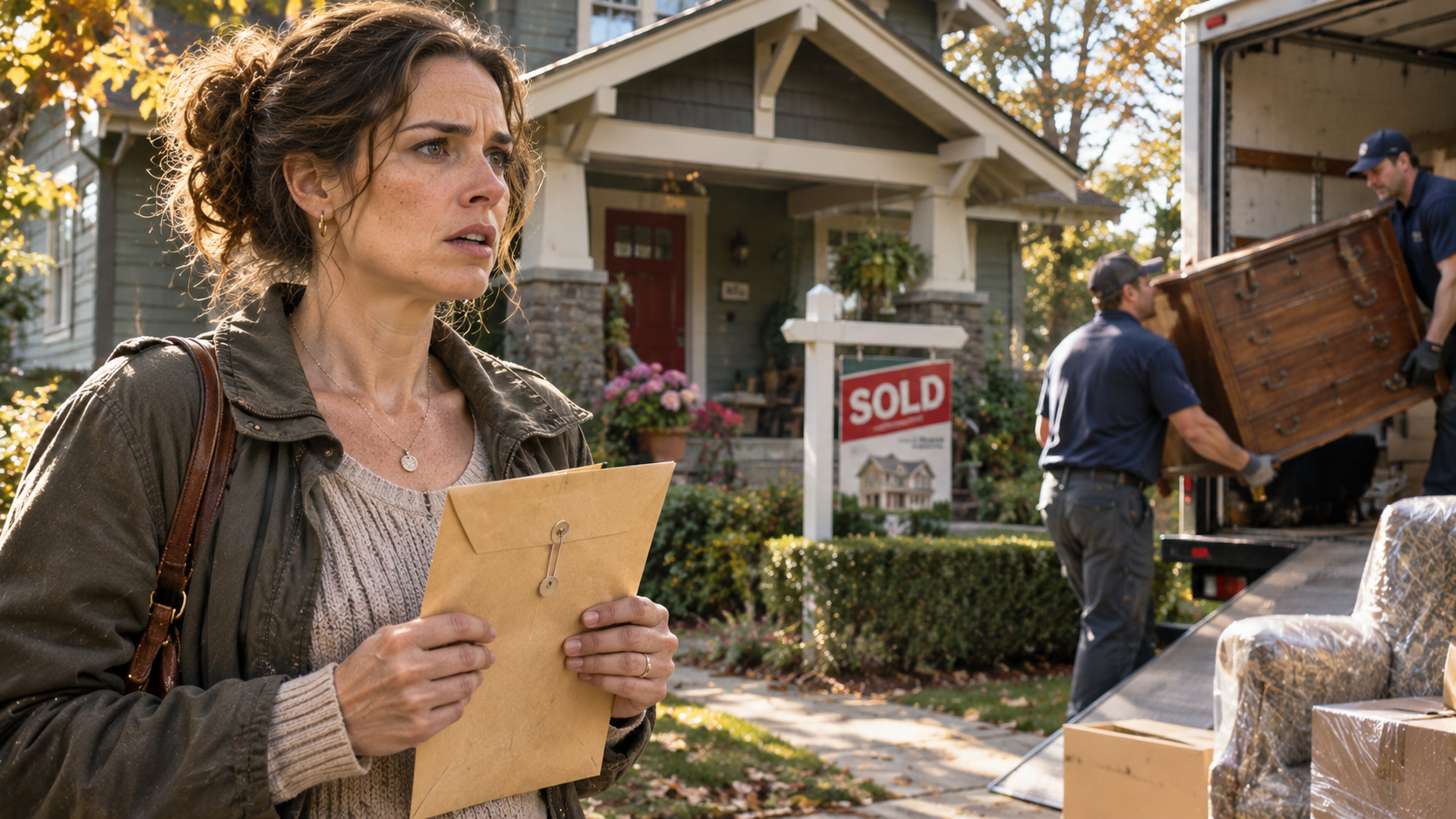
I was thirty-two years old, standing on the sidewalk in front of the only home I’d ever known, watching a crew of movers load my mother’s piano into a truck. The new owners—a young couple with a toddler—stood on the lawn, smiling apologetically. My stepmother, Carla, had sold the house three weeks earlier. She hadn’t told me. She hadn’t told anyone in the family. She’d simply forged my father’s signature on the deed, pocketed $412,000, and vanished to a condo in Scottsdale.
My father, Gerald, had been dead for two years. But the house—a 1920s Craftsman with a wraparound porch and a magnolia tree my mother planted the week I was born—was supposed to be mine. That was the plan. That was always the plan.
“I’m sorry,” the new owner said, handing me a set of keys. “She said you’d come by for the last of your things. She also said to give you this.” He handed me a manila envelope with my name scrawled on it in Carla’s loopy handwriting.
Inside was a single sheet of paper. A photocopy of a letter, dated August 14, 1998. It was addressed to my mother, and it was signed by my father. The words made my blood run cold.
The Letter That Changed Everything
My mother, Elaine, died when I was seven. Cancer. My father remarried Carla two years later—a decision my grandparents never forgave him for. Carla was twenty-eight, eleven years younger than my father, and she had a way of making him feel like the most important man in the world. She also had a way of making me feel like a guest in my own home.
But the letter changed my understanding of everything. In it, my father confessed to my mother that he’d made a terrible mistake. He’d taken out a second mortgage on the house without telling her, using the money to bail out his failing hardware store. He promised her he’d pay it back. He promised her the house would be safe.
He never did. Instead, he met Carla.
The letter continued: “Elaine, if something happens to me, the house is yours. I’ve put it in the will. But Carla has been asking questions about the deed. I’m scared. I think she’s been going through my papers. I’ve hidden a copy of the original trust document in the wall behind the built-in bookshelf in the study. If anything happens, you’ll know what to do.”
My mother never saw that letter. She died three months after it was written. And my father, apparently, never knew she hadn’t.
Carla had found it. And she’d kept it hidden for twenty-five years.
The Wall Behind the Bookshelf
I called my grandfather, Harold, that night. He was eighty-four, sharp as a tack, and had never trusted Carla. “I knew it,” he said, his voice shaking with rage. “I knew she was a thief. Your father told me once—right before he died—that he was worried about the deed. He said Carla had been acting strange. I thought he was just being paranoid.”
“Grandpa, the letter says there’s a trust document hidden in the wall.”
“Then we need to get it.”
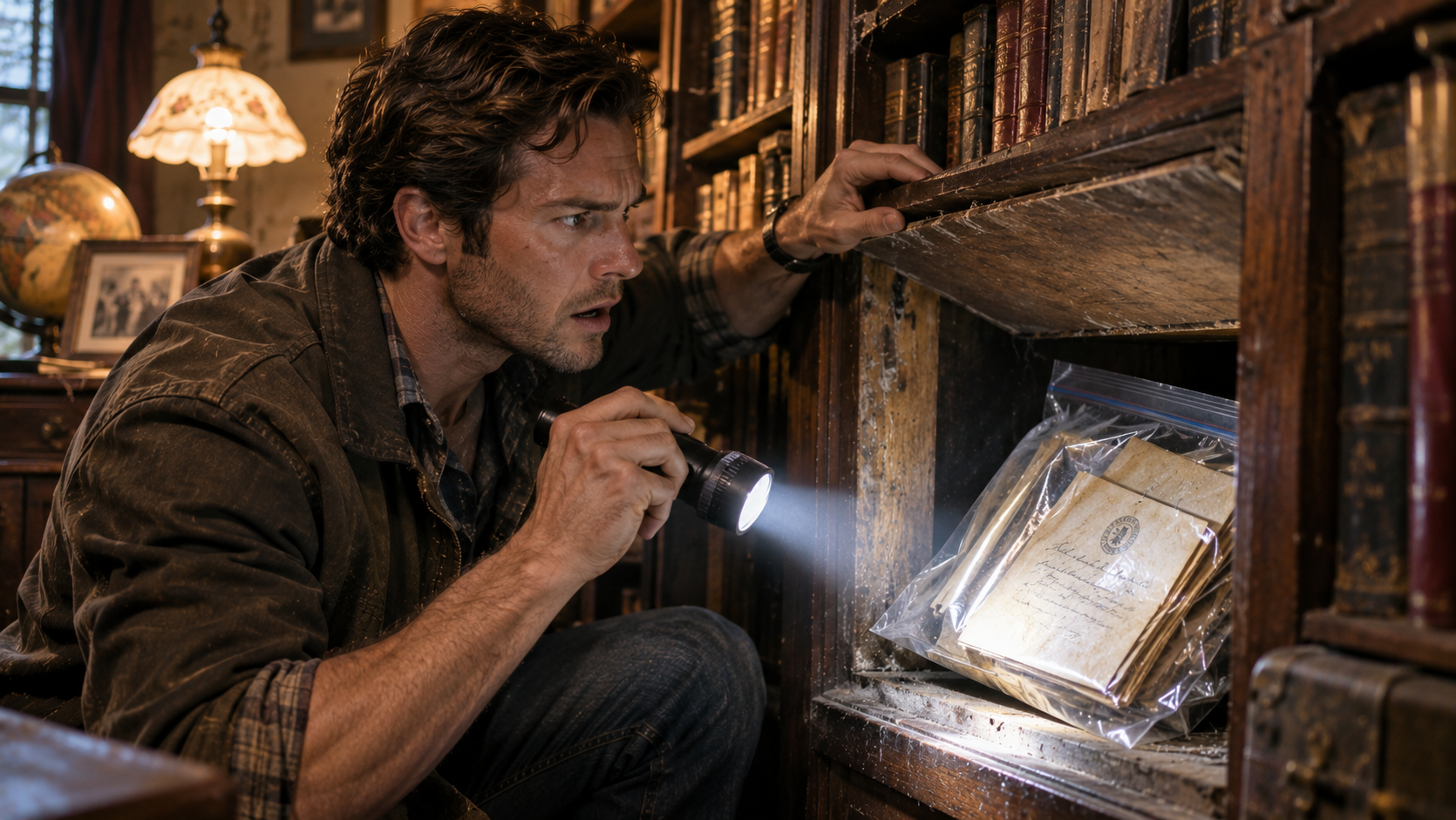
The next morning, I called the new owners. They were sympathetic—and curious. They let me in, and I went straight to the study. The built-in bookshelf was still there, the same one my father had built by hand when I was a baby. I ran my fingers along the back panel until I felt a slight give. With a crowbar, I pried it open.
Inside was a sealed plastic bag. Inside that bag was a notarized trust document, dated 1997, that named me as the sole beneficiary of the house and the property it sat on. It also named my father as the trustee—and stipulated that in the event of his death, the trust would transfer to me, free and clear, with no ability for any other party to alter or sell it.
Carla had forged my father’s signature on the deed. She’d sold a house she had no legal right to sell. And she’d left me a copy of a letter that proved she knew exactly what she was doing.
The Confrontation
I didn’t call Carla. I called a lawyer. Her name was Diane Reyes, and she specialized in real estate fraud. After reviewing the trust document and the letter, she smiled grimly. “This is a slam dunk,” she said. “Your stepmother committed forgery, fraud, and probably a dozen other crimes. The sale is void. The house reverts to the trust. And she’s liable for treble damages.”
“Treble?”
“Three times the sale price. That’s $1.2 million. Plus legal fees.”
I didn’t want the money. I wanted the house. But I also wanted Carla to face consequences.
We filed suit in the county court. Carla was served at her Scottsdale condo. She called me that night, screaming. “You ungrateful little brat! I took care of your father for fifteen years! I deserve that money!”
“You deserve a prison cell,” I said. “You sold my home. You forged my father’s signature. And you left me a letter that proves you knew exactly what you were doing. Why? Why would you do that?”
There was a long pause. Then, in a voice I barely recognized, she said, “Because I wanted you to know. I wanted you to know that I won. That I beat you. That I beat your mother.”
She hung up.
The Truth About My Father
The lawsuit took eight months. Carla tried to fight it, but the evidence was overwhelming. The trust document was authenticated. The letter was matched to my father’s handwriting. And a forensic accountant discovered that Carla had also drained my father’s savings account—$87,000—in the weeks before his death, using a power of attorney she’d obtained without his knowledge.
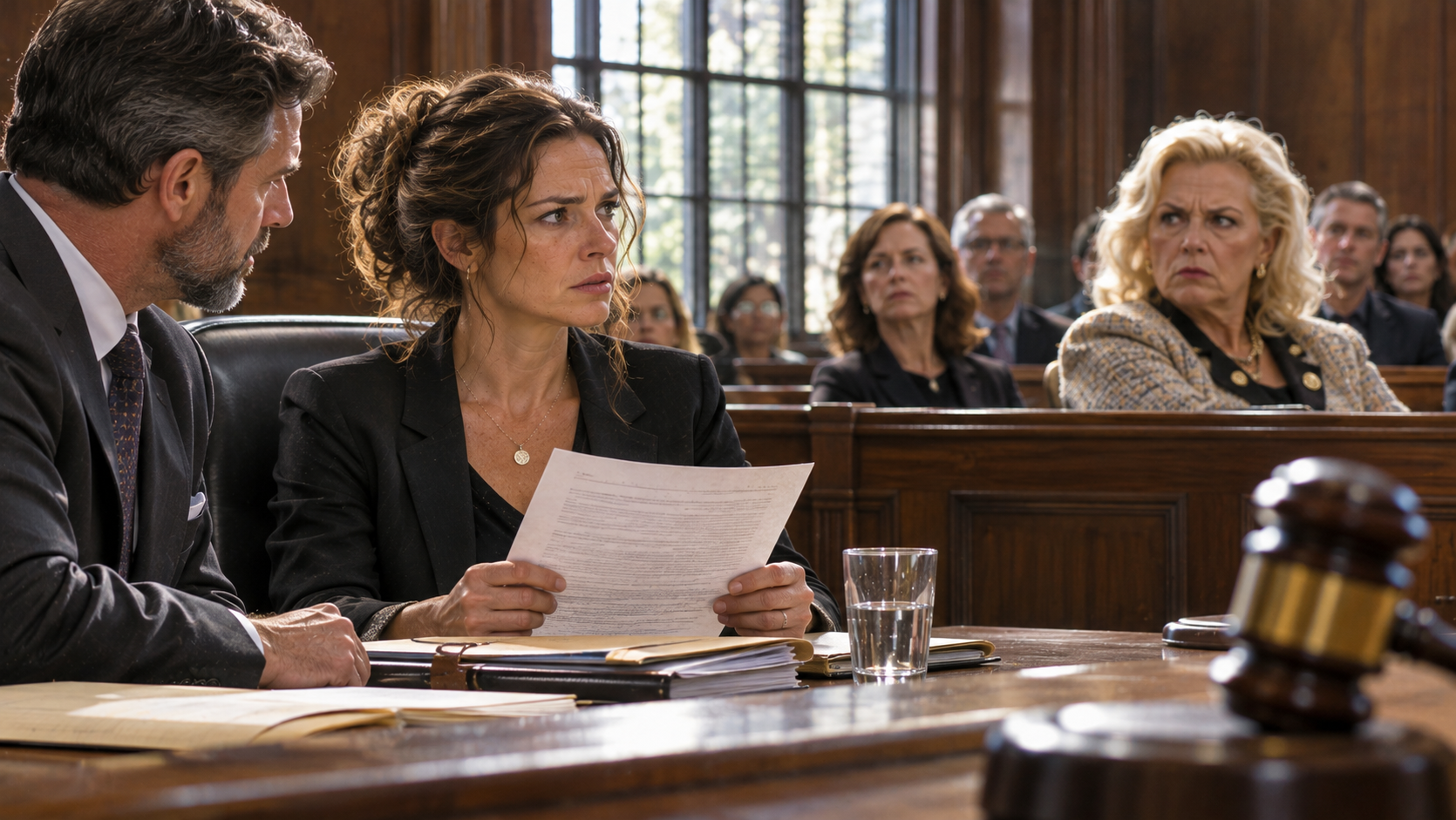
During the trial, my grandfather testified. He told the court about my father’s fears, about the second mortgage, about Carla’s obsession with money. He also revealed something I hadn’t known: my father had tried to divorce Carla six months before he died. He’d hired a lawyer. He’d started gathering evidence. But then he’d had a stroke, and Carla had taken over his care—and his paperwork.
“He was afraid of her,” my grandfather said, his voice breaking. “He told me she’d threatened to put him in a home if he left her. He said she’d take everything. He was right.”
The judge ruled in my favor. The sale was voided. Carla was ordered to repay the $412,000 plus $150,000 in damages. She was also charged with elder abuse and financial exploitation. She pleaded guilty to a reduced charge and was sentenced to three years probation and 200 hours of community service.
She never apologized.
What I Found in the Walls
I moved back into the house last spring. The new owners were understanding—they’d bought it in good faith, and they’d been victims of Carla’s lies too. They accepted a refund and found another home. I repainted the study, but I left the hidden compartment behind the bookshelf. I like knowing it’s there.
Last month, I was cleaning out the attic and found a box of my mother’s things. Inside was a journal. The last entry, dated three days before she died, read: “I know Gerald is hiding something. I found the letter in his desk. I know about the mortgage. I know about Carla. But I’m too tired to fight. I just hope that one day, someone will find the truth.”
She’d known. She’d known all along. And she’d trusted that someday, someone would uncover what she couldn’t.
I sat on the attic floor and cried for an hour. Then I went downstairs, made a cup of tea, and sat on the porch swing. The magnolia tree was in bloom. My mother had planted it the week I was born. It was still there. Still growing. Still home.
Carla may have sold my house, but she couldn’t sell my memories. She couldn’t sell the truth. And she couldn’t sell the love that built this place—the love that, in the end, brought me back.
Recommended Stories
At My Wedding, My Father Objected—Then He Handed Me a Photograph That Proved He Was Right
A bride's world shatters when her father objects at the altar—not out of malice, but because he holds a photograph...
My Sister Stole My $80,000 Inheritance—Then I Found a Letter That Changed Everything
She forged my signature and hid our mother's terminal diagnosis to steal $80,000. Then I found a letter that changed...

My Mother-in-Law Secretly Recorded Me for Years—Then She Played the Tapes at My Baby Shower
She recorded me for years, then played the tapes at my baby shower. But she never expected what I found...