My Sister Stole My $80,000 Inheritance—Then I Found a Letter That Changed Everything
I was standing in my mother’s kitchen, holding a stack of bank statements that didn’t add up, when my sister Melissa walked in and said the words that would detonate our family: “Mom’s money is gone, Rachel. And it’s not coming back.”
She said it the way you’d announce a flat tire—annoyed, inconvenienced, already moving on. But I knew something she didn’t: I had found the letter. The one she thought she’d destroyed. The one that proved she’d forged my signature on a legal document eight years ago, then hid our mother’s terminal diagnosis long enough to drain the account I’d spent a decade filling.
That $80,000 wasn’t just money. It was every double shift I’d worked, every vacation I’d skipped, every sacrifice I’d made so our mother could die at home instead of a nursing facility. And Melissa had stolen it with a smile and a lie.
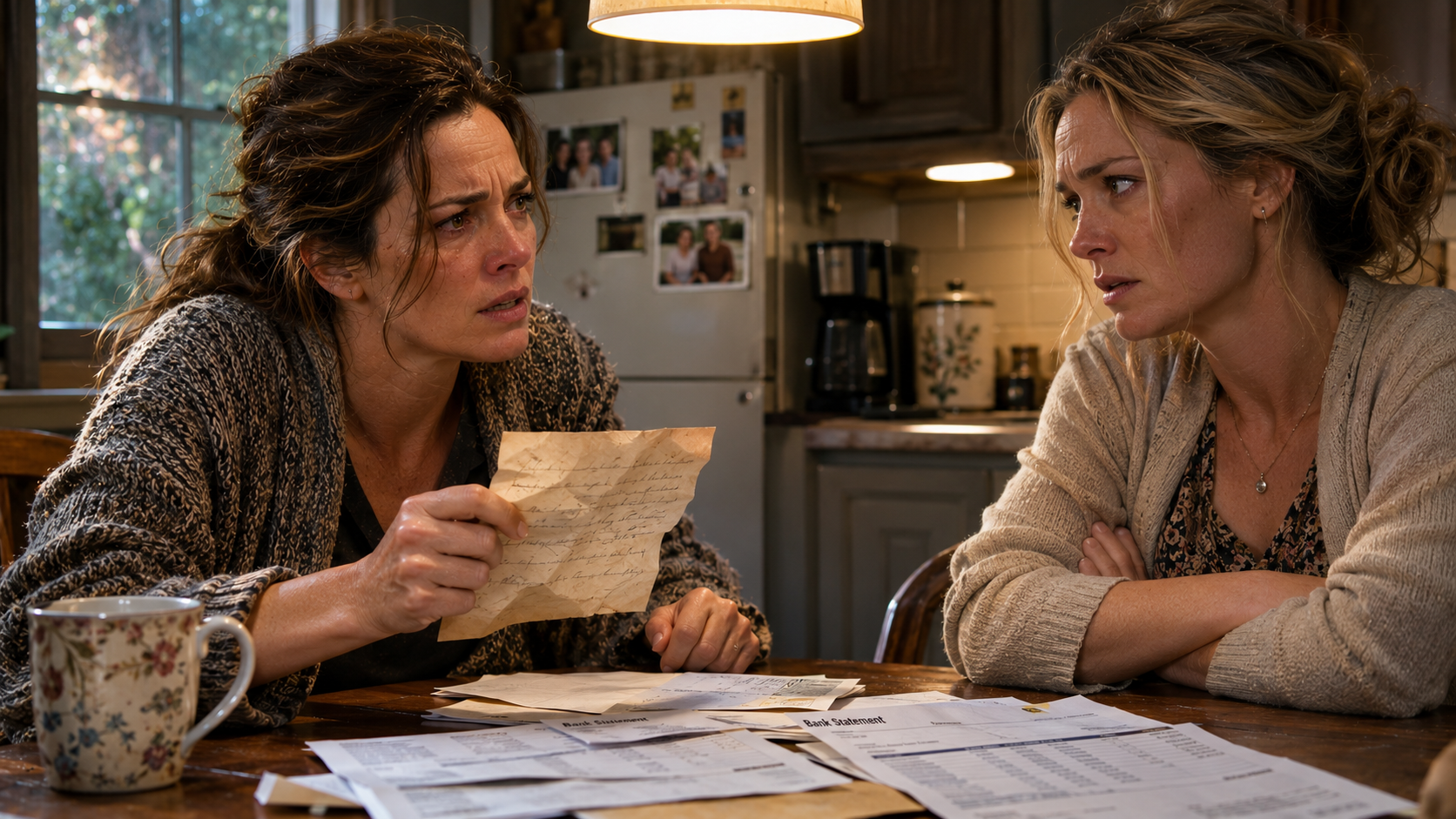
The Sacrifice Nobody Knew About
I’m Rachel, forty-two, a respiratory therapist in Dayton, Ohio. For twelve years, I worked overtime at three different hospitals to cover my mother’s care. She had COPD, then dementia. My father died when I was nineteen, and Melissa—older by four years—had always been “the successful one.” She sold real estate, drove a leased BMW, and posted vacation photos from Destin while I was wiping our mother’s chin.
But I never resented Mom. She was gentle and grateful, always apologizing for being a burden. What I didn’t know was that she’d been apologizing for something else entirely.
In 2015, Mom asked me to sign some papers for a “family trust” Melissa had set up. I was exhausted, coming off a night shift, and Melissa handed me a pen. “Just routine stuff, Rach. So we can manage things if Mom gets worse.” I signed without reading. I trusted my sister. That was my first mistake.
The Vanishing Act
Mom passed away last March. Two weeks later, Melissa called to say the estate was “complicated” and there was “nothing left after expenses.” I was grieving and didn’t push. But when I requested a copy of the trust documents from the lawyer, he hesitated. “Your sister said you’d waived your rights, Rachel. You signed a waiver in 2015.”
I felt the floor tilt. “What waiver?”
He emailed me a scanned document. My signature was there—a clumsy scrawl that looked like mine but wasn’t. The date was a day I’d been in the hospital with Mom after a breathing crisis. I couldn’t have signed anything. Melissa had forged it.
I confronted her at her house that evening. She laughed. “You’re delusional. You signed it. You were always jealous of me, and now you’re making up stories.” She told our aunt and cousins I was “having a breakdown” and “trying to steal from her.” My phone blew up with messages from relatives telling me to get help.

The Letter in the Attic
Three weeks later, I was cleaning out Mom’s attic—the last task before selling the house. In a box of old sewing patterns, I found an envelope addressed to me in Mom’s shaky handwriting. Inside was a letter dated two months before she died.
“My darling Rachel, I know what Melissa did. I found the papers in her desk last year. She forged your name. She told me you’d agreed to give up your share, but I knew you’d never do that. I was too sick to fight her. I’m so sorry. There’s a copy of the real trust in my blue jewelry box. The one she doesn’t know about. Please don’t let her win. Love, Mom.”
My hands were shaking. The blue jewelry box was still in Mom’s closet—Melissa had never bothered to search it. Inside, I found the original trust document, notarized and dated 2014, naming me as the primary beneficiary of $80,000—money I’d deposited over the years from my paychecks, plus Mom’s small pension. The forged waiver was a fake. And there was one more thing: a medical record showing Mom’s terminal diagnosis from 2016, the same year Melissa started transferring funds.
The Confrontation
I didn’t scream. I didn’t cry. I called Melissa and asked her to meet me at Mom’s house “to sort through the last of the furniture.” She arrived in her BMW, wearing a new watch I recognized from a catalog—$2,400, the same amount that had vanished from Mom’s account in 2017.
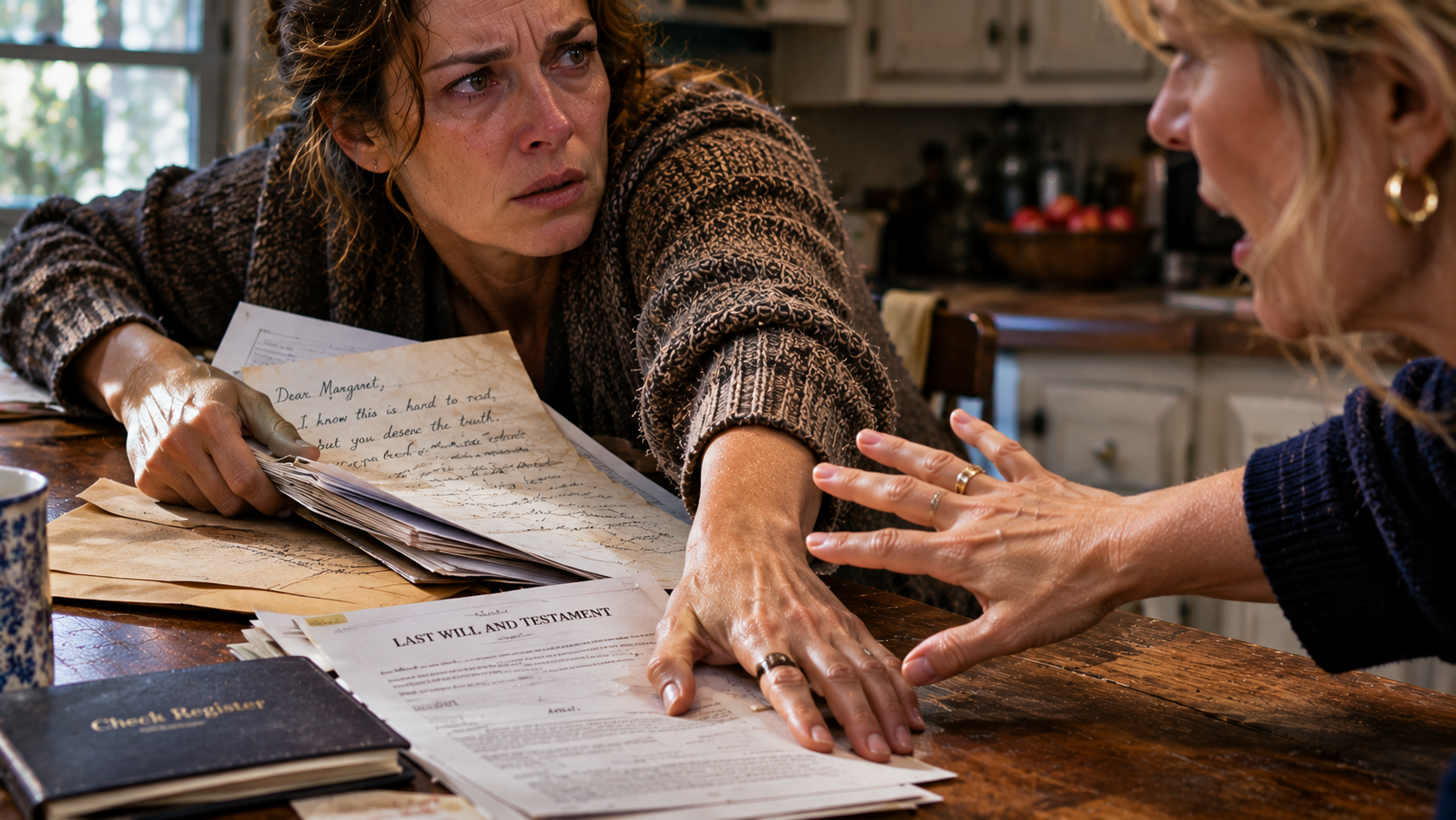
I laid the letter, the trust document, and the forged waiver on the kitchen table. “Explain this.”
Her face went white, then red. “You went through my things?”
“You forged my signature. You hid Mom’s diagnosis. You stole my money.”
She tried to grab the papers. I pulled them back. “I’ve already emailed copies to the lawyer and the police. And to Aunt Carol.”
Her voice cracked. “You don’t understand—I needed it. The business was failing. I was going to pay it back.”
“You had eight years,” I said. “You never paid back a dime. You bought a boat.”
She started sobbing, but I felt nothing. “The police will be in touch. And so will the estate lawyer. I want every cent back, Melissa. Every single cent.”
What the Truth Cost—and Bought
The investigation took four months. Melissa was charged with forgery and financial exploitation of a vulnerable adult. She avoided prison by agreeing to restitution—$80,000 plus legal fees—and a five-year probation. She sold the boat and the BMW. Our aunt stopped speaking to her. Most of the family sided with me once they saw the letter.
I used the money to pay off my own small debts and put a down payment on a modest house with a garden—something Mom always wanted for me. But the real gift was the letter. Mom had known. She’d tried to protect me. And in the end, she did.
Melissa still sends me Christmas cards. I throw them away. Some betrayals can be forgiven. But not the kind that steals your mother’s last months and your own future in the same breath.
I keep Mom’s letter in my nightstand. Sometimes I read it just to hear her voice. “Please don’t let her win.” I didn’t. And that’s the only inheritance that matters.
Recommended Stories
I Gave Up My Career to Care for My Sick Mom for 12 Years—Then My Brother Found Her Will and Discovered I Was Never in It
I gave up my career to care for my sick mom for 12 years. Then my brother found her will—and...
My Brother Forged Our Dad’s Will—But He Didn’t Know About the Second Copy
When my brother announced he'd inherited everything, I knew he was lying. But I never expected to find a second...
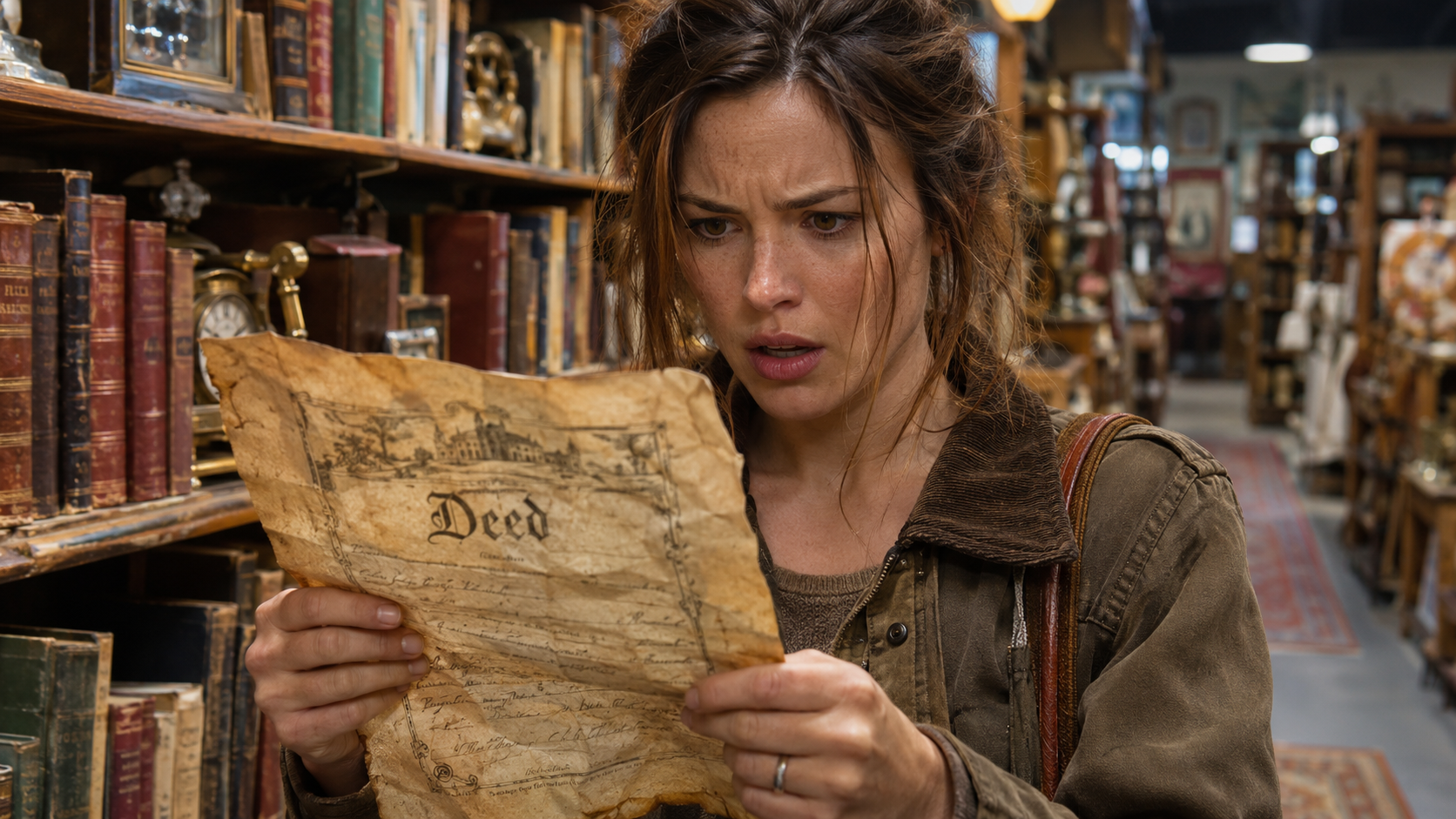
My Stepmother Sold My Childhood Home—Then I Found the Deed in a Thrift Store Book
When Dana's stepmother sold her childhood home, she thought she'd lost everything—until a 50-cent thrift store book revealed a forged...