At My Mother’s Funeral, My Sister Announced She Was Selling the House—Then I Found a Safe Deposit Box Key Hidden in Mom’s Jewelry Box
The Announcement That Silenced the Room
The smell of lilies was so thick it made my eyes water. Or maybe it was the fact that my sister, Carla, had just stood up in front of thirty mourners, still clutching a tissue to her dry eyes, and announced she was putting Mom’s house on the market by the end of the month. “It’s what Mom would have wanted,” she said, her voice dripping with practiced sorrow. “She hated the idea of us fighting over that old place.”
I sat in the second row of the funeral home, my hands gripping the wooden pew so hard my knuckles turned white. My brother, Dean, shot me a look that said don’t make a scene. But Carla wasn’t done. She smiled—actually smiled—and added, “I’ve already talked to a realtor. We’ll split the proceeds three ways, fair and square.”
Fair and square. That was Carla’s favorite phrase. She’d used it when she borrowed Mom’s car for “just a week” and kept it for two years. She’d used it when she convinced Mom to co-sign a loan for her failed bakery. And now she was using it to sell the only home I’d ever known—the house where Mom had raised us after Dad left, where she’d planted roses every spring and sat on the porch every summer evening.
But here’s the thing: I wasn’t upset about the house. I was upset because I knew something Carla didn’t. Mom had called me six months before she died, her voice weak but clear. “Don’t let them sell it, sweetheart,” she’d whispered. “The house is taken care of. You’ll find what you need in my jewelry box.”
I hadn’t understood then. But as Carla droned on about “new beginnings” and “moving forward,” I felt a strange calm settle over me. Mom had a plan. And I was about to find out what it was.
The Jewelry Box That Held More Than Memories
After the funeral, Carla insisted we go back to the house to “start sorting things out.” Translation: she wanted to inventory the valuables before I could claim anything. Dean, ever the peacemaker, agreed to meet us there. I said I needed a few minutes alone in Mom’s bedroom—just to say goodbye.
Carla rolled her eyes but didn’t argue. “Fine. But don’t touch the silver. That’s going to be appraised on Monday.”
I closed Mom’s bedroom door behind me and leaned against it, breathing in the scent of lavender and old paper. The room was exactly as she’d left it: the quilt she’d sewn by hand, the stack of mystery novels on her nightstand, the worn armchair where she’d spent her last months watching the birds at her feeder.
And there, on her dresser, was the jewelry box—a chipped wooden thing with a ballerina on top that had stopped spinning decades ago. I opened it slowly, expecting to find her wedding ring and the pearl earrings she wore on special occasions. Instead, nestled beneath a tangle of costume necklaces, was a small brass key with a number stamped on it: 417. Attached to it was a faded tag with two words in Mom’s handwriting: First National.
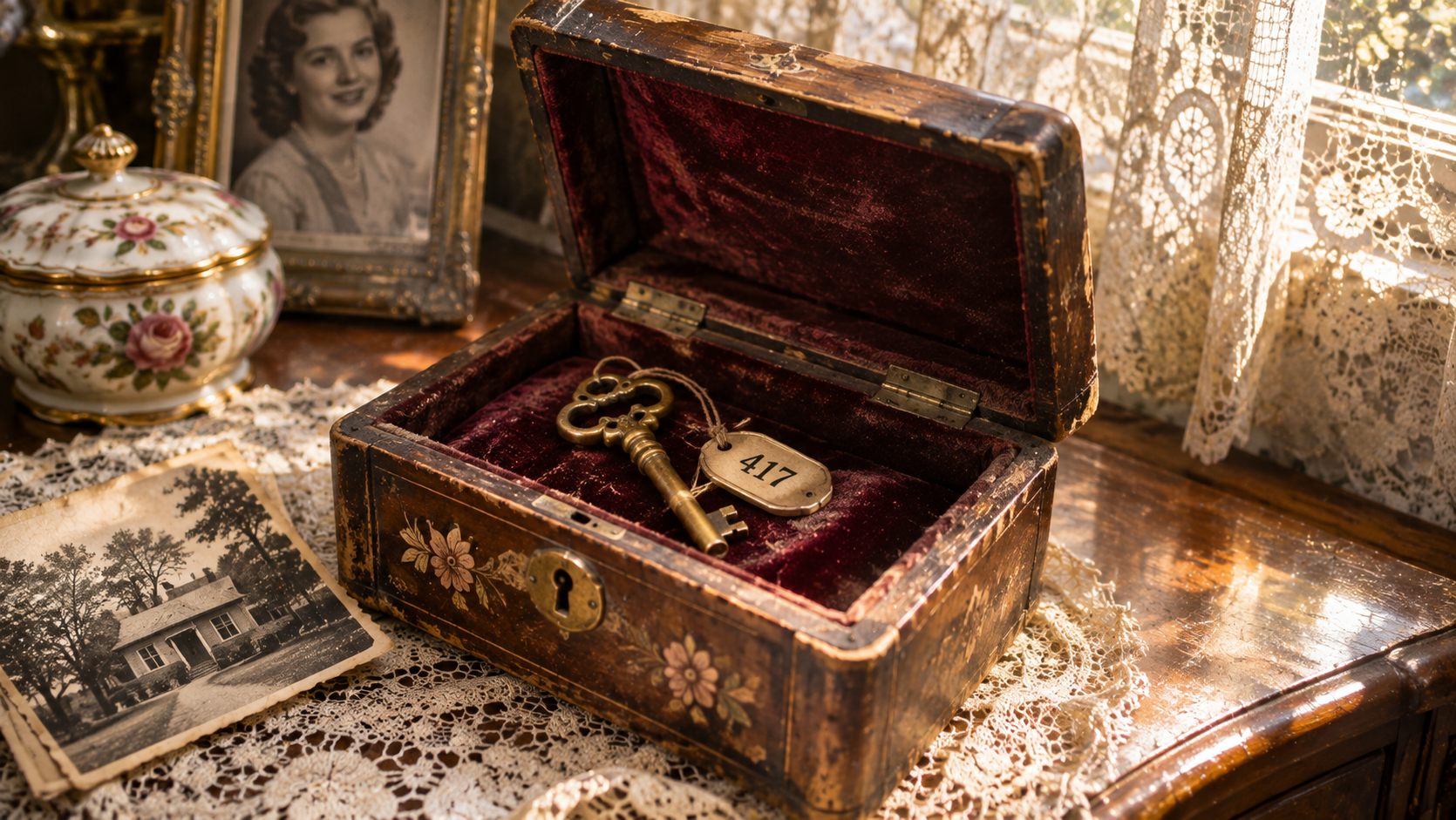
My hands trembled as I slipped the key into my pocket. First National Bank was two blocks from the house. Mom had banked there for forty years. But what could she possibly have locked away in a safe deposit box? And why had she never mentioned it?
Before I could think further, Carla’s voice echoed from the hallway. “Anna! Are you done in there? The realtor’s on the phone.”
I closed the jewelry box and walked out, my heart pounding. “I’m done,” I said. “But I need to run an errand. I’ll meet you and Dean at the lawyer’s office tomorrow.”
Carla’s eyes narrowed. “What errand?”
“Just something Mom asked me to do.”
It wasn’t a lie. But it wasn’t the whole truth either. And for the first time in months, I felt a flicker of something I’d almost forgotten: hope.
The Safe Deposit Box That Changed Everything
The next morning, I stood in the lobby of First National Bank, clutching the brass key like a lifeline. The teller, a kind-faced woman named Mrs. Alvarez, led me to a small room in the back and inserted the key into box 417. “Take your time, honey,” she said softly. “Your mother was a lovely woman.”
I nodded, unable to speak. When she closed the door, I sat down and opened the metal box.
Inside was a single manila envelope, thick with documents. My hands shook as I pulled them out. The first was a deed—the deed to Mom’s house, dated three years earlier. But it wasn’t in Mom’s name. It was in mine.
I stared at the paper, my brain struggling to process what I was seeing. Mom had transferred ownership of the house to me three years ago. Not to Carla. Not to Dean. To me. There was also a notarized letter in Mom’s handwriting, dated the same day.
My dearest Anna, it began. If you’re reading this, I’m gone. I know Carla will try to sell the house—she’s been pushing me to put it on the market for years. But this house is yours. You’re the one who stayed. You’re the one who drove me to every doctor’s appointment, who sat with me through every chemo session, who gave up your weekends and your savings to make sure I was okay. I couldn’t leave it to you in my will because Carla would have contested it. So I did it quietly. The house is yours. Sell it or keep it—but don’t let your sister bully you into anything. I love you. Mom.
I read the letter three times, tears streaming down my face. Mom had known. She’d known all along what Carla was like. And she’d outsmarted her.
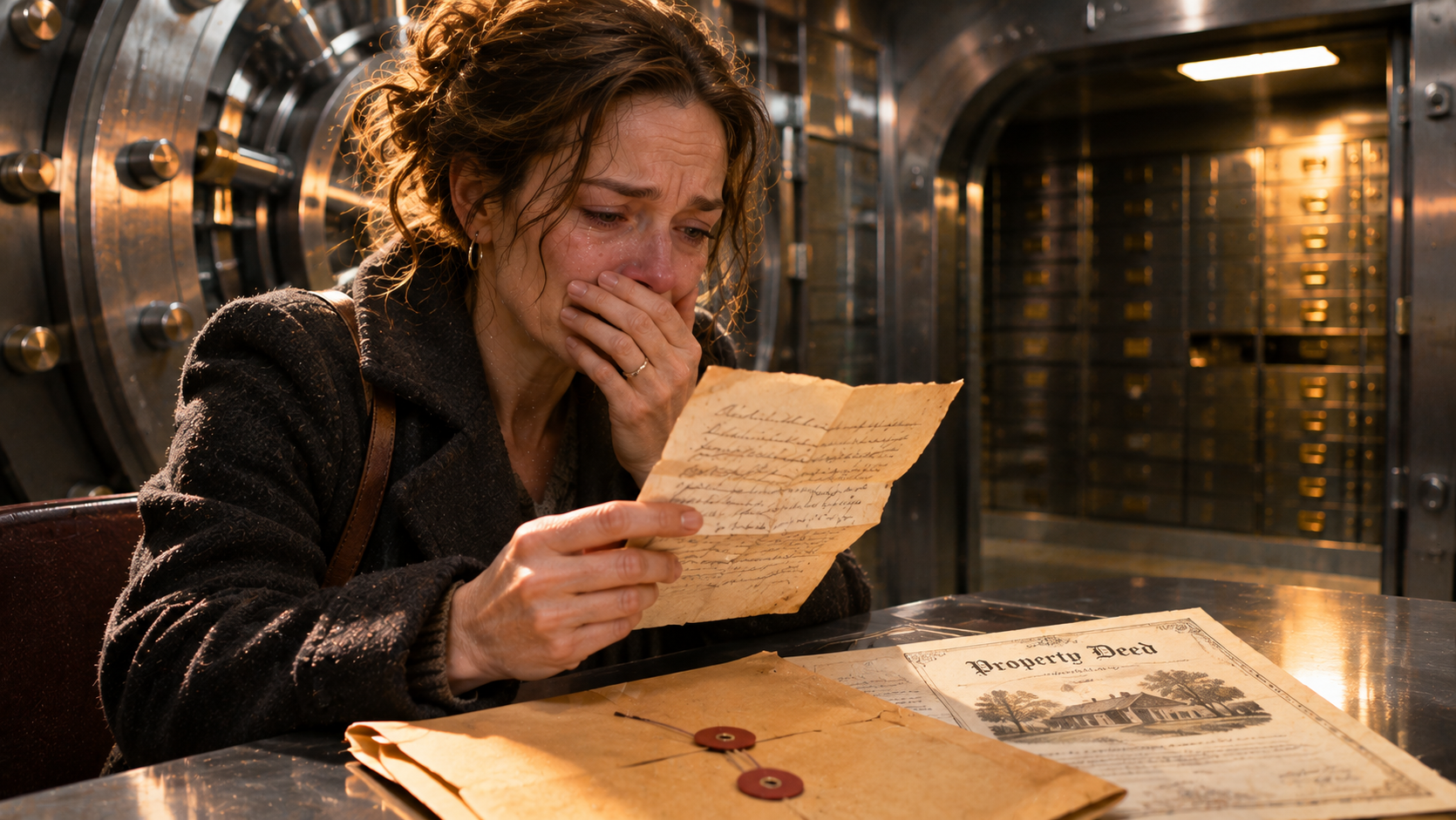
But there was more. Beneath the deed was a second document—a loan agreement. Carla had borrowed $45,000 from Mom two years ago, promising to pay it back with interest. The signature was Carla’s. And according to the document, the loan was secured against… Carla’s own house.
I let out a breath I didn’t know I’d been holding. Carla had been so focused on selling Mom’s house that she’d forgotten about her own debt. And now, thanks to Mom’s careful planning, I had the leverage I needed.
The Confrontation at the Lawyer’s Office
The next day, I walked into the lawyer’s office with a folder under my arm. Carla was already there, sipping an iced coffee and tapping away on her phone. Dean sat across from her, looking uncomfortable. The lawyer, a gray-haired man named Mr. Prescott, shuffled papers on his desk.
“Alright,” Carla said, not looking up. “Let’s get this over with. I’ve got a realtor coming at two.”
“There won’t be a realtor,” I said calmly.
Carla’s head snapped up. “Excuse me?”
I placed the deed on the table. “The house isn’t part of Mom’s estate. She transferred ownership to me three years ago. It’s legally mine.”
Silence. Dean’s mouth fell open. Carla’s face went through a series of emotions—confusion, disbelief, and then pure, unadulterated rage.
“That’s impossible,” she spat. “Mom would never—”
“She did.” I slid the notarized letter across the table. “She knew you’d try to sell it. So she made sure you couldn’t.”
Carla snatched the letter and read it, her hands shaking. When she finished, she crumpled it into a ball. “This is a forgery. You forged this.”
“It’s notarized,” Mr. Prescott said quietly, examining the document. “And the deed is filed with the county. It’s legitimate.”
Carla turned to Dean. “Say something!”
Dean looked at me, then at the deed, then back at Carla. “I think… I think Mom knew what she was doing.”
That’s when I pulled out the loan agreement. “Speaking of what Mom knew,” I said, “you still owe her $45,000. And since the loan was secured against your house, I’m now the lienholder. You can either pay me back in full, or I can foreclose.”
Carla’s face went pale. “You wouldn’t.”
“Try me.”
She stared at me for a long moment, and I saw something I’d never seen before: fear. Real, genuine fear. Because for the first time in our lives, I had the upper hand. And she knew it.
The House on Maple Street
That was six months ago. Carla eventually refinanced her house and paid back the loan—with interest, as Mom had specified. She hasn’t spoken to me since, which suits me fine. Dean and I are closer than ever; he confessed that he’d always known Carla was manipulative but had been too afraid to stand up to her.
I kept the house on Maple Street. I couldn’t bring myself to sell it. Instead, I moved in, repainted the kitchen the pale yellow Mom always wanted, and planted roses in the backyard. Every spring, when they bloom, I think of her sitting on the porch, watching the birds, knowing she’d protected me in the only way she could.
Sometimes I wonder if Carla ever thinks about what she lost—not the house, but the relationship. I wonder if she regrets the years she spent scheming instead of loving. But then I remember Mom’s letter, and I realize it doesn’t matter. Mom saw me. She knew what I’d sacrificed. And in the end, she made sure I knew it too.
The house on Maple Street is mine now. But really, it’s still hers. It always will be.
Recommended Stories
I Found a Locked Suitcase in My Late Aunt’s Attic—Inside Was a Photo of My Mother with a Man I’d Never Seen, and a Name That Changed Everything
A locked suitcase in my late aunt's attic held a photo of my mother with a stranger—and a name that...
My Aunt Gave Me a ‘Worthless’ Painting for My Wedding—Then an Art Expert Offered Me $100,000 Because of a Hidden Signature
Aunt Carol gave me a 'worthless' painting at my wedding—then an expert found a hidden signature worth $100,000. What happened...

My Father Promised to Pay for My College If I Maintained a 4.0—Then He Withdrew the Money and Took a Cruise, Saying ‘You’re an Adult Now, Figure It Out’
He promised to pay for college if I kept a 4.0. I did. Then he took a cruise and said,...