I Found a Locked Suitcase in My Late Aunt’s Attic—Inside Was a Photo of My Mother with a Man I’d Never Seen, and a Name That Changed Everything
The Attic That Held More Than Dust
When my Aunt Sylvia passed away last March, she left me her creaky Victorian house in Portland, Oregon—and a lifetime of clutter. I was thirty-four, a high school history teacher with a modest savings account and a crumbling marriage. The last thing I needed was a three-story money pit. But Sylvia had been more of a mother to me than my own mother, who died when I was twelve. So I rolled up my sleeves and started sorting through decades of hoarded memories.
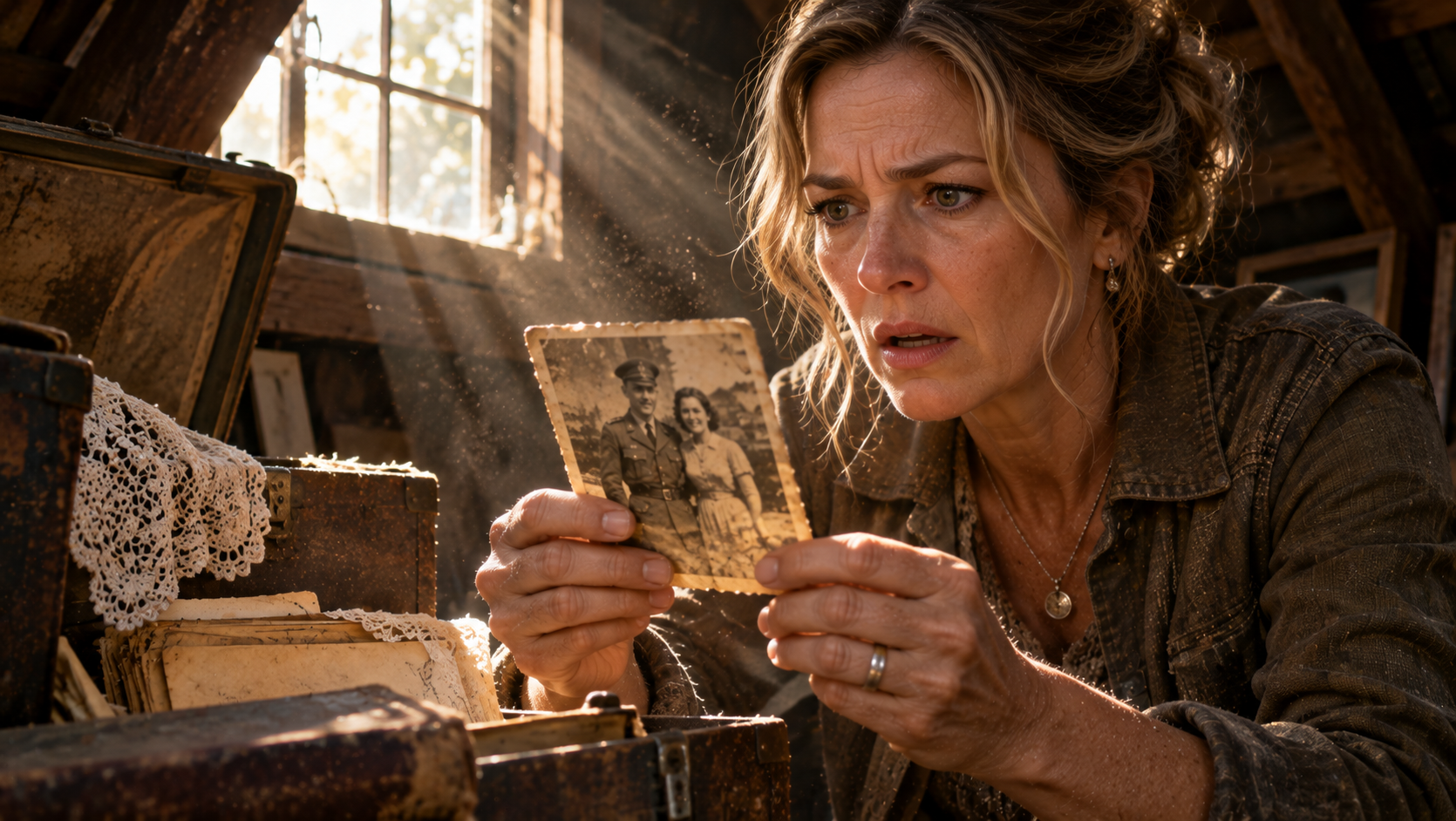
It was on the third day, in the stifling attic, that I found it: a battered leather suitcase tucked behind a stack of mildewed National Geographics. It was locked, but the brass clasp gave way with a little persuasion from a screwdriver. Inside, beneath a layer of yellowed silk scarves, lay a single black-and-white photograph. My mother, young and laughing, her head resting on the shoulder of a man I had never seen. He was tall, with kind eyes and a crooked smile. On the back, in my aunt’s neat handwriting: “Elena and David, June 1972. The only happy day.”
David. A name that meant nothing to me. My mother had never mentioned a David. My father—the stern, distant man who raised me—was named Richard. I stared at the photo, my heart hammering. Who was this man? And why had Sylvia kept him hidden for fifty years?
The Name on the Birth Certificate
I spent the next week in a fog. I called my older brother, Mark, who lived in Seattle. He was as clueless as I was. “Mom had a life before Dad,” he said. “But a secret lover? That’s not the woman I remember.” I hired a private investigator, a no-nonsense woman named Rosa, who traced the name “David” through old city records. Two days later, she called me, her voice unusually gentle. “I found a David Chen who lived in Portland in the early seventies. He was a medical student at OHSU. He died in a car accident in 1973.”
My mother had been pregnant with me in 1973. I did the math, my stomach dropping. I was born in November of that year. Richard and Elena married in August. The timeline was suspiciously tight. I ordered a copy of my birth certificate, something I’d never thought to look at before. When it arrived, I saw it: under “Father,” the name “Richard Hayes” was typed. But in the margin, in a different hand, someone had written a single word: “Amended.”
I felt the floor tilt. I called the Oregon Health Authority and after three weeks of paperwork and a lot of pleading, I got the original record. The father listed was David Chen. Richard had adopted me. My entire life was a lie.
The Aunt Who Knew Too Much
Sylvia had been my mother’s older sister. She never married, never had children. She was the one who held my hand at Mom’s funeral, who paid for my college when Richard refused. Now I understood why she’d always looked at me with a strange, sad intensity. She knew.
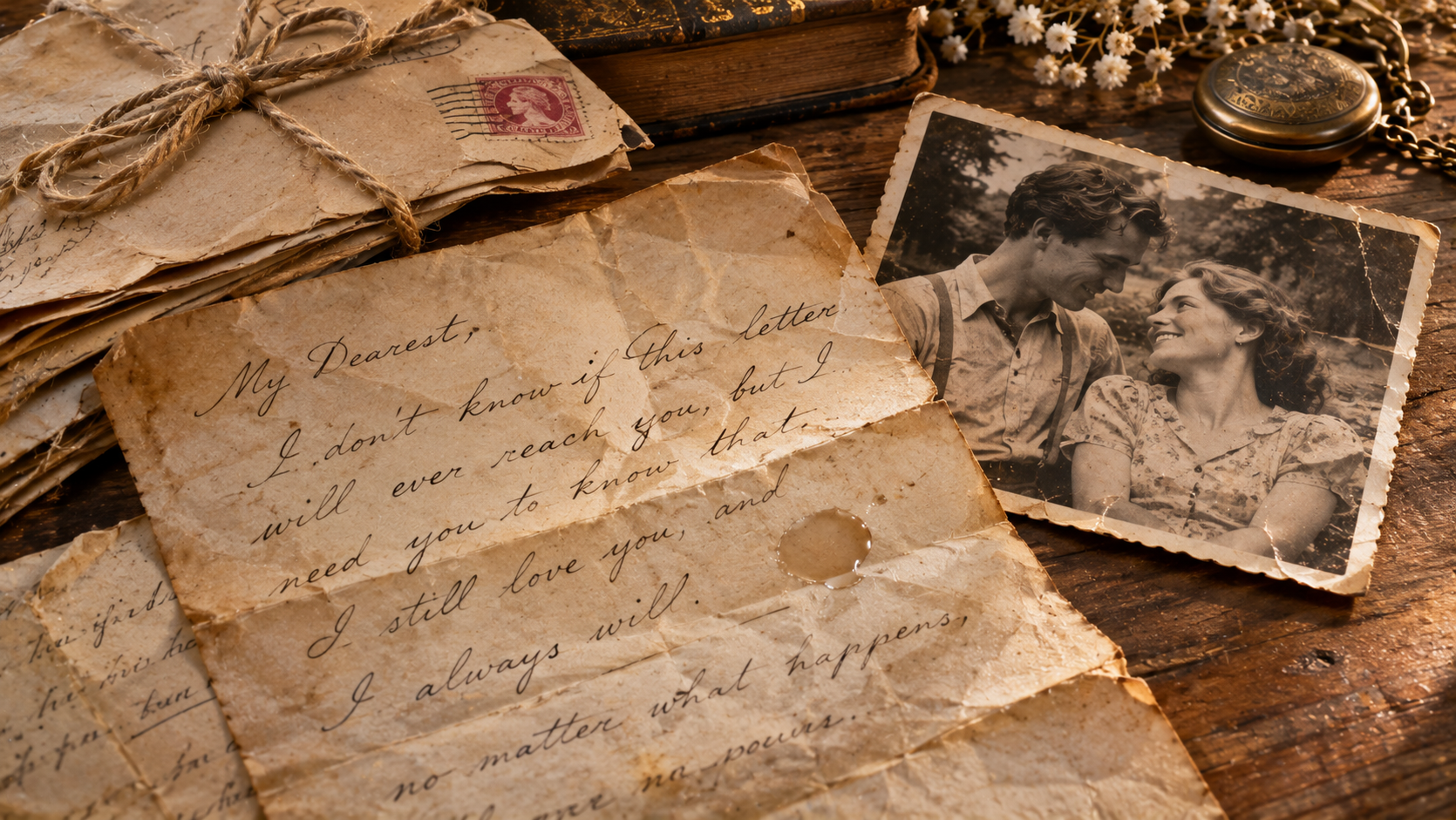
I went back to the attic, searching for more. In a shoebox labeled “Tax Returns 1985-1990,” I found a bundle of letters tied with twine. They were from David Chen to my mother, written during her pregnancy. “Elena,” one read, “I know you’re scared. But we can raise this baby together. My parents will come around. Please don’t marry Richard just because your family is pressuring you.”
The letters painted a picture of a young woman trapped by a conservative family and a man—Richard—who offered security but no love. My mother had chosen stability over passion. And Sylvia, ever loyal, had kept the secret to protect her sister’s reputation and my own legitimacy.
The Brother Who Wasn’t
I confronted Mark with what I’d found. He went pale, then angry. “You’re digging up dirt that doesn’t matter,” he snapped. “Dad was our father. He raised us. Who cares about some dead guy?” But his voice shook. I pushed harder. “Mark, you were born in 1970. You’re three years older than me. You would have been old enough to remember something.” He hung up on me.
A week later, he showed up at my door, his eyes red. “I remember,” he whispered. “I remember Mom crying when she got a phone call about David’s accident. I was four. I didn’t understand. But I remember Dad—Richard—yelling at her, saying ‘That chapter is closed.’” He paused. “I think Richard knew. He knew you weren’t his.”
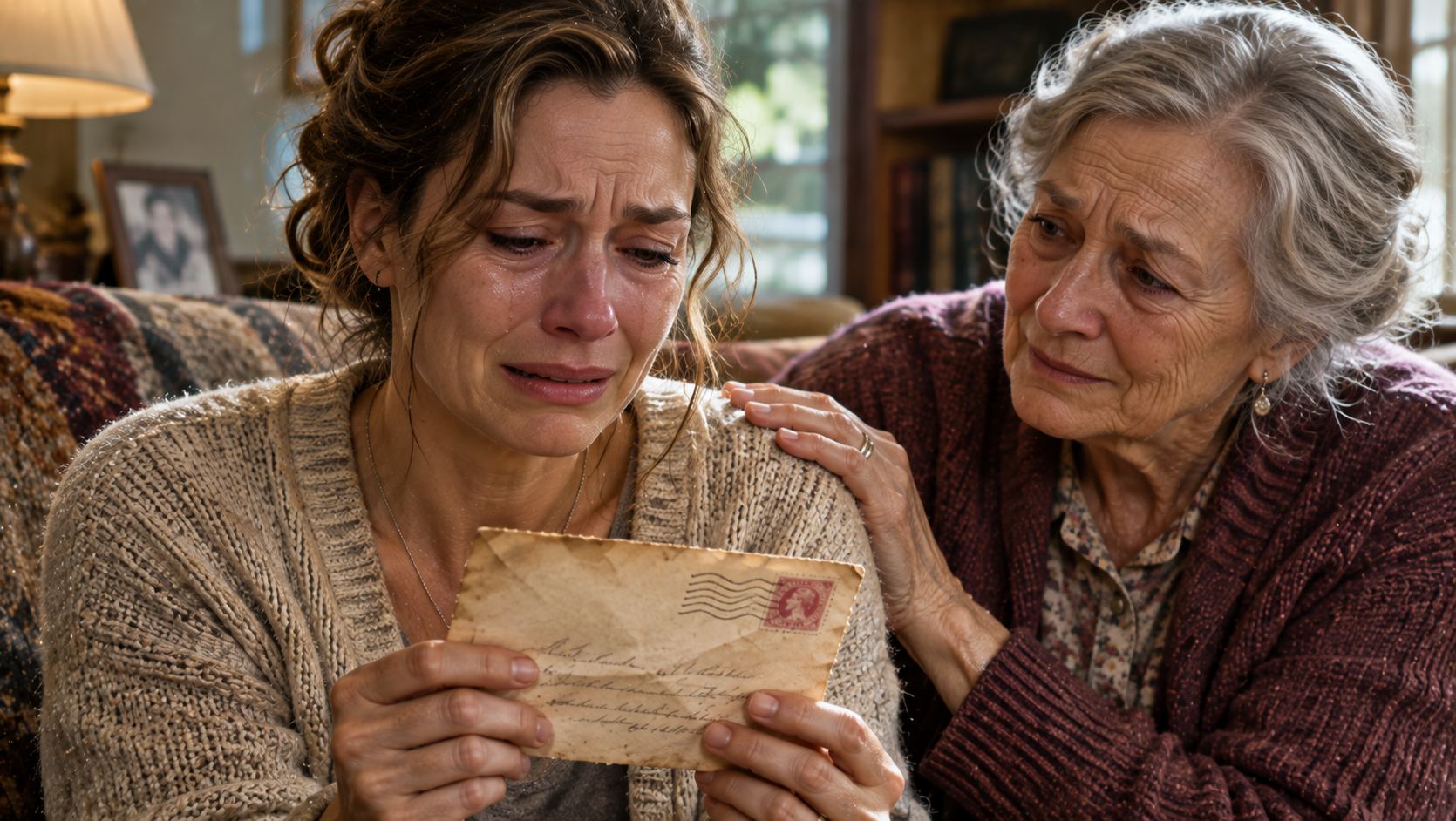
My brother had been carrying that memory for forty years. He’d buried it so deep he’d almost convinced himself it wasn’t real. Now we sat in my cluttered living room, two orphans of a different kind, the ground shifting beneath us.
The Will That Spoke from the Grave
I decided to track down David Chen’s family. Rosa found his younger sister, Linda, living in San Francisco. I wrote her a letter, explaining who I was. Two weeks later, my phone rang. Linda’s voice was warm, trembling. “I always wondered what happened to Elena’s baby,” she said. “David never stopped loving her. He was on his way to see her when he crashed.”
Linda invited me to visit. She showed me photo albums filled with pictures of David—playing guitar, hiking, laughing. In one, he wore a silver ring with a small jade stone. “He wore it every day,” Linda said. “We never found it after the accident.”
Then she handed me an envelope. “This was in David’s apartment. It’s addressed to your mother. We never opened it.” I unfolded the letter. It was a will, handwritten, dated two days before he died. In it, David left everything to “my child, who is not yet born.” He had saved $15,000 from his medical school scholarships. It wasn’t a fortune, but it was a future. He wanted to be a father.
My mother never claimed it. Richard must have made sure of that.
The Reckoning
I confronted Richard at his assisted living facility in Sacramento. He was eighty-two, frail, but his eyes were still sharp. I laid the photo and the birth certificate on his tray table. He stared at them for a long moment, then sighed. “I loved your mother,” he said. “She was pregnant when we met. David was dead. I gave you a name, a home. I saved you from shame.”
“You stole my inheritance,” I said, my voice shaking. “You stole my father.”
He looked away. “I made a choice. Maybe it was wrong. But I don’t regret it.”
I walked out. I didn’t cry. I felt something colder—a clean, hard anger. I contacted a lawyer. The statute of limitations on fraud had long passed, but the will was a different matter. David’s estate had never been settled. The $15,000, with interest and the value of the ring—which Linda found in a pawn shop decades later—amounted to about $40,000. It wasn’t life-changing money, but it was mine.
I donated half to a scholarship fund for medical students at OHSU in David Chen’s name. The rest I used to fix the roof of Sylvia’s house. I moved in, finally. The house felt different now—not a burden, but a sanctuary. Sylvia had given me more than a house. She’d given me a truth.
The Name I Carry
Last month, I legally added “Chen” to my name. I’m now Elena Hayes Chen. It’s a small thing, but it matters. My mother made a choice born of fear, and my aunt made a choice born of loyalty. My father—Richard—made a choice born of pride. And David Chen, the man I never met, made a choice born of love. I carry all of them with me.
The photo of my mother and David sits on my mantel now, next to a picture of me and my own daughter, Lily. She’s six, with her grandfather’s crooked smile. I tell her stories about a brave man named David who loved her grandmother. And I tell her that secrets can rot a family, but truth—even late—can heal it.
Sometimes, when the sun hits the attic window just right, I swear I can hear Sylvia’s voice: “You found it, didn’t you?” Yes, Aunt Sylvia. I found it. And I finally know who I am.
Recommended Stories
I Found a Locked Diary in My Late Father’s Attic—It Revealed He Had a Second Family, and They Were Coming to the Reading of the Will
A locked diary in the attic reveals my father's secret second family—and they're coming to the will reading. What happens...
My Mother-in-Law Gave Me a ‘Fake’ Family Heirloom—20 Years Later, a Museum Offered Me $250,000 for It
She called it a fake. Twenty years later, a museum offered $250,000—and I discovered the heirloom was stolen, the secret...
My Stepmother Sold My Childhood Home Without Telling Me—Then I Found a Hidden Safe in the Basement That Contained My Mother’s Will
My stepmother sold my childhood home without telling me—then I found a hidden safe in the basement that contained my...