I Found a Locked Diary in My Late Father’s Attic—It Revealed He Had a Second Family, and They Were Coming to the Reading of the Will
My father, Richard, was a man of routine. Every morning, he had the same breakfast—two eggs, toast, black coffee. He worked as a civil engineer for the county, wore the same style of khaki pants, and never missed a Sunday dinner with my mom, my sister, and me. He died at seventy-two, suddenly, from a heart attack. We were devastated. But nothing prepared us for the moment we found his diary.
It was three weeks after the funeral. My sister, Karen, and I were cleaning out the attic of our childhood home in Naperville, Illinois. The house was a split-level ranch, packed with decades of memories. We were sorting through boxes of old tax returns and photo albums when I spotted a leather-bound book tucked behind a loose panel in the wall. It was locked. A small brass key hung from a string nearby, as if someone had intended to hide it but then forgot. I opened it. The first page was dated January 3, 1985—two years before I was born.
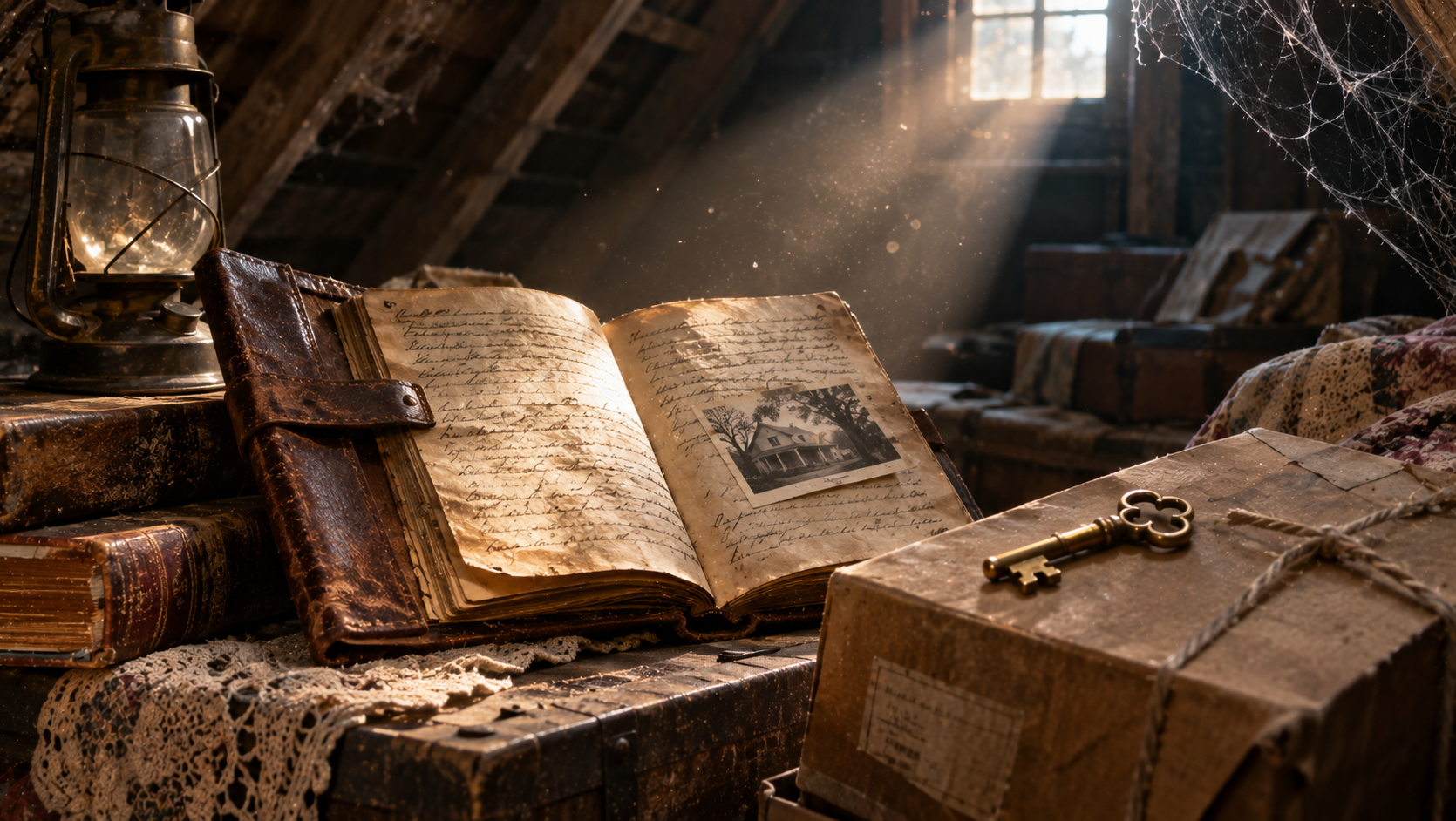
I expected to find mundane entries about work or the weather. Instead, I found a detailed account of a second life. My father had another family—a woman named Elena and two children, a boy and a girl, living in a small town about forty miles away. He called them his “other home.” The entries were filled with guilt and love. He wrote about his son’s Little League games and his daughter’s piano recitals. He wrote about Elena’s kindness and how he felt torn between two worlds. I read the entire diary in one sitting, my hands trembling. Karen was downstairs making coffee; I didn’t know how to tell her.
The Second Family Speaks
Before I could process it, the phone rang. It was the lawyer handling my father’s estate. He asked if we could come to his office the next day—there was a matter regarding the will. I asked what matter. He hesitated, then said, “Your father left specific instructions regarding a second beneficiary.” My heart sank. I hadn’t told anyone about the diary yet. How could the lawyer know?
The next morning, Karen and I sat in the lawyer’s office, a sterile room with beige walls and a mahogany desk. The lawyer, Mr. Thompson, explained that my father had set up a trust for a woman named Elena Morales and her two children, Marcus and Sofia. They were to receive a portion of his estate. I felt like the floor had opened up. Karen looked at me, confused. “Who are they?” she whispered. I pulled the diary from my bag and slid it across the table. She read the first page, then looked up, her eyes wide. “What is this?”
Mr. Thompson continued, “They will be at the reading of the will on Friday. Your father requested that all family members be present.” I didn’t know what to say. My father had been a quiet, unassuming man. He never seemed like someone who could lead a double life. But the diary was proof. And now, we were about to meet the strangers who shared our blood.
The Diary’s Hidden Truth
That night, I couldn’t sleep. I reread the diary more carefully. The entries revealed that my father had met Elena in 1983, before he married my mother. They had a brief relationship, but he chose my mother because she was “the safe choice.” Elena never told him she was pregnant. She raised Marcus and Sofia alone, never asking for child support. My father found out years later, and he began secretly supporting them, visiting them on weekends when he told us he was on business trips. He wrote about the guilt of lying to my mother, who died five years ago from cancer. He never told her.
I felt a mix of anger and pity. My father had been living a lie for over thirty years. But he had also provided for these children, who were innocent in all of this. I wondered what they were like. Were they like me? Did they know about us?
On Friday, Karen and I drove to the lawyer’s office. We sat in the same beige room, but this time, there were three extra chairs. At precisely ten o’clock, the door opened, and a woman in her late fifties walked in, followed by a man and a woman in their thirties. Elena was petite, with graying hair and kind eyes. Marcus was tall and broad-shouldered, with my father’s nose. Sofia was slender, with a warm smile. They looked nervous. I felt a strange sense of recognition.
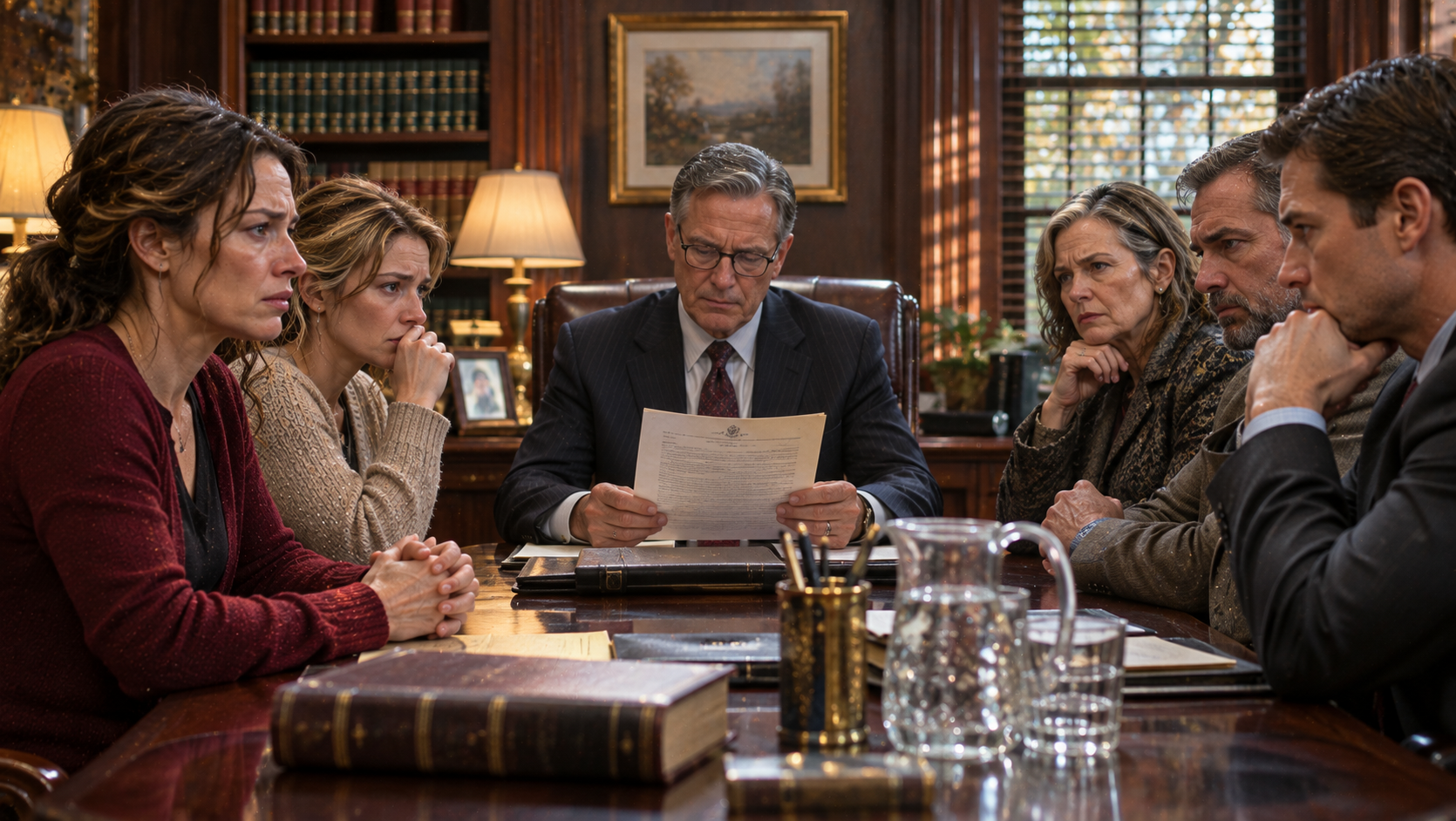
Mr. Thompson read the will. My father had divided his estate—a house worth $300,000, savings of $200,000, and a small investment portfolio—into four equal parts: me, Karen, Marcus, and Sofia. Elena received nothing, as per her request. He also left a letter for each of us. In mine, he apologized for the secrecy and asked me to understand. He wrote, “I loved your mother, but I also loved Elena. I made mistakes, but I tried to do right by everyone. Please don’t hate me.”
The reading ended in silence. Then Sofia spoke. “We didn’t know about you until after he died,” she said. “He told us you existed, but he never let us contact you. He said it would complicate things.” Marcus added, “He was a good father to us. We’re sorry for your loss.” I didn’t know what to say. Karen was crying. I felt a tear roll down my cheek.
The Choice That Changed Everything
In the weeks that followed, we had to decide what to do with the house. My father had left it to all four of us. Karen and I wanted to sell it and split the proceeds, but Marcus and Sofia wanted to keep it as a rental property. We argued. There was tension. But then I remembered the diary—how my father had tried to balance two lives. I suggested we meet for dinner, just the four of us, without lawyers.
We met at a small Italian restaurant in Naperville. It was awkward at first. But as we talked, we realized we had more in common than we thought. Marcus was an engineer like our father. Sofia was a teacher. They had grown up without a father’s presence, but they had a strong mother. We shared stories. We laughed. We cried. By the end of the night, we had agreed to keep the house and rent it out, splitting the income equally. It wasn’t about the money anymore. It was about honoring our father’s complicated legacy.
I still miss my dad. But I’ve come to understand that people are not black and white. He made mistakes, but he also tried to make things right. And in the end, he gave me something unexpected: two more siblings. We’re not close yet, but we’re building something. And that’s more than I ever expected.
The Legacy of Secrets
Looking back, I realize that the diary was a gift. It revealed the truth, but it also gave us a chance to heal. My father’s secret didn’t destroy us; it forced us to confront our own assumptions about family. We are all flawed. We all make choices that hurt others. But we also have the capacity to forgive. That’s the real inheritance.
Recommended Stories
My Brother Stole My Identity to Buy a House—Then the Real Owner Showed Up at My Door
A stranger knocked on my door with a deed to my house—and my name on it. That's when I realized...
My Father’s Dying Words Were ‘Check the Birdhouse’—What I Found Inside Was a 50-Year-Old Secret That Shattered Our Family
My father's dying words sent me to a weathered birdhouse in the backyard. Inside, a 50-year-old secret that would tear...
My Brother Secretly Recorded Our Family Arguments for Years—Then He Played Them at Thanksgiving to ‘Prove’ I Was the Toxic One
He played years of secret recordings at Thanksgiving to prove I was toxic. Then a single clip exposed his own...