My Mother-in-Law Gave Me a ‘Fake’ Family Heirloom—20 Years Later, a Museum Offered Me $250,000 for It
The Gift That Felt Like a Punishment
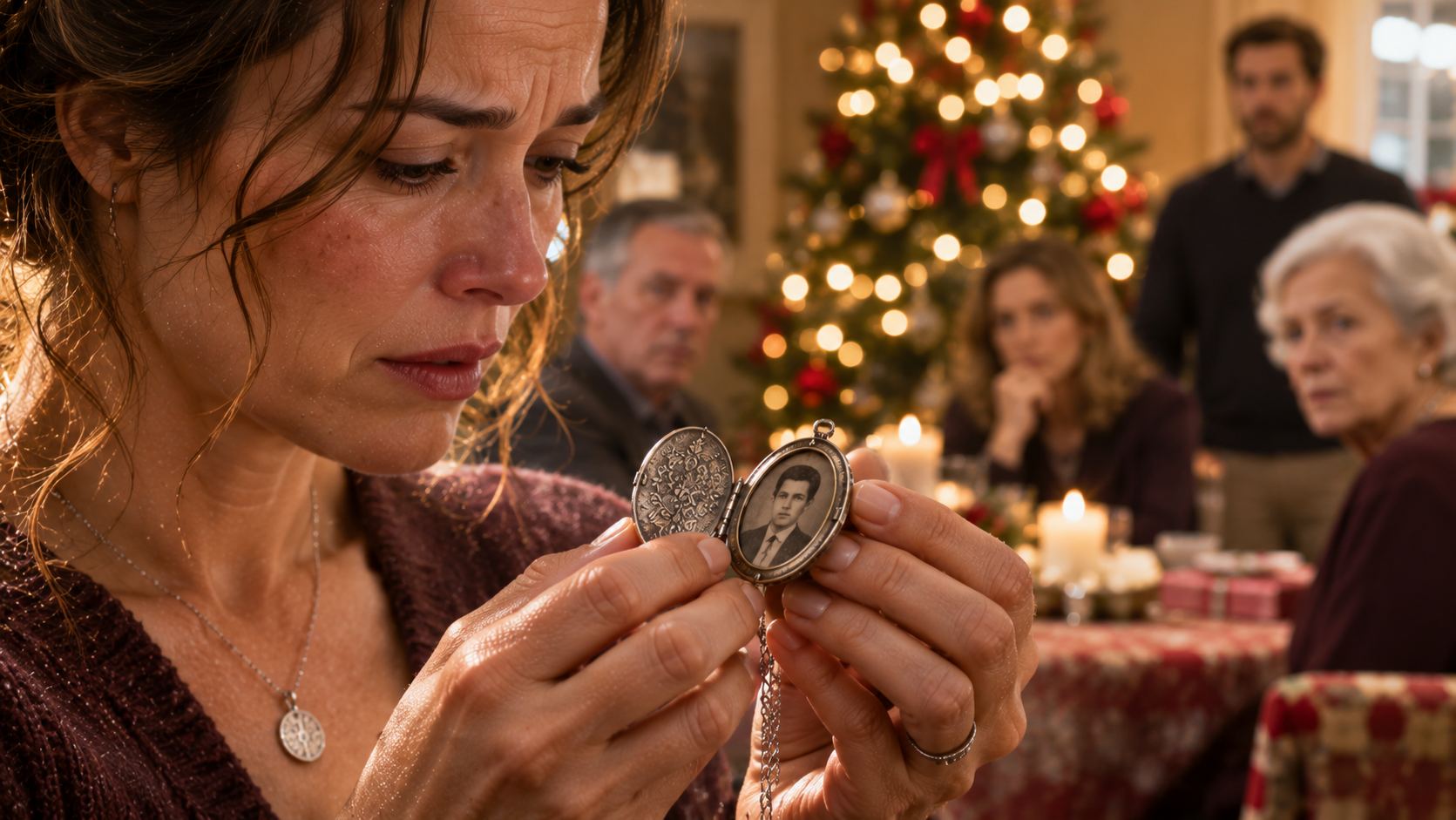
I still remember the exact moment my mother-in-law, Eleanor, handed me the small velvet box. It was Christmas Eve 2003, and the whole family was gathered in her living room in Savannah, Georgia. She smiled tightly as I opened it, revealing a tarnished silver locket on a thin chain. “It’s a family heirloom,” she said, her voice dripping with forced politeness. “But it’s just a replica, of course. The real one was lost decades ago. I thought you might like something to remember us by.”
I was twenty-six, newly married to her son, David, and desperate to earn her approval. Eleanor had never hidden her disappointment that David chose me—a graphic designer from a modest background—over the debutante she’d groomed him for. The locket felt like a consolation prize, a polite way of saying I wasn’t worthy of the real thing. I thanked her and wore it anyway, mostly to keep the peace.
For two decades, that locket sat in my jewelry box, rarely worn. It was a symbol of everything I’d never be in Eleanor’s eyes. Until last month, when a museum curator told me it was worth a quarter of a million dollars—and that Eleanor had known the truth all along.
The Curator’s Unexpected Call
I’d almost forgotten the locket existed until my daughter, Chloe, found it while helping me declutter. She was home from college and insisted we take it to an antique appraiser. “Mom, this looks old. Like, really old,” she said, turning it over in her palm. I laughed it off. “Your grandmother always said it was a fake.”
But the appraiser’s eyes went wide. He called in a specialist from the Telfair Museums in Savannah. Two weeks later, I was sitting across from Dr. Miriam Hayes, a curator of decorative arts, who explained that the locket wasn’t a replica at all. It was an original piece by a renowned 18th-century silversmith, commissioned by a wealthy Savannah family in 1792. The engravings inside, which I’d never bothered to examine closely, contained a coded message and a miniature portrait of a woman named Eliza. Dr. Hayes estimated its value at $250,000—and its historical significance was even greater.
I felt the floor tilt beneath me. Eleanor had given me a priceless artifact and called it a fake. Why? The answer, it turned out, was buried in a family scandal that had been hushed up for generations.
The Secret Behind the Silver
Dr. Hayes explained that the locket had been commissioned by a wealthy merchant named Charles Whitfield for his daughter, Eliza, as a wedding gift. But Eliza never married the man her father chose. Instead, she eloped with a penniless artist, and the locket was supposedly lost when the family disowned her. The coded message inside, when deciphered, was a love note from the artist—and a confession that he had stolen the locket from her father’s estate as a final act of defiance.
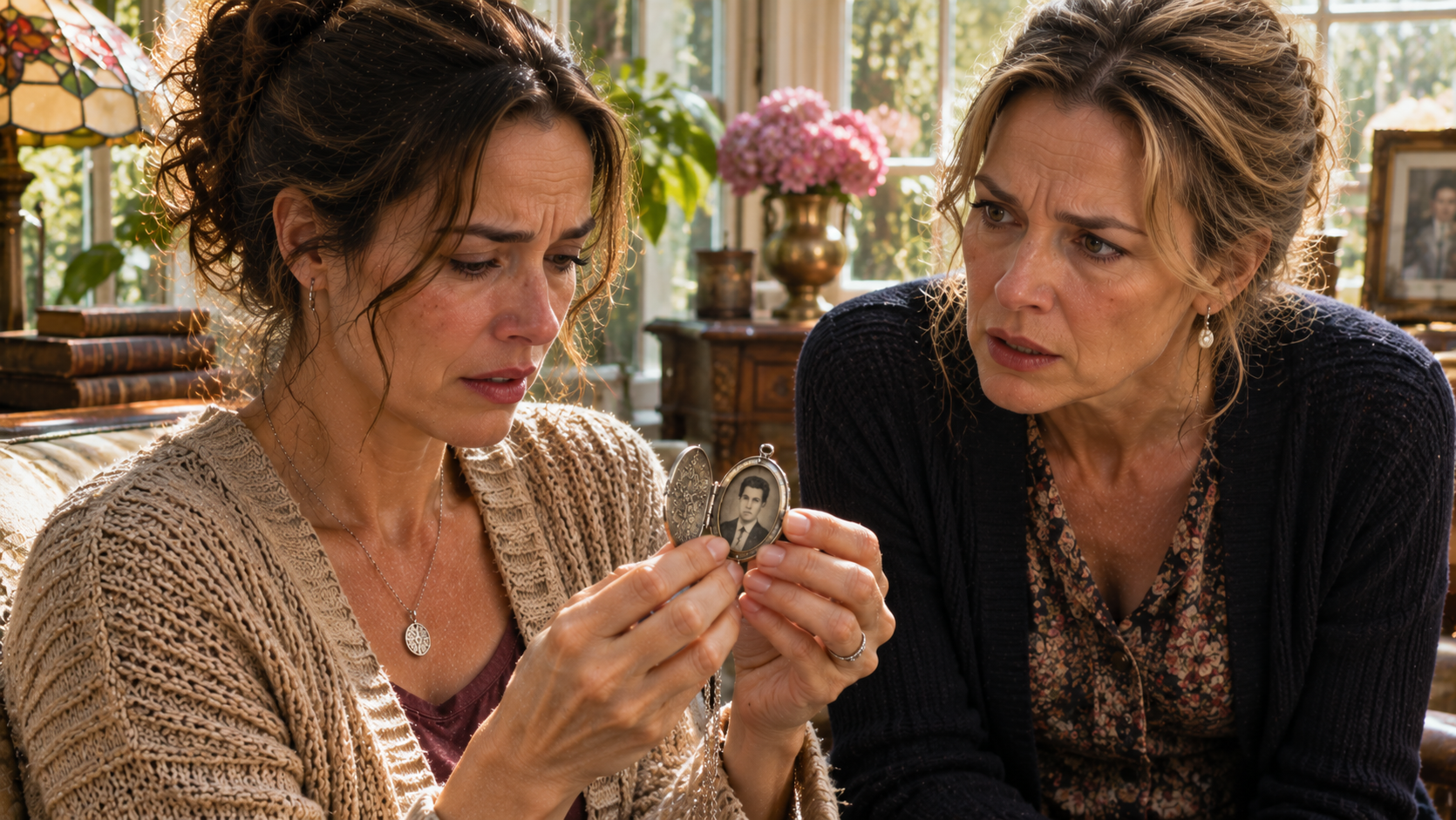
But how did Eleanor end up with it? I confronted her in her sunroom, the locket resting on the table between us. She paled when she saw it. “Where did you get that?” she whispered. “You gave it to me,” I said. “Twenty years ago. You said it was a fake.”
Eleanor’s hands trembled as she finally told the truth. The locket had been in her family for generations, passed down from her great-grandmother, who was a direct descendant of Eliza. But the family had always believed it was a replica because the original was supposedly stolen. “My grandmother told me it was a copy made in the 1920s,” Eleanor said. “She was ashamed of the scandal. She never had it appraised.”
But I didn’t believe her. Not entirely. Because when I asked why she’d never had it checked, she looked away. “I didn’t want to know,” she admitted. “If it was real, it would mean my grandmother lied to all of us. And I couldn’t bear that.”
The Real Reason She Gave It Away
That night, I couldn’t sleep. Something still didn’t add up. Eleanor had given me the locket when she thought it was worthless—but she’d also given it to the daughter-in-law she never wanted. Why not keep it in the family? Why not give it to David’s sister, whom she adored?
The answer came from an unexpected source: my father-in-law, George. He called me the next morning, his voice heavy. “Eleanor told me what happened,” he said. “I think you deserve the whole story.” He explained that Eleanor’s grandmother had indeed been told the locket was a fake, but not because of the scandal. It was because her own mother—Eleanor’s great-great-grandmother—had stolen it from a cousin who had inherited it legitimately. The family had been covering up the theft for over a century.
Eleanor had known this. She’d discovered the truth as a young woman but buried it, terrified of the shame. When she gave me the locket, she was offloading a secret she couldn’t bear to keep. “She thought if it was a fake, it didn’t matter,” George said. “But it did. It always did.”
I sat in silence, the locket cold in my hand. Eleanor hadn’t just given me a fake heirloom. She’d given me the weight of her family’s darkest secret—and then spent twenty years pretending it was nothing.
What I Decided to Do
The museum offered to purchase the locket for $250,000, but I didn’t sell it. Instead, I donated it on long-term loan, with a condition: the exhibit would include the full story, including the theft and the cover-up. Dr. Hayes agreed. The locket went on display last week, with a placard that tells the truth about Eliza, the artist, and the generations of lies that followed.
Eleanor hasn’t spoken to me since. David is torn, but he understands. Chloe told me she’s proud of me. And I finally understand what that locket really was: not a gift, not a punishment, but a test. Eleanor wanted to see if I’d uncover the truth—or if I’d stay silent like everyone else.
I didn’t stay silent. And that, more than any silver or gold, is the real heirloom I’ll pass down to my daughter.
Recommended Stories
At My Wedding, My Father Objected—Then He Handed Me a Photograph That Proved He Was Right
A bride's world shatters when her father objects at the altar—not out of malice, but because he holds a photograph...

At My Mother’s Funeral, My Aunt Announced She Was My Real Mother—Then My ‘Sister’ Handed Me a DNA Test
At my mother's funeral, my aunt dropped a bombshell: she was my real mother. Then my 'sister' handed me a...
My Stepmother Gave Me a Cheap Locket for My Birthday—Years Later, a Jeweler Told Me What Was Inside
A stepmother's 'cheap' birthday gift hid a secret that took 20 years to unfold—and a jeweler's revelation changed everything.