At My Mother’s Funeral, My Aunt Announced She Was My Real Mother—Then My ‘Sister’ Handed Me a DNA Test
The scent of lilies was so thick it made my eyes water. Or maybe it was the fact that I was standing in the receiving line at my mother’s funeral, shaking hands with people whose names I couldn’t remember, while my aunt—my mother’s sister, Diane—kept staring at me with an intensity that made my skin crawl. I thought it was grief. I was wrong.
My mother, Carol, had died three days earlier after a brutal eighteen-month battle with pancreatic cancer. I was thirty-four, an only child, and now officially parentless—my father had passed when I was twelve. I had spent the last year and a half as her primary caregiver, driving her to chemo, managing her medications, and holding her hand through the worst of it. I was exhausted, hollowed out, and utterly unprepared for what was about to happen.
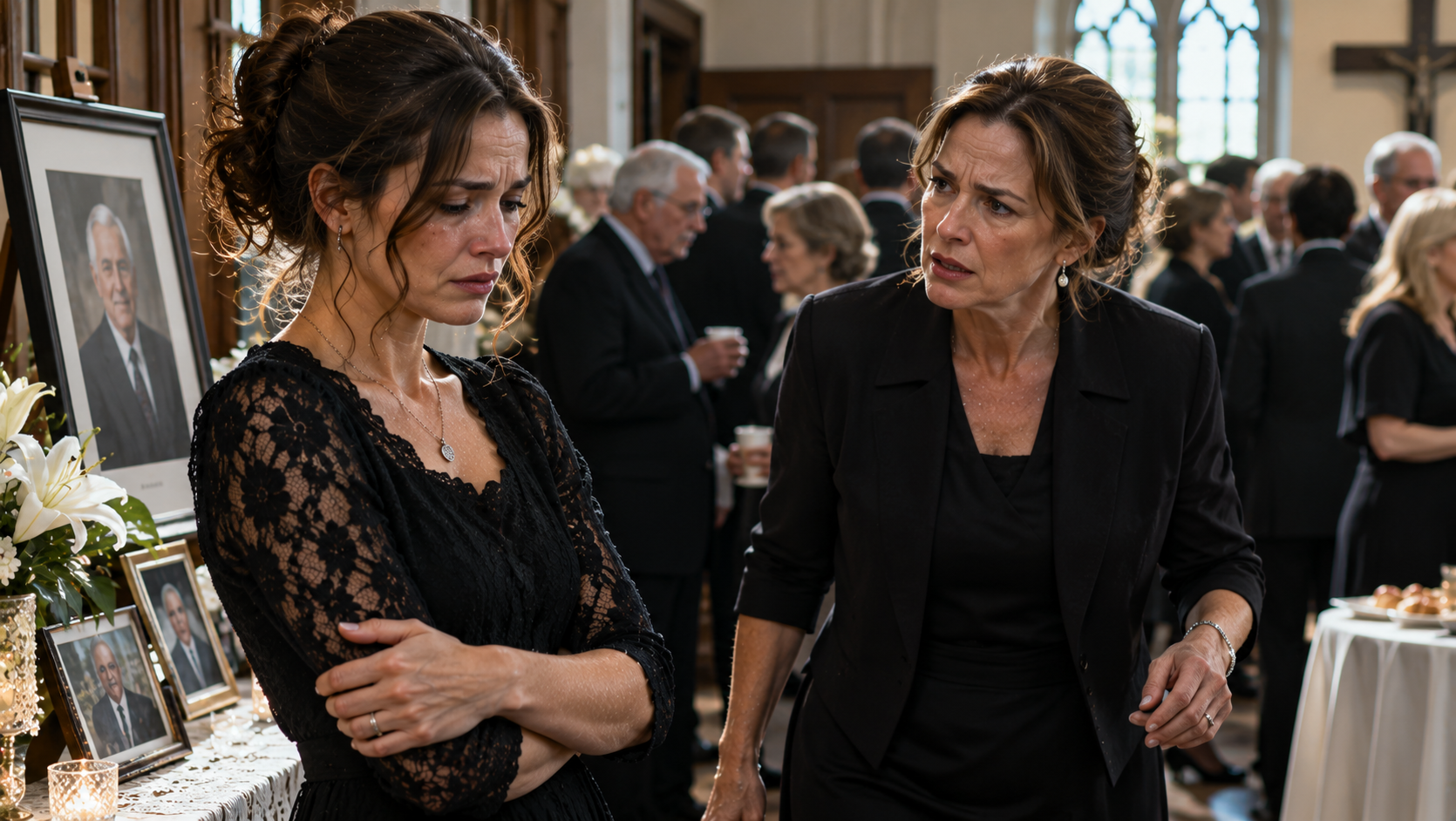
Diane had always been the black sheep of the family—twice divorced, a recovering alcoholic who had disappeared for years at a time. But she had shown up for the funeral, sober and dressed in an expensive black suit that seemed out of place. She had been hovering near me all afternoon, and I assumed she wanted money. That was usually what Diane wanted.
“Rachel,” she said, her voice low and urgent, pulling me aside near the coat rack. “There’s something you need to know. Something I should have told you years ago.”
I tried to pull away. “Diane, not now. Please. I can’t do this today.”
But she gripped my arm with surprising strength. “You need to hear this. Carol wasn’t your mother. I am.”
The words didn’t make sense at first. They hung in the air like a bad joke, and I actually laughed—a short, ugly sound. “What?”
“I gave birth to you,” Diane said, her eyes glistening. “Carol and your father raised you because I couldn’t. I was nineteen, strung out on drugs, and they stepped in. It was supposed to be temporary, but then… it just became permanent.”
I stared at her, my mind racing. This was absurd. My mother—Carol—had been a nurse, a churchgoer, the most stable person I’d ever known. She would never have lied about something like this. “You’re drunk,” I said. “Or you’re trying to get money. I don’t know what this is, but I’m not doing it.”
Before Diane could respond, my cousin Beth appeared at my elbow. Beth was Diane’s daughter—or so I’d always believed. She was two years younger than me, and we had grown up more like sisters than cousins, spending summers together at our grandmother’s house. She was holding a manila envelope.
“Rachel,” Beth said quietly, “I think you should see this.”
She handed me the envelope. Inside was a DNA test report. I scanned it, my eyes catching the key phrases: Biological relationship: Parent-Child. Probability: 99.97%. The names at the top were Diane M. Carter and Rachel A. Thompson. My name.
“I took the test last year,” Beth said, her voice trembling. “Mom told me the truth when she got sober. She said she wanted to make amends, but she was terrified of how you’d react. So I did the test to confirm it. I’m sorry, Rachel. I really am.”
I felt the floor tilt beneath me. Beth—my cousin, my closest friend—was actually my half-sister. Diane was my mother. Carol, the woman I had just buried, was my aunt.
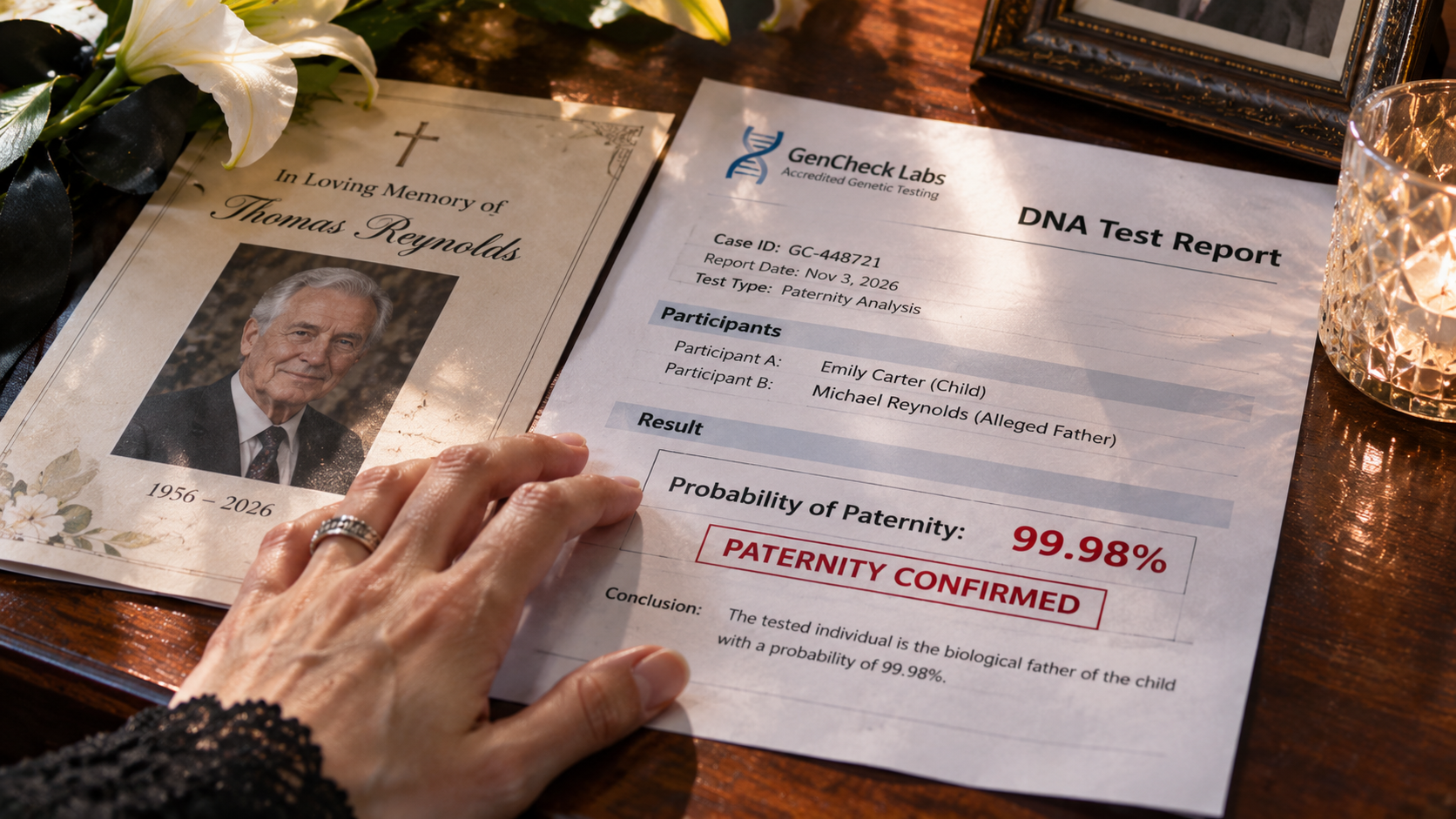
I don’t remember leaving the reception. I remember driving home in a daze, the envelope clutched in my lap. I didn’t sleep that night. I sat on my couch and went through every memory I had of my childhood, looking for clues I had missed. Carol had always been a little distant, a little formal—I had attributed that to her personality. But now I wondered: had she resented me? Had she seen her sister’s face every time she looked at me?
The next morning, I called Diane. She answered on the first ring.
“I need the whole story,” I said. “From the beginning.”
And she told me. She had gotten pregnant at eighteen, dropped out of college, and moved back home. Her parents—my grandparents—were devout Catholics who were horrified. They pressured her to give the baby up for adoption, but Carol, who was twenty-five and married to my father, offered to raise me as their own. It was supposed to be a closed adoption, but Diane had insisted on staying in my life as my aunt. She had struggled with addiction for years, and Carol had used that as leverage, threatening to cut her off if she ever told me the truth.
“I wanted to tell you so many times,” Diane said, crying. “But I was scared. And then your father died, and Carol said it would destroy you. So I stayed quiet. I’m sorry, Rachel. I know that doesn’t fix anything.”
I didn’t know what to feel. Anger at Carol for lying? Anger at Diane for abandoning me? Or grief for the relationship I had lost—and the one I might have gained?
Over the next few weeks, I met with Diane several times. She showed me photographs from her pregnancy, letters Carol had written her, and even a birth certificate with the original details. It was all real. And slowly, tentatively, we began to build something new. It wasn’t easy—there was too much hurt, too much time lost. But Diane was sober, in therapy, and genuinely trying.
Beth and I had a harder time. She had known the truth for a year and hadn’t told me. “I was trying to protect you,” she said. “And I was scared you’d hate me.” We’re still working through it.
But the strangest thing happened at the end of that first month. I found a letter in Carol’s desk—one she had written to me but never sent. It was dated six months before her death. In it, she confessed everything. She wrote about how much she loved me, how grateful she was that Diane had trusted her with me, and how guilty she felt for keeping the secret. She ended with a line I’ll never forget: “I hope one day you can forgive me, and that you’ll find room in your heart for Diane, too. She gave me the greatest gift of my life.”
I sat on my kitchen floor and cried for an hour. Not because I was sad, but because I finally understood. Carol hadn’t been distant because she resented me—she had been distant because she was terrified of losing me. And Diane hadn’t abandoned me—she had given me a better life than she could have provided, then stayed on the periphery, watching over me the only way she knew how.
I still call Diane on Sundays. We’re not mother and daughter yet—maybe we never will be—but we’re something. And that’s enough.
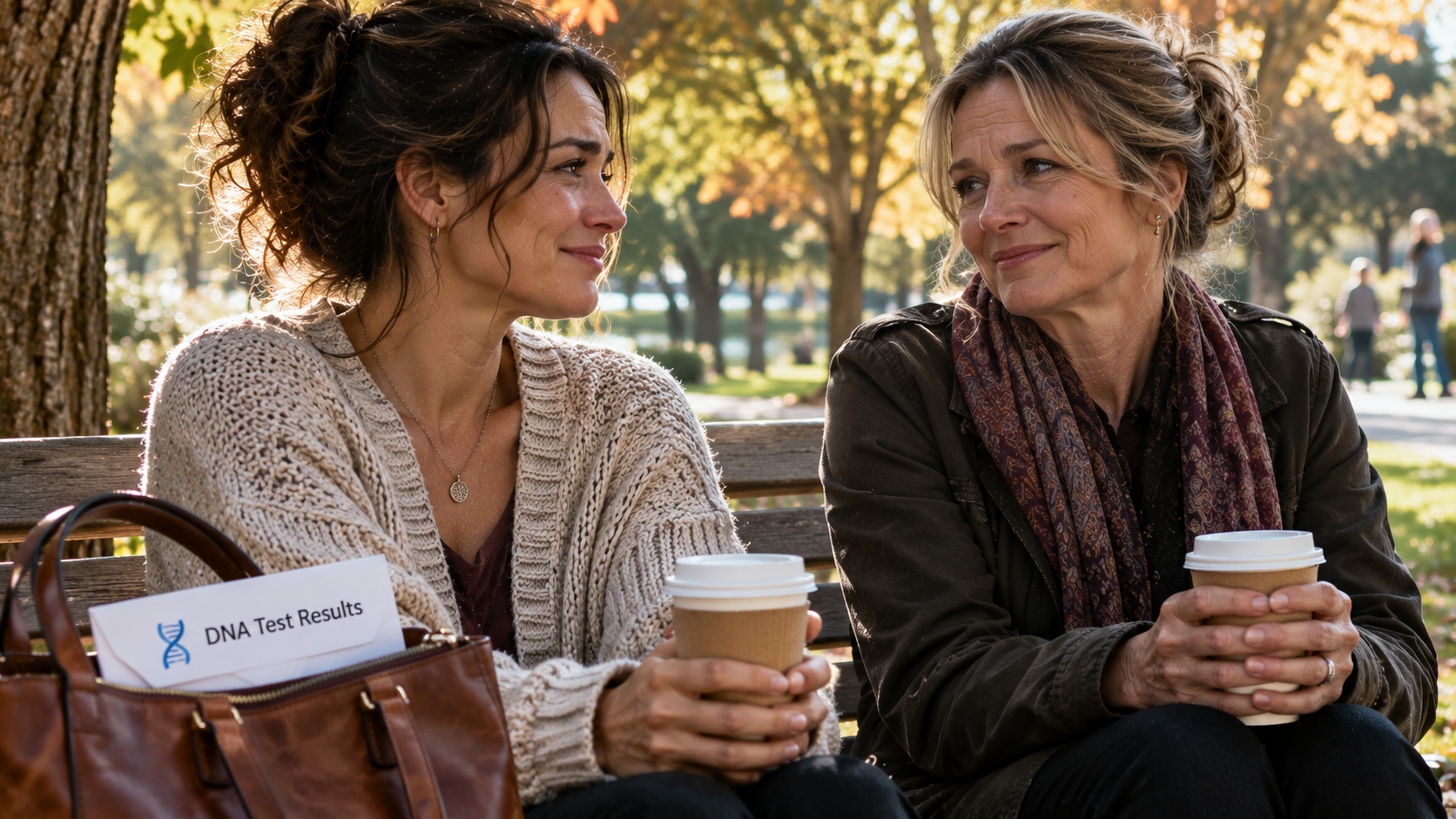
The truth about who we are isn’t always simple. Sometimes it’s buried under decades of silence and fear. But finding it—even at a funeral, even when it shatters everything you thought you knew—can be the beginning of something unexpected.
Recommended Stories
At My Wedding, My Father Objected—Then He Handed Me a Photograph That Proved He Was Right
A bride's world shatters when her father objects at the altar—not out of malice, but because he holds a photograph...
My Husband’s Ex-Wife Moved In with Us—Then I Found Her Diary and Learned the Truth
When my husband's ex-wife moved in, I thought it was charity. Then I found her diary and learned it was...
I Gave Up My Career to Care for My Sick Mom for 12 Years—Then My Brother Found Her Will and Discovered I Was Never in It
I gave up my career to care for my sick mom for 12 years. Then my brother found her will—and...