I Found My Birth Mother After 40 Years—She Slammed the Door in My Face, Then Sent a Letter That Changed Everything
The Door That Closed, Then Opened
I was forty-two years old when I finally found her. Her name was Eleanor, and she lived in a small town in Vermont. I had spent two years and nearly three thousand dollars on search fees, court records, and a private investigator. My adoptive parents had passed away, and I was an only child. I needed to know where I came from. I needed to know why I had been given up.
But when she opened the door and saw my face, her expression didn’t soften. It hardened. She looked at me like I was a ghost. Then she said, “You shouldn’t have come here,” and slammed the door so hard the porch light rattled. I stood there for a full minute, my hand still raised to knock again. I had rehearsed this moment a thousand times. I had imagined tears and apologies. I had never imagined that.
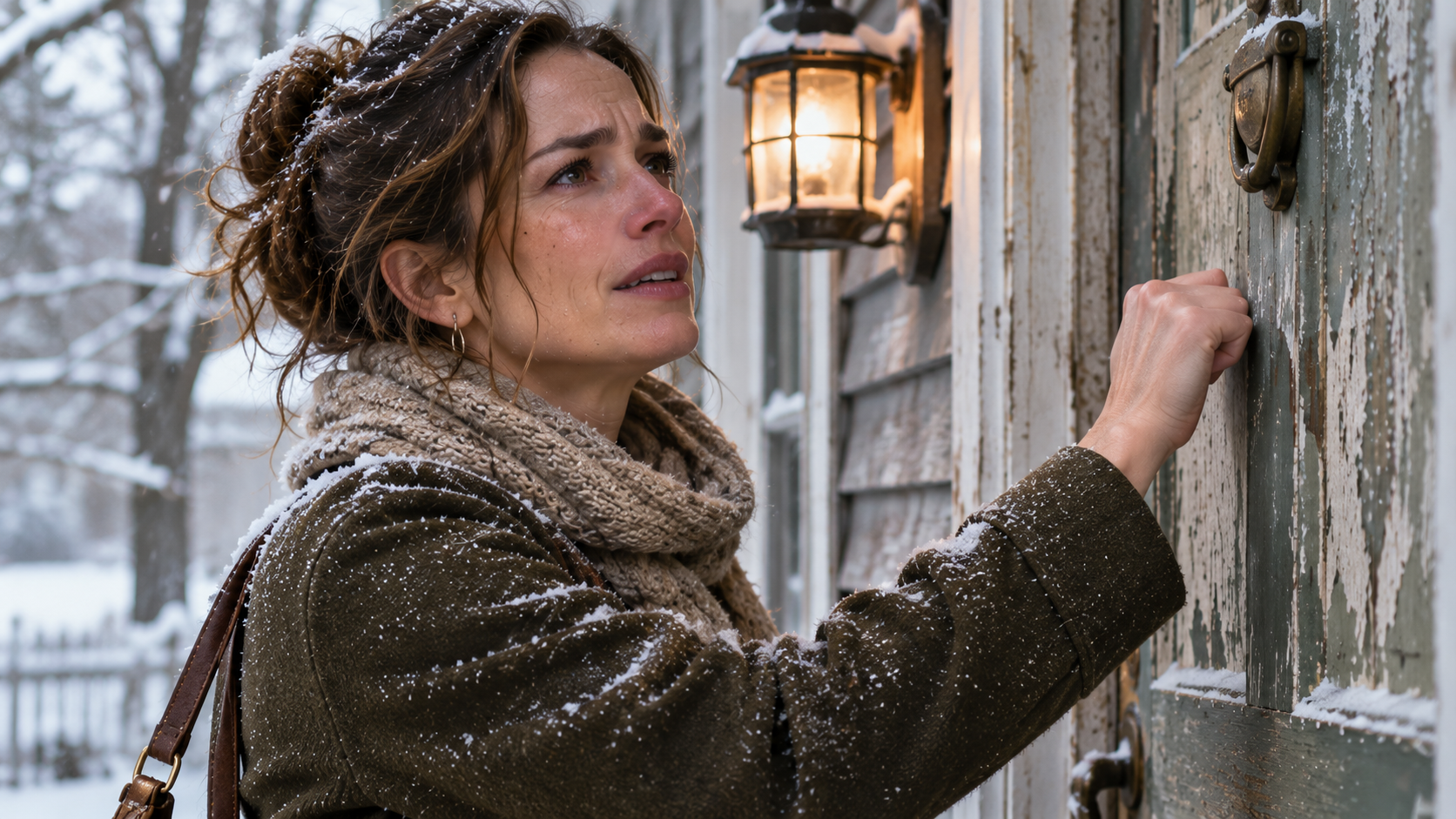
I drove back to my hotel in a daze. The next morning, I checked out and started the long drive home to Ohio. I told myself I was done. I told myself I had my answer. But three weeks later, a thick envelope arrived at my house. The return address was a law firm in Montpelier. Inside was a letter from Eleanor, and it began with the words: “Please forgive me. I owe you the truth.”
The Secret She’d Been Forced to Keep
Eleanor’s letter was eleven pages long. She wrote that she had been sixteen when she got pregnant. Her father was a deacon at their church, and her mother was the town’s Sunday school teacher. When they found out, they didn’t just punish her. They erased the evidence. They sent her to a home for unwed mothers, took the baby, and told her to forget. She never even held me.
But that wasn’t the worst part. Eleanor wrote that her parents told her I had died at birth. For forty years, she believed her son was dead. She grieved me in silence, lighting a candle every year on my birthday. When I showed up on her porch, she thought she was hallucinating. She slammed the door not because she didn’t want me, but because she was terrified she had lost her mind.
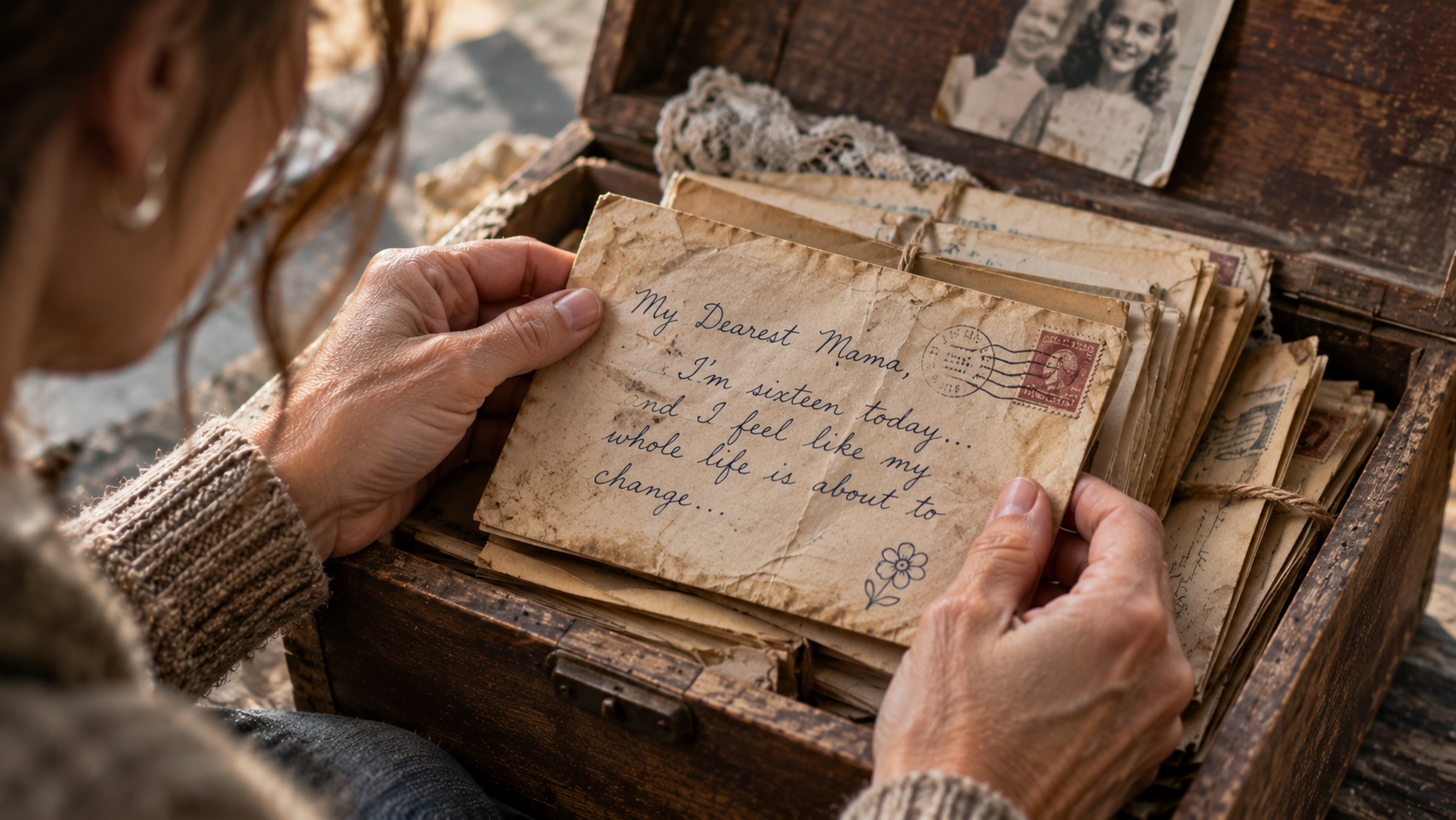
She wrote that after I left, she called her older sister, Ruth. Ruth confessed that she had helped their parents forge the death certificate. Ruth had also promised to keep the secret forever, but she had been holding onto a box of letters Eleanor had written to me as a teenager—letters that were never sent. Ruth gave that box to Eleanor after my visit. That’s when Eleanor knew I was real.
The Family That Tried to Erase Me
Eleanor’s parents were both dead by the time I found her. Her father had passed away in 2001, her mother in 2010. But their legacy of control lived on. Eleanor wrote that her parents had also threatened to cut off contact with her younger brother, James, if he ever mentioned me. James was only eight when I was born, but he grew up knowing he had a nephew somewhere. He just didn’t know where.
I called Eleanor the day after I read the letter. We talked for four hours. She told me about my birth father, a boy from a neighboring town who was shipped off to military school the same week she was sent to the unwed mothers’ home. She never saw him again. She told me she had married late, had two daughters, and divorced in her fifties. She told me she had always felt a hole in her life, but she never knew how to fill it.
I told her about my adoptive parents—how they had been kind but distant, how they had never hidden the fact that I was adopted but had also never encouraged me to search. I told her about my own daughter, who was now sixteen. I told her that I had named her after my adoptive grandmother because I had no other family names to pass down.
Eleanor cried. I cried. Then she said something that stopped me cold: “There’s something else you need to know. Your grandfather didn’t just hide you. He also stole from you.”
The Inheritance They Kept Hidden
Eleanor explained that when her mother died in 2010, the estate included a small trust fund that had been set up for “any living descendants.” Her parents had written the will when Eleanor was pregnant, before they decided to erase me. They never updated it. The lawyer who handled the estate never knew I existed, so the trust was divided between Eleanor and James. But Eleanor’s mother had also left a separate savings account with fifty thousand dollars in it, intended for “the child.”
Eleanor had never known about the savings account until she found the paperwork in her mother’s belongings. She had assumed it was meant for her own children. But the account was opened in 1974, the year I was born, and the beneficiary was listed as “Baby Boy Eleanor.” The bank had never been updated. The money was still there, untouched for forty years.
“I want you to have it,” Eleanor said. “It’s not much, but it’s yours. And I want you to know that I’m not asking for anything in return. I just want to know you.”
I didn’t know what to say. I had spent years imagining this reunion as a confrontation. I had prepared myself for anger and rejection. I had never prepared myself for a mother who wanted to make things right. I told her I needed time. She said she understood. Then she said, “Take all the time you need. I’ve waited forty years. I can wait a little longer.”
The Reunion That Finally Happened
Six months later, I drove back to Vermont. This time, Eleanor was waiting on the porch. She didn’t slam the door. She opened it wide and said, “Welcome home.” I met my half-sisters, who were wary at first but warmed up after I showed them pictures of my daughter. I met my uncle James, who apologized for not looking for me sooner. I visited the cemetery where my grandparents were buried. I didn’t feel anger. I just felt tired.
Eleanor and I have spent the last three years building a relationship. It hasn’t been easy. We missed forty years of birthdays and holidays and ordinary days. But we have time now. We talk every Sunday. We visit twice a year. My daughter calls her “Grandma Eleanor,” and Eleanor’s face lights up every time.
The fifty thousand dollars helped me pay off my mortgage and start a college fund for my daughter. But the money was never the point. The point was the truth. The point was knowing that I wasn’t abandoned. I was hidden. And now I’m found.
Eleanor once told me that the hardest part of losing me wasn’t the loss itself. It was the silence. She had no one to talk to about me, no one to share her grief with. Her parents had made sure of that. But now the silence is broken. We talk about everything. We talk about the past and the present and the future. We talk about the life we might have had. And then we talk about the life we have now.
It’s not the life I imagined. It’s better. Because it’s real.
Recommended Stories
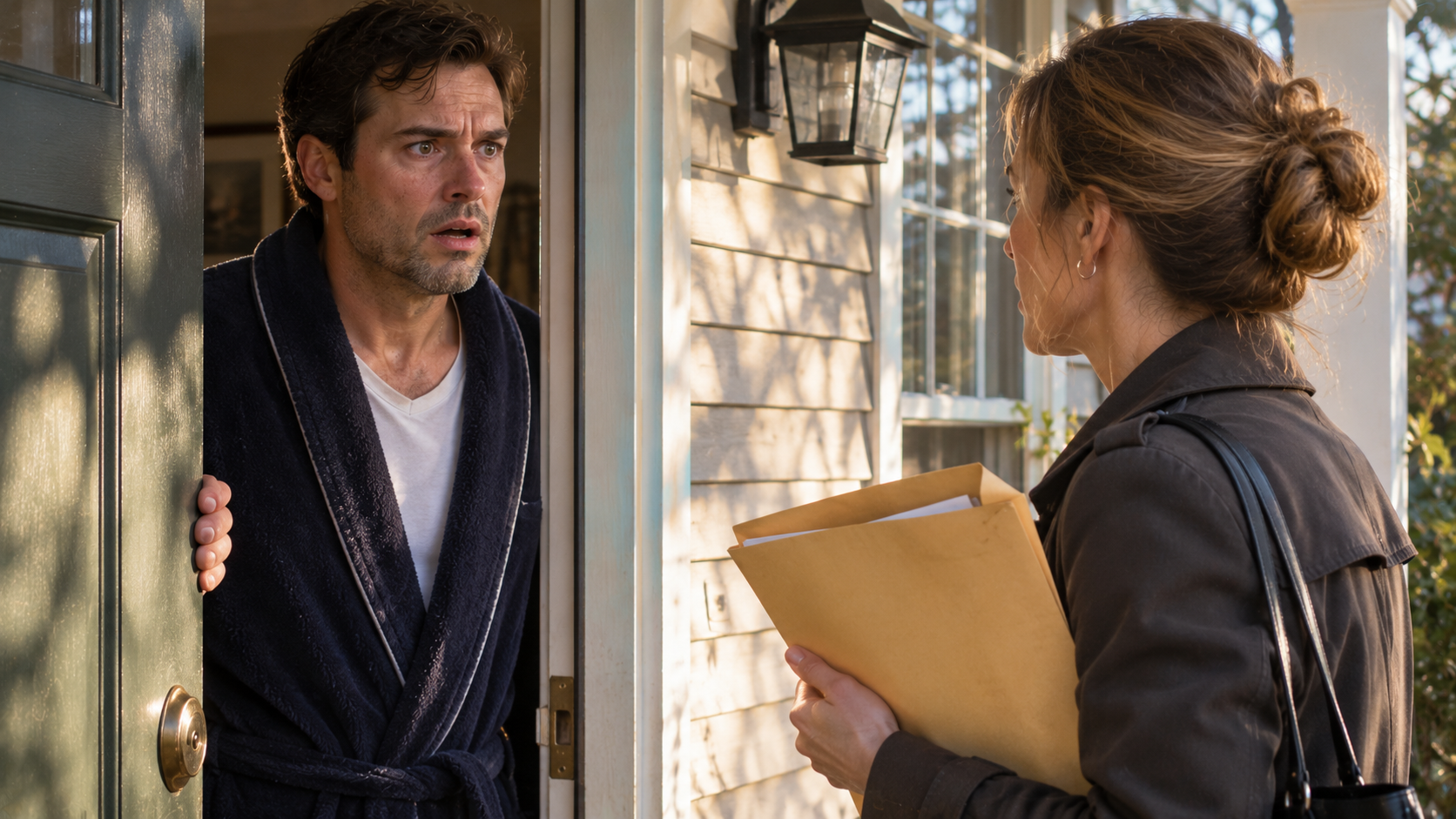
My Brother Stole My Identity to Buy a House—Then the Real Owner Showed Up at My Door
A stranger knocked on my door with a deed to my house—and my name on it. That's when I realized...
I Gave My Brother My Kidney—He Repaid Me by Stealing My Fiancée
I gave my brother my kidney. Two months later, I came home early and heard his voice in my bedroom....

My Sister-in-Law Stole My Baby Name—Then I Discovered Why and It Made Me Cry
She announced the name at Sunday dinner—the name I'd whispered to my belly for months. I called it theft. But...