My Stepmother Burned My Late Mother’s Letters—Then I Found One She Missed, and It Named My Real Father
The Fire That Took Everything
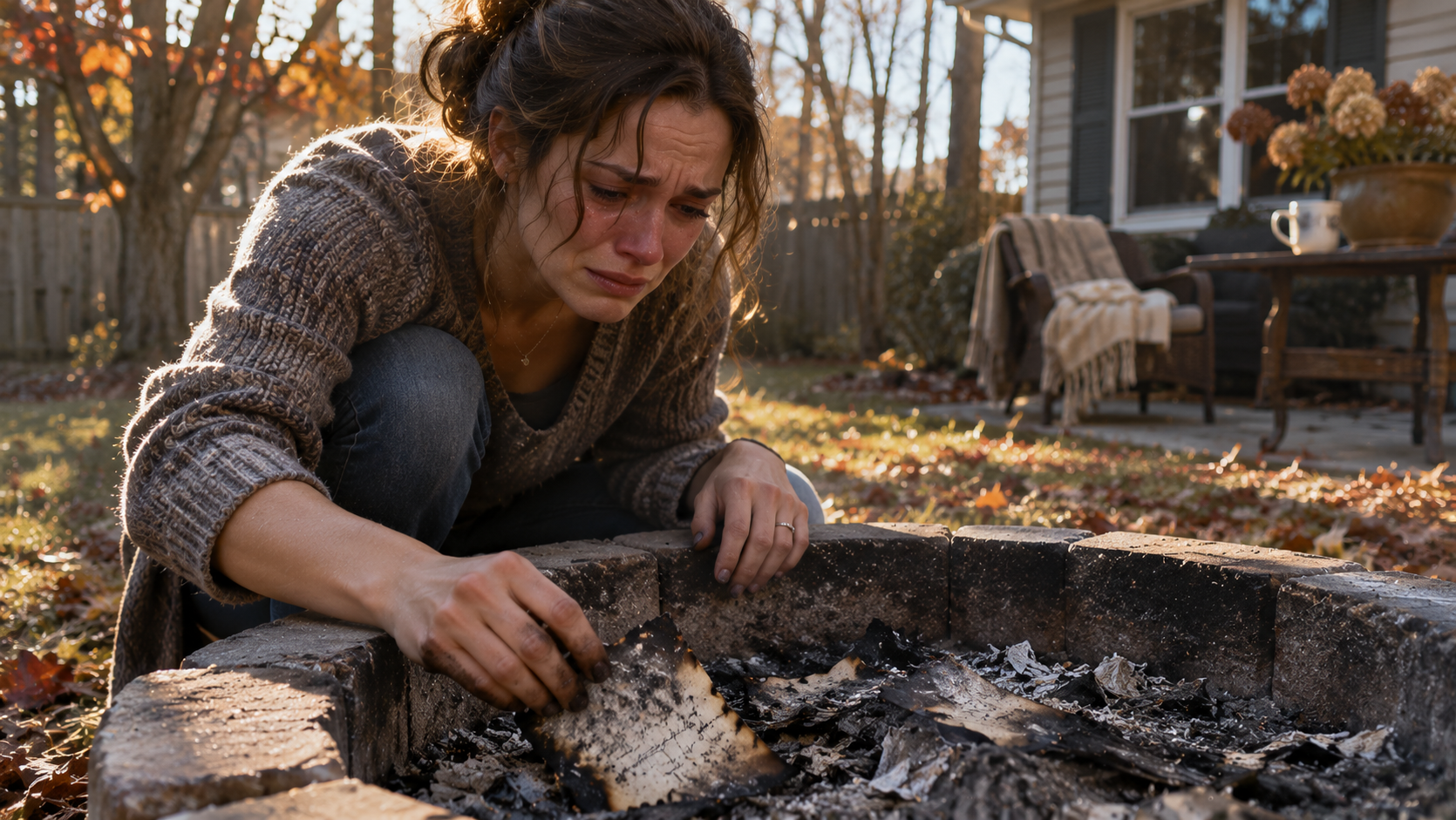
I was nineteen when my mother died of ovarian cancer, and twenty-two when my father remarried. Her name was Claudia, and she moved into our house in Portland, Oregon, with three suitcases and a smile that never quite reached her eyes. She immediately began ‘decluttering’—starting with my mother’s belongings. I was away at college, so I didn’t know until I came home for Thanksgiving that my mother’s cedar chest had been emptied, her clothes donated, and her letters—every single one—burned in the backyard fire pit.
I found out because I asked where they were. Claudia looked me dead in the eye and said, ‘They were old and moldy. Your father agreed.’ My father, sitting at the kitchen table, didn’t contradict her. He just stared at his coffee. That silence told me everything I needed to know about my new stepmother—and about my father’s willingness to trade my mother’s memory for peace.
I spent that Thanksgiving break searching the house for anything Claudia might have missed. I found nothing. Not a card, not a photo, not a single scrap of my mother’s handwriting. I went back to school hollowed out, convinced that Claudia had erased my mother from our home as efficiently as she’d erased her from my father’s attention.
The Book That Didn’t Belong
Two years passed. I graduated, moved to Seattle, and built a life that kept me as far from Claudia as possible. I visited my father twice a year—Christmas and his birthday—and each visit was a study in polite estrangement. Claudia had redecorated the house entirely: new furniture, new paint, new curtains. My mother’s garden had been paved over for a hot tub. I stopped expecting to find anything of hers there.
Then, in March, my father called. Claudia had been diagnosed with early-onset Alzheimer’s. He was overwhelmed. He asked if I could come help sort through the house—’too much stuff,’ he said, ‘and she gets confused by clutter.’ I almost said no. But something in his voice sounded like the father I remembered from before, so I took a week off work and drove down.
On the third day, I was clearing out the guest room closet when I found a book I didn’t recognize. It was a worn copy of Jane Eyre, my mother’s favorite novel. I opened it, and a single envelope fell out—sealed, unstamped, and addressed to me in my mother’s handwriting. The return address was a name I’d never heard: Thomas Whitfield, 41 Maple Street, Boise, Idaho.
My hands shook as I opened it. Inside was a letter dated two months before my mother’s death. It read: ‘My dearest Emma, if you’re reading this, I’m gone. I need you to know the truth. Your father is not the man who raised you. His name is Thomas Whitfield. We met in college, but he was married, and I was too young to fight for him. I married your father to give you a name and a home. He knew the truth and agreed to raise you as his own. I never told you because I was ashamed—not of you, but of my cowardice. Please forgive me. And if you ever want to know the man I loved, find him. He deserves to know you exist. All my love, Mom.’
The Man Who Wasn’t My Father
I sat on the guest room floor for an hour, the letter trembling in my hand. My father—the man who’d raised me, taught me to ride a bike, walked me down the aisle at my wedding—was not my biological father. He had known all along. And Claudia? She had burned my mother’s letters, but she’d missed this one. Whether by accident or design, I couldn’t tell.
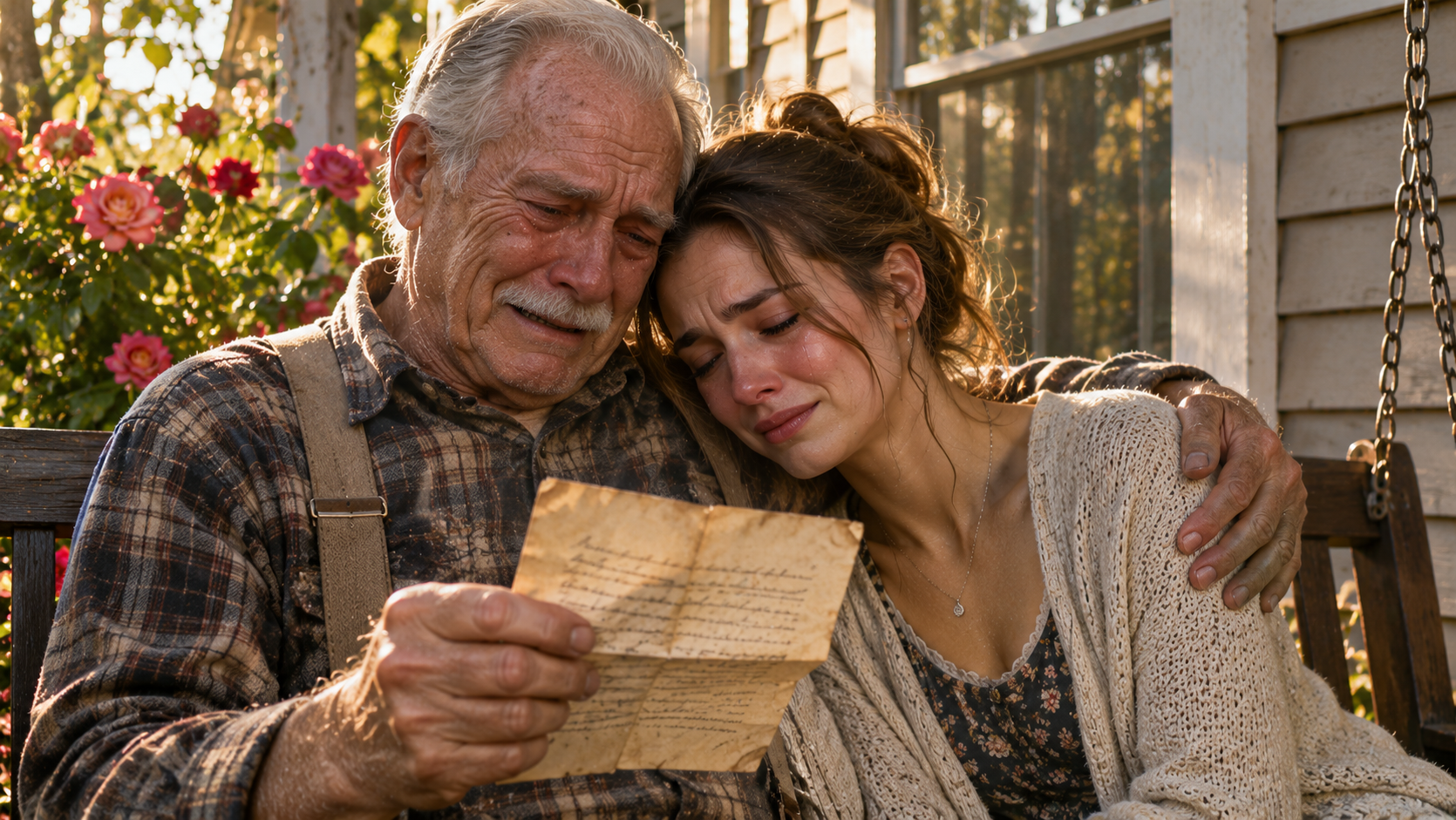
I didn’t confront my father that day. I couldn’t. Instead, I drove to Boise three weeks later, to 41 Maple Street. The house was a modest bungalow with a sagging porch and a garden full of wild roses. An old man answered the door—tall, stooped, with my same grey eyes. He introduced himself as Thomas Whitfield, and when I told him my mother’s name, he started to cry.
He told me everything. They had been in love, but he was already married with two children. My mother refused to break up his family, so she left. He never knew she was pregnant. He’d spent forty years wondering what happened to her. When I showed him the letter, he read it three times, then asked if he could keep it. I said yes.
The Confrontation That Changed Everything
I went back to Portland and confronted my father. He didn’t deny it. He said he’d agreed to raise me as his own because he loved my mother, and he’d kept the secret because he was afraid I’d leave him if I knew. ‘I was your father in every way that mattered,’ he said. ‘Doesn’t that count for something?’
I told him it did. But I also told him that Claudia burning my mother’s letters was unforgivable—and that his silence had allowed it. He looked at me then, really looked at me, and said, ‘I know. I’m sorry.’
Claudia’s illness progressed quickly. She never apologized for the letters. I don’t know if she was even capable of it by the end. But I found out something else: the Jane Eyre book had been a gift from my mother to my father on their first anniversary. Claudia had tried to burn it too, but my father had hidden it in the guest room closet. He’d saved it for me, even if he’d never found the courage to tell me why.
What the Ashes Couldn’t Take
I have a relationship with Thomas Whitfield now. He’s eighty-three and lives in Boise, and I visit him twice a year. He tells me stories about my mother that no one else knew—how she laughed, how she danced, how she once drove five hours just to bring him soup when he had the flu. I wish I’d had those stories growing up. But I have them now.
My father and I are rebuilding something fragile. It’s not the same as before. It can’t be. But he saved that book. He saved the letter. And in the end, that saved me.
Claudia died last winter. At her funeral, I didn’t speak. But I thought about the fire pit, and the ashes, and the one letter that survived. Sometimes I wonder if she knew about the book all along—if she left it there on purpose, a final test. I’ll never know. But I do know this: my mother’s love was stronger than any fire. And it found me, even from beyond the grave.
Recommended Stories
My Mother-in-Law Gave Me a ‘Fake’ Family Heirloom—20 Years Later, a Museum Offered Me $250,000 for It
She called it a fake. Twenty years later, a museum offered $250,000—and I discovered the heirloom was stolen, the secret...
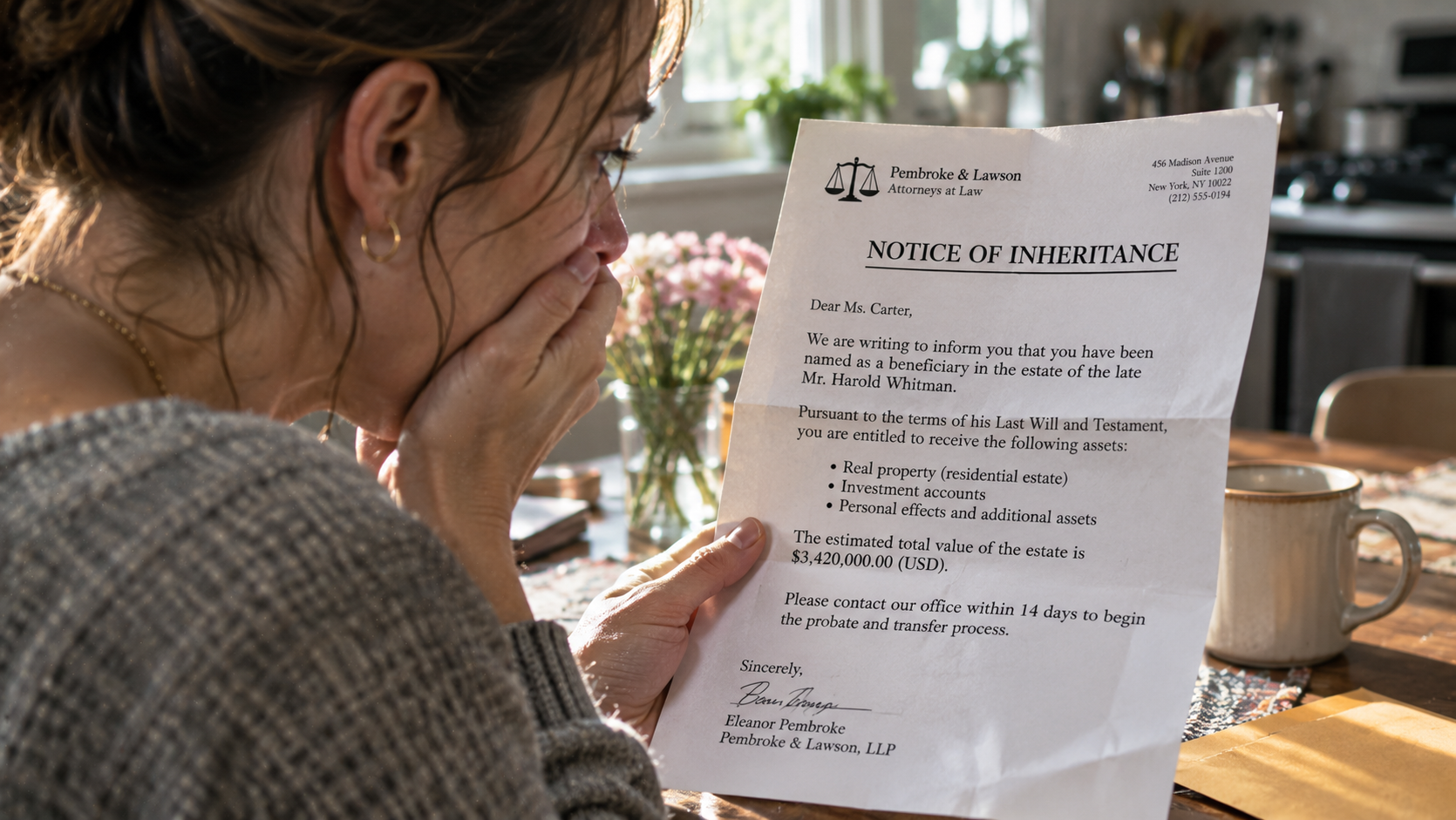
I Inherited a Million Dollars from a Stranger—Then His Family Showed Up with a Shocking Demand
I was a nurse with no connection to a wealthy stranger. When he left me his fortune, his family demanded...
I Gave My Brother My Kidney—He Repaid Me by Stealing My Fiancée
I gave my brother my kidney. Two months later, I came home early and heard his voice in my bedroom....