My Mother-in-Law Swapped My Wedding Ring with a Fake—Then a Pawn Shop Owner Called Me About the ‘Stolen’ Original
The Ring That Wasn’t Mine
I noticed it three days after my wedding. The diamond on my left hand caught the light differently—duller, smaller. I twisted the band, and it felt loose, foreign. My heart hammered as I slid it off and read the inscription inside: To my forever, 5-12-18. But my husband, Mark, had engraved To my forever, 6-22-24—our wedding date. This was not my ring.
I called Mark, who was at work. He laughed, said I was stressed from the wedding planning. But when I drove to his mother’s house, Carol was suspiciously calm. She glanced at the ring and waved her hand. “Oh, that old thing? You probably just forgot. It’s the same ring, sweetie.” But I knew my ring. It was a family heirloom from my grandmother—a 1.5-carat diamond with a hidden inscription my grandfather had engraved for her in 1952. This ring had a different inscription entirely.
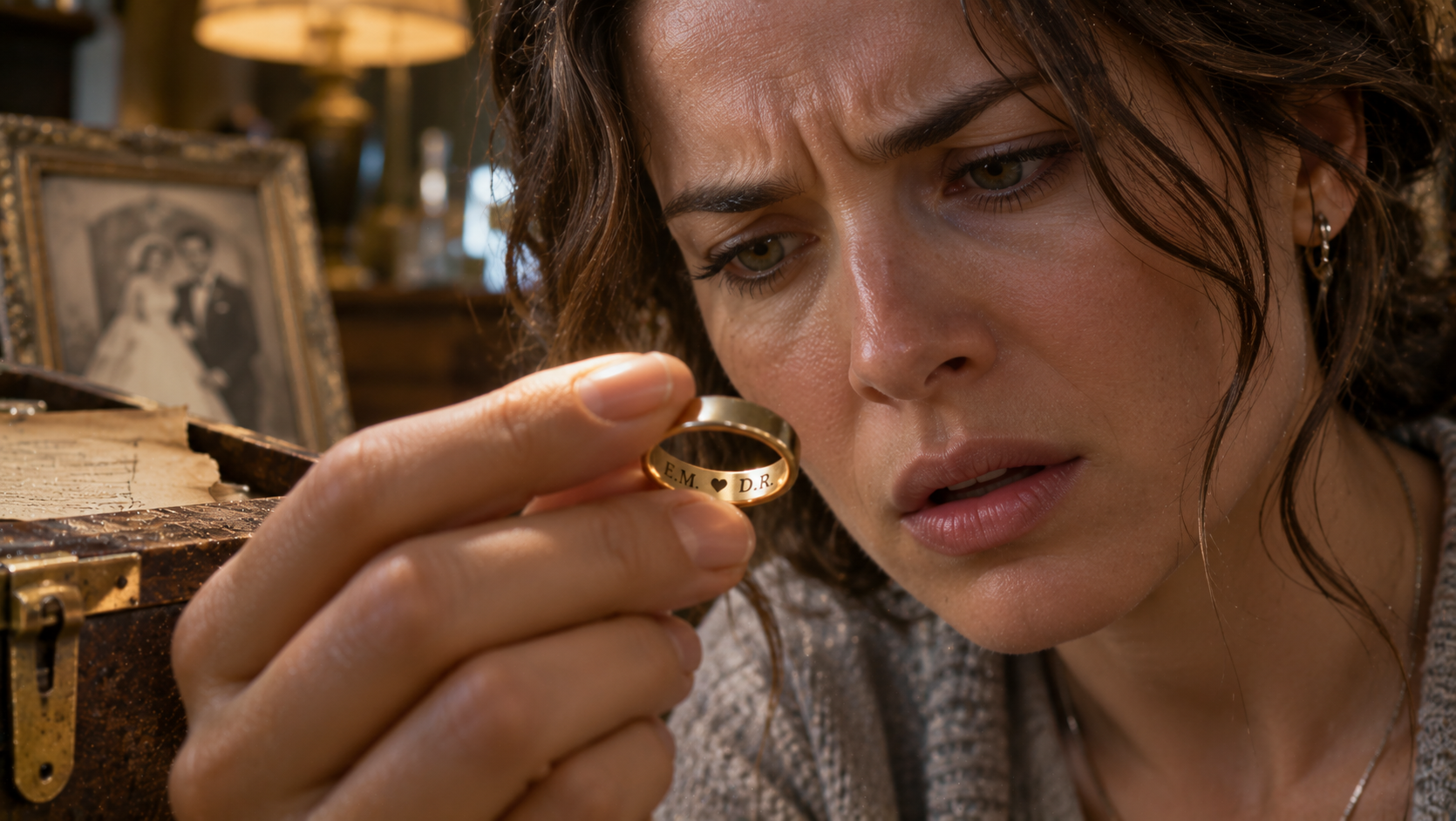
I didn’t confront Carol then. I went home and searched for my ring. It wasn’t in my jewelry box. I called my mom, who reminded me that the ring had been insured for $12,000. I reported it missing to the police, but without proof, they said it was a civil matter.
The Pawn Shop’s Call
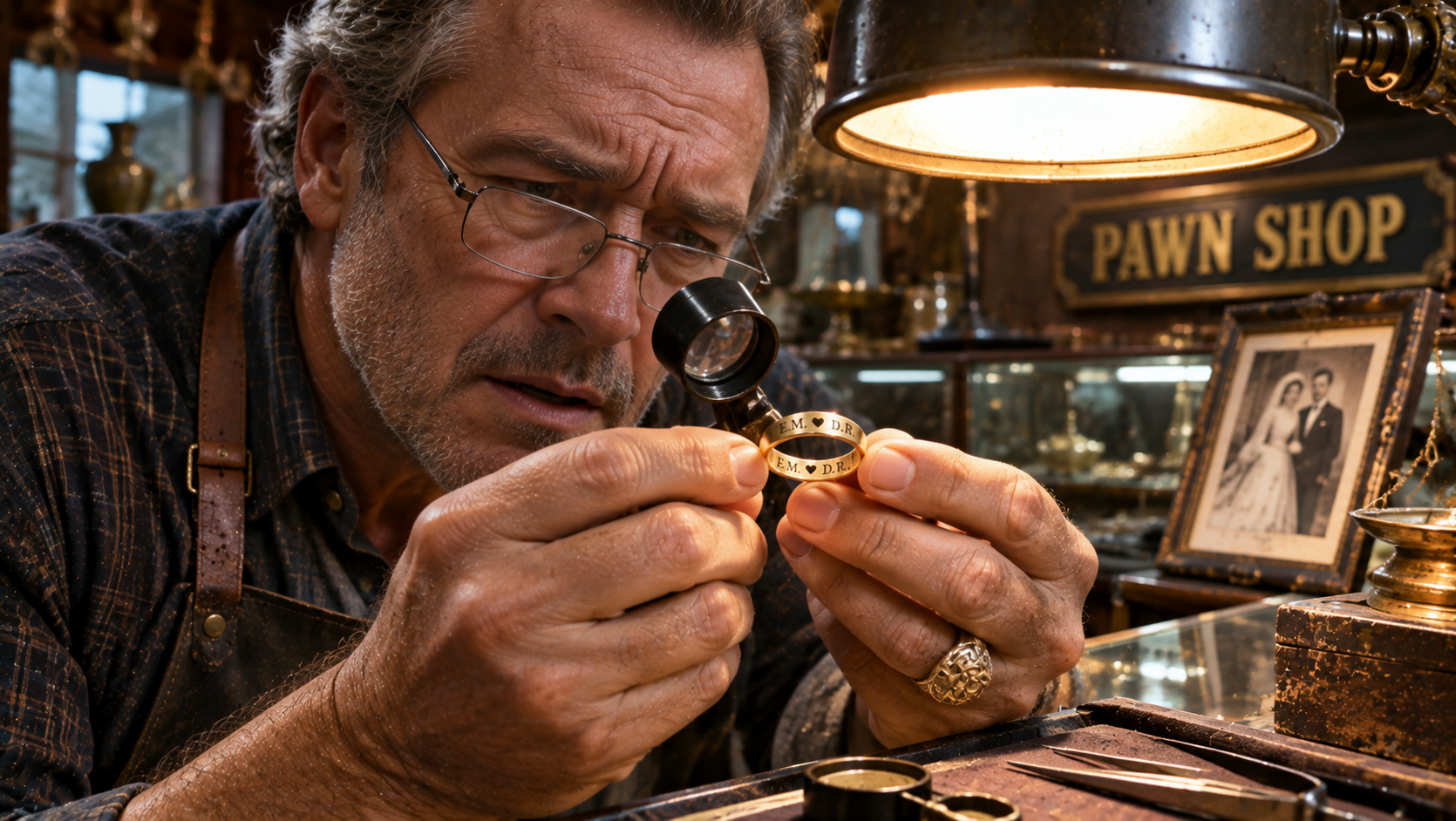
Two weeks later, my phone rang. A man named Eddie from a pawn shop two towns over asked if I was the owner of a ring matching my description. “We had a woman come in yesterday trying to sell it,” he said. “She claimed it was hers, but the inscription didn’t match what she said. She got nervous and left. I remembered the police report and thought I should call.” My heart raced. I asked him to describe the woman. “Middle-aged, blonde, said her name was Carol.”
I drove to the pawn shop with my husband. Eddie showed us the ring—my ring—and the inscription matched perfectly. Mark’s face went pale. “That’s my mother,” he whispered. Eddie explained that Carol had tried to sell it for $5,000, claiming it was a family heirloom she needed to pawn for medical bills. But when Eddie asked for ID, she bolted.
We retrieved the ring, but the damage was done. Mark confronted Carol, who initially denied everything. Then she broke down. She admitted she’d swapped the rings because she felt my heirloom was “too extravagant” and wanted to teach me a lesson about humility. She’d planned to sell the original to pay off her credit card debt. “You don’t deserve that ring,” she spat at me. “You’re not family.”
The Inscription That Changed Everything
But there was more. When I took the ring to a jeweler for a cleaning, he noticed something odd. “There’s a second inscription under the first one,” he said. He carefully polished the band, revealing faint letters: Property of E. Vanders, 1952. My grandmother’s maiden name was Eleanor Vanders. But she’d always told us the ring was a gift from her husband. The jeweler explained that the style and the hidden inscription suggested the ring might have been part of a famous jewelry heist in 1952—the Vanders Collection, stolen from a wealthy family in Boston.
I researched the Vanders family and discovered they were distant relatives of my grandmother. The ring was never hers to give—it was stolen. My grandmother had received it from a mysterious “friend” in the 1960s, never knowing its origin. The original owners had offered a reward for its return. I contacted their estate and, after verifying the inscription, they not only let me keep the ring but also gave me a $10,000 reward for its recovery.
Justice Served Cold
Carol was arrested for theft and attempted fraud. Mark, devastated by his mother’s betrayal, cut ties with her. He apologized to me a hundred times, but trust was broken. We went to counseling, and slowly, we rebuilt. But the ring—now legally mine—became a symbol of my strength. I had it reset with a new band, keeping the original inscription intact. Every time I look at it, I remember that some things are worth fighting for, and some people will never change.
As for Carol, she was sentenced to community service and ordered to pay restitution. She never apologized. But I didn’t need her apology. I had my ring, my dignity, and the truth. And sometimes, that’s enough.
Recommended Stories
My Father Promised Me the Family Cabin in His Will—But After He Died, My Stepmother Produced a Newer Will Giving Everything to Her Son. Then I Found a Voicemail He Left Me the Night Before He Died
My father promised me the family cabin. After he died, my stepmother produced a newer will giving everything to her...
My Mother-in-Law Gave Me a ‘Fake’ Pearl Necklace for My Wedding—A Jeweler Later Told Me It Was Real and Part of a $2 Million Heist
A wedding gift she was told was fake turns out to be a real pearl necklace from a $2 million...
My Mother-in-Law Secretly Recorded Me for Years—Then She Played the Tapes at My Baby Shower
She recorded me for years, then played the tapes at my baby shower. But she never expected what I found...