I Found a Hidden Room in My Basement—Inside Was a 50-Year-Old Letter from My ‘Dead’ Uncle, and a Map to His Fortune
The Hammer That Changed Everything
The hammer slipped from my sweaty grip and clattered against the concrete floor of my basement. I’d been chipping away at a suspiciously hollow-sounding wall for twenty minutes, convinced I was just wasting a Saturday afternoon. My wife, Elena, had been telling me for months that the damp patch near the water heater needed fixing. She had no idea how right she was—just not in the way she imagined.
When the first chunk of cinder block gave way, a gust of stale, cold air hit my face. I grabbed a flashlight and leaned in. Behind the wall wasn’t just insulation or a crawlspace. It was a room. Small, maybe eight by ten feet, with wooden shelves lining the walls and a single bare bulb hanging from the ceiling. My heart hammered against my ribs as I stepped through the jagged opening.
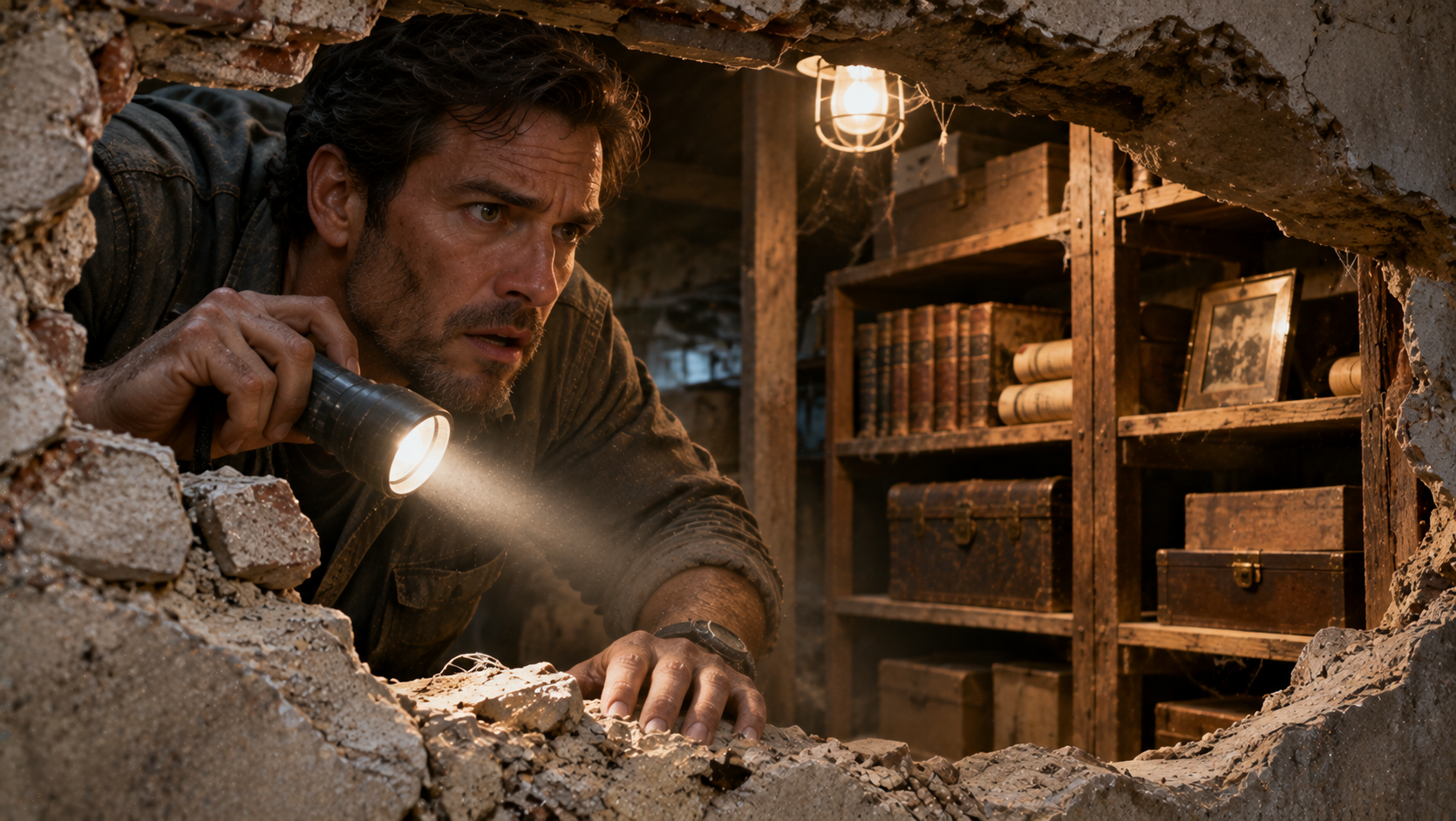
On the center shelf sat a metal lockbox, the kind you’d see in old war movies. It wasn’t locked. Inside, wrapped in oilcloth, was a single envelope. The handwriting on the front made my blood run cold: To Danny, if I don’t make it back.
Danny was my father. He’d been dead for twelve years. And the writer—my Uncle Ray—had supposedly died in a boating accident off the coast of Maine in 1973, five years before I was born.
The Uncle Who Never Died
I sat on the basement floor for a long time, staring at that envelope. Uncle Ray was a legend in our family, but not the good kind. My father rarely spoke about him, and when he did, his jaw would tighten. All I knew was that Ray was the wild one—a charmer who couldn’t hold a job, who borrowed money from everyone and paid back no one, who vanished one summer and was declared dead when his empty boat washed ashore.
My hands trembled as I opened the letter. The paper was brittle, yellowed at the edges, but the words were clear.
Danny,
If you’re reading this, I’m gone for good. I’m sorry for the mess I left you with. The men I owe aren’t the kind who forget. They’ll come looking for their money, and if they can’t find me, they’ll come for you. I’ve hidden what I have left—enough to pay them off and then some. It’s not much, but it’s clean. Follow the map. Don’t trust the police. Don’t trust anyone who knew me. And whatever you do, don’t let Mom find out.
I’m sorry I wasn’t the brother you deserved.
Ray
Tucked behind the letter was a folded piece of paper—a hand-drawn map of the woods behind our old family cabin in the Catskills, with an X marked near a fallen oak tree.
I didn’t sleep that night. My father had spent his whole life paying for his brother’s mistakes. He’d worked double shifts at the post office, sold his vintage guitar collection, even mortgaged the house once—all because of some vague “family debt” he refused to explain. Now I understood. And now I had a choice: ignore the map and keep my family safe, or find out what Ray had buried fifty years ago.
The Men Who Never Forgot
Two days later, I drove up to the Catskills with my cousin Marcus, the only family member I trusted. Marcus was a former Marine, built like a refrigerator, and the kind of guy who didn’t ask questions until he absolutely had to. The cabin was a wreck—roof caved in, windows shattered—but the woods behind it were unchanged.
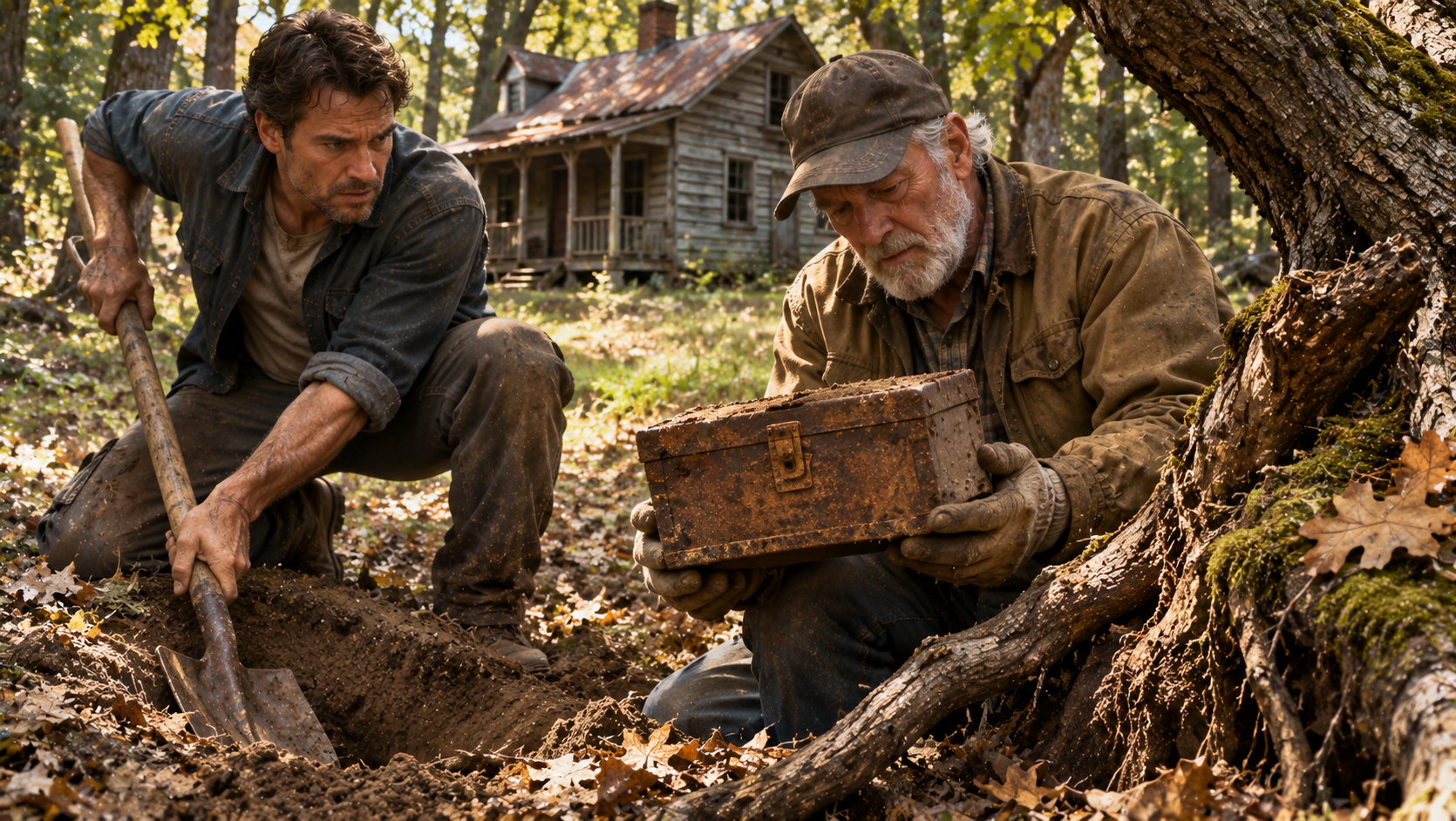
We found the fallen oak within an hour. Marcus dug while I kept watch, my ears straining for any sound that didn’t belong. The shovel hit metal at three feet. We pulled up a rusted ammunition box, the kind that held .50-caliber rounds. Inside was a waterproof pouch containing $40,000 in cash—all in twenties and fifties, printed before 1975—and a ledger.
The ledger was Ray’s confession. He’d been a runner for a small-time loan shark in Boston, skimming off the top for years. When he got caught, he fled with $40,000 of the man’s money. The loan shark’s name was Vito Marchetti. He’d been dead since 1989, but his sons had taken over the business. And according to a note scrawled on the last page, they’d been looking for Ray—and his family—ever since.
I felt the blood drain from my face. “Marcus,” I said, “we need to go. Now.”
We made it back to the city by nightfall, but something was wrong. My front door was ajar. Inside, Elena sat on the couch, her face pale, a man in a gray suit sitting across from her. He stood as I walked in.
“Mr. Reilly,” he said, extending a hand I didn’t take. “My name is Anthony Marchetti. I believe your uncle left something of ours in your basement. I’d like it back.”
The Price of a Dead Man’s Debt
I’ll spare you the details of that conversation. Anthony was polite, which was somehow worse than if he’d been threatening. He explained that his grandfather had kept a ledger of every debt, and that Ray’s debt—with fifty years of interest—now totaled $250,000. He was willing to accept the $40,000 I’d found as a down payment, but he wanted the rest.
“Your uncle stole from my family,” Anthony said. “I’m not asking for revenge. I’m asking for what’s fair.”
I told him I’d need time. He gave me seventy-two hours.
That night, I read Ray’s letter again. And again. And then I noticed something I’d missed the first time—a postscript in tiny handwriting at the very bottom of the page: Check the third shelf, behind the loose brick. The real fortune isn’t money.
I went back to the hidden room with a crowbar. Behind the loose brick was a second envelope, this one containing a single document: a deed to twenty acres of land in upstate New York, purchased in 1968 and never developed. The land had been in Ray’s name, but the deed had a clause—transferable only to a blood relative named Reilly.
I did some quick research. That land was now worth $1.2 million.
The Choice That Defined Us
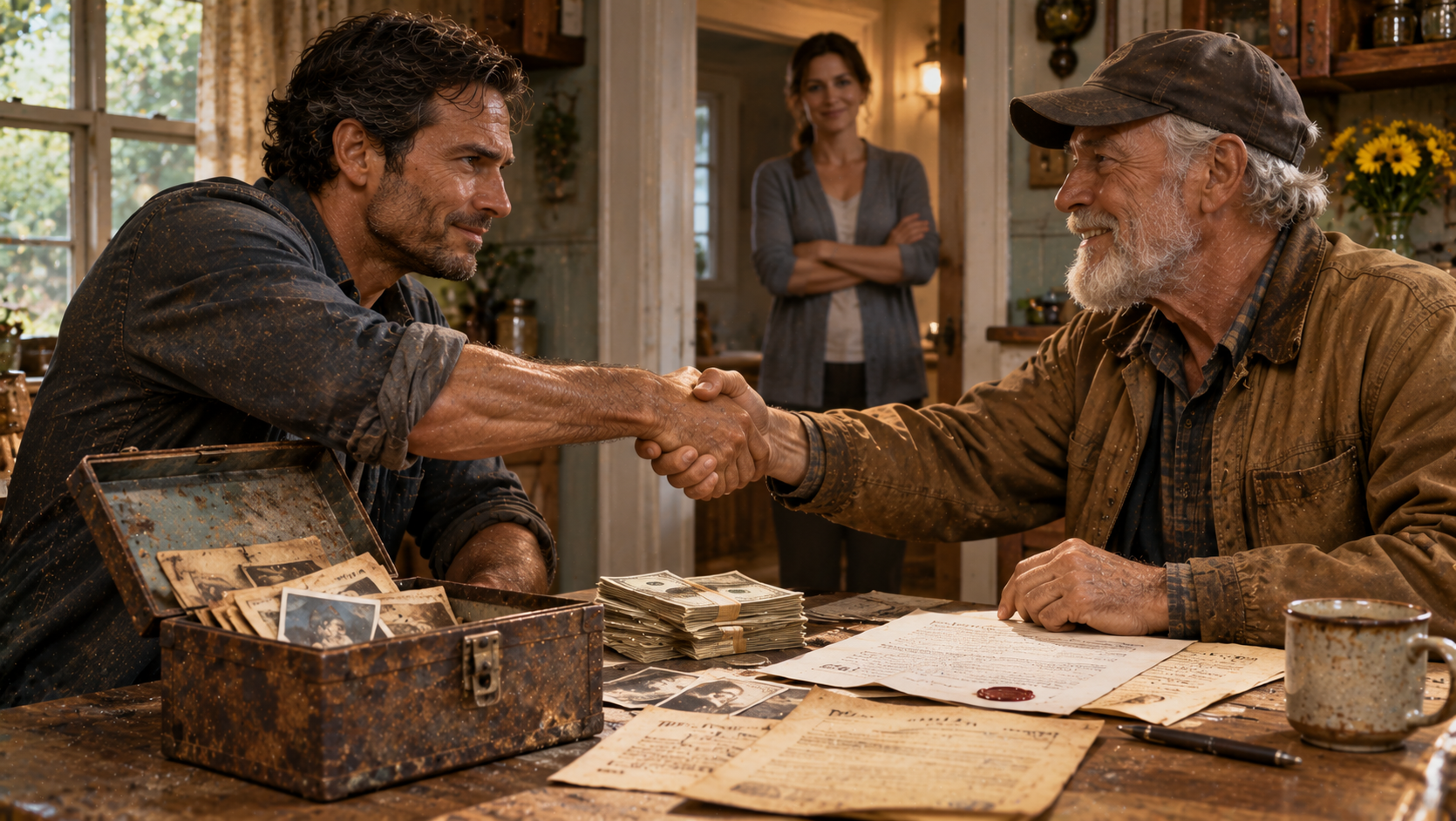
I called Anthony Marchetti the next morning and invited him to my house. When he arrived, I laid everything on the table: the $40,000, the ledger, the deed, and the letter.
“Your grandfather was a criminal,” I said. “So was my uncle. But my father spent his whole life paying for Ray’s mistakes, and I’m done with that cycle. Here’s my offer: I’ll give you the $40,000, and I’ll sign over half the land deed to your family. That’s $600,000 worth of property. In exchange, you leave my family alone. Forever.”
Anthony studied me for a long moment. Then he nodded. “My grandfather would have taken it all,” he said. “But I’m not my grandfather.”
We signed the papers that afternoon. As he walked out the door, he paused. “Your uncle was a thief,” he said. “But he was smart. He knew exactly what he was leaving you—a way out, not a way in.”
I never found out if Ray really died in that boating accident or if he just disappeared. Part of me hopes he lived a long, quiet life somewhere, far from the mess he made. But I do know one thing: he left me a fortune, and it wasn’t the money. It was the chance to break a curse that had haunted my family for fifty years.
My father spent his life cleaning up after his brother. I spent one weekend doing the same—and then I walked away. That’s the real inheritance.
Recommended Stories
My Husband’s ‘Business Trip’ Photos Showed a Beach—But the Background Revealed He Was at My Sister’s Wedding
She thought her husband was on a business trip—until a photo revealed he was at her sister's wedding. A story...
My Brother Stole My Identity to Buy a House—Then the Real Owner Showed Up at My Door
A stranger knocked on my door with a deed to my house—and my name on it. That's when I realized...

My Mother-in-Law Gave Me a ‘Fake’ Pearl Necklace for My Wedding—A Jeweler Later Told Me It Was Real and Part of a $2 Million Heist
A wedding gift she was told was fake turns out to be a real pearl necklace from a $2 million...