I Gave Up My College Fund to Pay for My Brother’s Rehab—He Got Clean, Then Sued Me for ‘Emotional Distress’ and Won. But Karma Had Other Plans
The Call That Changed Everything
I was nineteen years old, sitting in a cramped dorm room at Ohio State, when my mother’s number flashed on my phone. It was 11:47 p.m. on a Tuesday in October 2016. I still remember the exact time because that’s when my life split into before and after.
“Danny’s in the hospital,” she said, her voice cracking. “He overdosed. They had to revive him twice.”
My brother Danny was twenty-three and had been battling opioid addiction for three years. I’d watched him spiral from a funny, charismatic kid who could fix anything with his hands into a hollow-eyed stranger who pawned our father’s tools for cash. But this was the first time he’d nearly died.
I drove home to Youngstown the next morning. At the hospital, Danny looked small and gray against the white sheets. My mother, Carol, hadn’t slept. My father, Ray, sat in the corner with his head in his hands.
“The rehab program they recommend is sixty days,” my mother said quietly. “It’s twenty-eight thousand dollars. Our insurance covers almost none of it.”
I knew what she was asking before she said it. I had a college fund—$32,000 that my grandparents had left me when they died. It was supposed to cover my remaining three years of tuition. My parents had always promised they’d never touch it.
“We’ll pay you back,” my father said, not meeting my eyes. “Every penny. I swear.”
I looked at my brother, who was staring at the ceiling, tears leaking from the corners of his eyes. “I’m sorry,” he whispered. “I’m so sorry.”
I transferred the money the next day.

Sixty Days That Turned Into Six Months
Danny completed the program. Then he relapsed. Then he completed another program, funded by my parents selling their boat. Then he relapsed again. I dropped out of school after my sophomore year because I couldn’t afford tuition, and I took a job at a call center in Akron, working forty hours a week while living in a studio apartment with a mattress on the floor.
But by the spring of 2019, Danny had been clean for eighteen months. He’d gotten a job at a landscaping company, was renting a small house with two roommates, and had started dating a woman named Erica. My parents were cautiously optimistic. I was proud of him—genuinely, deeply proud. I’d made sacrifices, but they’d been worth it.
That’s when the lawsuit arrived.
It was a thick envelope from a law firm in Cleveland. I opened it at my kitchen table, thinking it was junk mail. Instead, I read that my brother Daniel Whitmore was suing me for “intentional infliction of emotional distress” and “defamation,” claiming that I had “publicly humiliated and emotionally traumatized” him by telling family members about his addiction and “coercing” him into rehab by “withholding financial support.” He was seeking $75,000 in damages.
I called him immediately. He didn’t answer. I called my mother. She was crying.
“He says you made him feel like a charity case,” she said. “He says you held that money over his head for years. He wants to move on with his life, and he feels like you’re a constant reminder of his worst moments.”
“Mom, I gave him my college fund. I dropped out of school. I never asked for a dime back.”
“I know,” she whispered. “But he’s your brother. Maybe just… let him have this.”
Let him have this. Let him have a lawsuit. Let him have a judgment against me.
The Trial Where Truth Didn’t Matter
The case went to trial in August 2020. Danny had a lawyer, a slick man in a gray suit who painted me as a controlling, resentful sister who had used my brother’s addiction as a weapon. They argued that I had “forced” Danny into rehab by giving my parents the money, and that by telling relatives about his struggles, I had “destroyed his reputation.”
My lawyer was a public defender I’d hired for $3,000—all I had in savings. He did his best, but he was overwhelmed. The judge, an older man named Harold Meeks, seemed sympathetic to Danny. “Addiction is a disease,” he said at one point. “We must be careful not to blame those who suffer from it.”
I testified about the money, the dropped classes, the call center job. I showed the bank transfer records. I explained that I’d never told anyone about Danny’s addiction except immediate family, and only because I was worried about him.
But Danny testified that I had “shamed” him at a family dinner, that I had “rolled my eyes” when he talked about his recovery, that I had “made him feel worthless.” None of it was true. But his tears were convincing.
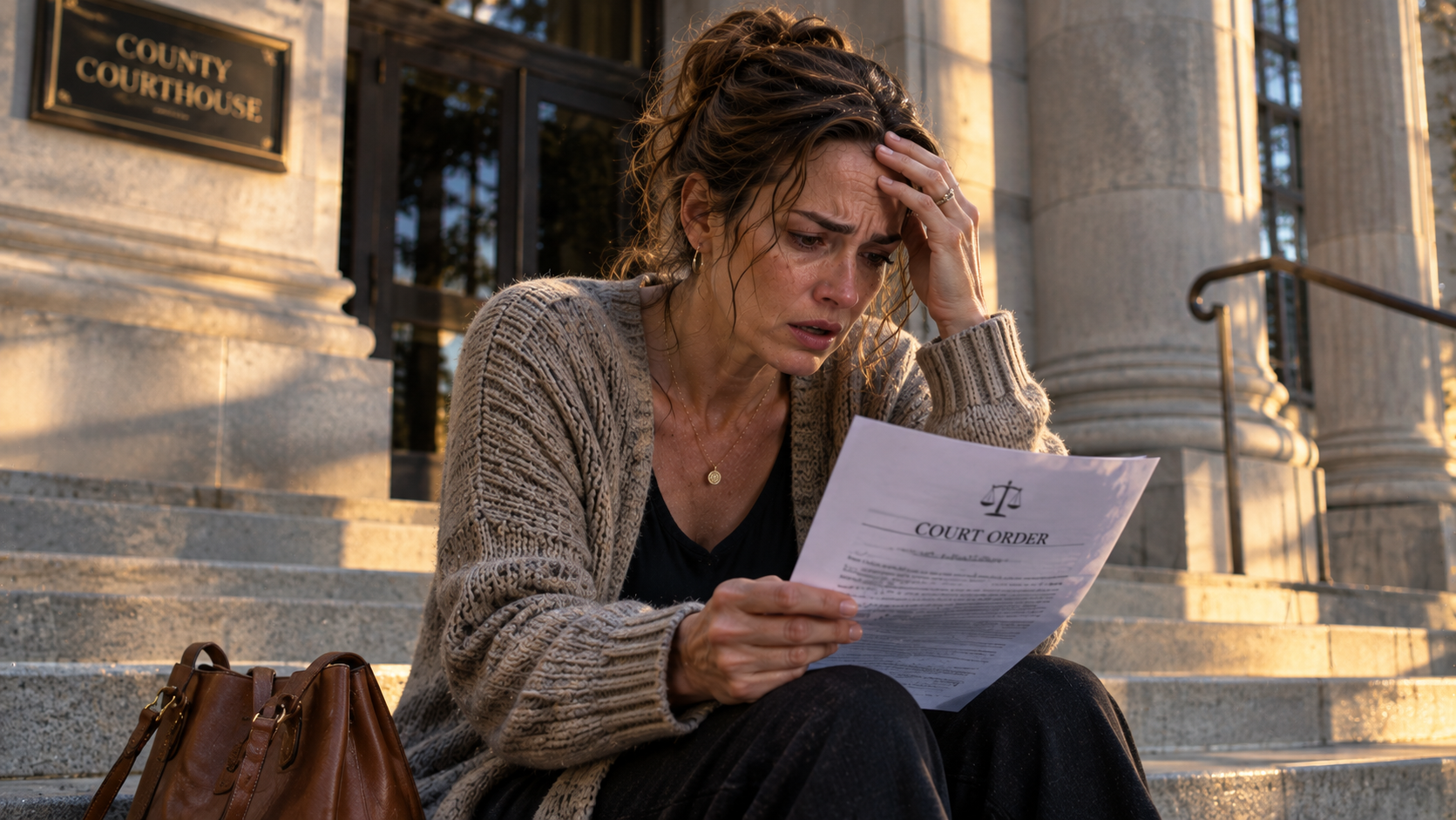
The judge ruled in Danny’s favor, awarding him $40,000—a reduced amount from the original request, but still a devastating blow. I was ordered to pay $500 a month for six years and eight months. I sat in that courtroom, twenty-three years old, with $1,200 in my checking account, and felt the floor drop out from under me.
My brother walked out without looking at me.
The Karma Nobody Saw Coming
I paid the first three installments—$1,500 total—by selling my car and picking up extra shifts. I was drowning. But then, in January 2021, I got a call from a woman named Patricia Holloway. She was an investigator with the Ohio Bureau of Workers’ Compensation.
“Do you know a Daniel Whitmore?” she asked.
“He’s my brother.”
“Did you know he filed a workers’ comp claim in September 2020, claiming a back injury from his landscaping job?”
I didn’t.
“We’ve been investigating him for fraud,” she said. “He’s been collecting disability payments while working under the table for a roofing company. We have video evidence. He also lied about his medical history—specifically, he didn’t disclose that he’d been in rehab for opioid addiction, which is a felony on a workers’ comp application.”
I felt a strange, cold calm settle over me. “Why are you telling me this?”
“Because during our investigation, we found something else. Your brother used his settlement money from your lawsuit to pay for a vacation to Cancún. He posted photos on Facebook. We found them. And we also found that he’d been bragging to friends about how he ‘got one over’ on his sister.”
Patricia paused. “I’m not supposed to tell you this, but I think you should know: the judge in your case, Harold Meeks, is under investigation for accepting bribes. Your brother’s lawyer, Marcus Webb, is a person of interest. They’ve been involved in several suspicious rulings.”
I hung up the phone and sat in silence for a long time. Then I called a lawyer—a real one this time, a woman named Denise Carter who specialized in fraud and civil appeals. She listened to my story, asked for every document I had, and said four words: “We’re going to fight.”
The Reversal
The next six months were a blur of depositions, subpoenas, and hearings. Denise uncovered a trail of evidence: Danny’s fraudulent workers’ comp claim, his undisclosed income, his Facebook posts mocking me, and—most damning—text messages between his lawyer and Judge Meeks discussing “favorable outcomes” in exchange for “considerations.”
In July 2021, Judge Meeks was removed from the bench and charged with corruption. Marcus Webb was disbarred. And my brother’s judgment against me was vacated entirely. Not only that, but Danny was ordered to repay the $1,500 I’d already paid, plus $10,000 in legal fees.
He was also arrested for workers’ comp fraud and insurance fraud. He pled guilty to two felonies and was sentenced to eighteen months of house arrest, five years of probation, and restitution of $47,000 to the state.
I stood in the courtroom when the verdict was read. Danny looked at me for the first time in over a year. His eyes were wet, but I didn’t feel sorry for him. I felt something else—something I hadn’t felt in a long time. Free.
My parents didn’t speak to me for six months. They said I’d “destroyed” my brother. But eventually, my mother called. She apologized. She said she’d been blind. She said she was proud of me.
I didn’t forgive her right away. Some things take time.
What I Learned About Sacrifice and Justice
Today, I’m twenty-seven. I went back to school part-time and finished my degree in social work last year. I work with families affected by addiction, and I tell my story often—not for sympathy, but because I want people to know that sacrifice doesn’t always get rewarded. Sometimes it gets punished.
But karma is real. It’s not always immediate, and it’s not always dramatic. Sometimes it’s just a phone call from a stranger who says, “I think you should know.”
My brother and I don’t talk anymore. I don’t know if we ever will. But I’ve made peace with that. I gave up my college fund to save his life. He used it to try to destroy mine. And in the end, the truth—quiet, patient, and stubborn—won.
I still have the bank transfer receipt from that October morning in 2016. I keep it in a drawer, not as a reminder of what I lost, but as proof of who I was when it mattered. A sister who loved her brother enough to give everything. And a woman who learned, the hard way, that sometimes the only person who will fight for you is you.
Recommended Stories

My Father Left Me a ‘Cursed’ Antique Clock—When I Finally Had It Appraised, the Appraiser Recognized It from a 50-Year-Old Theft
My father left me a 'cursed' antique clock. When an appraiser recognized it from a 50-year-old theft, I uncovered a...

My Mother-in-Law Gave Me a ‘Fake’ Pearl Necklace for My Wedding—A Jeweler Later Told Me It Was Real and Part of a $2 Million Heist
A wedding gift she was told was fake turns out to be a real pearl necklace from a $2 million...

My Mother-in-Law Gave Me a ‘Fake’ Antique Brooch for My Wedding—20 Years Later, a Museum Curator Called and Said It Was a Stolen National Treasure
She called it 'fake' at my wedding. Twenty years later, a museum curator called it a stolen national treasure—and revealed...