My Mother-in-Law Gave Me a ‘Fake’ Antique Brooch for My Wedding—20 Years Later, a Museum Curator Called and Said It Was a Stolen National Treasure
The Gift That Felt Like a Warning
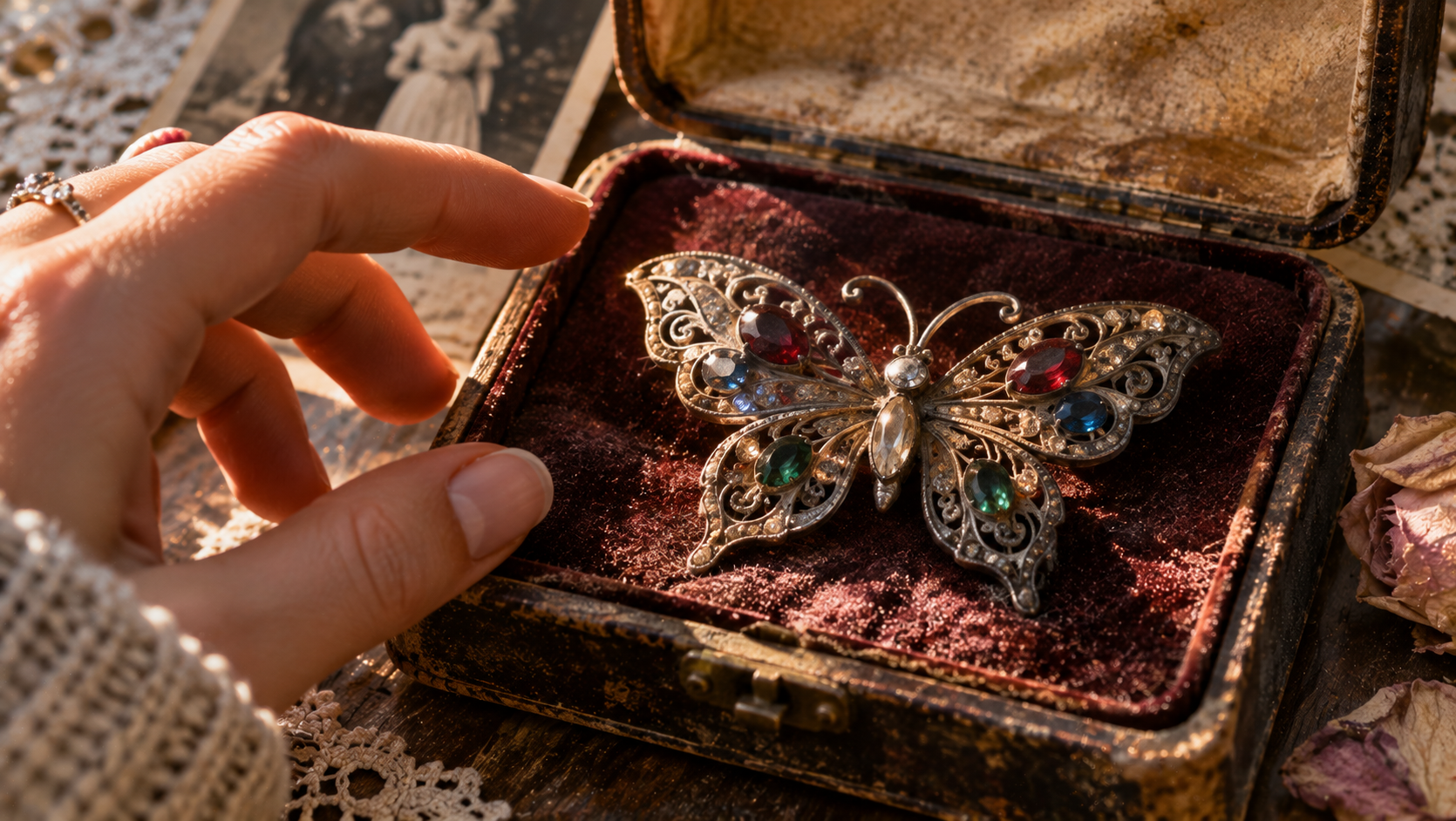
On my wedding day in June 2003, my mother-in-law, Eleanor, pressed a small velvet box into my hands with a thin smile. ‘It’s just costume jewelry,’ she said loudly enough for the guests to hear. ‘But it looks old, and I know how you love vintage things.’ Inside was a brooch—a tarnished silver butterfly with chips of colored glass. I thanked her and pinned it to my dress, ignoring the sting. I was twenty-six, marrying into the Whitfield family of Savannah, Georgia, and I had already learned that Eleanor’s gifts always came with a hidden price.
I wore the brooch for exactly one hour before it snagged my lace sleeve. I tucked it into my clutch and forgot about it. For two decades, it lived in a shoebox of forgotten things—until the morning a museum curator called and asked if I still owned a ‘butterfly brooch with cabochon stones.’ My heart stopped. Because I had always assumed it was worthless.
The Shoebox Secret
The call came on a Tuesday in October 2023. I was in my kitchen in Athens, Georgia, packing lunches for my two kids. The caller introduced herself as Dr. Lena Ortiz from the Georgia Museum of Art. ‘Mrs. Hayes? We’re conducting a provenance review of items donated by the Whitfield estate. Your name appeared in Eleanor Whitfield’s records. Did she ever give you a piece of jewelry—specifically a butterfly brooch?’
I nearly dropped the phone. ‘She gave me a fake one at my wedding,’ I said. ‘It’s in a box somewhere.’
Dr. Ortiz’s voice tightened. ‘Ma’am, that brooch is not fake. It’s a missing piece from the 1893 World’s Columbian Exposition—a prototype by the jeweler who later founded a famous Chicago house. It was stolen from a private collection in 1972. It’s considered a national treasure.’
I sat down on the kitchen floor. Twenty years of silent resentment toward Eleanor—the woman who called me ‘the help’ behind my back and once gave me a used candle for Christmas—suddenly felt very complicated.
The Accusation That Changed Everything
I found the brooch that night, buried under old report cards and a broken watch. It looked exactly as I remembered: dull, chipped, unremarkable. But under a jeweler’s loupe, the ‘glass’ showed tiny hallmarks. The silver was actually platinum. The stones were sapphires, rubies, and a single canary diamond.
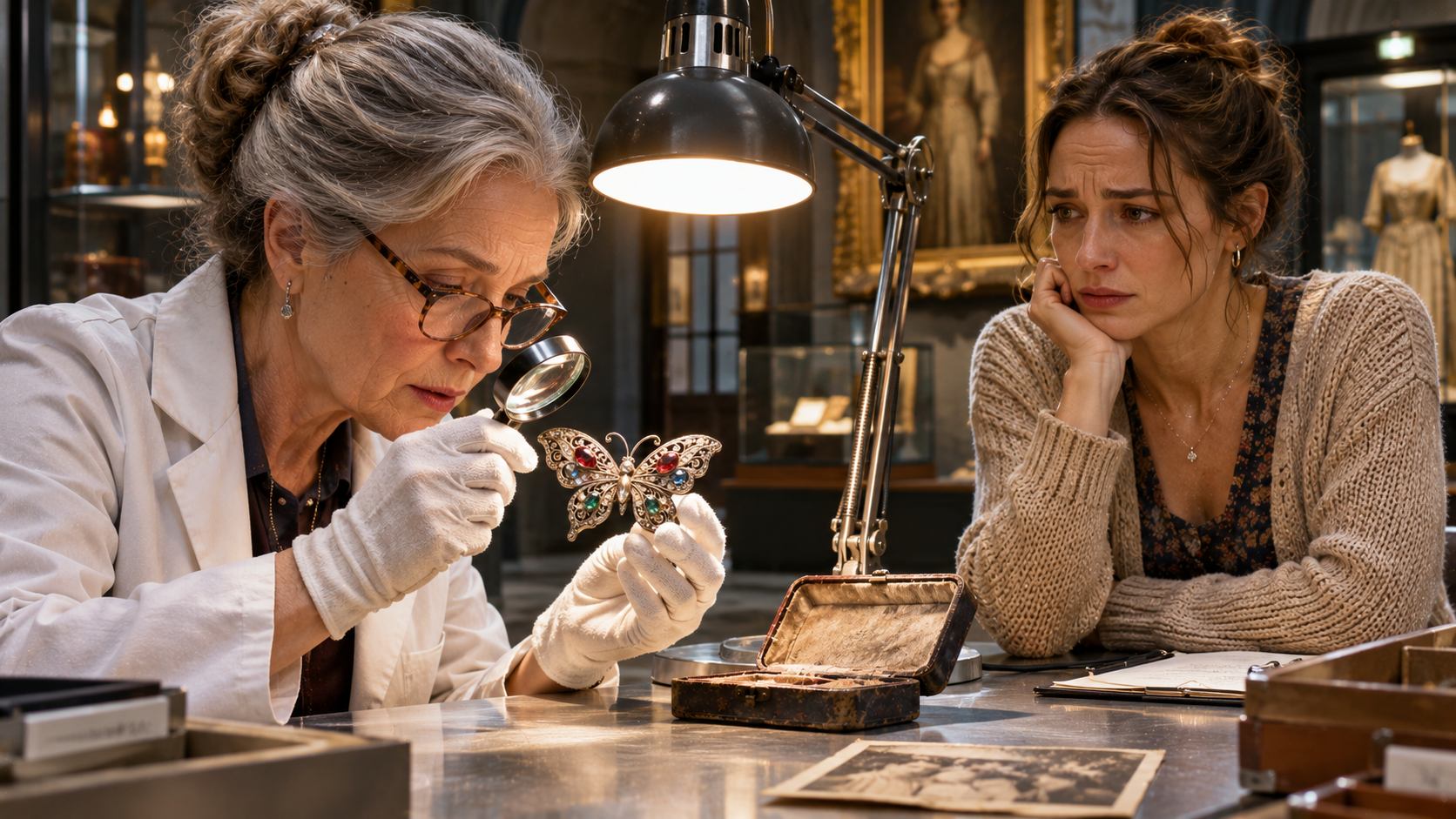
The next week, I drove to the museum with the brooch in a Ziploc bag. Dr. Ortiz confirmed it was the missing ‘Whitfield Butterfly’—named for the family who had owned it since 1895. Eleanor’s grandfather had purchased it at auction in 1973, just a year after the theft. The seller was never identified. Eleanor had inherited it in 1999 but never reported it.
Why give it to me? The answer came from an unexpected source: Eleanor’s sister, my aunt-in-law Margaret, who had been estranged from the family for years. ‘Eleanor was terrified of that brooch,’ Margaret told me over coffee. ‘She thought it was cursed. Her husband—your father-in-law—found out it was stolen and threatened to turn it in. She gave it to you to get it out of the house.’
The Fallout
The museum wanted the brooch back. Legally, I had no claim—it was stolen property. But the Whitfield family had a claim too: they had bought it in good faith. The museum offered a settlement: they would keep the brooch, and I would receive a tax deduction for its appraised value—$1.2 million—if I donated it.
I called my husband, Daniel, expecting him to be furious at his mother. Instead, he was quiet. ‘She gave it to you to protect herself,’ he said. ‘That’s not a gift. That’s a burden.’
Eleanor, now eighty-two and living in assisted living, refused to discuss it. ‘I don’t remember,’ she said when I visited. But her hands trembled when I mentioned the butterfly.
I donated the brooch. The museum unveiled it in a special exhibit called ‘The Whitfield Butterfly: A Journey Home.’ Daniel and I attended the opening. Eleanor did not.
The Letter in the Lining
A month after the donation, Dr. Ortiz called again. ‘We found something inside the brooch’s lining,’ she said. ‘A folded piece of paper. It’s addressed to you.’
I drove to the museum that afternoon. The letter was written in Eleanor’s shaky handwriting, dated 2003—my wedding day.
‘Dear Claire, I know you think I hate you. I don’t. I’m giving you this because I’m afraid. My father stole it, and I’ve spent my whole life waiting to be caught. Maybe if you have it, the curse will pass to you. I’m sorry. I’m a coward.’
I read it three times. For twenty years, I had believed Eleanor saw me as unworthy. In reality, she saw me as a scapegoat.
What the Butterfly Taught Me
I never got an apology from Eleanor. She passed away six months later, leaving me nothing but a set of chipped teacups. But I did get something else: clarity.
The brooch was never a gift. It was a handoff—a way for Eleanor to unload her family’s shame onto the daughter-in-law she never wanted. And for twenty years, I carried that shame without knowing it.
Today, the Whitfield Butterfly sits in a glass case in Athens, Georgia, with a placard that reads: ‘Donated by Claire Hayes.’ Sometimes I visit it. I don’t feel angry anymore. I feel free.
Because the real treasure wasn’t the brooch. It was the truth—finally out of the shadows, where it belonged.
Recommended Stories
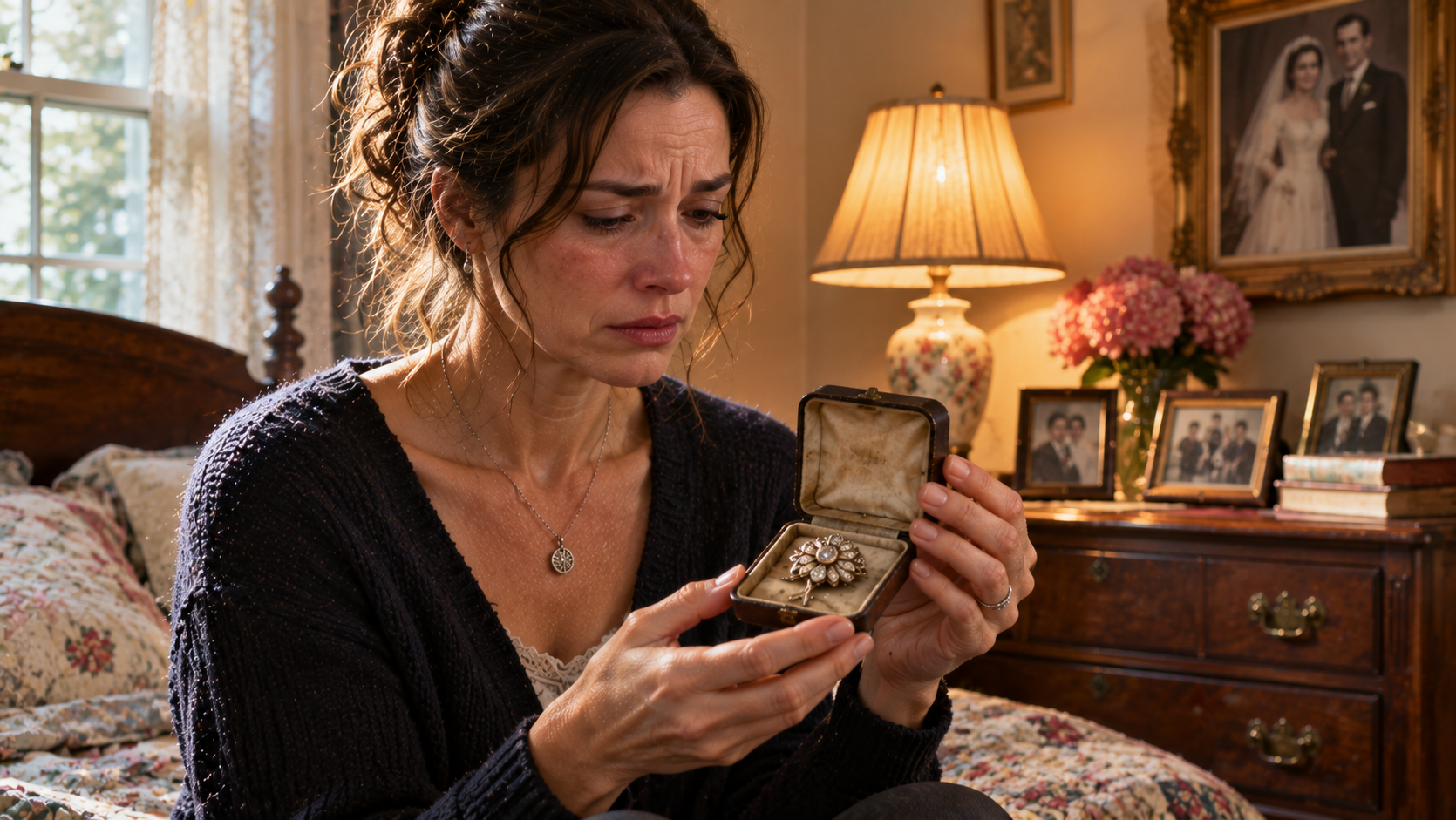
My Mother-in-Law Gave Me a ‘Worthless’ Brooch on My Wedding Day—A Pawn Shop Owner Turned Pale When He Saw It
My mother-in-law called the wedding brooch 'worthless.' The pawn shop owner's face went pale—and then he told me the truth...
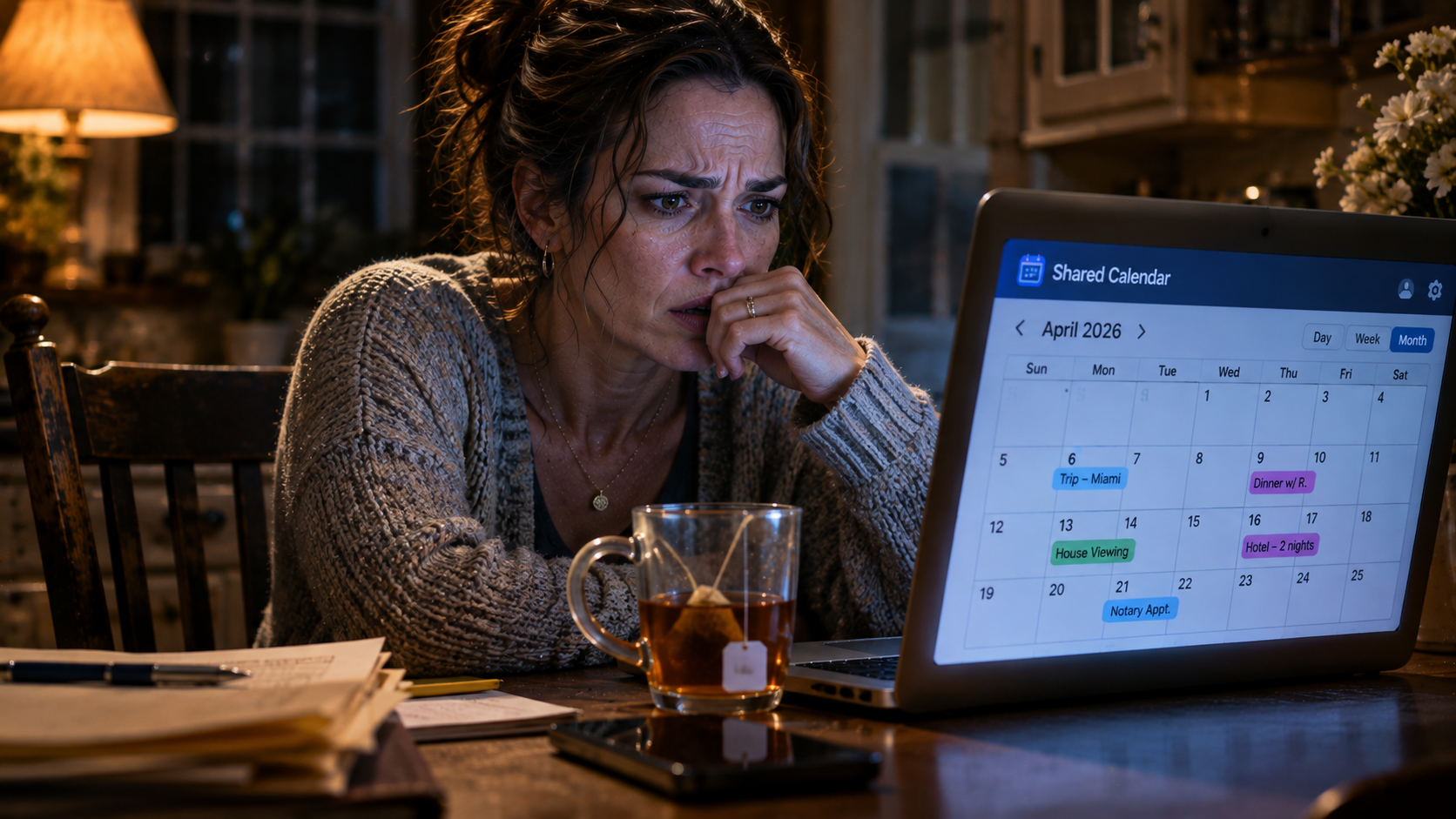
My Husband’s ‘Business Trips’ Always Coincided with My Sister’s ‘Girls’ Weekends’—So I Hired a Private Investigator, and What He Found Destroyed Two Families
His 'business trips' always matched her 'girls' weekends.' I hired a PI. What he found wasn't just an affair—it was...
My Father Left Me a ‘Cursed’ Antique Clock—When I Finally Had It Appraised, the Appraiser Recognized It from a 50-Year-Old Theft
My father left me a 'cursed' antique clock. When an appraiser recognized it from a 50-year-old theft, I uncovered a...