My Stepmother Gave Me a ‘Worthless’ Locket for My Birthday—20 Years Later, a Historian Offered Me $250,000, But the Engraving Inside Revealed It Was Stolen from a War Hero
The Birthday Gift That Felt Like a Punch
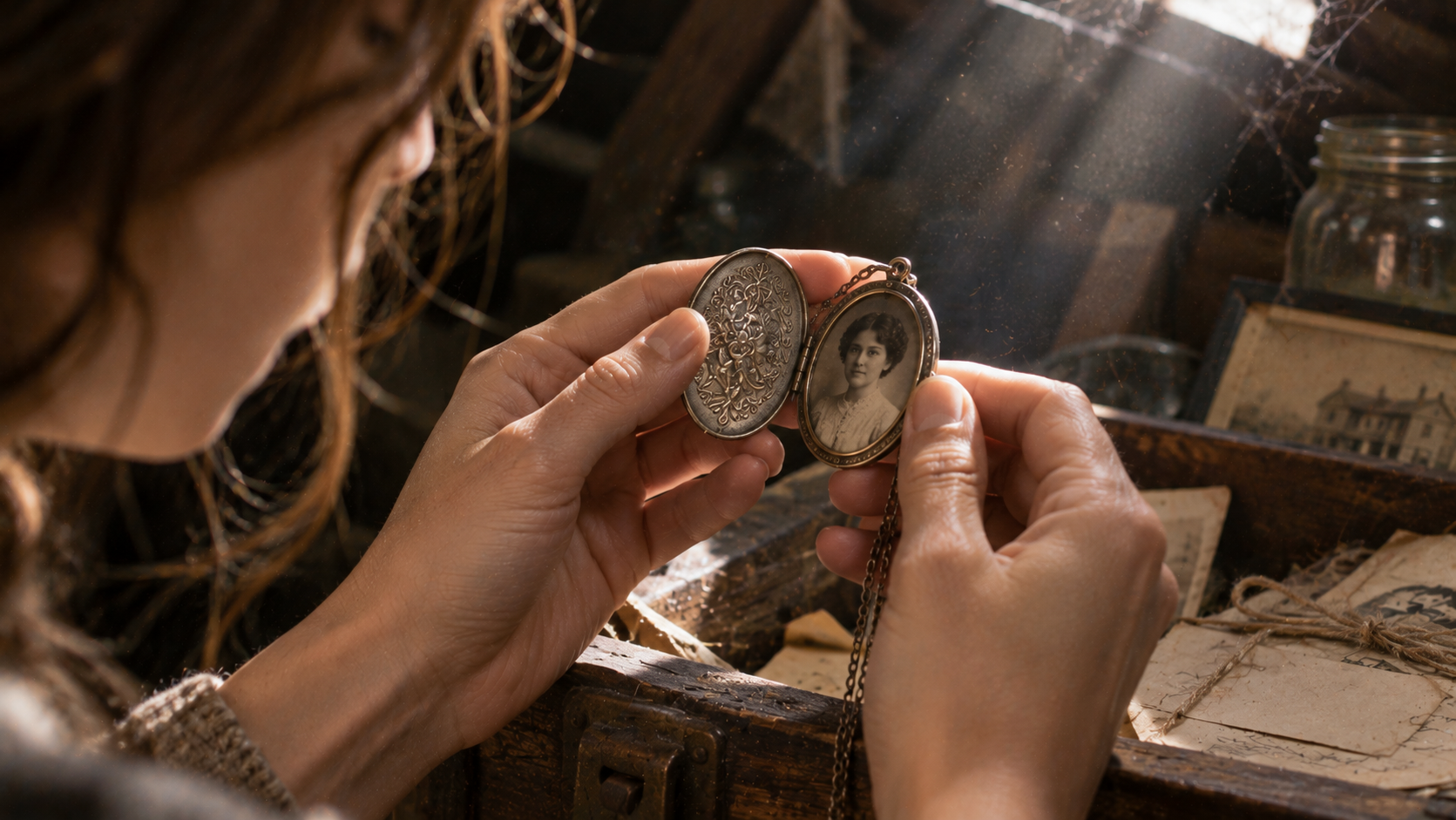
My stepmother, Camille, had a way of making generosity feel like a insult. On my eighteenth birthday, she handed me a small velvet box with a smile that didn’t reach her eyes. Inside was a tarnished locket, its chain thin as thread, the front engraved with a faded floral pattern. ‘It’s an heirloom,’ she said, her voice dripping with fake sweetness. ‘From my side of the family. I thought you might appreciate something with history.’
I knew better than to expect anything real from Camille. She’d married my father when I was twelve, two years after my mother died, and she’d spent every day since trying to erase my mother’s memory from our house. This locket was just another reminder that I was an outsider in my own home. I thanked her politely, then shoved the box into a drawer and forgot about it.
That was twenty years ago. I’m now thirty-eight, living in Portland, Oregon, with a career as a high school history teacher and a life that feels finally my own. The locket stayed buried in a shoebox through college, through my father’s death, through every move. I never wore it. I never even looked at it closely. Until last month, when a historian named Dr. Eleanor Vance called my school out of the blue.
A Call That Changed Everything
Dr. Vance was researching artifacts from World War II, specifically items looted from European families during the Holocaust. She’d been contacted by a collector who’d seen a photo of my locket—apparently, I’d posted it on a genealogy forum years ago, asking if anyone recognized the floral pattern. I’d forgotten all about that post. But Dr. Vance hadn’t. She asked if she could examine the locket in person. ‘It may be more significant than you realize,’ she said.
I agreed, mostly out of curiosity. When she arrived at my apartment, she spent twenty minutes examining the locket under a magnifying glass. Then she looked up, her face pale. ‘This belonged to Captain James A. Whitfield,’ she said. ‘A war hero who saved dozens of lives during the Battle of the Bulge. His family was prominent in Charleston society. The locket was reported stolen in 1944, along with other valuables from his estate.’
My heart stopped. ‘Stolen? By whom?’
Dr. Vance hesitated. ‘The report names a suspect: a young woman who worked as a maid for the Whitfield family. Her name was Camille Duval.’
My stepmother. The woman who’d given me the locket as a ‘family heirloom.’
The Truth Behind the Tarnish
I felt the floor drop out from under me. Camille had always been secretive about her past, but I’d never imagined this. Dr. Vance explained that the locket contained a hidden engraving inside the clasp—a tiny inscription that read ‘To my beloved, from J.A.W.’ The historian believed it was a gift from Captain Whitfield to his fiancée, who died in the war. The locket was valued at $250,000, not just for its materials but for its historical significance.
But I couldn’t sell it. Not after learning it was stolen. I thought about my mother, who’d taught me right from wrong. She would have returned it without hesitation. So I did the only thing that felt right: I contacted the Whitfield family and arranged to give it back.
The family’s response was overwhelming. The last surviving son, a ninety-two-year-old veteran named Thomas Whitfield, invited me to his home in Charleston. When I handed him the locket, he wept. ‘My father gave this to my mother the day before he shipped out,’ he said. ‘She thought it was lost forever.’

The Unexpected Reward
I expected nothing in return. But Thomas insisted on giving me a reward—not the full $250,000, but a generous $25,000, which he said was a fraction of what the locket meant to his family. He also wrote a letter to my school, praising my integrity and suggesting they name a scholarship after my mother.
That scholarship now helps students like me—kids who grew up feeling like outsiders—pursue their dreams. And Camille? She’s still alive, living in Florida. I haven’t spoken to her since I learned the truth. Part of me wants to confront her, to ask why she gave me a stolen item. But another part of me realizes it doesn’t matter. She gave me a gift, all those years ago, thinking it was worthless. Instead, it taught me the value of honesty—and the power of doing the right thing, even when no one is watching.
Sometimes, the most tarnished things hold the brightest stories. And sometimes, the people who try to diminish us end up giving us exactly what we need to rise.
Recommended Stories
My Mother-in-Law Gave Me a ‘Worthless’ Brooch on My Wedding Day—A Pawn Shop Owner Turned Pale When He Saw It
My mother-in-law called the wedding brooch 'worthless.' The pawn shop owner's face went pale—and then he told me the truth...
My Husband’s Ex-Wife Moved In with Us—Then I Found Her Diary and Learned the Truth
When my husband's ex-wife moved in, I thought it was charity. Then I found her diary and learned it was...
My Mother Gave Me a ‘Worthless’ Necklace for My Birthday—Then a Jeweler Offered Me $100,000 Because of a Hidden Inscription
My mother gave me a 'worthless' necklace for my birthday. Then a jeweler saw the hidden inscription and offered me...