My Father Promised Me His Vintage Car Collection—After He Died, My Stepmother Sold It for $50,000. Then I Found the Original Title in His Safe
The Promise That Vanished Overnight
My father, Robert “Bob” Callahan, was a man of grease and grit. He spent thirty-five years as a diesel mechanic in Bakersfield, California, and every penny he saved went into his true passion: a collection of five vintage cars, each one a piece of American history. There was a 1957 Chevrolet Bel Air, a 1965 Ford Mustang, a 1969 Dodge Charger, a 1972 Pontiac Firebird, and his crown jewel, a 1953 Corvette. He kept them in a climate-controlled garage behind our house, and every Sunday, he’d let me help him polish the chrome.
“These cars are your legacy, Maya,” he told me when I was twelve. “When I’m gone, they’re yours. Not your stepmother, not anyone else. You’ll have something real to hold onto.”
I believed him. My mother died when I was eight, and my father remarried Diane a year later. Diane was polished, charming, and always smelled of expensive perfume. She never liked me much, but she loved my father’s pension and the house. The cars? She called them “rusty junk.”
When my father passed away from a heart attack at sixty-eight, I was devastated. But I took comfort in knowing his wishes were clear. He’d told me a hundred times: the cars were mine. The will, he said, was in his safe. But Diane got to the safe first.
The Sale That Stole My Legacy
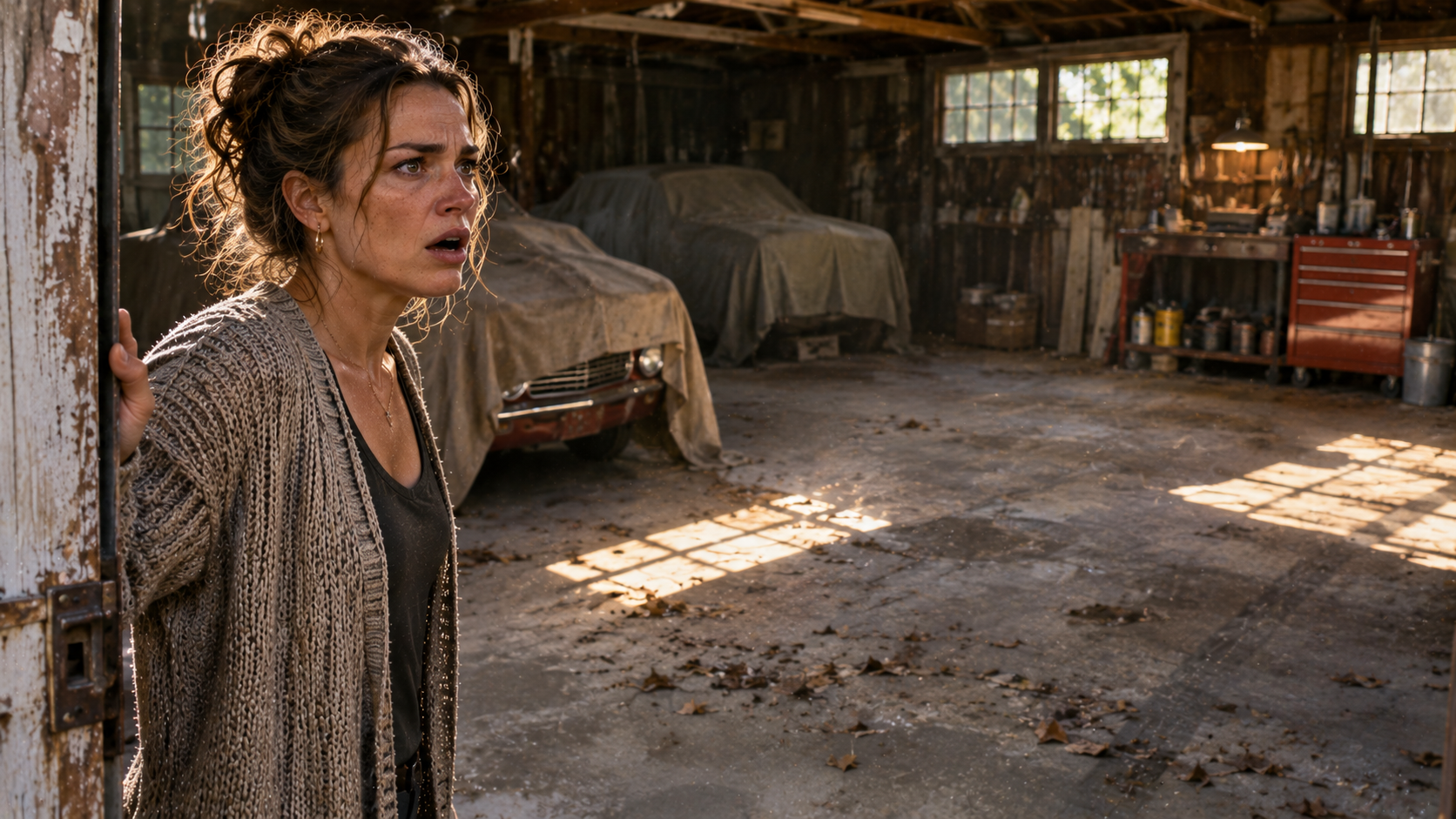
Three weeks after the funeral, I drove to the house to collect the cars. Diane met me at the door in a silk robe, a glass of white wine in her hand.
“They’re gone,” she said flatly.
“What do you mean, gone?”
“Sold. All five. Got fifty grand for the lot. Some dealer from Los Angeles came with a trailer.” She smiled. “You didn’t really think Bob would leave them to you, did you? I’m his wife. Everything goes to me.”
I felt the floor drop out from under me. Those cars were worth at least $250,000—maybe more. The Corvette alone was a six-figure classic. She’d sold them for a fraction of their value, and she knew it. She just wanted them gone before I could claim them.
“Where’s the will?” I demanded.
“Filed with the county. Everything’s mine. You get nothing.”
I left in tears, but something didn’t add up. My father was meticulous. He would never have left something that important to chance. That night, I remembered something he’d told me years earlier: “If Diane ever gives you trouble, look behind the workbench in the garage. There’s a second safe. The combination is your birthday.”
The Hidden Safe and the Original Title
The next day, I went back when Diane was at her weekly tennis lesson. The garage was empty, the cars gone. But behind the heavy wooden workbench, bolted to the concrete wall, was a small steel safe I’d never noticed. My hands trembled as I spun the dial: 0-8-1-4. My birthday.
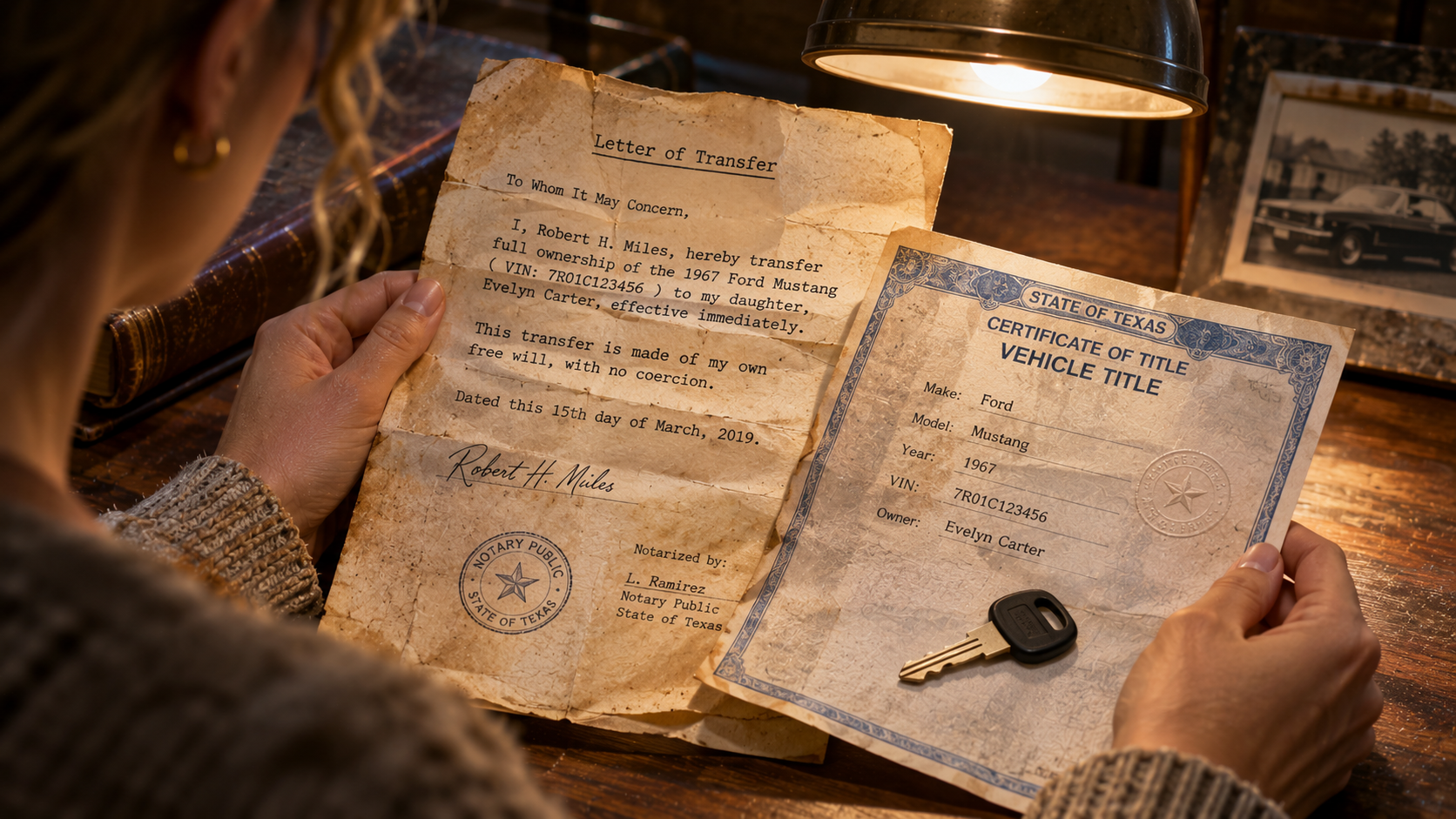
Inside was a single manila envelope. It contained the original title for the 1953 Corvette, made out to my father. But that wasn’t all. There was also a notarized letter, dated six months before he died.
“To whom it may concern,” it read. “I, Robert Callahan, being of sound mind, hereby bequeath my entire vintage car collection to my daughter, Maya Callahan. My wife, Diane, has no claim to these vehicles. I have enclosed the original titles for all five cars, which I removed from the joint safe because Diane threatened to sell them. The cars are to be transferred to Maya upon my death. Signed, Robert Callahan.”
I stared at the letter, my heart pounding. He’d known. He’d known Diane would try to steal them. But where were the other four titles? Then I saw a small key taped to the back of the envelope. It was the key to a safety deposit box at our local bank.
The Dealer, the Law, and the Lie That Unraveled
I went to the bank the next morning. The safety deposit box contained the titles for all five cars, plus a copy of my father’s will—the real one, signed and witnessed. It left everything to me: the house, the cars, and his savings. Diane had filed a forged will with the county, one that left everything to her.
I hired a lawyer, Elena Vasquez, who specialized in estate fraud. She was sharp and furious on my behalf. “This is clear-cut,” she said. “Your father’s letter, the titles, and the original will are enough to prove Diane committed fraud. We can also go after the dealer who bought the cars. He should have checked the titles.”
We tracked down the dealer, a man named Vince Marino in Los Angeles. When Elena called him, he was defensive. “I bought them fair and square,” he said. “She had the titles.”
“Did you notice the titles were in Robert Callahan’s name, not Diane’s?” Elena asked. “And that the transfer wasn’t notarized? That’s auto theft.”
There was a long pause. “Look,” Vince said finally, “she told me her husband was dead and the cars were hers. I paid fifty grand cash. I didn’t ask questions.”
“Then you’ll cooperate,” Elena said. “Or you’ll be charged as an accessory.”
Vince agreed to return the cars in exchange for not pressing charges. He’d been duped, and he knew it. But Diane wasn’t going down without a fight.
The Confrontation That Changed Everything
We served Diane with a lawsuit the following week. She showed up at my apartment, pounding on the door.
“You think you can take what’s mine?” she screamed. “I was married to him for twelve years! I deserve those cars!”
“You deserve nothing,” I said, my voice steady. “You forged a will. You sold my inheritance for pocket change. And you lied to a dealer.”
Her face went pale. “You can’t prove any of that.”
“I have the original titles. I have the notarized letter. And I have a copy of the real will from the bank.” I held up my phone. “And I’ve been recording this conversation. You just admitted the cars were ‘yours’—but they were never yours to sell.”
She lunged at me, but my neighbor, a retired cop, stepped into the hallway. “Everything okay here?” he asked.
Diane backed off, her eyes wild. “This isn’t over,” she spat.
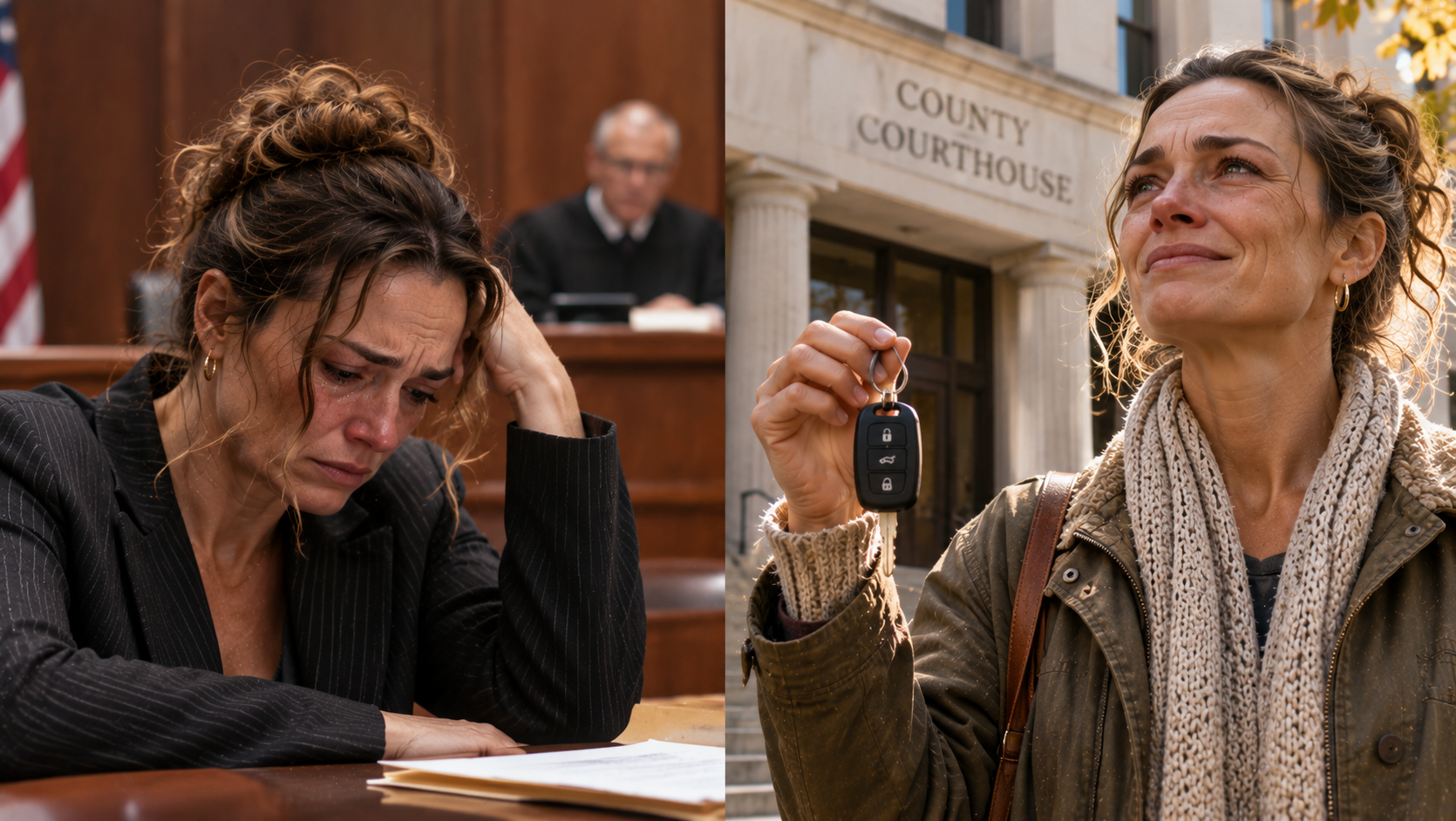
But it was. The court ruled in my favor within three months. The forged will was invalidated. Diane was ordered to repay the $50,000 to Vince—money she didn’t have. She was also charged with fraud and forgery. She took a plea deal: probation and restitution. The house was sold to cover her debts, and she moved to Arizona to live with her sister.
The Cars Come Home
Vince returned the cars to me, dusty but intact. The Corvette needed a new battery, but the engine turned over on the first try. I cried when I heard that V8 rumble—the same sound I’d heard every Sunday of my childhood.
I sold the Bel Air and the Charger to pay for the legal fees and to restore the other three. The Corvette, the Mustang, and the Firebird are now in my own garage in Sacramento, where I work as a high school auto shop teacher. Every Sunday, I polish the chrome and think of my dad.
He knew Diane would try to take them. He also knew I’d fight for them. And he made sure I had the tools to win.
Sometimes, the people we love leave us more than memories. They leave us proof—and a key to the truth.
Recommended Stories
At My Wedding, My Mother-in-Law Announced She Was Pregnant—Then My Father Stood Up
A wedding toast turns into a confession: my mother-in-law is pregnant, and my father is the father. The fallout shatters...
My Mother Gave My Wedding Dress to My Ex-Sister-in-Law—Then I Found a Hidden Letter in the Seams That Revealed Her True Motive
When I saw my ex-sister-in-law wearing my $4,800 wedding dress, I thought my mother had betrayed me. Then I found...
My Father Left Me a ‘Cursed’ Antique Clock—When I Finally Had It Appraised, the Appraiser Recognized It from a 50-Year-Old Theft
My father left me a 'cursed' antique clock. When an appraiser recognized it from a 50-year-old theft, I uncovered a...