My Sister Asked Me to Donate My Kidney to Her—Then I Found Out She’d Been Telling Everyone I Was a ‘Deadbeat’ and Had Been Stealing from Our Grandmother
The Phone Call That Changed Everything
I was halfway through my shift at the hardware store when my phone buzzed. It was my sister, Melissa. We hadn’t spoken in months—not since she’d screamed at me for missing her birthday dinner. I almost let it go to voicemail, but something made me answer.
“Tara, it’s me,” she said, her voice cracking. “I need you. My kidneys are failing. The doctors say I need a transplant within six months, and you’re the only match in the family.”
I stood there in aisle seven, holding a box of nails, feeling the floor tilt beneath me. Melissa and I had never been close—she was the golden child, the one who got the new car at sixteen while I worked double shifts to buy my own. But hearing her sound so scared broke something open in me. I said yes before I even thought it through.
That night, I told my husband, Derek, what I’d agreed to. He didn’t say much, just looked at me with that quiet worry he gets when he thinks I’m being too generous. “Are you sure, Tara? You know how she can be.”
“She’s my sister,” I said. “What kind of person would I be if I said no?”
I didn’t know then that the answer was: a person who wouldn’t have been played for a fool.
The Tests and the Whispers
The next few weeks were a blur of blood draws, scans, and meetings with transplant coordinators. Melissa was all sweetness and gratitude, texting me heart emojis and calling me her “hero.” But something felt off. She never asked how I was doing, never offered to help with the cost of the tests, never even thanked Derek for picking up the slack at home while I was at appointments.
Then, one afternoon, I ran into our cousin, Gina, at the grocery store. She looked at me strangely when I mentioned the transplant.
“You’re really going through with it?” she asked, her eyebrows raised. “After everything you’ve said about Melissa?”
“What do you mean?” I asked.
Gina hesitated, then pulled out her phone. “I shouldn’t be showing you this, but… you need to see it.”
It was a group chat—Melissa, Gina, and three other cousins. Melissa had written: “Tara’s finally doing something useful for once. She’s giving me her kidney. About time she contributed to this family instead of being a deadbeat.”
I felt like I’d been punched in the gut. Deadbeat? I’d worked since I was fifteen. I’d paid my own way through community college. I’d never asked anyone for a dime.
Gina scrolled up. There was more. Melissa had been telling everyone that I’d “borrowed” money from our grandmother and never paid it back—that I was a mooch who only showed up when I needed something. But it was a lie. I’d never taken a cent from Grandma Rose. In fact, for the past two years, I’d been the one quietly covering Grandma’s utility bills because she was too proud to ask for help.
What Grandma Rose Knew

I drove straight to Grandma Rose’s assisted living facility. She was in her usual chair by the window, working on a crossword puzzle. When I walked in, her face lit up—then fell when she saw my expression.
“What’s wrong, sweetheart?” she asked.
I sat down and told her everything. The transplant, the group chat, the lies. Grandma listened without interrupting, her hands folded in her lap. When I finished, she was quiet for a long moment.
“I know,” she said finally. “I’ve known for a while.”
“What?”
“Melissa’s been coming by, asking for money. She told me you needed it—that you were behind on your mortgage and too embarrassed to ask. I gave her five thousand dollars over the past year.” Grandma’s voice was steady, but her eyes were sad. “I should have known better. But she’s my granddaughter, and I wanted to believe her.”
My hands were shaking. “Grandma, I never got that money. I never asked her to do that.”
“I know that now,” she said. “I checked my bank statements last month. The withdrawals didn’t match what she told me. She’d been pocketing most of it.”
I felt sick. Melissa hadn’t just been lying about me—she’d been stealing from our grandmother, using my name as cover.
The Confrontation
I didn’t go to the next transplant appointment. Instead, I showed up at Melissa’s apartment with Gina’s screenshots and Grandma’s bank records printed out. She opened the door in her yoga clothes, a smoothie in hand, looking perfectly healthy—which, I realized, she probably was. The kidney story might have been real, but the timeline? The urgency? I had no proof, but I suspected she’d exaggerated it to get me on the hook.
“Tara!” she said, her smile faltering. “What are you doing here?”
I held up the papers. “We need to talk.”
She glanced at the pages, and her face went pale. “Where did you get those?”
“Doesn’t matter. What matters is that you’ve been telling everyone I’m a deadbeat, that I stole from Grandma, and that I’m only good for spare parts. And you’ve been taking her money for a year.”
Melissa’s expression shifted—from shock to something harder. “You don’t understand. I needed that money. My medical bills—”
“Your medical bills?” I cut her off. “Grandma gave you five thousand dollars, Melissa. Where did it go? Because it wasn’t to me, and it wasn’t to the hospital.”
She looked away. “I had expenses.”
“You had a manicure and a new purse,” I said, pointing at the designer bag on her counter. “I saw your Instagram.”
Her jaw tightened. “Fine. So I lied. But you’re still going to donate, right? You promised.”
I stared at her—this person I’d shared a bedroom with, fought with over the bathroom mirror, hugged at our parents’ funeral. “No,” I said. “I’m not.”
“You can’t do that!” she screamed. “I’ll die!”
“You’ll find another donor,” I said. “Or you’ll finally tell the truth. Either way, I’m done.”
The Will and the Reckoning
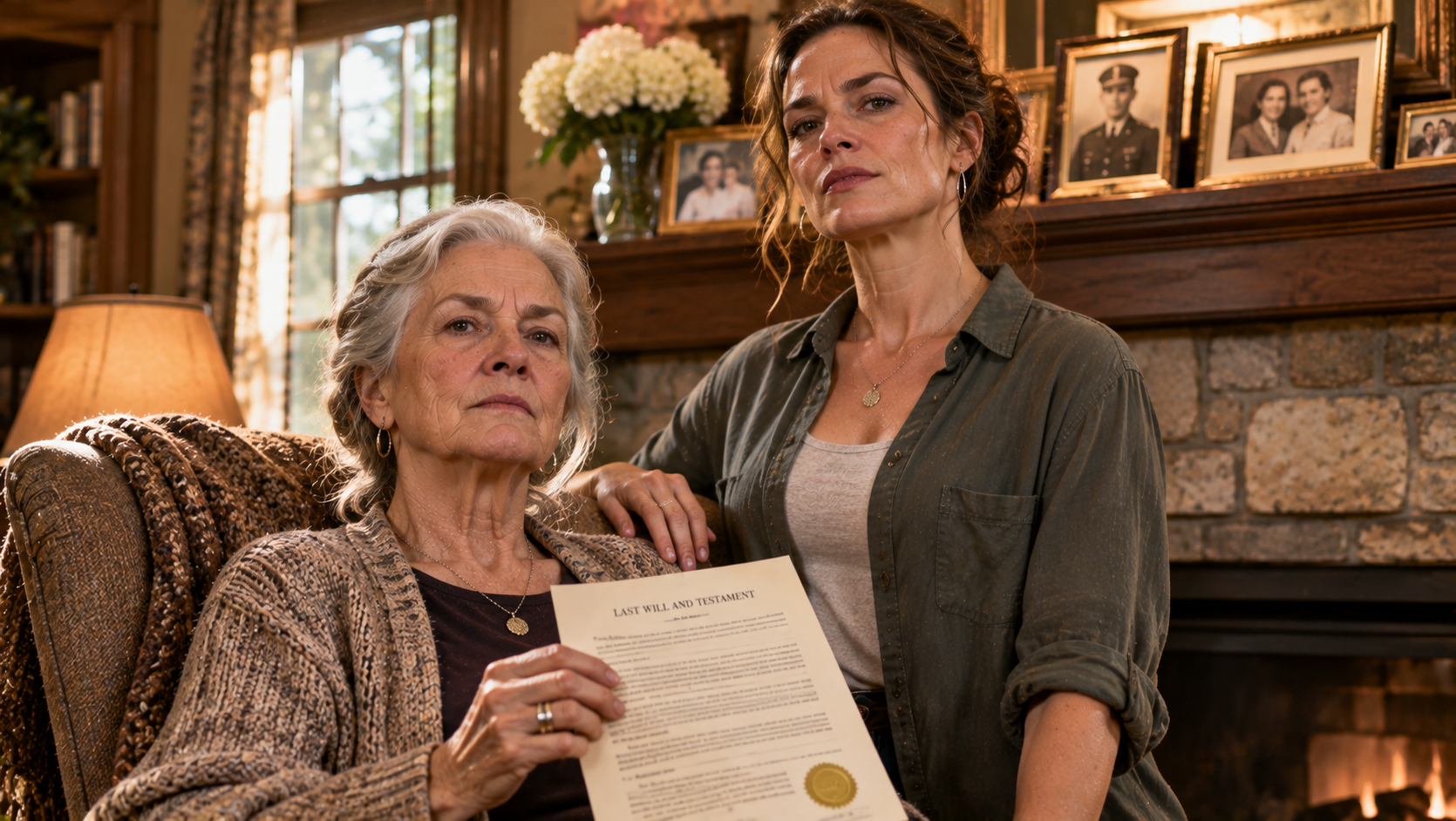
The fallout was ugly. Melissa told our aunts and uncles that I’d backed out at the last minute, that I was selfish and cruel. But Gina backed me up. She showed the group chat to the rest of the family, and one by one, the cousins started asking questions. When Grandma Rose called a family meeting and presented her bank records, the room went silent.
“I’ve changed my will,” Grandma announced. “Melissa, you’ll receive nothing. Tara, you’ll get the house and the savings. Not because you donated a kidney—because you’ve been the one taking care of me all along.”
Melissa stormed out, but no one followed her. The rest of the family stayed, apologizing to me, asking how they could help. It wasn’t a perfect reconciliation—some wounds take years to heal—but it was a start.
As for Melissa, she eventually found another donor—a friend from her church. I heard she’s doing well. I hope that’s true. But I also hope she’s learned something about the cost of lying to the people who love you.
I still visit Grandma Rose every Sunday. We do the crossword together, and she tells me stories about her youth. Sometimes, when the light hits the window just right, I think about how close I came to losing everything—my dignity, my family, my sense of self—all because I believed a lie dressed up as love.
But I didn’t lose it. I found something better: the truth, and the courage to stand by it.
Recommended Stories

My Husband’s ‘Business Partner’ Turned Out to Be His Secret Wife—Then I Discovered He’d Been Funding Her Lifestyle with My Inheritance
She thought her husband was meeting a 'business partner.' Then a text message revealed a secret wife, a hidden child,...
My Father’s Dying Words Were ‘Check the Garage’—What I Found Behind the Drywall Made Me Call the Police
His dying words were a riddle. Behind the garage wall, I found a fake ID, $20,000, and a secret that...

My Sister-in-Law Stole My Baby Name—Then I Discovered Why and It Made Me Cry
She announced the name at Sunday dinner—the name I'd whispered to my belly for months. I called it theft. But...