My Mother Gave Me a ‘Worthless’ Music Box for My Wedding—Then a Collector Offered Me $75,000 Because of a Hidden Compartment
The Gift That Felt Like a Slap
My mother handed me the music box the morning of my wedding, wrapped in a dish towel instead of wrapping paper. It was small, maybe six inches wide, made of dark wood with a tarnished brass key and a lid that stuck. She didn’t smile when she gave it to me. She just said, ‘This was your grandmother’s. It’s not worth anything, but you should have it.’ Then she walked away to check on the caterers.
I stood there in my robe, holding this dusty relic, and felt the familiar sting of being an afterthought. My sister, Marlene, had received a new car for her wedding. My brother, Paul, got a down payment on a house. I got a broken music box that smelled like mothballs.
But I smiled. I always smiled. That was my role in the family—the peacekeeper, the one who never made waves. I tucked the box into my suitcase and didn’t think about it again until three months later, when my husband, Derek, and I were unpacking the last of our wedding gifts.
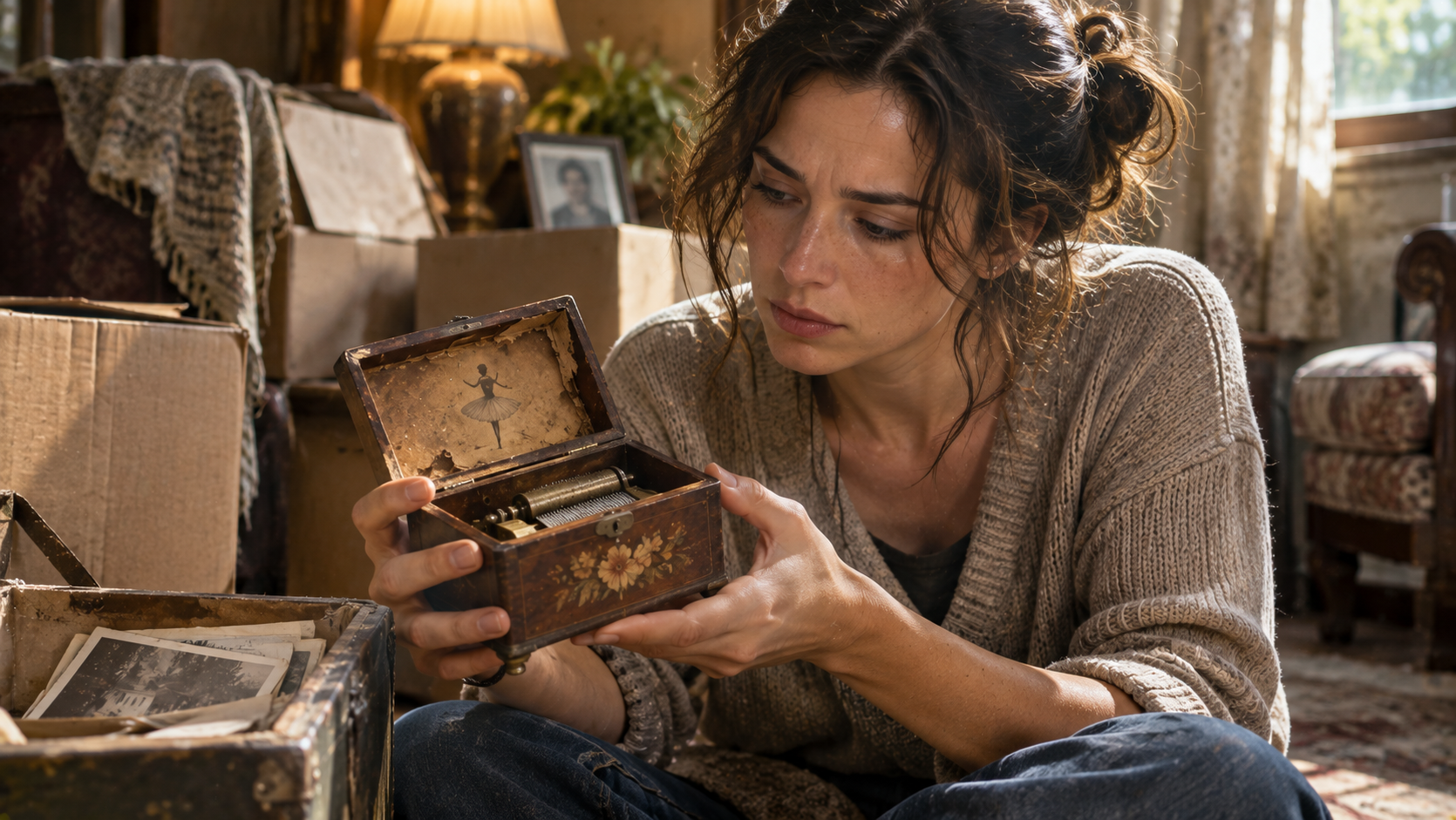
The Box That Wouldn’t Open
Derek was the one who noticed it first. ‘This lid is weird,’ he said, turning the box over. ‘It’s not broken. It’s stuck. Like there’s a latch or something.’
I shrugged. ‘My mom said it’s worthless. Probably just old.’
But Derek, an engineer with a stubborn streak, spent the next hour fiddling with it. Finally, he pressed a tiny, almost invisible button on the bottom corner, and the lid popped open with a soft click.
Inside, there was no jewelry. No letters. Just a small velvet pouch, cracked with age, and a folded piece of paper so yellowed it looked like parchment.
I opened the paper first. It was a receipt from a music shop in Vienna, dated 1938. The handwriting was elegant, almost calligraphic. It read: ‘One custom music box, mahogany, with hidden compartment. Mechanism: Strauss’s Blue Danube. Commissioned by H. Weiss.’
I didn’t know anyone named H. Weiss. My grandmother’s name was Helen. Helen Weiss.
My heart started pounding. I turned to the pouch and shook it gently. A small key fell out, along with a tiny brass cylinder—the kind that goes inside a music box to play a specific tune.
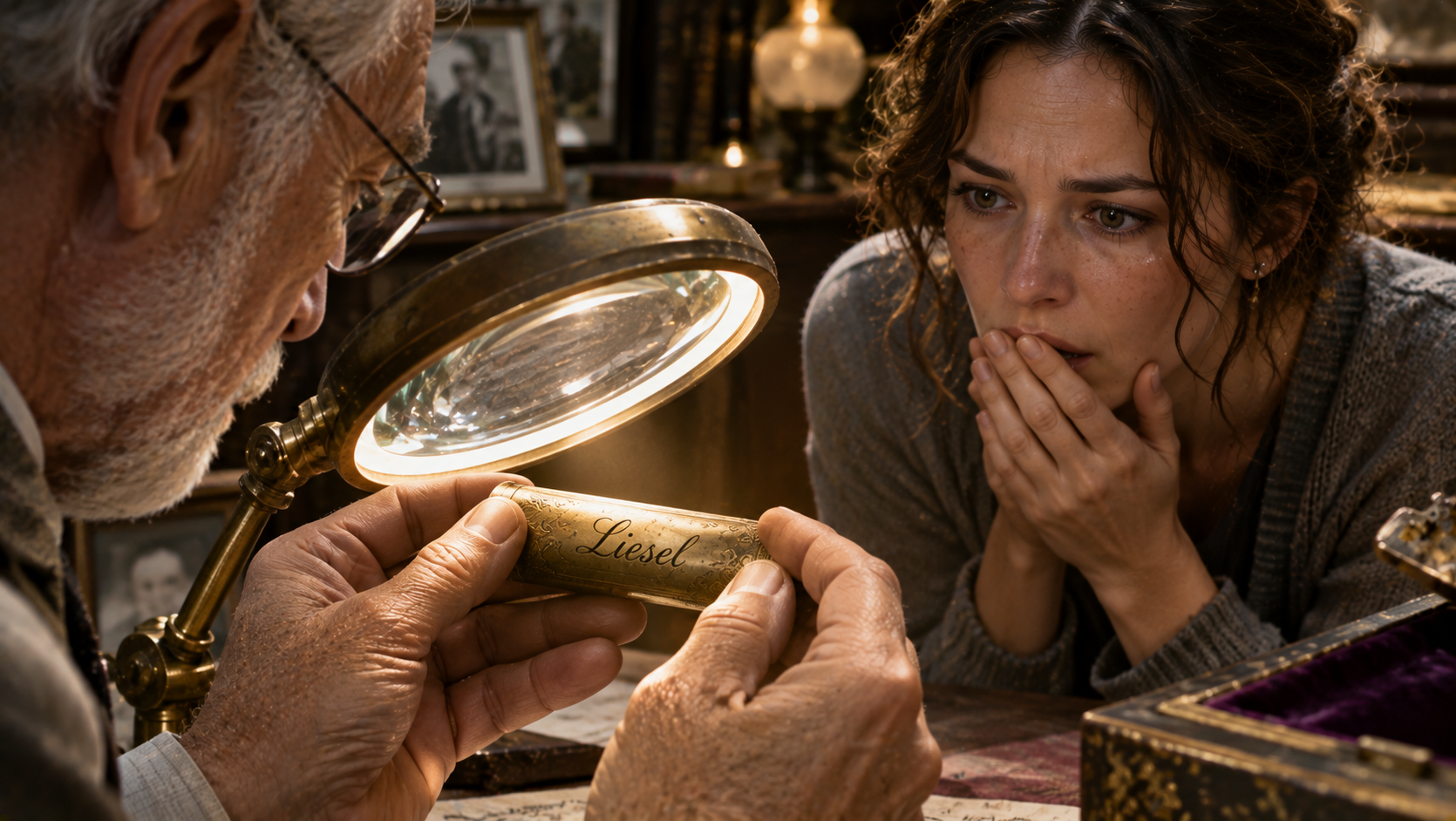
But this cylinder wasn’t like any I’d ever seen. It was engraved with tiny letters, almost too small to read without a magnifying glass. I squinted. It spelled out a name: ‘Liesel.’
I didn’t know who Liesel was. But I knew my grandmother had never mentioned her.
The Collector Who Knew Too Much
A week later, I took the box to an antique appraiser in downtown Portland. I expected him to tell me it was a nice piece of family history, maybe worth a few hundred dollars. Instead, he went pale.
‘Where did you get this?’ he asked, his voice barely above a whisper.
‘My mother. It was my grandmother’s.’
He turned the box over, examined the cylinder, and then looked at me with an expression I couldn’t read. ‘This isn’t just a music box,’ he said. ‘This is a piece of history. The cylinder alone is rare—pre-war Austrian craftsmanship. But the box itself…’ He paused. ‘There’s a collector in New York who’s been looking for this specific piece for twenty years. He’s offered a standing reward of seventy-five thousand dollars for it.’
I nearly fell off my chair. ‘Seventy-five thousand? For a music box?’
‘Not just for the box,’ he said. ‘For what’s inside it.’
The Secret My Grandmother Took to Her Grave
I didn’t sell the box. Not yet. First, I needed to understand.
I called my mother. She was evasive at first, then annoyed. ‘I told you it was worthless. Why are you making a fuss?’
But when I mentioned the name ‘Liesel,’ she went silent. Then she hung up.
That night, my aunt Ruth called me. She was the only one in the family who had ever been kind to me, and she sounded scared. ‘Don’t tell your mother I told you this,’ she whispered. ‘But Liesel was your grandmother’s sister. She disappeared in 1939. The family never talked about her. Your grandmother was heartbroken. She commissioned that music box as a memorial—a way to keep Liesel’s memory alive. The cylinder plays a lullaby their mother used to sing.’
I felt the floor shift beneath me. ‘So the box is a family heirloom?’
‘It’s more than that,’ Ruth said. ‘The collector in New York—his name is David Weiss. He’s Liesel’s grandson. He’s been trying to find that box for decades. It’s the only thing left of his grandmother.’
I sat in the dark for a long time, holding the music box. My mother had given it to me as an insult, a reminder that I was the least important child. But my grandmother had given it to my mother as a sacred trust. And my mother had never even opened it.
The Confrontation That Changed Everything
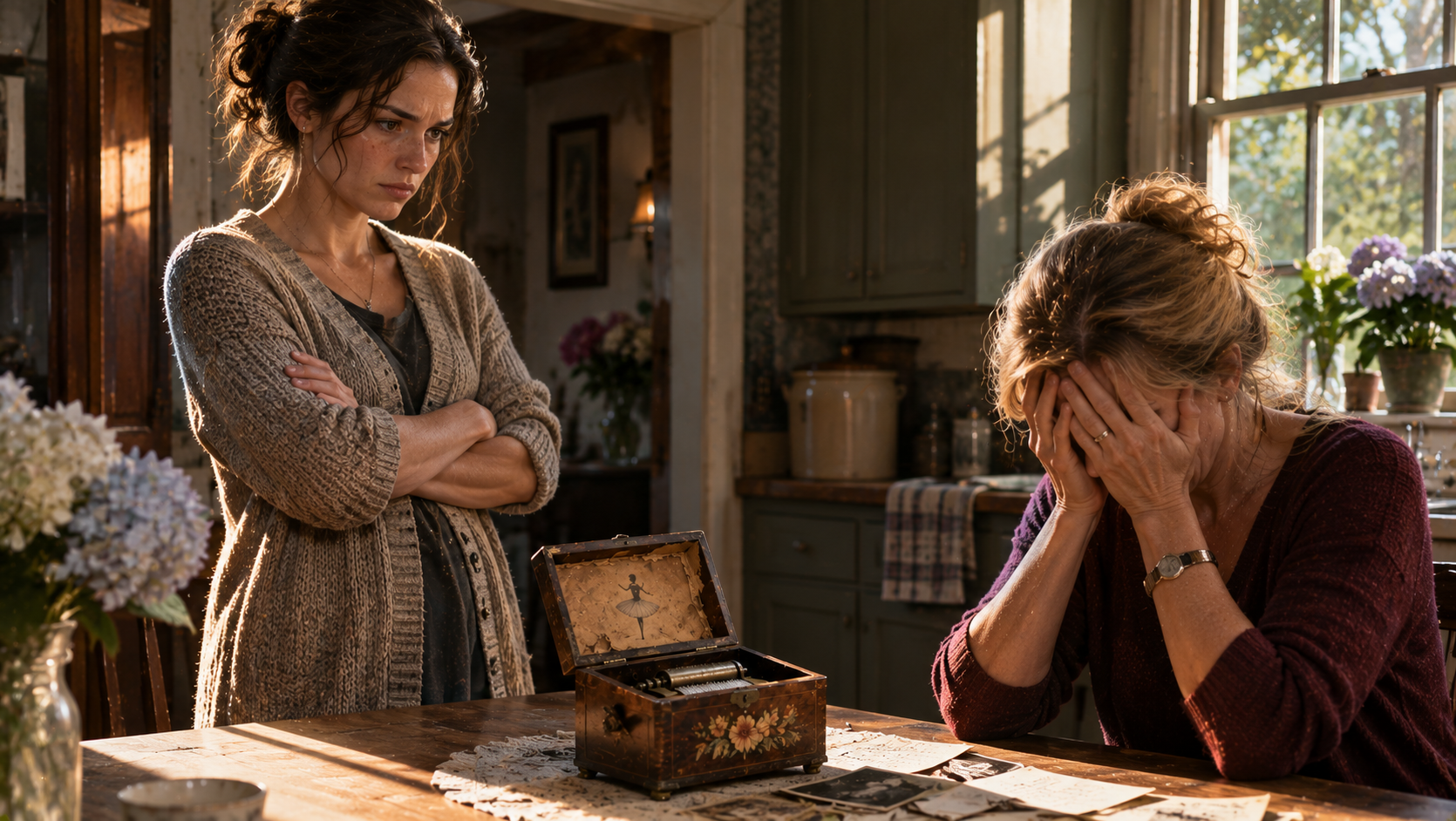
The next day, I drove to my mother’s house. I didn’t call first. I walked in, set the music box on her kitchen table, and opened the hidden compartment in front of her.
She stared at the cylinder, at the name ‘Liesel,’ and her face crumpled. ‘I didn’t know,’ she whispered. ‘I never opened it. I thought it was just junk.’
‘Why did you give it to me?’ I asked. ‘If it was junk, why not throw it away?’
She looked at me then, really looked at me, and for the first time in my life, I saw shame in her eyes. ‘Because you were the only one who would keep it,’ she said. ‘Marlene would have sold it. Paul would have lost it. You… you keep things. You always have.’
It wasn’t an apology. It wasn’t even kind. But it was the truth. And for my mother, that was as close to vulnerable as she ever got.
The Offer I Couldn’t Refuse—And the One I Did
I contacted David Weiss. He flew to Portland two weeks later. He was in his sixties, soft-spoken, with the same blue eyes as my grandmother. When I handed him the music box, he cried.
He told me that Liesel had been sent to a camp in 1939 and never returned. His mother, Liesel’s daughter, had survived by being hidden with a neighbor. The music box was the last thing Liesel had touched before she was taken. David had been searching for it for thirty years.
He offered me the seventy-five thousand dollars. I refused.
Instead, I asked him to let me keep the box for one more week. I wanted to hear the lullaby. I wanted to understand what my grandmother had been trying to preserve.
That night, Derek and I wound the cylinder and let the music play. It was a simple, haunting melody—a mother’s song for her children. And as it played, I realized that my grandmother had never meant for the box to be a slight. She had meant for it to be a bridge. A way to connect us to a past we’d never known.
I gave the box to David. But I kept a recording of the lullaby. And I kept the receipt from Vienna, framed on my wall.
What the Music Box Taught Me
My mother and I still don’t have the relationship I always wanted. She’s still critical, still distant. But something shifted. She calls me now, sometimes, just to talk. She asked to see the recording of the lullaby. She cried when she heard it.
I didn’t get seventy-five thousand dollars. But I got something better. I got the truth—about my grandmother, about my family, about myself. I learned that I wasn’t the afterthought I’d always believed I was. I was the keeper. The one who held the door open to the past.
And sometimes, late at night, I play the lullaby on my phone and think about Liesel, and Helen, and all the women in my family who carried secrets they couldn’t speak. I think about how a ‘worthless’ gift turned out to be the most valuable thing I’ve ever owned.
Not because of the money. Because of the story.
Recommended Stories
My Sister Asked Me to Be Her Surrogate—Then She and Her Husband Disappeared with the Baby and Left Me with a $50,000 Hospital Bill
My sister begged me to be her surrogate. I said yes. Then she and her husband fled the country, leaving...

My Sister Asked Me to Be Her Surrogate—Then She Tried to Take the Baby and Claim I Was Unfit. But She Didn’t Know About the Contract Clause
She asked me to carry her baby. Then she tried to erase me from the child's life. But one clause...
At My Wedding, My Father Objected—Then He Handed Me a Photograph That Proved He Was Right
A bride's world shatters when her father objects at the altar—not out of malice, but because he holds a photograph...