My Brother’s ‘Charity’ Was Actually a Money Laundering Scheme—Then the FBI Knocked on My Door Because My Name Was on the Accounts
The Knock That Split My Life in Two
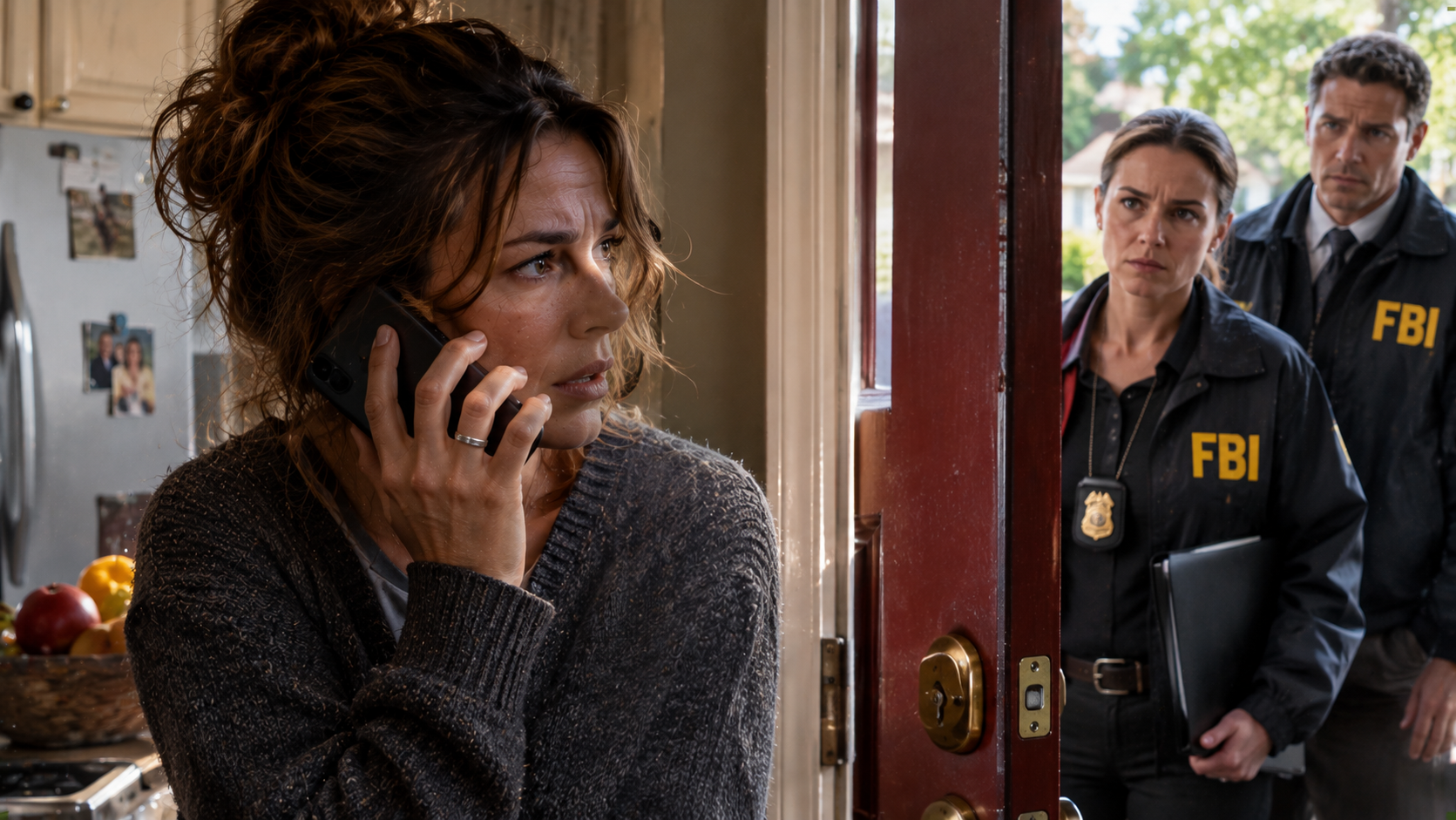
On a gray Tuesday morning in March, I was standing in my kitchen in Boise, Idaho, spreading peanut butter on my daughter’s sandwich when the doorbell rang. Through the frosted glass, I saw two silhouettes in dark suits. My first thought was that it was a package delivery. My second thought, when I opened the door and saw the badges, was that something had happened to my parents.
“Are you Rachel Vance?” the taller agent asked. His voice was flat, professional. I nodded. “I’m Special Agent Cole with the FBI. This is Agent Ramirez. We’d like to ask you a few questions about a charity called Hope’s Bridge Foundation.”
My stomach dropped. Hope’s Bridge was my brother Daniel’s charity. He’d started it six years ago, a nonprofit that supposedly built wells in drought-stricken villages in East Africa. He’d asked me to be on the board as a favor—a ‘diversity hire,’ he’d joked, since I was a high school math teacher and not a wealthy donor. I’d signed the papers he put in front of me at a family barbecue, barely glancing at them.
“I’m on the board,” I said slowly. “But I don’t handle any of the finances. My brother Daniel is the executive director.”
Agent Cole exchanged a look with Ramirez. “Mrs. Vance, your name is on three of the foundation’s bank accounts. You’re listed as a co-signer. We need to understand your role in the transfer of over $2.4 million to offshore accounts over the past eighteen months.”
I felt the floor tilt beneath me. Two point four million dollars. I hadn’t seen a single penny of it. And I was about to learn that my brother—the golden child, the one my parents bragged about at every holiday dinner—had been using me as a human shield for years.
The Brother I Thought I Knew
Daniel was seven years older than me. Growing up in Spokane, Washington, he was the star: valedictorian, debate champion, the son who could do no wrong. I was the quiet one, the math nerd who preferred books to parties. Our parents, both retired teachers, had always held him up as the example I should follow. When he founded Hope’s Bridge, they were ecstatic. They donated their savings—$40,000—to help him get started. They convinced their church group to donate too.
I’d been proud of him. Genuinely. I’d helped him design the charity’s website, I’d spoken at two fundraisers, and I’d even convinced my school’s honor society to do a bake sale that raised $3,200. I never asked where the money went. I trusted him.
After the FBI agents left that morning, I called Daniel. He didn’t answer. I called again. Nothing. I texted: FBI came to my house. Call me now. The message showed as delivered, but no reply came.
That night, I couldn’t sleep. I pulled out the folder of documents Daniel had given me over the years—the board meeting minutes, the annual reports, the glossy brochures with photos of smiling children beside new wells. I’d never read them closely. Now I did. And that’s when I noticed something odd: the annual reports listed ‘administrative expenses’ that consumed nearly 70% of all donations. The wells in the photos were the same wells, reused across multiple years.
My hands were shaking when I found the bank statements tucked into the back of the folder. I’d never seen them before—Daniel must have slipped them in by mistake. They showed transfers to a company called Bright Horizon Trading Ltd., based in the Cayman Islands. The amounts matched large donations from a handful of corporate sponsors. I didn’t recognize any of the sponsor names.
The Evidence I Couldn’t Ignore
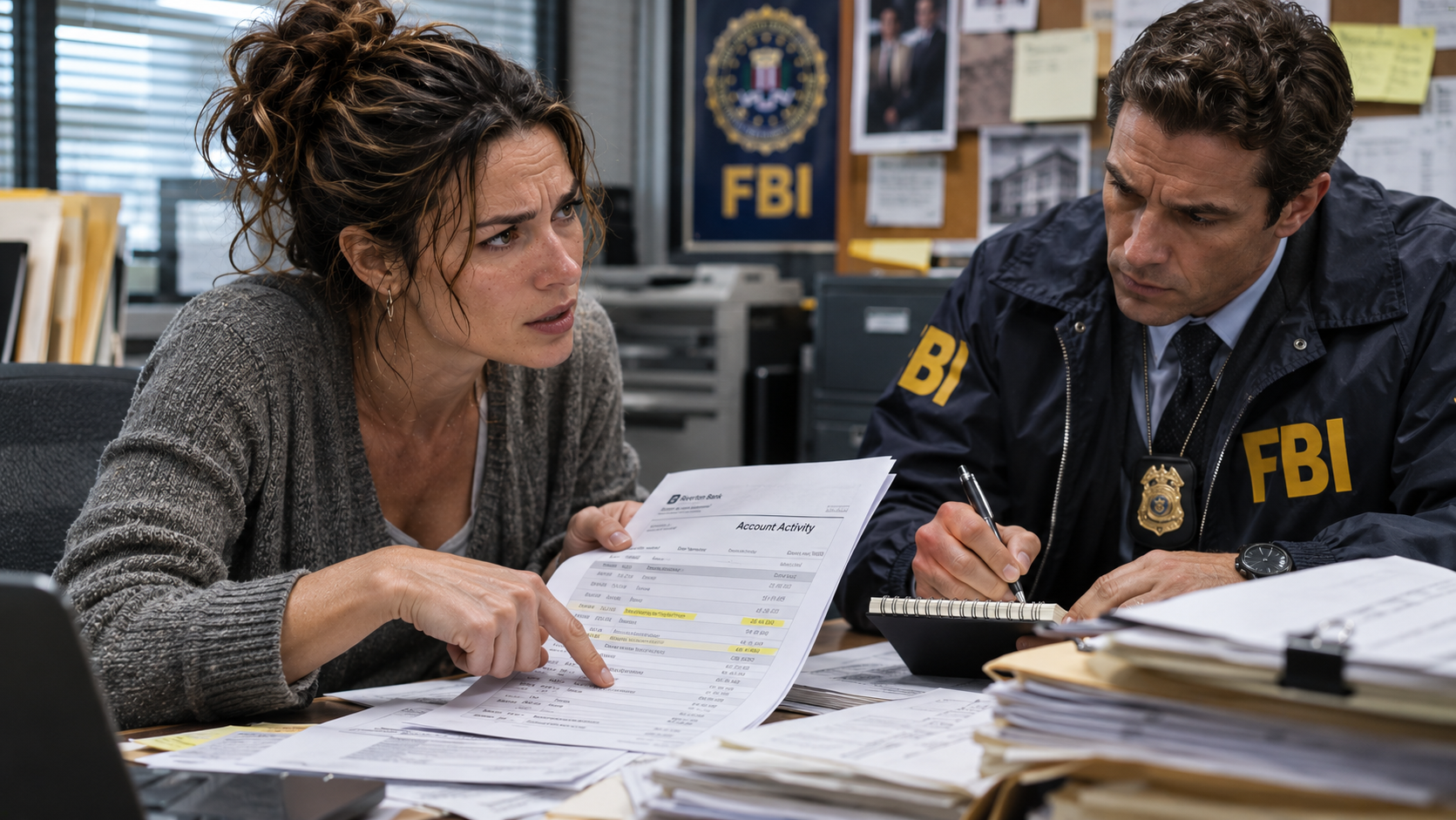
The next morning, I called Agent Cole. I told him everything—about the folder, the statements, the Cayman Islands transfers. He asked me to bring the documents to the field office in Boise. I did. I spent four hours answering questions, handing over everything I had, and signing a statement. I also gave them permission to access my personal bank records, which showed no connection to Hope’s Bridge funds. I hadn’t received a salary, a reimbursement, or a single wire transfer.
Agent Cole was candid: “Your brother is the primary target. But your name on those accounts means you’re exposed. If we can’t establish that you were unaware, you could face charges. We need you to cooperate fully.”
I agreed without hesitation. I hired a lawyer—a family friend named Patricia Okafor—who specialized in white-collar defense. Patricia was blunt: “You’re in a bad spot, Rachel. The government has to prove you knew or should have known. Your best defense is complete transparency and helping them build the case against Daniel.”
Over the next three weeks, I turned over every email, every text, every scrap of paper Daniel had ever given me. I sat through interviews. I wore a wire during a phone call with Daniel—a call in which he finally answered and told me to ‘stay quiet’ and ‘let the lawyers handle it.’ He never asked how I was doing. He never apologized. He just said, ‘Don’t talk to anyone. You’ll make it worse.’
That call was the moment I stopped protecting him.
The Truth About the ‘Charity’
The full picture emerged during the investigation, and it was worse than I’d imagined. Hope’s Bridge was a shell. Daniel had partnered with a man named Victor Sorenson, a former hedge fund manager who’d been banned from securities trading in 2015. Together, they’d set up a network of fake corporate sponsors—shell companies that ‘donated’ millions to Hope’s Bridge. The money was then funneled through Bright Horizon Trading Ltd. and eventually into personal accounts in Switzerland and Singapore. The wells in Africa? A handful were real, built with a fraction of the funds. Most of the photos were staged or stolen from other nonprofits’ websites.
Daniel had used our parents’ $40,000, their church’s donations, and my name to create an illusion of legitimacy. As a board member with a clean record—a public school teacher, no less—I made the charity look trustworthy. He’d counted on my ignorance. He’d counted on my loyalty.
The FBI arrested Daniel and Sorenson in April. Daniel was charged with wire fraud, money laundering, and conspiracy. Sorenson fled to a country without an extradition treaty; he’s still at large. Daniel pleaded guilty to avoid a trial, hoping for leniency. He was sentenced to six years in federal prison and ordered to pay $2.1 million in restitution. Our parents were devastated. They’d lost their savings, their church had lost its trust in them, and their son was a felon.
As for me, the U.S. Attorney’s office declined to prosecute. Agent Cole told me later that my cooperation had been ‘instrumental’ in securing Daniel’s plea. Patricia said the evidence was clear: I had no knowledge of the scheme and had been used as a pawn. But the stigma lingered. Some of my colleagues at school treated me differently. A few parents whispered. I had to explain to my daughter, then twelve, why her uncle was in prison.
Rebuilding from the Rubble
The hardest part wasn’t the FBI or the legal fees—it was the betrayal. I’d loved my brother. I’d trusted him. And he’d treated me like a disposable alibi. For months, I couldn’t sleep without replaying every family dinner, every holiday, every time he’d smiled and said, ‘You’re the best sister a guy could ask for.’ Had any of it been real?
I found a therapist who specialized in family trauma. I learned to set boundaries—with Daniel, with my parents, who initially blamed me for ‘not protecting him.’ That relationship took years to repair. I also changed my career. I left teaching and took a job as a financial compliance officer for a local credit union. It felt like reclaiming my life—using my math skills to catch the kind of fraud I’d missed.
Two years after the arrest, I received a letter from Daniel in prison. He apologized. He said he’d been ‘desperate’ and ‘made terrible choices.’ He asked if I could visit. I didn’t. Maybe someday I will. But I’ve learned that forgiveness isn’t a debt I owe him. It’s a gift I give myself—when I’m ready.
Today, I’m the one who reviews every document before I sign it. I’m the one who asks questions. And I’m the one who tells my daughter: ‘Trust is earned, not given. Even in families.’
The knock on my door that March morning shattered my life. But it also woke me up. I’m not the quiet sister anymore. I’m the one who speaks up.
Recommended Stories
My Father-in-Law Promised Us His House When He Died—But After the Funeral, His Girlfriend Produced a New Will Leaving Everything to Her. Then I Found a Video He Recorded the Day Before He Died
A contested will, a secret video, and a girlfriend's betrayal—how a hidden recording exposed the truth and brought justice to...
My Husband’s ‘Business Trip’ Was Actually a Secret Wedding to My Best Friend—I Found Out When the Photographer Sent Me the Pictures
A misdirected email delivered 147 photos of my husband marrying my best friend. I thought my life was over—until I...
My Brother Stole My Identity to Buy a Boat—Then He Crashed It and Left Me with a $200,000 Debt and a Criminal Record
A quiet accountant's life unravels when a detective calls about a boat he never bought—and the trail leads straight to...