My Sister Sold My Late Mother’s Wedding Ring at a Pawn Shop for $50—Then I Found It in a Museum Display Valued at $25,000
The Ring That Vanished
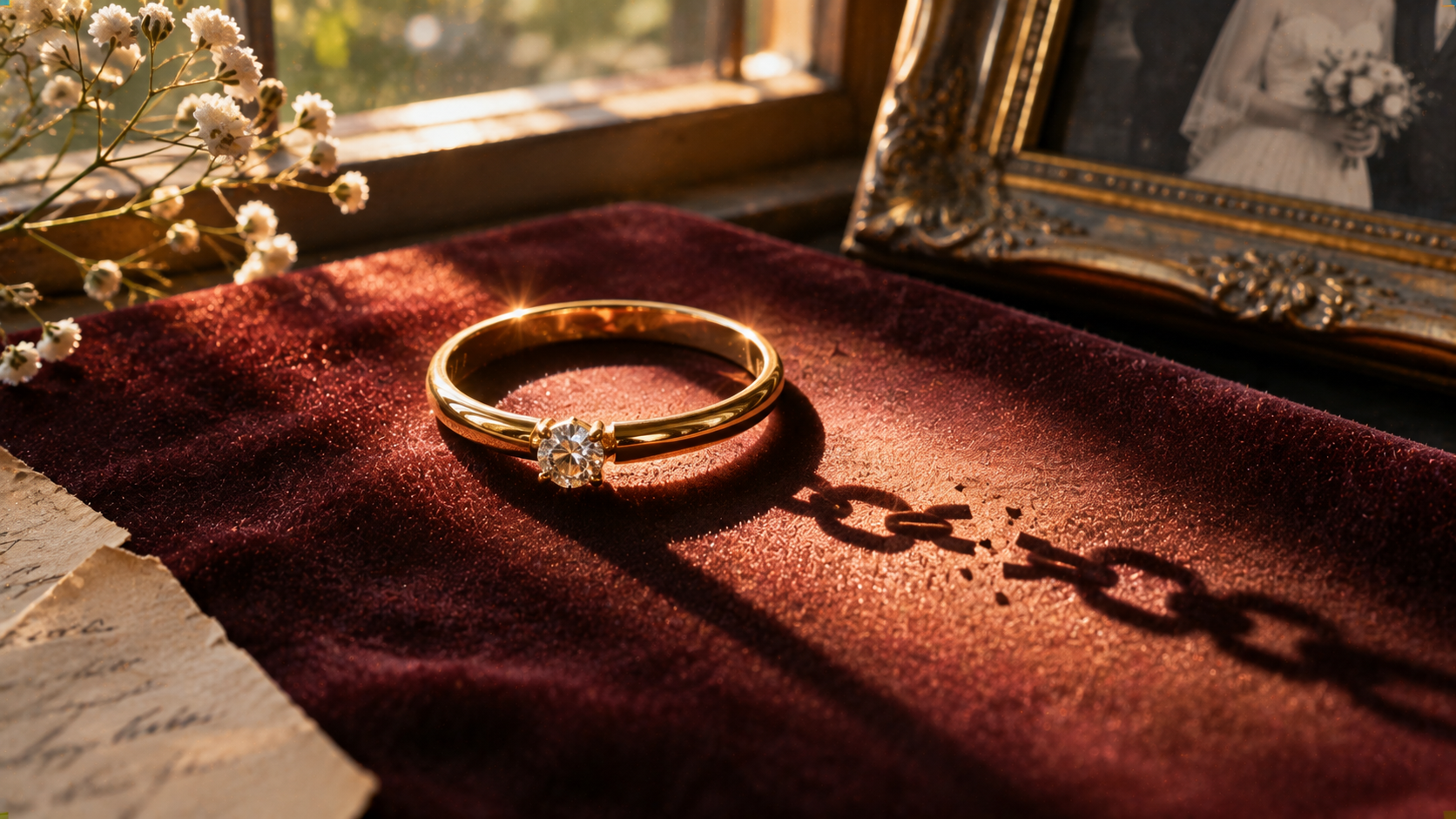
My mother’s wedding ring was not just a piece of jewelry. It was a promise she wore for forty-three years, a thin gold band with a small diamond that caught the light when she kneaded bread or wiped tears from my cheek. After she died, my sister Claire took it. She said she needed something to remember Mom by, and I, still numb with grief, didn’t argue. I was the one who held Mom’s hand as she passed. I was the one who planned the funeral, paid the bills, and cleared out the house. Claire showed up three days late with a coffee cup and a new manicure.
Two months later, Claire called me. Her voice was flat. “I pawned Mom’s ring,” she said. “I needed gas money. They gave me fifty bucks.” I dropped the phone. Fifty dollars. That ring was worth more than sentiment — it was an heirloom, a symbol of everything our family had survived. I demanded she get it back. She laughed. “It’s gone, Liz. Get over it.” I didn’t get over it. I couldn’t.
A Museum Miracle
Three months later, I took my daughter to the local history museum. We wandered through exhibits on early settlers and Victorian silverware. Then I saw it. In a glass case labeled “The Hartwell Collection: Pioneer Jewelry,” a small gold ring with a diamond — my mother’s ring. The band had a tiny nick near the prong, a flaw I’d memorized from years of watching Mom twist it when she was nervous. My heart hammered. I read the plaque: “Wedding band, circa 1890. Donated by the Hartwell family. Estimated value: $25,000.”
I nearly collapsed. How did a ring pawned for fifty dollars end up in a museum? I took photos, demanded to speak to the curator, and told her the ring belonged to my mother. The curator, a kind woman named Dr. Patel, looked skeptical but listened. She explained that the ring had been donated by a local family who claimed it was a family heirloom. The Hartwells. I didn’t know them, but I knew my mother’s maiden name: Hartwell.
The Provenance Puzzle
Dr. Patel agreed to investigate. She showed me the donation paperwork: a letter from Eleanor Hartwell, my mother’s estranged cousin, claiming the ring had been passed down through generations. But my mother had no cousin Eleanor. She had a sister, Aunt Ruth, who died years ago. I called Aunt Ruth’s daughter, my cousin Marnie, who still lived in town. Marnie hesitated, then told me the truth: Eleanor wasn’t a cousin. She was my mother’s half-sister, born from an affair my grandfather had in the 1950s. The family had covered it up. Eleanor had always been jealous of my mother, who got the ring, the house, and the family name. When my mother died, Eleanor saw her chance.
But how did she get the ring from the pawn shop? Marnie didn’t know. I went back to the pawn shop, a dingy place called Quick Cash. The owner, a man named Sal, remembered Claire. “She came in drunk,” he said. “Sold the ring for fifty, said it was costume jewelry. I felt bad, so I called a guy I know who buys estate pieces. He gave me two hundred. I thought I made a profit.” That guy was a dealer named Frank, who sold it to Eleanor Hartwell for $1,200. Eleanor then donated it to the museum, claiming it was a family heirloom, and took a tax deduction for $25,000.
The Confrontation
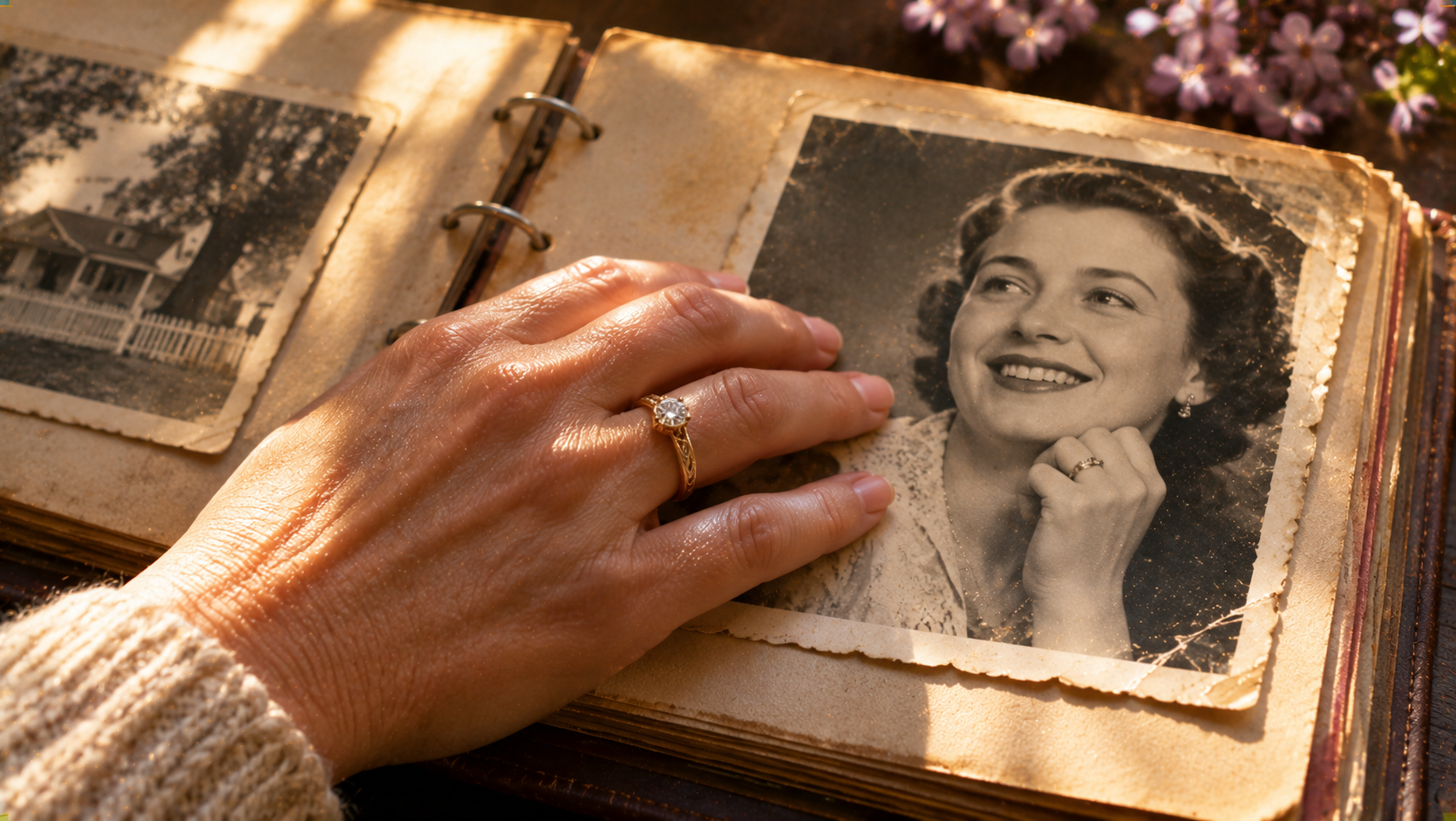
I called Claire. She was defensive. “I didn’t know it was worth anything!” she shouted. “You should have told me!” I reminded her that she never asked. She hung up. Then I called Eleanor. She was icy. “That ring belonged to my father’s family,” she said. “Your mother stole it from us. I was just reclaiming what was ours.” I told her about the museum, the donation, the tax fraud. She laughed. “Good luck proving anything.” But I had proof. Dr. Patel had the donation letter with Eleanor’s signature. Sal had the pawn ticket with Claire’s name. Frank had the receipt. And I had my mother’s old photo album, showing her wearing the ring in 1978, with a handwritten note: “To my daughter Liz, this ring is yours when I’m gone.”
I hired a lawyer, a sharp woman named Janet who specialized in art restitution. She sent a letter to the museum and to Eleanor, demanding the ring’s return and threatening legal action for fraudulent donation. The museum, eager to avoid scandal, agreed to return the ring to me if I could prove ownership. I had the photo, the note, and the pawn shop records. Eleanor tried to fight, but her story fell apart. The museum revoked her donation and she faced a hefty fine for tax fraud. Claire, meanwhile, was charged with theft for selling stolen property. She pleaded guilty to a misdemeanor and had to pay restitution — to me.
The Ring Comes Home
Six months after I saw it in the museum, I held my mother’s ring in my hand again. It was lighter than I remembered, but the diamond still sparkled. I slipped it onto my finger, where it fit perfectly. I didn’t sell it. I didn’t pawn it. I wore it every day, a reminder that some things are worth fighting for. Claire and I don’t speak anymore. Eleanor moved out of state. But my mother’s ring is home, and that’s all that matters.
Sometimes I think about that pawn shop, that fifty-dollar betrayal. It led me to a museum, to a truth about my family I never knew, and to a strength I didn’t know I had. My mother’s ring is not just a piece of jewelry. It’s a story of survival, of justice, and of a daughter’s love that refused to be pawned.
Recommended Stories
At My Wedding, My Father Gave a Toast Praising My Sister—Then He Announced He Was Cutting Me Out of the Will Because I Married ‘Beneath Me’
My father used his toast to disinherit me for marrying a carpenter. Six months later, his empire collapsed—and the truth...
At My Father’s Funeral, His Secret Second Family Showed Up—Then I Found Out He’d Been Paying Their Mortgage for 20 Years
At my father's funeral, a woman in the back pew introduced her son as my father's other child. Then I...
I Gave My Sister My Savings for Her Cancer Treatment—She Used It to Buy a Boat, and Then Karma Hit Her in the Most Unexpected Way
I drained my savings to save my sister from cancer. She bought a boat instead. Then the Coast Guard called,...