I Gave My Sister My Savings for Her Cancer Treatment—She Used It to Buy a Boat, and Then Karma Hit Her in the Most Unexpected Way
The Phone Call That Shattered Everything
My hands were still shaking when I hung up with the oncologist’s office. My sister, Dana, had been diagnosed with stage 2 breast cancer three months earlier, and I had drained my entire savings—$47,000—to cover the treatments her insurance wouldn’t touch. I was a 34-year-old high school biology teacher in Boise, Idaho, living in a cramped apartment with a leaking faucet I couldn’t afford to fix. But Dana was my only sibling, and when she sobbed into the phone that she might die, I didn’t hesitate.
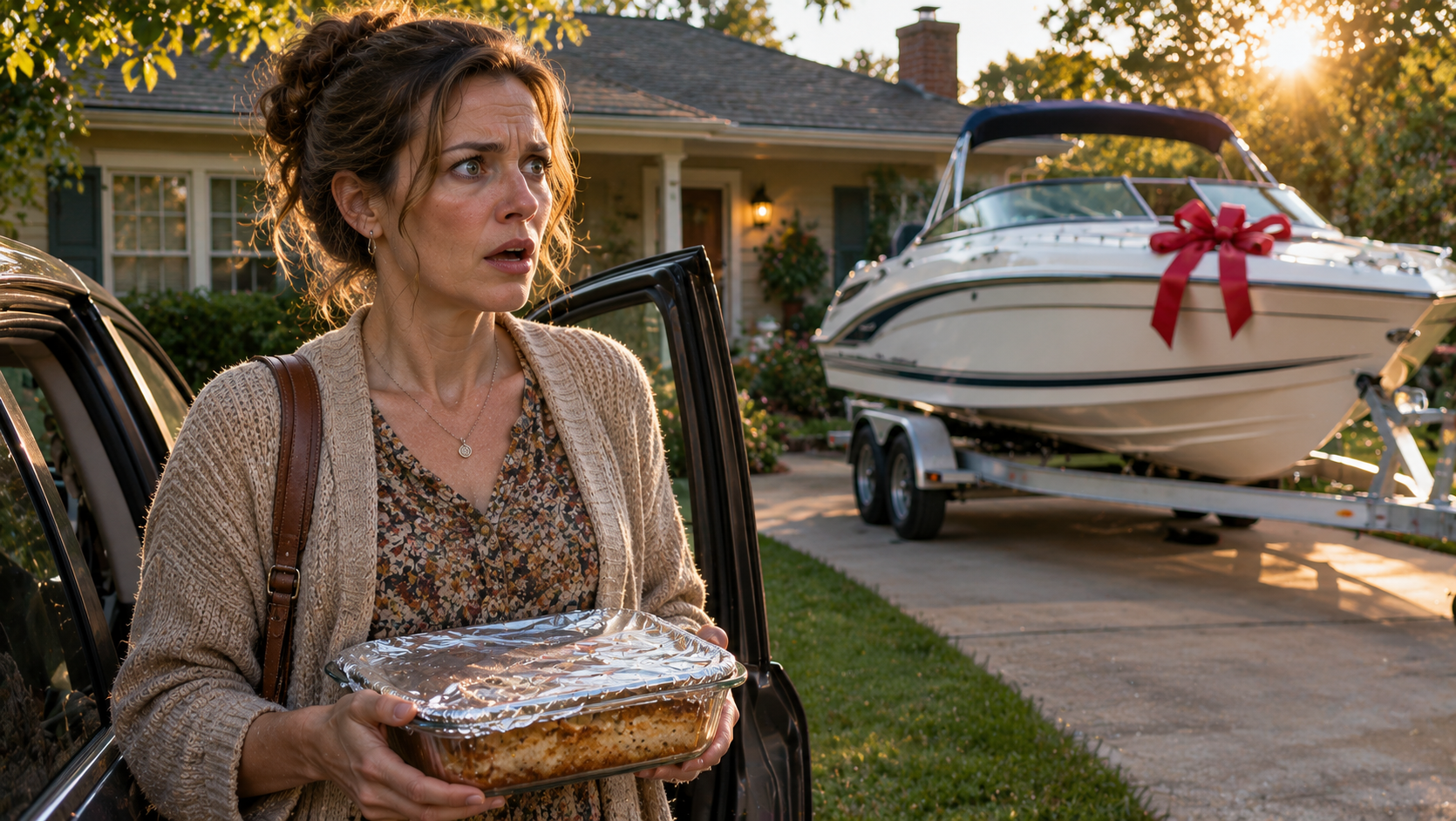
That was six months ago. Today, I was sitting in my car outside her house, staring at the gleaming white center console boat parked in her driveway. A 2022 Boston Whaler. I knew the model because my late father had always wanted one. The sticker price was north of $50,000.
Dana had told me the boat belonged to a friend. She’d said it with that breezy laugh she used when she was lying. I knew that laugh. I’d heard it every time she told our mother she’d quit smoking, or that she’d paid back the $2,000 she borrowed for rent in 2019.
I hadn’t planned to confront her that day. I’d come to drop off a casserole and a check for her next round of chemo. But as I stood in her kitchen, watching her pour a glass of expensive chardonnay while wearing a silk robe, something inside me snapped.
The Lie That Unraveled
“Dana,” I said, setting the casserole on the counter. “Whose boat is that?”
She didn’t even blink. “My friend Rick’s. He’s letting me borrow it for the summer. You know, to take my mind off things.”
I pulled out my phone. “Then why did I just see the registration in your name when I walked past the trailer?” I had. It was taped to the tongue of the trailer, clear as day: Dana M. Whitfield.
Her face went pale, then red. “You went through my things?”
“It was right there,” I said. “Dana, where did you get the money?”
She set her wine glass down with a sharp click. “I don’t have to explain myself to you.”
“I gave you forty-seven thousand dollars,” I said, my voice cracking. “I gave you every penny I had. I’ve been eating ramen for months. My car has 210,000 miles on it. And you bought a boat?”
She crossed her arms. “The treatments were cheaper than expected. I had some left over. It’s my money now.”
“Left over?” I laughed, but there was no humor in it. “Dana, I paid the hospital directly. I saw the bills. You didn’t have a dime left over.”
That’s when she said the words that would change everything between us forever: “Well, maybe I lied about how much I needed. But you can’t prove anything.”
She was wrong. I could.
The Paper Trail She Forgot
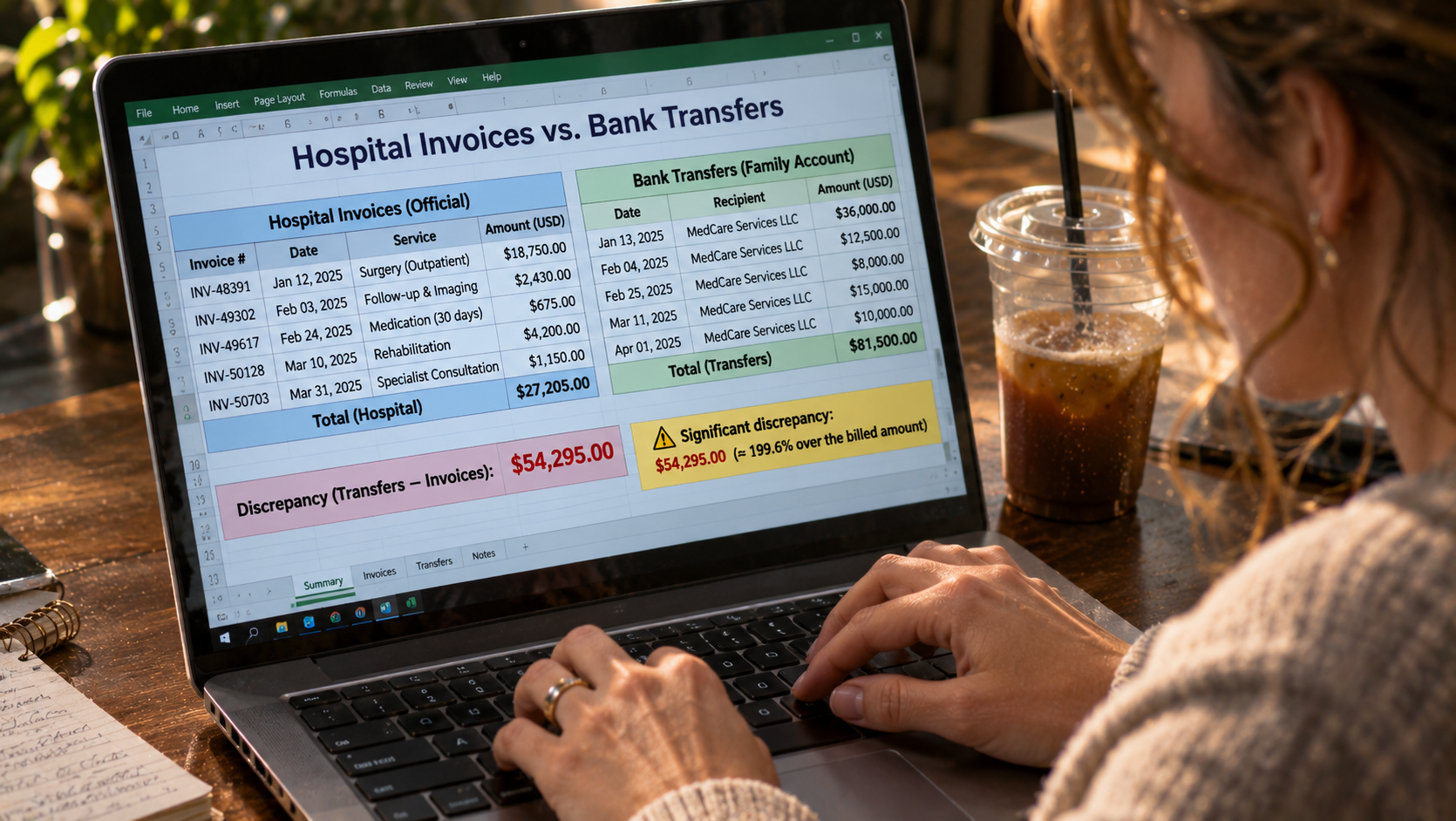
I’m a biology teacher, but my father was a forensic accountant, and he taught me one thing before he died: Always keep receipts. When Dana first asked for help, I didn’t just hand her cash. I created a shared folder with every invoice, every bank transfer, every email from her oncologist. I did it because I loved her and wanted to make sure the money went where it was supposed to go.
What I didn’t know was that Dana had been forging the invoices. She’d taken real hospital bills, altered the amounts, and sent them to me. The actual treatments cost less than half of what she claimed—her insurance covered more than she let on. She’d pocketed the difference. And then she’d used it to buy a boat.
I spent the next week gathering evidence. I called the hospital’s billing department and requested itemized statements. I printed out every email she’d sent me. I even found a Facebook post from her friend Rick, captioned: “Congrats to Dana on the new ride! Best impulse buy ever!” It was dated three days after I’d transferred the last of my savings.
The Confrontation at the Family Barbecue
I didn’t go to the police. Not yet. I wanted to give Dana a chance to make it right. So I invited her to our mother’s annual Fourth of July barbecue, along with our aunt Carol, who was the family’s unofficial judge and jury.
Dana showed up in a new designer sundress, carrying a bottle of wine that cost more than my weekly grocery budget. She was all smiles, hugging everyone, telling Aunt Carol how brave she’d been during her ordeal.
I waited until we were all seated at the picnic table. Then I pulled out a folder and set it in the center.
“Dana,” I said, loud enough for everyone to hear, “I need to ask you something in front of the family. Did you use the money I gave you for cancer treatments to buy a boat?”
The table went silent. Dana’s smile froze. “That’s not—that’s not what happened.”
I opened the folder. “These are the real hospital bills. These are the invoices you sent me. And this is the boat registration with your name on it, dated two weeks after you told me you needed another $10,000 for ’emergency surgery.’”
Aunt Carol picked up the papers. Her face hardened. “Dana, is this true?”
Dana burst into tears—the same tears she’d used to manipulate me for years. “You don’t understand! I was scared! I needed something to make me feel alive!”
“You needed a boat to feel alive?” I asked. “I gave you everything I had. I sacrificed my savings, my security, my future. And you lied to my face.”
She looked around the table, desperate for an ally. She found none. Even our mother, who had always favored Dana, sat with her mouth pressed into a thin line.
“I want the money back,” I said. “All of it. Or I’m going to the police with these documents. That’s fraud, Dana. And I have proof.”
Karma, Delivered by the Coast Guard
Dana didn’t return the money. Instead, she blocked my number and told the family I was ‘jealous’ and ‘unstable.’ For two months, I heard nothing. I started looking into lawyers, but I didn’t have the funds to hire one. I felt defeated.
Then, in late September, I got a call from Aunt Carol. She was laughing so hard she could barely speak.
“Turn on the news,” she said. “Channel 7.”
I did. And there, on the screen, was a familiar white Boston Whaler, listing to one side in the middle of Lucky Peak Lake. A Coast Guard boat was towing it to shore. The reporter was saying something about a ‘reckless operator’ and ‘unregistered vessel’ and ‘pending charges for boating under the influence.’
The operator? Dana.
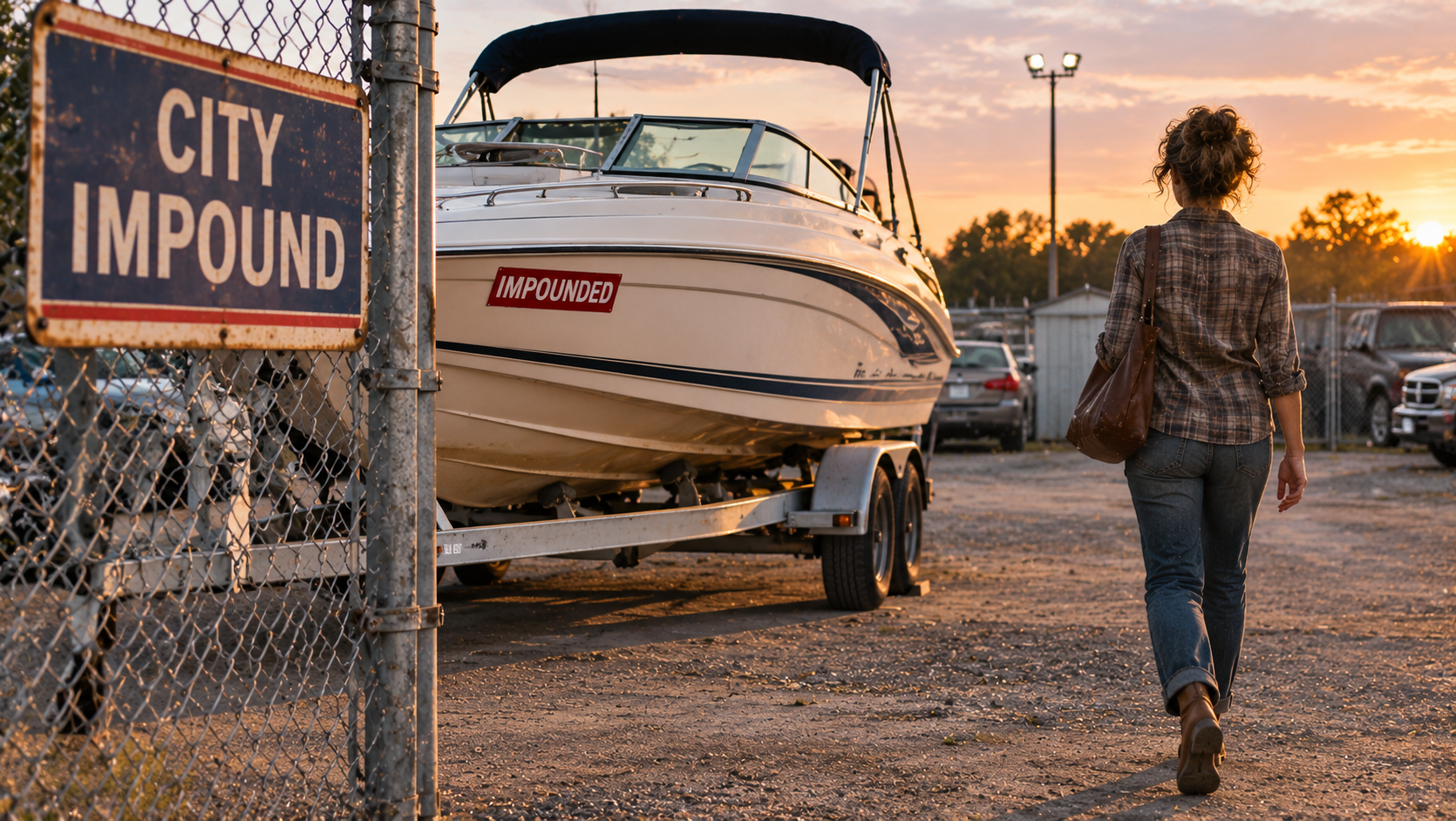
Apparently, she’d taken the boat out with her friend Rick, gotten drunk, and crashed into a buoy. The boat was impounded. And because she’d never actually registered it properly—she’d forged the registration to save money—she was facing fines and possible jail time.
But that wasn’t the best part. The best part was that the Coast Guard officer who responded to the call was my neighbor’s son, Tyler. He recognized the boat from the description I’d given him weeks earlier when I’d vented about my sister. He called me after the incident.
“Hey,” he said, “I think I found your sister’s boat. It’s in the impound lot. You might want to talk to the police about that fraud thing now. The impound lot needs proof of ownership before they release it.”
I didn’t go to the police. I didn’t need to. Dana’s boat was stuck in impound, racking up $150 a day in storage fees. She couldn’t afford to get it out without selling it, and she couldn’t sell it without proving she owned it—which meant admitting she’d bought it with stolen money.
She called me three days later, sobbing. “Please,” she said. “I’ll pay you back. I’ll sell the boat. Just tell them it’s yours.”
“No,” I said. “You made your choice. Now you live with it.”
The Lesson I Didn’t Expect to Learn
Dana eventually sold the boat—at a loss—to pay the impound fees and a lawyer who negotiated a plea deal for the forged registration. She avoided jail, but she had to pay restitution. Not to me. To the hospital, for the fraudulent claims. She also lost her job at the real estate office when her boss found out about the fraud charges.
She never paid me back. I don’t expect her to. But I did get something better: I got my dignity back. I got the truth. And I got the knowledge that I am not responsible for my sister’s choices.
I still teach biology. I still drive my beat-up car. But I no longer answer Dana’s calls. And when Aunt Carol asks me at family gatherings if I’ve forgiven her, I say the same thing every time: “Forgiveness is free. Trust costs extra. And she’s fresh out of credit.”
The strangest part? I don’t regret giving her the money. I regret believing her. But that’s a lesson I won’t have to learn twice.
Recommended Stories
At My Wedding, My Mother Stood Up and Objected—Then She Handed Me a Photo of My Fiancé with My Cousin
My mother stood up at my wedding and objected—then handed me a photo of my fiancé with my cousin. What...
My Husband’s Secret Bank Account Had $500,000—Then I Found Out Where It Came From
She found a sticky note with a password—and a $500,000 secret. What she discovered next about her husband and mother-in-law...