My Father’s Dying Wish Was to Read His Old War Letters—When I Opened the Box, I Found a Confession That Shattered Our Family
My father, a decorated Vietnam veteran, had one final request from his hospice bed: he wanted me to read his old war letters aloud. His voice was a whisper, his eyes distant. “The box under my workbench,” he said. “Read them to me, Danny. I need to hear them one last time.” I thought it was nostalgia. I had no idea it was a confession.
After he passed, I found the box—a rusted ammo crate labeled “Personal.” Inside were bundles of letters tied with twine, postmarked from Da Nang, 1968. But as I unfolded the first one, my hands began to shake. This wasn’t a love letter to my mother. It was addressed to a woman named Eleanor, and the words on the page would rewrite everything I knew about my family.
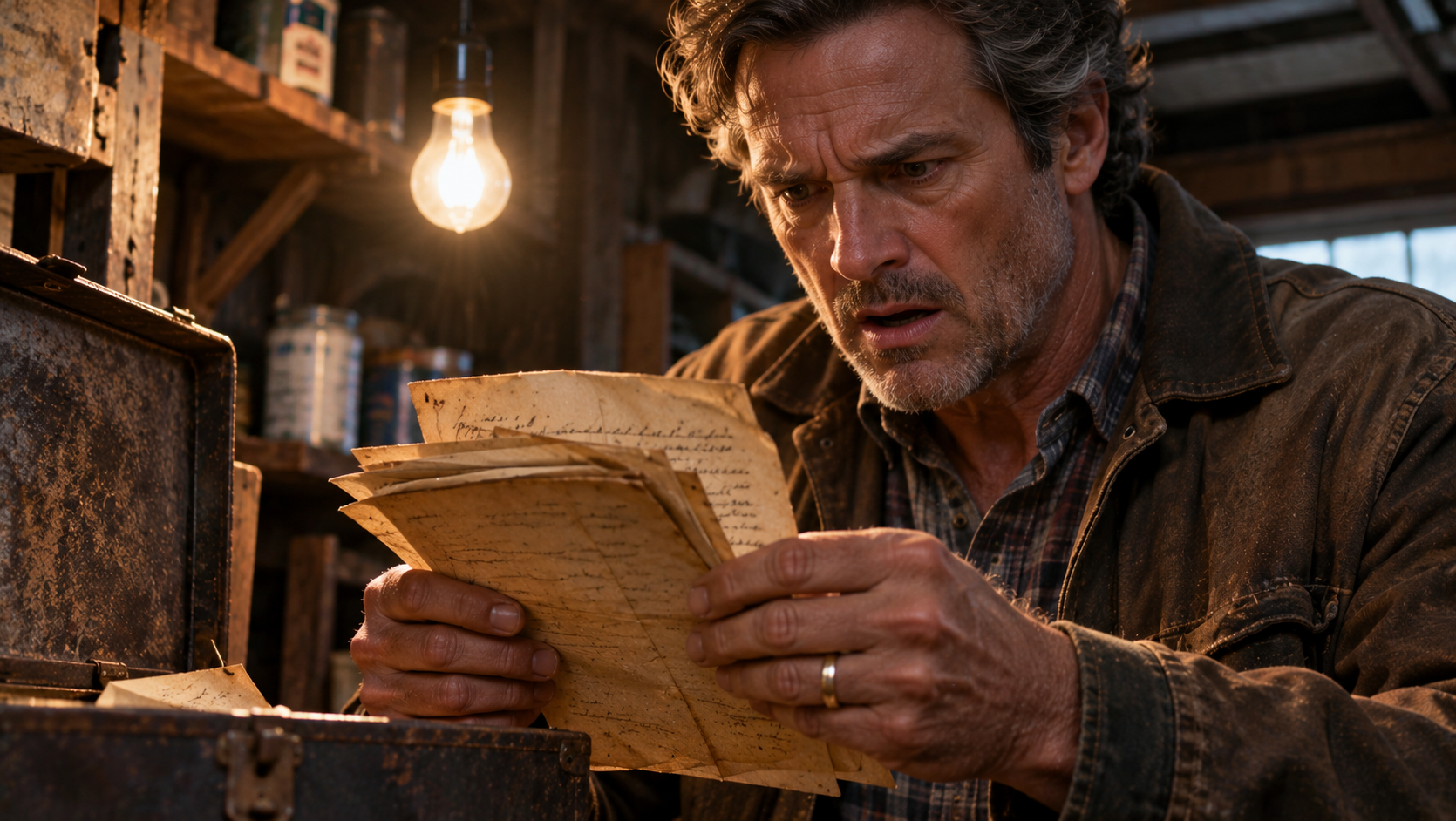
The Letters That Didn’t Belong
My father, Frank, was a quiet man who worked as a mechanic and never talked about the war. He met my mother, Carol, in 1970, and they built a life in a small Ohio town. I was their only child. The letters, however, revealed a different timeline. Frank wrote to Eleanor almost daily during his tour, describing a love so fierce it seemed impossible he could have left her behind.
“I’m counting the days until I’m home, El. The ring is in my pocket. I’ll ask you the moment I see you,” one letter read. Another mentioned a child—a daughter named Lily. My father had a daughter before me? I felt the floor tilt. My mother had died five years ago, and Frank never mentioned another family. I read on, desperate for an explanation.
The Confession Hidden in Plain Sight
The final letter in the bundle was not from Vietnam. It was dated 1971, written from our hometown. Frank confessed to Eleanor that he had married my mother because she was pregnant with me, and that he had abandoned Eleanor and their daughter. “I was a coward,” he wrote. “I chose the easy path, and I’ve regretted it every day.” He begged Eleanor’s forgiveness and asked about Lily. There was no reply in the box.
My father’s dying wish wasn’t to relive his glory days. It was to confess a sin he couldn’t speak aloud. He wanted me to know the truth—but why? And who was Lily?
The Search for Lily
I hired a private investigator, using the return address on Eleanor’s letters. Two weeks later, I had a name: Lily Brennan, 52, living in Portland, Oregon. She had been adopted as an infant. Eleanor had died in 2010, never revealing Lily’s father’s identity. My half-sister had spent her life wondering why she was given up.
I called her. The silence on the line was heavy. “I’m your brother,” I said. “I think I have letters from our father.” Lily agreed to meet. When she opened her door, I saw my father’s eyes staring back at me. She had his smile, his stubborn chin. We sat in her kitchen as I handed her the letters. She read them slowly, tears streaming down her face. “He loved us,” she whispered. “He just couldn’t stay.”
The Inheritance of Truth
Lily and I spent months piecing together the story. Frank had indeed bought a ring, but when he returned from Vietnam, Eleanor’s parents had already forced her to give up the baby. She never told him she was pregnant. He assumed she had moved on. He married my mother, but the guilt never left him. He sent money anonymously to the adoption agency for years—a fact I discovered in his financial records.
My father’s secret had cost Lily a childhood with her real family. But it had also given her a brother. We decided to honor Frank’s memory by building a relationship, not by burying the truth. I introduced Lily to my children, her niece and nephew. She cried when they called her “Aunt Lily.”
The Final Letter
Months later, while cleaning out my father’s workbench, I found a second box—smaller, hidden behind a drawer. Inside was a single letter, dated the day he died. It was addressed to me. “Danny, I hope you found the letters and found Lily. I was too ashamed to tell you while I was alive. Please forgive me, and please love her. She is your sister. I’m sorry I wasn’t brave enough to be her father. Be better than me.”
I sat on the garage floor and wept. My father wasn’t a hero or a villain—he was a man who made a terrible choice and spent his life regretting it. His dying wish wasn’t about him. It was about giving Lily a family and giving me a chance to make things right.
Today, Lily and I talk every week. We’ve visited Eleanor’s grave together and left flowers. My father’s confession shattered our family’s tidy story, but it also built something new. Sometimes the truth doesn’t set you free—it just gives you a different set of chains. But those chains can be held together.
Recommended Stories
My Husband’s Ex-Wife Moved In with Us—Then I Found Her Diary and Learned the Truth
When my husband's ex-wife moved in, I thought it was charity. Then I found her diary and learned it was...
My Stepmother Burned My Late Mother’s Letters—Then I Found One She Missed, and It Named My Real Father
She burned every letter my mother ever wrote—except one. Hidden in a book, it named my real father. What I...
I Found a Hidden Room in My Basement—Inside Was a 50-Year-Old Letter from My ‘Dead’ Uncle, and a Map to His Fortune
A hidden room. A letter from an uncle who supposedly died 50 years ago. A map to a buried fortune—and...