My Father’s Dying Words Were ‘The Key Is in the Piano’—What I Found Inside Changed My Family Forever
The Last Whisper
My father’s final words were not a blessing or a goodbye. They were a riddle, rasped into my ear as I leaned close to his hospital bed. ‘The key is in the piano,’ he said, his eyes locking onto mine with an intensity that burned through the morphine haze. Then he was gone. I was forty-two, a high school history teacher in Portland, Oregon, and suddenly the executor of a mystery I never knew existed.
My mother, Diane, had died five years earlier. My older brother, Marcus, a real estate developer in Seattle, had always been the favored son—the one who inherited our father’s business sense. I was the bookish one, the daughter who stayed close to home. As we planned the funeral, Marcus wasted no time. ‘We need to sell the house and the piano,’ he said. ‘That old Steinway is worth something, but it’s just furniture now.’ I said nothing, but the words ‘the key is in the piano’ echoed in my mind like a warning.
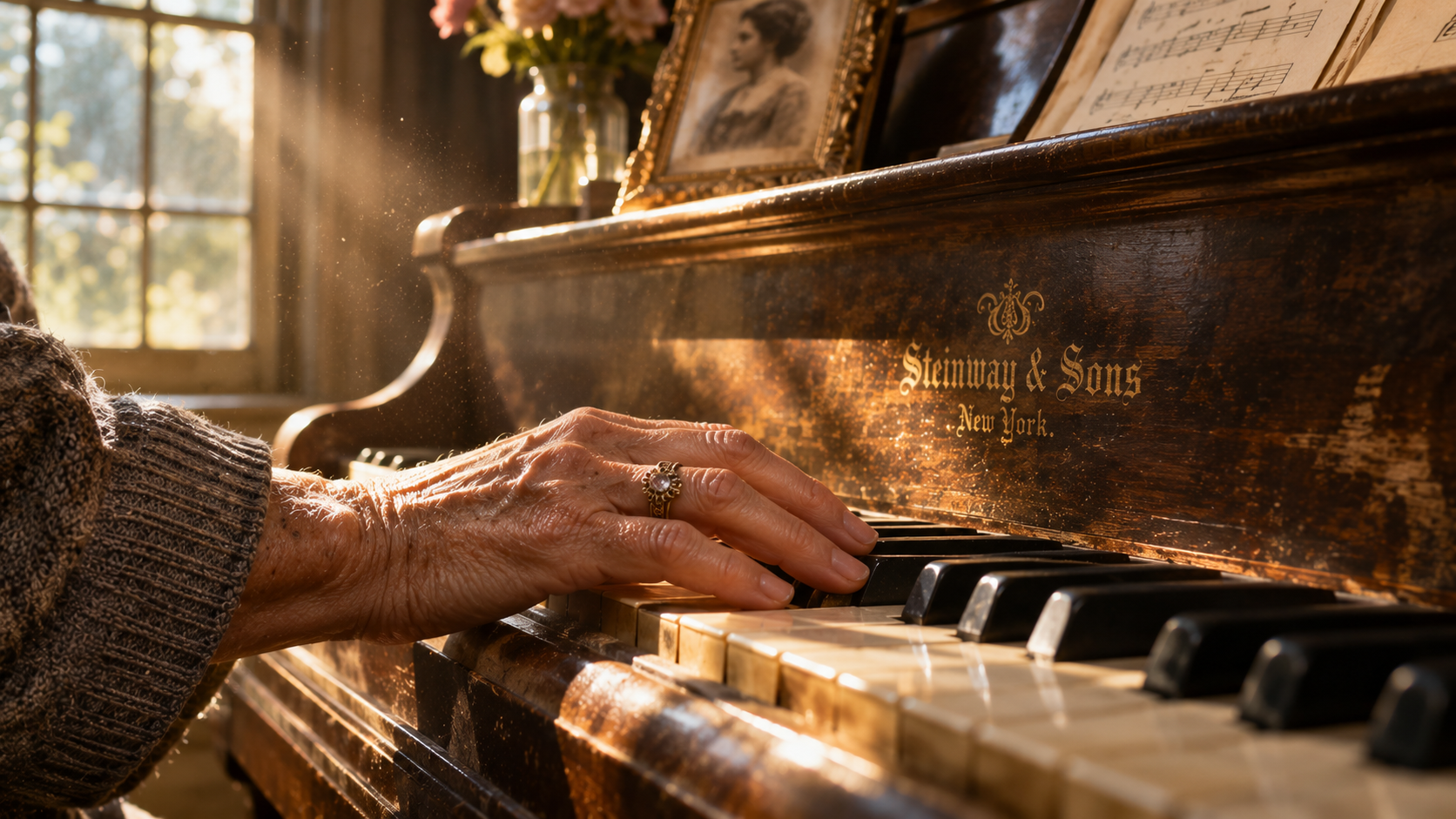
After the funeral, I went to my father’s house alone. The piano stood in the corner of the living room, a 1920s Steinway that had been in our family for three generations. I ran my fingers over the keys, remembering the scales I’d practiced as a child. Then I started searching. Not for a literal key—that would be too easy—but for something hidden. I lifted the lid, checked the strings, felt under the keyboard. Nothing. Then I noticed a small, loose panel at the base of the piano, behind the pedals. It took a screwdriver and ten minutes of prying, but it finally gave way.
The Box Beneath the Floorboards
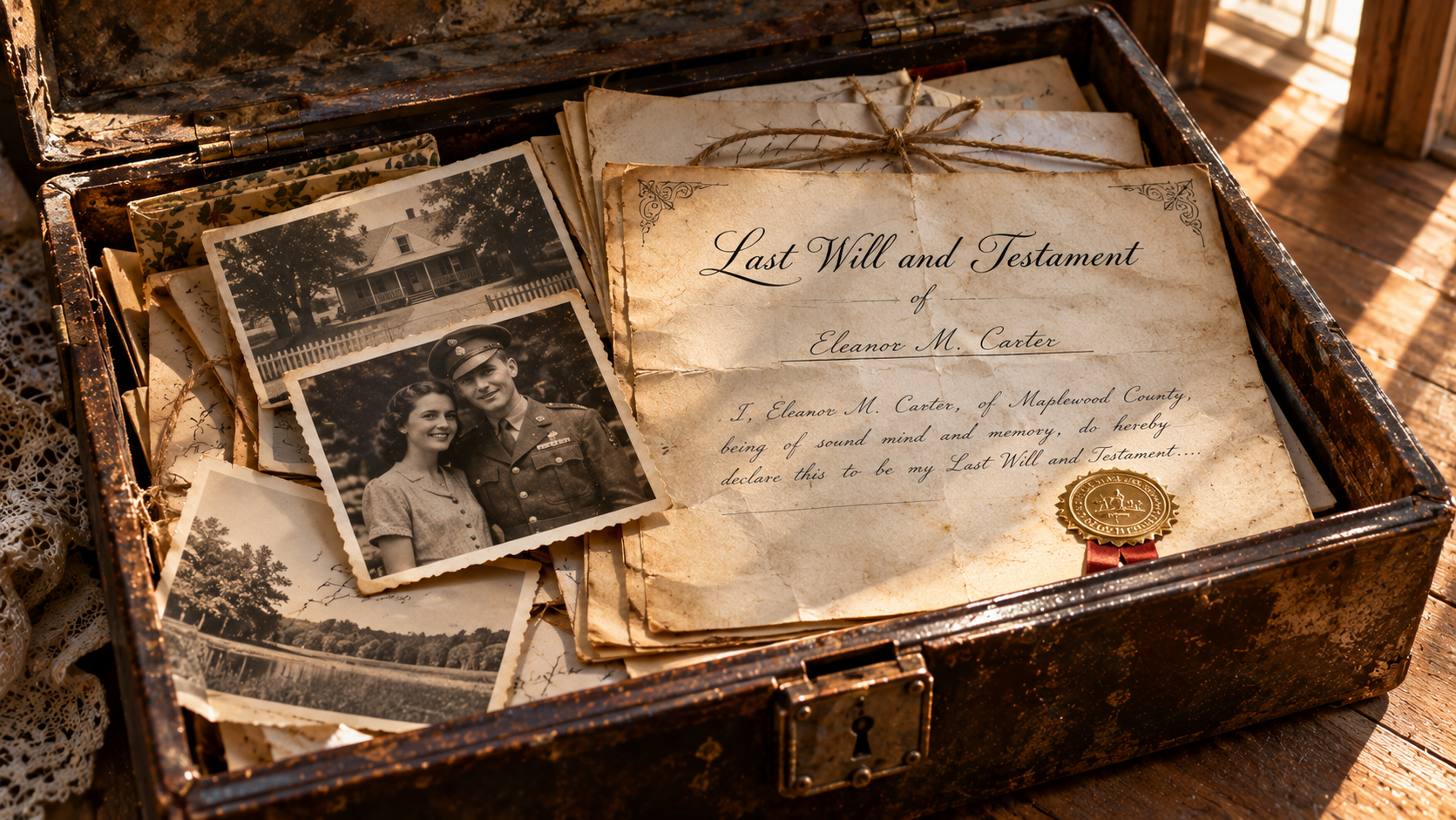
Behind the panel was a hollow space, and inside it, a metal lockbox. My heart hammered as I pulled it out. It was heavy. I pried it open with a butter knife, and what I found made my hands shake. There were letters—dozens of them—bound with a faded ribbon. And a will. A will dated just three months before my father’s death, naming me as the sole beneficiary of his estate. But that wasn’t the shocking part. The letters were addressed to my father from a woman named Elena, and they were written in Spanish. I could read enough to understand they were love letters, spanning forty years. And there were photographs: a young woman with dark hair and my father’s smile, standing in front of a house in San Miguel de Allende, Mexico. In some photos, she held a child—a boy. My half-brother.
I sat on the floor, the letters spread around me, and I felt the world tilt. My father, the stoic accountant who never missed a day of work, had a second family. He had been sending money to them for decades. The will even included a provision: a house in Mexico, deeded to Elena, which he asked me to honor. My brother Marcus knew nothing of this. Or did he? I remembered a conversation we’d had years ago, when Marcus made a joke about Dad’s ‘business trips’ to Texas. I’d dismissed it then. Now, it felt like a clue.
The Brother Who Knew Too Much
I called Marcus the next day. I didn’t tell him about the box. I asked him if Dad had ever mentioned anyone named Elena. There was a pause—too long. ‘Why do you ask?’ he said, his voice tight. I pressed. Finally, he admitted he’d known about Elena since he was a teenager. Dad had sworn him to secrecy. ‘He said it was a mistake from before he met Mom,’ Marcus said. ‘He was going to tell you, but then Mom got sick.’ I felt a cold fury. My brother had kept this from me for thirty years. But then he added something that made my blood run cold: ‘The house in Mexico—Dad promised it to me. He said I could develop it. It’s worth millions.’
So that was it. Marcus wasn’t just hiding a secret; he was planning to profit from it. He’d probably been waiting for Dad to die so he could swoop in. I looked at the will again. It was notarized, witnessed by two people I didn’t recognize. It was legally binding. And it left everything to me—including the house in Mexico, which I was instructed to sell and split the proceeds with Elena and her son. Marcus would get nothing.
The Confrontation
I invited Marcus to the house a week later, under the pretense of dividing Dad’s belongings. When he arrived, I had the box on the coffee table. He went pale. ‘Where did you find that?’ he demanded. I told him. Then I showed him the will. He exploded. ‘You can’t do this! That house is mine! Dad promised it to me!’ I asked him why Dad would promise something that wasn’t his to give. Marcus sputtered, then tried a different tactic: ‘Elena is a gold digger. She’s been bleeding Dad dry for years.’ I pointed to the letters—forty years of love, not greed. ‘You knew,’ I said. ‘You knew and you did nothing. You let me think Dad was perfect.’
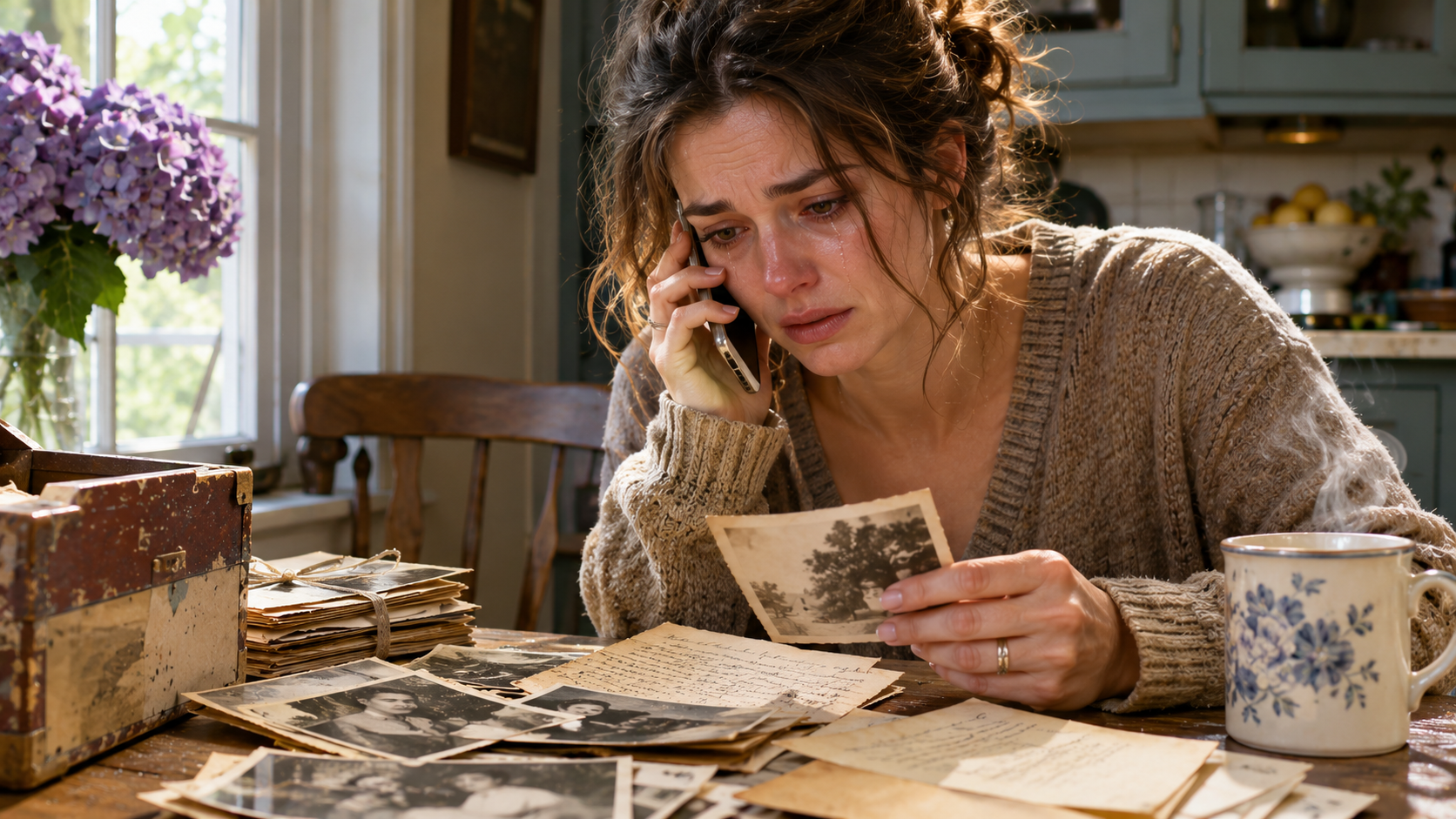
He left in a rage, threatening to contest the will. But I had the original, and I had the letters. I also had something else: a phone call from Elena herself. She had found my number in Dad’s address book. She was in her seventies now, her voice soft and sad. She told me she had never asked for anything except to be allowed to love him. She had no idea about the will. ‘He was a good man,’ she said. ‘But he was also a coward.’ That night, I cried for the father I thought I knew and for the one I was just meeting.
The Legacy I Chose
In the end, Marcus did contest the will. But the court upheld it. The house in Mexico was sold for $1.2 million. I split the proceeds with Elena and her son, Mateo, who was now a doctor in Guadalajara. He flew to Portland to meet me, and we spent a week going through the letters together. He had his father’s eyes. I gave him the lockbox. It belonged to him more than me.
Marcus and I don’t speak anymore. He moved to Arizona and started a new development project. Sometimes I wonder if he ever thinks about the secret he kept. I do. I think about it every time I sit at my own piano, a small upright in my living room. I never learned to play well, but I still try. And I think about my father—not as a saint, but as a man with flaws and a hidden heart. The key was in the piano. But the real discovery was that sometimes the truth doesn’t set you free; it just gives you a different kind of cage. One you have to learn to live in.
I wrote to Elena last month. She sent me a photo of her garden, full of marigolds. She said my father planted them the first year they met. I planted some in my own garden this spring. They’re blooming now. And for the first time, I feel like I know where I come from.
Recommended Stories
I Discovered My Husband Had a Second Family in Another State—Then His ‘Other Wife’ Sent Me a Friend Request on Facebook
A friend request from a stranger revealed my husband's secret second family. What happened next turned betrayal into an unlikely...
My Father’s Dying Words Were ‘Check the Birdhouse’—What I Found Inside Was a 50-Year-Old Secret That Shattered Our Family
My father's dying words sent me to a weathered birdhouse in the backyard. Inside, a 50-year-old secret that would tear...
I Co-Signed My Parents’ Mortgage to Save Their Home—Then They Sold It and Kept the Profit, Leaving Me with a $200,000 Debt and No Place to Live
I co-signed my parents' mortgage to save their home. They sold it, kept the $250K profit, and left me with...