My Mother Promised Me Her Antique Necklace—Then My Sister Wore It to Her Wedding and Claimed It Was Always Hers
The Heirloom That Wasn’t Mine
I was twenty-eight when my mother, Linda, was diagnosed with stage four ovarian cancer. She lasted eleven months. In that time, she gave away pieces of her life with careful, deliberate hands. My father had passed five years earlier, and my older sister, Rachel, and I were all that remained of the immediate family. Rachel was the golden child—the one who never missed a Sunday dinner, the one whose children were photographed on Linda’s fridge. I was the one who moved two hours away for a job in medical research, the one who called every night but couldn’t always be there.
One afternoon, in the quiet of her bedroom, Linda pressed a small velvet box into my palm. Inside was a necklace: a Victorian-era gold locket with a seed pearl border, its chain so delicate it felt like a whisper. “This was your great-grandmother’s,” she said, her voice thin. “I want you to have it. Rachel has the house and the china. This is yours.” I promised to treasure it. I wore it to her funeral.
Rachel noticed. She noticed everything.
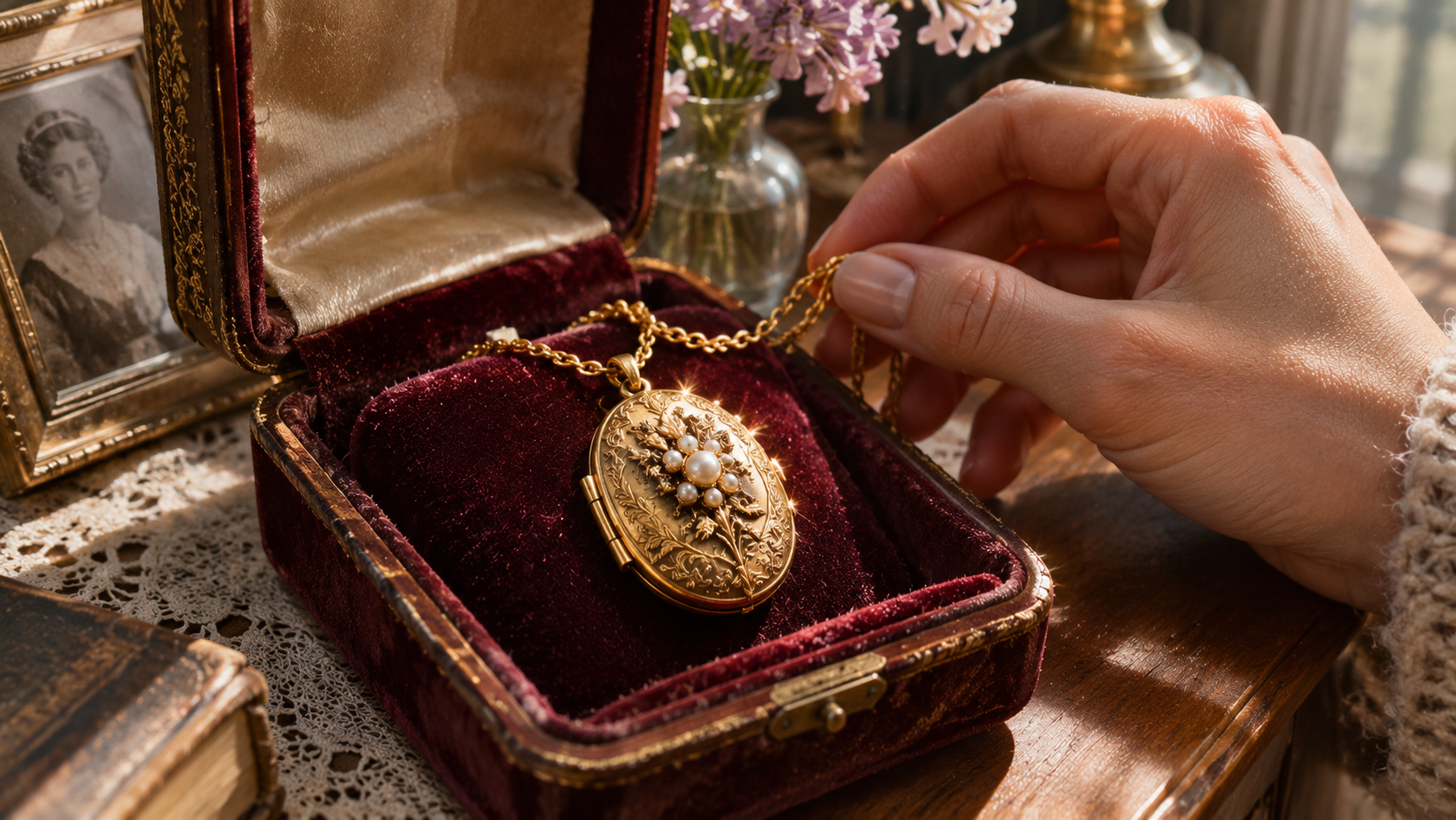
“That’s Mom’s necklace,” she said at the reception, her eyes narrowing. “I thought she’d want me to have it. I’m the oldest.” I explained that Mom had given it to me explicitly. Rachel smiled tightly and said nothing more. I should have known that silence was a warning.
Three Years Later
Rachel got married last June. I was happy for her—truly. She’d been with Mark for six years, and their wedding was a modest but lovely affair at a vineyard in Virginia. I flew in from Chicago, bought a new dress, and sat in the third row with our aunt. When the bridal march began, I turned to watch my sister walk down the aisle.
My breath caught in my throat. Around Rachel’s neck, gleaming under the string lights, was the locket. My locket. The one my mother had given me. The one I had locked in a safe in my apartment two states away.
I didn’t hear the vows. I didn’t hear the applause. I just stared at the necklace, my mind racing. How had she gotten it? I hadn’t told her the combination. I hadn’t even told her I had a safe.
After the ceremony, I cornered her near the cake table. “Rachel, that necklace—”
“Isn’t it beautiful?” she said, beaming. “Mom always told me it would be mine. I’m so glad I found it in her jewelry box after she passed.”
“That’s not true,” I said, keeping my voice low. “She gave it to me. In her bedroom. You were there when she told me she wanted me to have it.”
Rachel’s smile didn’t waver. “You must be misremembering. She was so sick at the end. She probably confused things.”
I wanted to scream. But it was her wedding. I swallowed my anger and walked away.
The Safe Was Empty
When I got home, I checked my safe. The locket was gone. So were my grandmother’s silver earrings and a small stack of savings bonds. I called the police. The responding officer took a report but told me it was likely someone I knew—no forced entry. I didn’t have the heart to accuse Rachel without proof.
Two weeks later, I received a letter from our aunt Carol, my mother’s sister. She’d been cleaning out her attic and found an old journal Linda had kept during her final months. Carol thought I should have it.
The journal was heartbreaking and illuminating. In an entry dated three months before she died, Linda wrote: “Rachel asked for the locket today. I told her no—it’s for Emma. Rachel was angry. She said Emma doesn’t appreciate family things. I worry about what Rachel might do.”
Another entry, two weeks later: “Rachel took the locket from my jewelry box while I was napping. I saw her. She said she was just looking, but she had it in her pocket. I made her put it back. I’m so tired. I can’t fight her.”
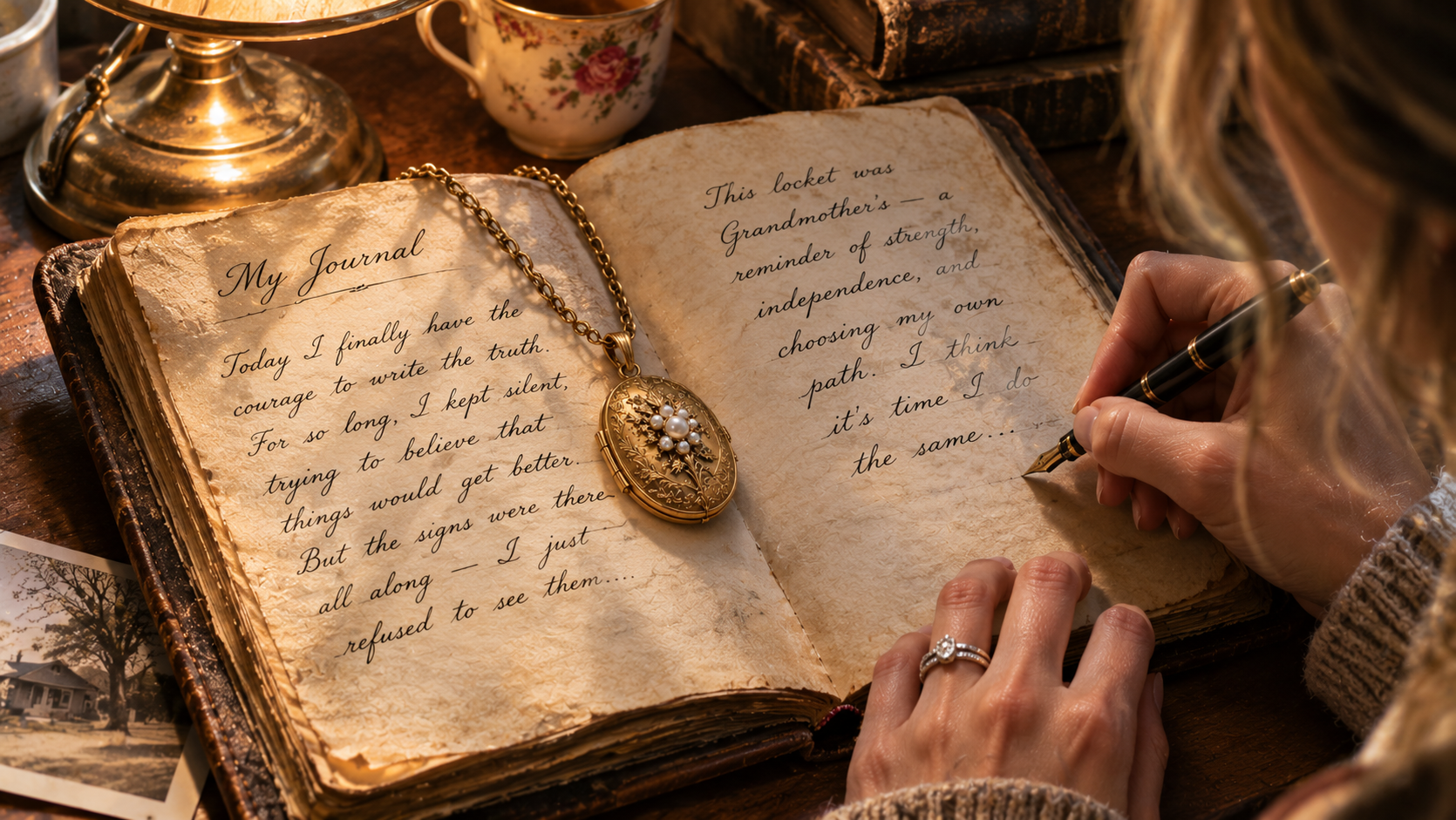
I sat on my kitchen floor and cried. My mother had been dying, and Rachel had been stealing from her. And now she had stolen from me.
The Confrontation
I didn’t call Rachel. I drove to her house with the journal. She opened the door in yoga pants and a tank top, the locket still around her neck. She looked surprised to see me, then guarded.
“You took it,” I said, holding up the journal. “Mom wrote about it. You stole it from her twice. And then you stole it from me.”
Rachel’s face went pale. She tried to close the door, but I stepped inside. “You can’t just take things because you want them,” I said. “That necklace was mine. It was a gift from Mom. And you lied to everyone at your wedding.”
“She gave it to me first,” Rachel whispered. “When I was sixteen. She said I could have it when I got married. Then she changed her mind because you were always the sensitive one.”
“That’s not what she wrote,” I said. “She wrote that she told you no. That you took it anyway.”
Rachel’s eyes filled with tears. “I just wanted something of hers,” she said. “You got the education. You got the career. You got to leave. I stayed. I took care of her. I deserved it.”
“You didn’t take care of her,” I said, my voice shaking. “You stole from her while she was dying.”
She didn’t deny it. She just stood there, crying, her hand touching the locket. “What do you want me to do?” she asked.
“I want you to give it back,” I said. “And I want you to tell Mark the truth. And I want you to apologize to me and to Mom’s memory.”
The Decision
Rachel gave me the locket. She told Mark, who was horrified and made her return the other items she’d taken from my safe. She wrote me a letter of apology, which I read once and put in a drawer. I didn’t forgive her right away. I couldn’t. But I also didn’t cut her out of my life.
Over the next year, Rachel started therapy. She admitted she’d been resentful for years—resentful that I left, that I had a life she didn’t, that Mom trusted me with the necklace. She said she knew it was wrong, but she couldn’t stop herself. She was jealous and sad and lost.
I understood, even if I didn’t excuse it. Grief makes people do strange things. But it doesn’t excuse stealing. Still, I decided to give her a chance to be better. Not for her sake, but for mine. I didn’t want to carry that anger forever.
What the Locket Taught Me
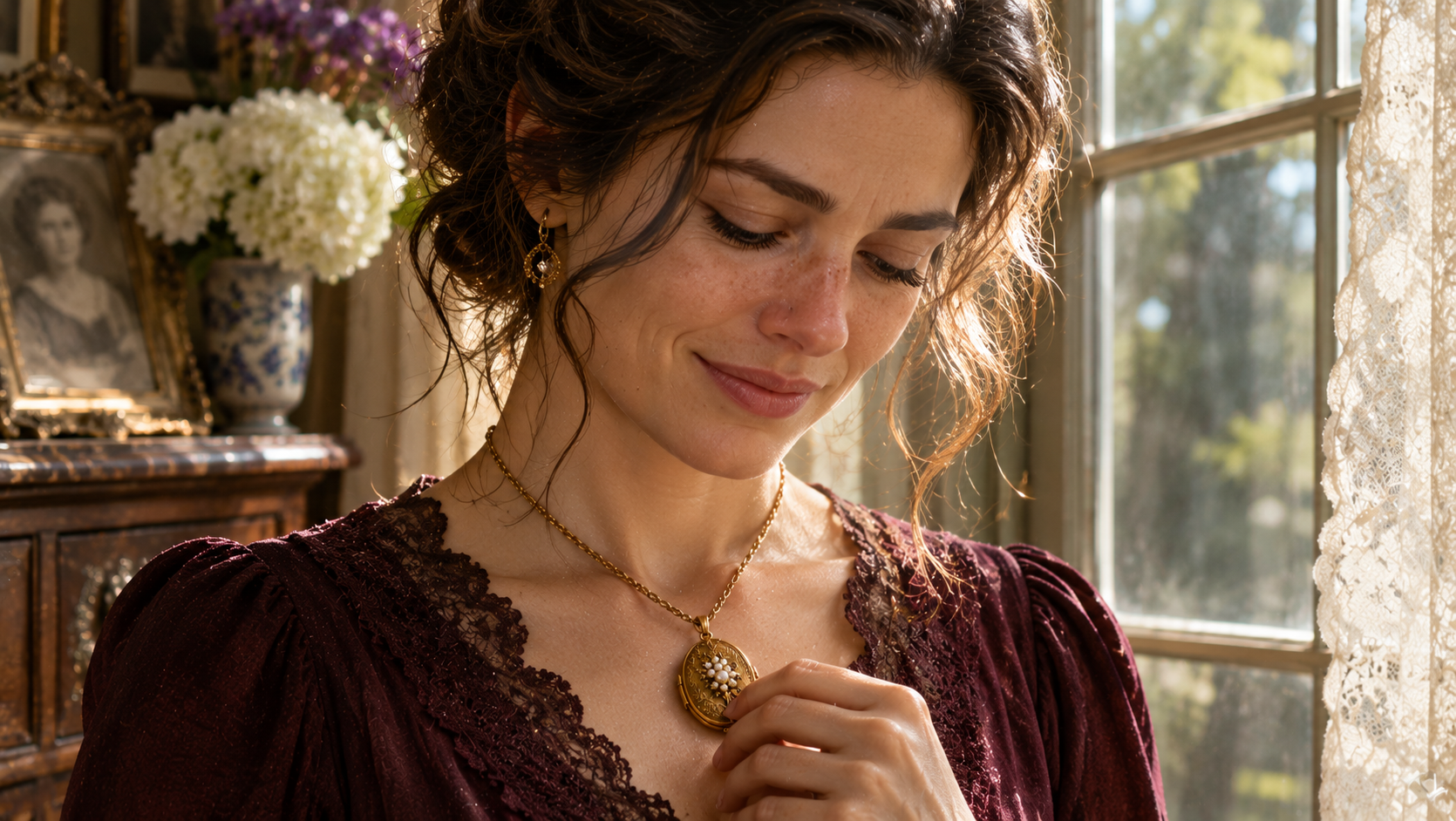
I wear the locket now. Not every day, but on important days—birthdays, holidays, the anniversary of Mom’s death. It’s a reminder of her love and her trust. It’s also a reminder that family isn’t just about blood. It’s about honesty and respect. Rachel broke that trust. She’s working to earn it back.
Last month, she asked if she could borrow the locket for a family portrait. I said no. She nodded and said she understood. That was progress.
The locket is more than an heirloom. It’s a test of character. My mother knew that. She gave it to me because she believed I would do the right thing. I hope I have.
Recommended Stories
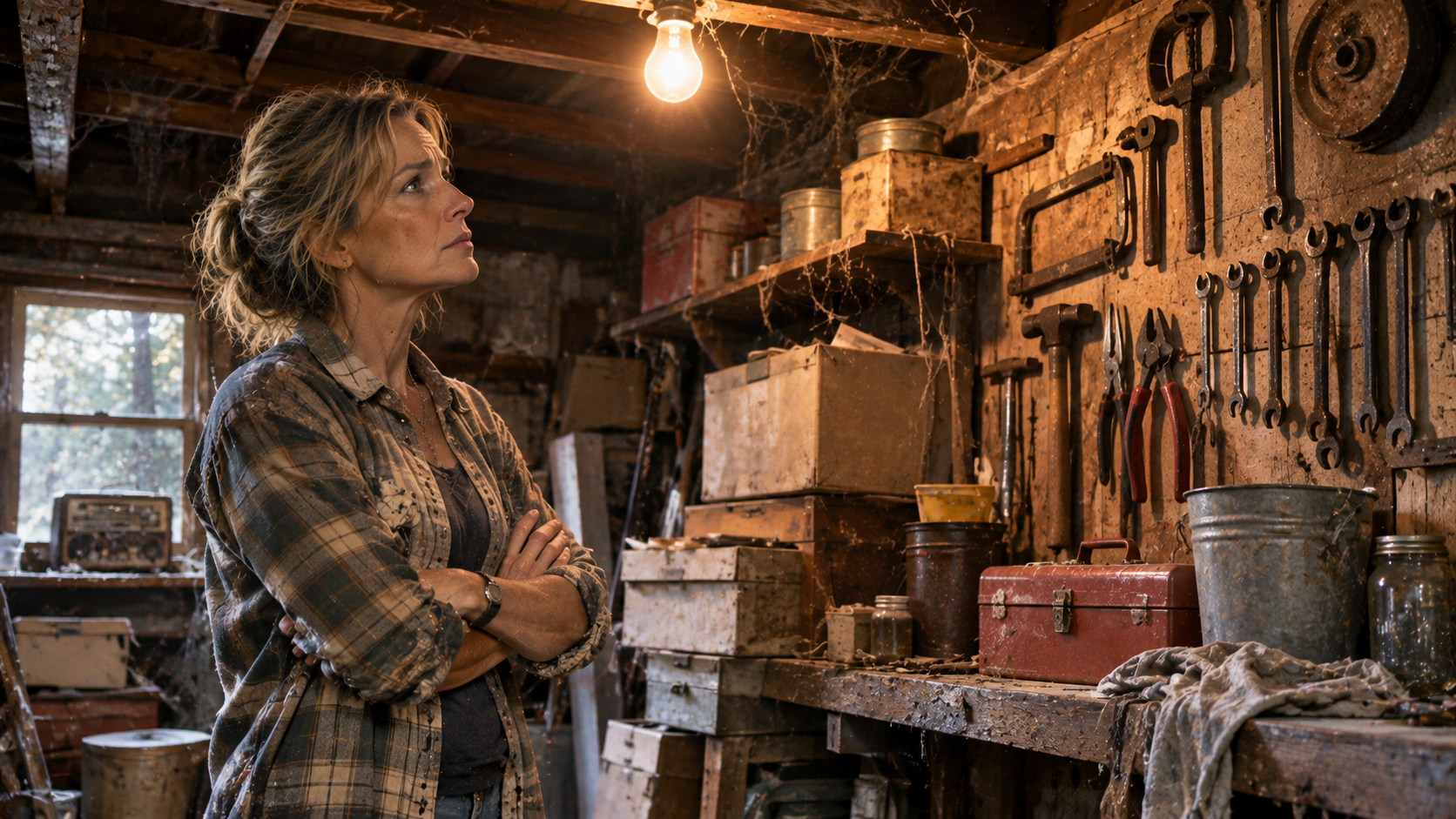
My Father’s Dying Words Were ‘Check the Garage’—What I Found Behind the Drywall Made Me Call the Police
His dying words were a riddle. Behind the garage wall, I found a fake ID, $20,000, and a secret that...
I Paid for My Sister’s Dream Wedding—Then She Eloped with My Fiancé and Posted the Photos on My Birthday
She paid $22,000 for her sister's dream wedding—then found the bride kissing her fiancé on her birthday. The receipts that...
My Brother ‘Borrowed’ My Identity to Buy a House—Then I Got a Letter from the IRS for $200,000 in Unpaid Taxes
I opened an IRS letter and discovered my brother had stolen my identity to buy a house, leaving me $200,000...