My Mother’s Dying Confession: ‘You Have a Twin Sister We Gave Away’—Then I Found Her Living 10 Miles Away
The Last Thing My Mother Ever Told Me
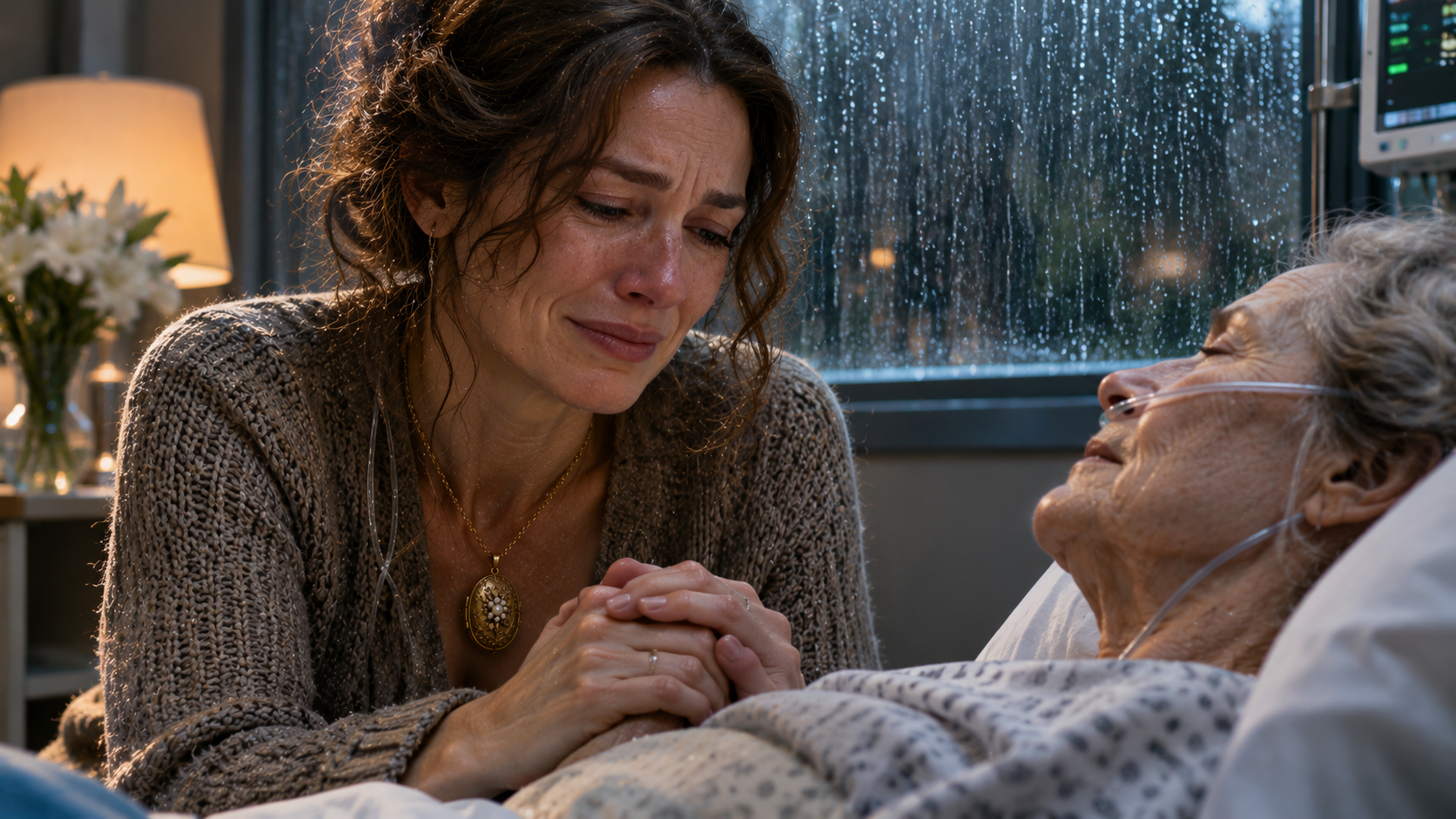
My mother’s hand felt like tissue paper in mine as she whispered the words that would unravel everything I knew about my life. “You have a twin sister,” she said, her voice barely audible over the hum of the hospital machines. “We gave her away. I’m so sorry.”
I sat frozen in that sterile room in Portland, Oregon, the rain streaking down the window like tears I couldn’t shed. My mother, Eleanor, had been battling pancreatic cancer for eight months. I’d spent every free moment at her bedside, holding her hand, reading her favorite novels, trying to cram a lifetime of love into borrowed time.
And now, with her final breaths, she’d dropped a bomb that made no sense.
“What are you talking about?” I asked, my voice cracking. “I don’t have a sister. I’m an only child.”
She shook her head weakly, tears slipping from the corners of her eyes. “Twin. Identical. Born June 14, 1989. We named her Lily. Your father… he said we couldn’t keep both. We were barely surviving.”
June 14, 1989. My birthday. The day I’d celebrated thirty-four times, never knowing someone else shared those exact first moments of life.
My father had died when I was twelve, and I’d spent years idealizing his memory. Now, with a few whispered words, my mother had rewritten everything.
The Search Begins
My mother passed three days later. I buried her next to my father in a quiet ceremony, then went home to the house I’d inherited—a modest bungalow in Beaverton—and started digging.
In her closet, behind a stack of old photo albums, I found a shoebox. Inside were adoption papers, yellowed with age, and a single photograph. A Polaroid of my mother holding two newborn babies, both swaddled in identical pink blankets. On the back, in her handwriting: Eleanor and Lily, June 1989.
My hands trembled as I read the adoption agency’s name: Willamette Valley Family Services. The agency still existed, though under a different name. I called the next morning, but they couldn’t release records without a court order. I needed proof of the relationship—which meant a DNA test.
I swabbed my cheek, mailed the sample, and waited. Six weeks later, the results came back. I had a sibling. An identical twin sister. The report listed only a first name: Lily.
I hired a private investigator, a gruff former cop named Marcus who charged $75 an hour and promised discretion. It took him eleven days to find her.
“She goes by Lily Chen now,” Marcus said over the phone. “Adopted by a Chinese-American couple from San Francisco. She’s a pediatric nurse. Lives in Hillsboro. That’s about ten miles from you.”
Ten miles. My entire life, my twin sister had been living ten miles away.
The Woman Who Looked Like Me
I found her Facebook profile that night. Lily Chen, RN, BSN. Her profile picture showed a woman with my exact face—the same dark hair, the same sharp jawline, the same eyes that strangers sometimes described as “knowing.” But her smile was different. Warmer, somehow. Less guarded.
I sent her a message at 2 a.m., typing and deleting the same words a dozen times. Finally, I wrote: Hello. My name is Rachel. I think we might be twins. I have adoption papers and DNA results. I’m so sorry to spring this on you. Please let me know if you’re willing to talk.
She replied in twelve minutes.
Who are you? How did you get my name?
I sent photos of the papers, the Polaroid, the DNA results. Then a selfie, taken in my kitchen, no makeup, hair pulled back.
Her response came at 3:47 a.m.: You look exactly like my daughter. I need to think. I’ll call you tomorrow.
The next day, my phone rang at 10 a.m. Lily’s voice was steady but tight with emotion. “I was adopted,” she said. “My parents told me when I was eight. They said my birth mother was young and couldn’t keep me. They never said I had a twin.”
We talked for three hours. She told me about growing up in San Francisco, about her adoptive parents who ran a small bakery in Chinatown, about her daughter, Mei, who was seven and had my exact stubborn chin. I told her about our mother—her mother too, though she’d never met her—about the cancer, the confession, the shoebox.
“I want to meet you,” she said finally. “Can we meet today?”
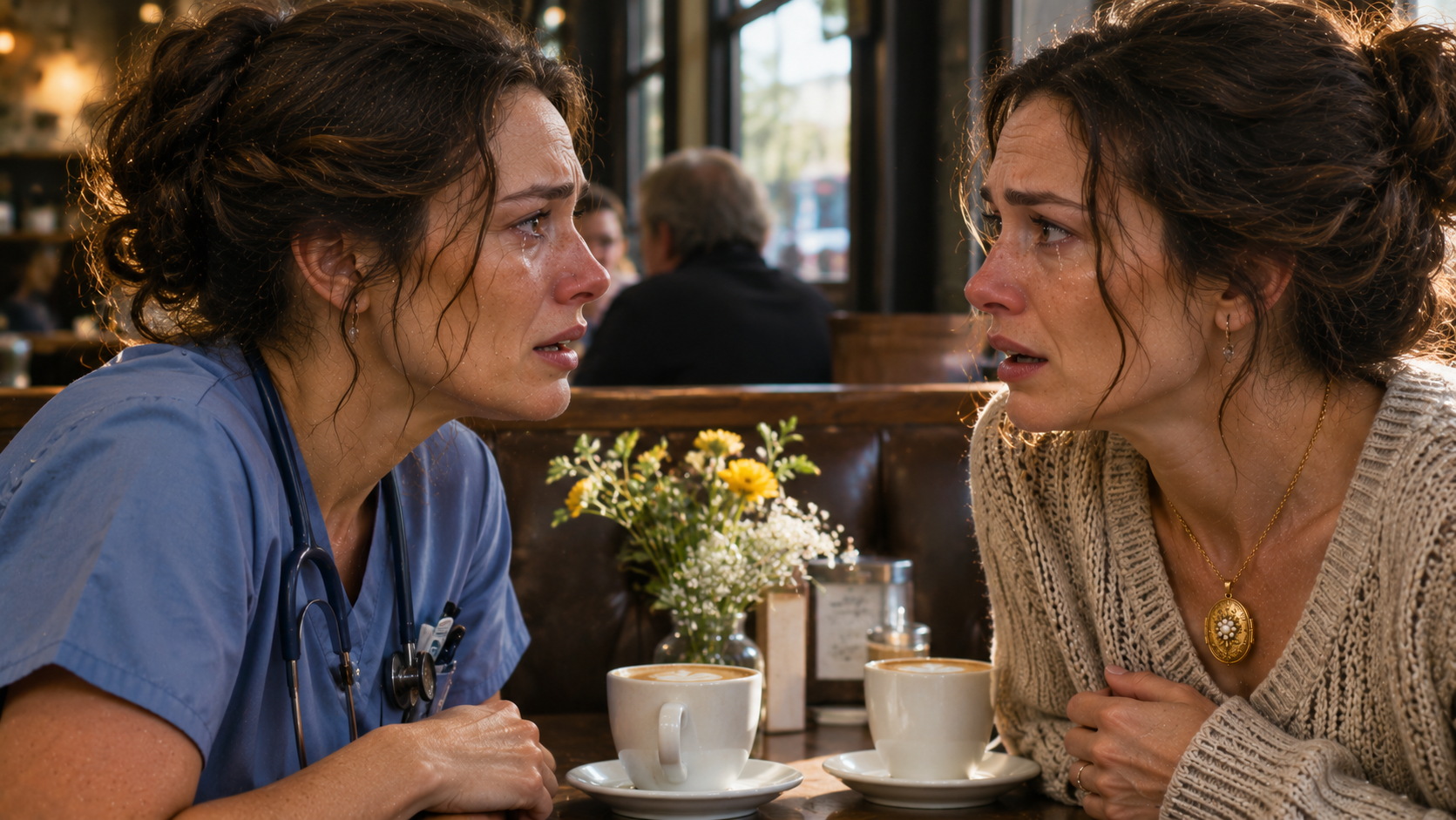
We met at a coffee shop in Hillsboro, a neutral space. I arrived early and watched her walk in. It was like looking in a mirror that had been polished to a different shine. Same face, different life. She wore scrubs and a lanyard with a hospital ID. Her hair was shorter than mine. She had a small tattoo of a lotus flower on her wrist.
Neither of us spoke for a long moment. Then she laughed—a soft, nervous sound—and said, “This is surreal.”
“Tell me about it,” I replied.
The Reason Why
Over the next few weeks, we pieced together the story. Our mother, Eleanor, was twenty-three when she gave birth to us in 1989. She and our father, David, were newly married, living in a cramped apartment in Portland, working low-wage jobs. They’d planned for one baby, not two. The pregnancy had been a surprise, and the double birth nearly broke them.
“She told me once that they couldn’t afford formula for two,” I said to Lily one evening, sitting on my back porch. “I thought she was joking. She said, ‘We were so poor we had to choose.’ I thought she meant choosing between rent and groceries.”
Lily shook her head. “My parents—my adoptive parents—told me the agency said my birth parents were a young couple who already had a child. That was a lie, I guess.”
“No,” I said. “They did have a child. Me. They kept me because…” I trailed off, the answer suddenly clear. “Because I was born first. The first baby. The one they’d prepared for. You came seven minutes later, and they didn’t know what to do.”
Lily was quiet. “So I was the extra.”
“You were the one they thought they couldn’t keep.”
She nodded slowly. “I’ve spent my whole life wondering why I was given up. Now I know. It wasn’t because I wasn’t wanted. It was because they were drowning.”
That night, I found a letter in the shoebox I hadn’t noticed before, tucked inside the adoption papers. It was from my mother, written when Lily was five. Dear Lily, I think about you every day. I hope you have a family who loves you. I hope you never feel alone. I’m so sorry.
She’d never mailed it. She’d kept it with the papers, a secret apology she could never send.
The Family We Build
Lily and I didn’t become instant best friends. We were strangers with the same face, and that’s a strange thing to be. But we talked every day. We compared childhoods—hers in a bustling Chinese-American household with siblings and family dinners, mine in a quiet house with a father who died too young and a mother who carried a secret like a stone in her chest.
I met Mei, my niece, who called me “Aunt Rachel” on our second meeting and hugged me like she’d known me forever. Lily met my friends, my coworkers, the small circle of people who’d been my family by choice. She fit in like a missing puzzle piece.
We took a DNA test together, just to confirm what we already knew. The results came back: 100% identical twins.
“Well,” Lily said, laughing, “I guess that settles it.”
We scattered our mother’s ashes together in the Willamette River, standing side by side, two women with the same face and different lives, bound by a secret that had finally been released.
“Do you forgive her?” Lily asked as the ashes drifted downstream.
I thought about it for a long time. “I’m learning to,” I said. “She made a choice she thought was the only one she had. And she spent thirty-four years carrying it. That’s its own kind of punishment.”
Lily nodded. “I think I understand her now. In a way I never could before.”
We stood there in the cold Oregon morning, two sisters who’d been separated by poverty and secrets, finally whole.
Sometimes I wonder what my life would have been like if my mother had told me sooner. If I’d grown up with Lily, with Mei, with a family that was twice as big and twice as complicated. But then I remember: we found each other anyway. Ten miles apart, for thirty-four years, and we still found each other.
That’s not a tragedy. That’s a miracle.
And when I look at Lily now, at her daughter, at the family we’re building together, I know one thing for certain: my mother’s dying confession wasn’t a burden. It was a gift. The last gift she had to give.
Recommended Stories
I Discovered My Husband Had a Second Family in Another State—Then His ‘Other Wife’ Sent Me a Friend Request on Facebook
A friend request from a stranger revealed my husband's secret second family. What happened next turned betrayal into an unlikely...
I Paid for My Brother’s Wedding After He Promised to Repay Me—Then He Posted Photos from His $50,000 Honeymoon and Blocked My Number
He promised to repay the $18,500 I lent him for his wedding—then blocked me and flew to Bora Bora. Here's...
My Brother Used My Social Security Number to Open 12 Credit Cards—When I Confronted Him, He Laughed and Said ‘You Owe Me for Being the Favorite.’ Then the Bank Statements Revealed His Real Motive
My brother opened 12 credit cards in my name and laughed when I confronted him. Then the bank statements revealed...