I Paid for My Sister’s Dream Wedding—Then She Eloped with My Fiancé and Posted the Photos on My Birthday
The Venue Deposit That Never Was
I was thirty-four, a pediatric nurse in Asheville, North Carolina, and I had $18,400 in a savings account labeled ‘Wedding’ in my banking app. My sister, Marissa, thirty-one, had been engaged for two years to a man named Todd, and their wedding was set for October. My fiancé, Derek, a high school baseball coach, and I were supposed to marry the following spring. I was the responsible one—the one who co-signed their apartment lease when Todd’s credit tanked, the one who fronted the $6,500 deposit for Marissa’s dream venue at the Biltmore Estate when her card was declined.
‘You’ll get it back after the wedding,’ Marissa promised, hugging me tight. ‘You’re the best sister in the world.’
That was in March. By August, the venue had received no final payment, and Marissa stopped answering my calls. Derek said she was just stressed. But on the morning of my thirty-fifth birthday, September 12th, I opened Instagram to find a photo of Marissa in a white dress, kissing Derek in front of a courthouse in Gatlinburg. The caption read: ‘Mr. and Mrs. Derek Harmon. Sometimes the best love stories start with a secret.’
My hands shook as I scrolled. There were twelve photos. My sister. My fiancé. My life savings.

The Receipts I’d Been Too Trusting to Keep
I didn’t cry. I called my mother, who sighed and said, ‘Well, sweetheart, you can’t control who people love.’ Then she asked if I’d still be able to help with Marissa’s student loans that month. I hung up.
I drove to Marissa’s apartment—the one I’d co-signed—and used my spare key. The place was half-empty. On the kitchen counter, I found a manila folder labeled ‘Biltmore.’ Inside were my $6,500 check (uncashed, voided), a letter from the venue explaining that the contract had been canceled in May, and a printed email chain between Marissa and Derek. The earliest message was dated February 14th—Valentine’s Day. ‘I can’t wait until we don’t have to pretend anymore,’ Marissa had written. Derek replied: ‘Once the wedding money comes through, we’re out.’
They’d been planning this for seven months. The ‘dream wedding’ was a cover to siphon my savings. The $18,400 I’d saved for my own future was gone—transferred in three separate withdrawals I’d authorized because Marissa said the venue needed cashier’s checks.
I sat on her empty living room floor and did something I hadn’t done in years: I called a lawyer.
The Audit That Unraveled Everything
My attorney, a sharp woman named Priya, requested my bank statements and Marissa’s. What we found was worse than I imagined. Marissa had taken $22,000 total—my $18,400 plus $3,600 from our grandmother’s ’emergency fund’ that Marissa managed. She’d also opened a credit card in my name in June, maxing it out on a ‘honeymoon’ to Cancún.
Priya sent a demand letter. Marissa’s response was a text: ‘You’re just jealous because Derek chose me. Get over it.’
But here’s what Marissa didn’t know: Derek had been married before. His ex-wife, a woman named Carla, had reached out to me two years earlier on Facebook, warning me that Derek had a pattern of ‘borrowing’ money from partners and disappearing. I’d ignored her, believing Derek’s story that Carla was ‘crazy.’ Now I called Carla back.
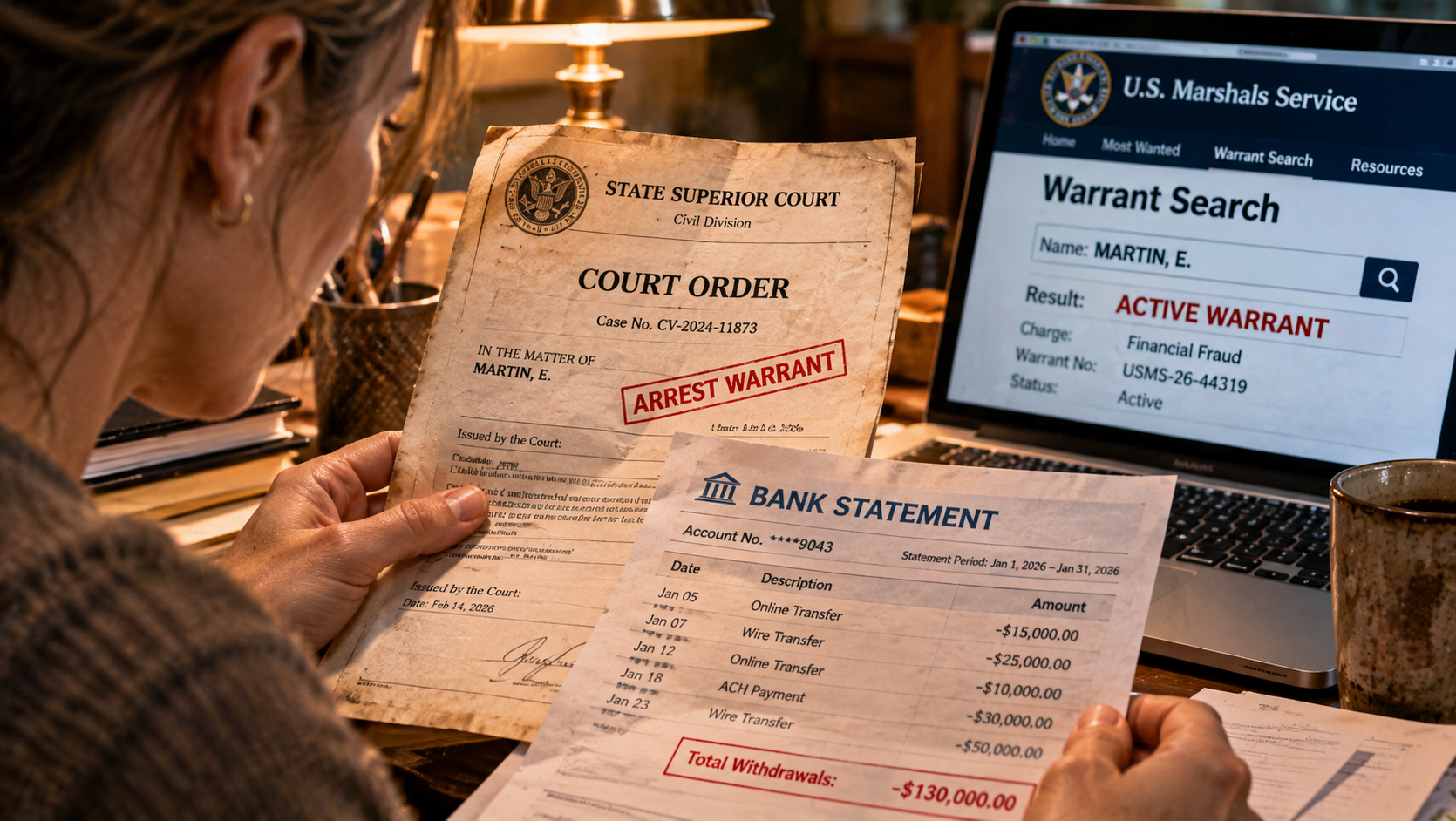
She sent me court records from 2019: Derek had been ordered to pay $14,000 in restitution for a similar scheme involving a former girlfriend’s savings. He’d never paid it. There was an active warrant in Tennessee.
The Birthday Post That Backfired
I didn’t post anything dramatic. I didn’t need to. I simply replied to Marissa’s Instagram post with a comment: ‘Congratulations. Since you used my $22,000 for the elopement, I assume you’ll be sending the first installment by Friday. My lawyer has the receipts.’ Then I attached a screenshot of the voided check and the email chain.
The comment went viral within hours. Marissa deleted it, but screenshots spread. Her employer—a private school where she taught third grade—saw the post. They launched an investigation into the credit card fraud. Derek’s school district received an anonymous tip about the warrant.
Two weeks later, Derek was arrested at a gas station in Knoxville. Marissa was charged with identity theft and grand larceny. My mother called me, sobbing, begging me to ‘drop the charges for the family’s sake.’ I told her I’d drop them if Marissa repaid every cent and publicly admitted what she’d done. She refused.
The case dragged on for eight months. Marissa pleaded guilty to a lesser charge and was ordered to pay $22,000 in restitution plus $4,500 in court fees. Derek received eighteen months for the outstanding warrant and the new fraud charge. Their marriage lasted four months.
The Quiet Rebuilding
I didn’t get my money back immediately. Marissa’s wages were garnished, and I received $300 a month for two years. But I got something better: my life back. I moved into a small rental near the hospital, picked up extra shifts, and started therapy. I learned that being the ‘responsible one’ didn’t mean being a doormat.
My mother and I didn’t speak for a year. She eventually apologized—not for taking Marissa’s side, but for never asking me how I was. It’s a start.
Last spring, I met someone new. A respiratory therapist named Ben who brings me coffee on night shifts and thinks my spreadsheets are ‘cute.’ We’re taking it slow. I’m not paying for anyone’s wedding but my own.
And Marissa? She moved to Florida, works at a call center, and sends me $300 every month with a note that just says ‘Sorry.’ I cash the checks. Forgiveness is a process, but so is justice. I’m okay with both taking their time.

The hardest lesson wasn’t about the money. It was learning that some people will use your love as a weapon. But here’s the thing: a weapon only works if you hand it over. I’m never doing that again.
Recommended Stories

My Sister Asked Me to Be Her Surrogate—Then She Tried to Take the Baby and Claim I Was Unfit. But She Didn’t Know About the Contract Clause
She asked me to carry her baby. Then she tried to erase me from the child's life. But one clause...

My Mother Gave My Wedding Dress to My Ex-Sister-in-Law—Then I Found a Hidden Letter in the Seams That Revealed Her True Motive
When I saw my ex-sister-in-law wearing my $4,800 wedding dress, I thought my mother had betrayed me. Then I found...

My Stepmother Sold My Childhood Home—Then I Found a Letter She Hid in the Walls
When my stepmother sold my childhood home behind my back, I thought I'd lost everything. Then a hidden letter revealed...