I Donated My Kidney to My Estranged Father—Then He Sued Me for ‘Emotional Distress’ Because I Didn’t Visit Him After Surgery
The Call That Changed Everything
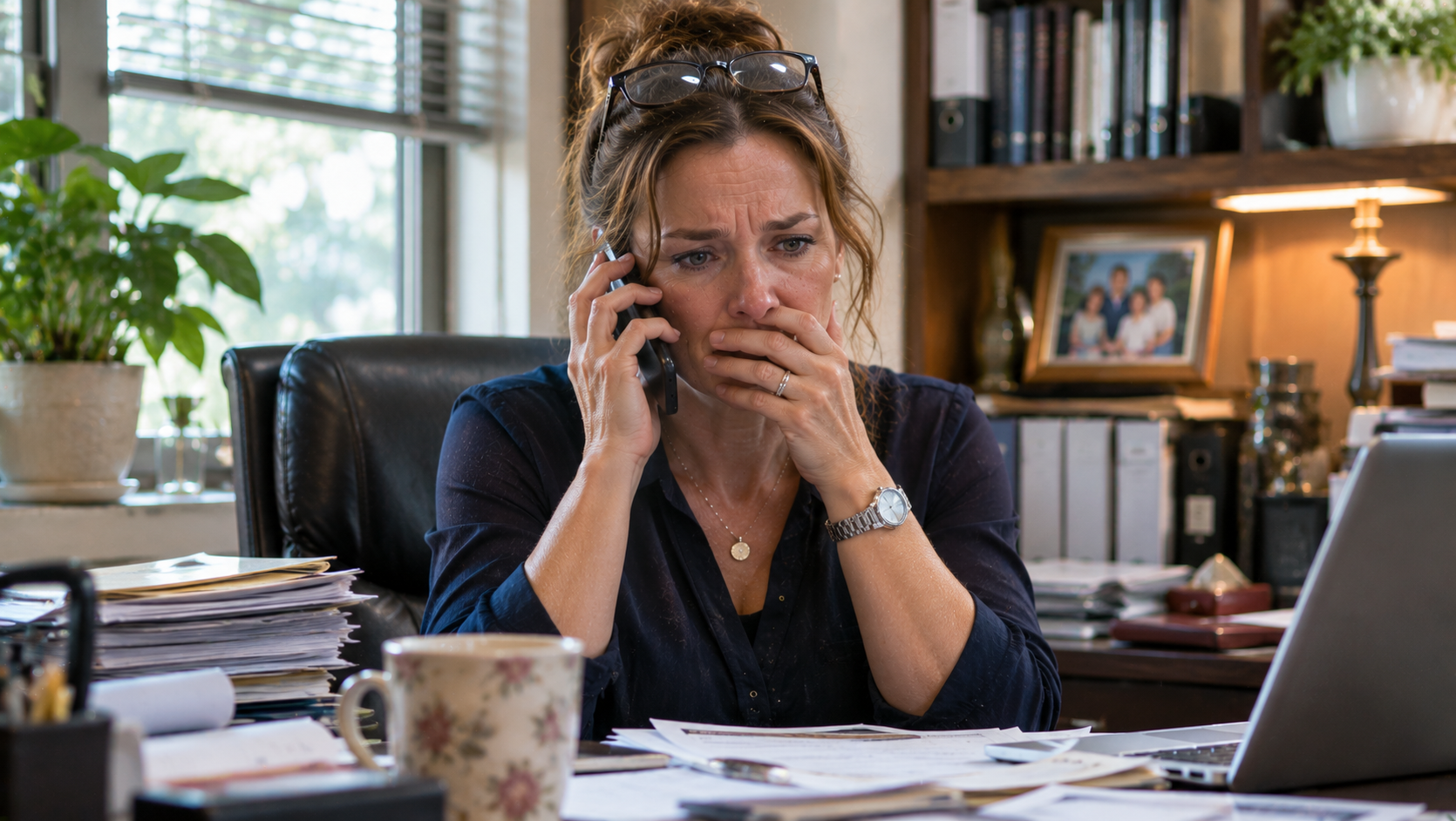
My phone buzzed on a Tuesday afternoon in March 2022. I was at my desk in Denver, reviewing spreadsheets for a client, when my mother’s number flashed on the screen. We hadn’t spoken in eight months—not since I’d skipped my cousin’s wedding to avoid another round of my father’s silent treatment. I almost let it go to voicemail. But something made me answer.
“Nora, it’s your dad,” she said, her voice tight. “His kidneys are failing. The doctors say he needs a transplant within a year, or he’ll have to go on dialysis. He’s… he’s asking if you’ll get tested.”
I sat back in my chair, staring at the spreadsheet without seeing it. My father, Richard, had been a ghost in my life since I was sixteen—ever since he’d walked out on us for a woman he met at a hardware convention. He’d paid child support, technically, but only after my mother dragged him to court. He’d missed my high school graduation, my college move-in day, and my wedding. The last time we’d spoken, he’d called me ‘selfish’ for not lending him $5,000 for a ‘business opportunity’ that turned out to be a timeshare in Boca Raton.
“Why me?” I asked. “He has two brothers. A sister. What about them?”
“They’ve all been tested,” my mother said. “No matches. You’re his only hope, Nora. I know he hasn’t been… the best father. But he’s still your dad.”
I didn’t answer right away. I thought about the years of birthday cards that never came, the Christmases he’d promised to visit and then didn’t. I thought about the time I’d called him from the hospital after my own miscarriage, and he’d said, “Well, these things happen,” before hanging up to take another call. But I also thought about the fact that I was healthy, that I had two working kidneys, and that somewhere inside me was a stubborn, stupid hope that maybe this would finally make him see me.
“I’ll get tested,” I said. “But I’m not promising anything.”
The Test Results and the Price of Hope
Two weeks later, I sat in a sterile exam room at UCHealth University of Colorado Hospital, a nurse practitioner scrolling through my bloodwork. “You’re a match,” she said, smiling. “A very strong match, actually. If you’re willing, we can schedule the surgery within the next two months.”
I felt a strange mix of terror and relief. I called my father that night. He answered on the second ring—unusual for him. “Nora,” he said, his voice softer than I’d heard it in years. “Your mother told me. I don’t know what to say. Thank you.”
It was the first time he’d ever thanked me for anything. I cried after we hung up, not because I was happy, but because I was confused. Was this real? Was he finally going to be the father I’d always wanted?
The surgery was scheduled for June 15, 2022. I took six weeks of unpaid leave from my job as a financial analyst. My husband, Marcus, drove me to the hospital at 5 a.m., holding my hand in the waiting room. “You don’t have to do this,” he said. “You know that, right?”
“I know,” I said. “But I want to.”
The operation took four hours. When I woke up in recovery, my side throbbing and my mouth dry as sand, the first thing I asked was, “Is he okay?”
“He’s doing great,” the nurse said. “The kidney started working immediately. He’s in the ICU, but he’s stable.”
I didn’t see him that day. Or the next. I was discharged on June 18, three days after surgery, with a bottle of painkillers and a list of restrictions: no lifting, no driving, no work for six weeks. I went home to Marcus, who made me soup and watched old movies with me while I healed.
The Lawsuit That Broke Me
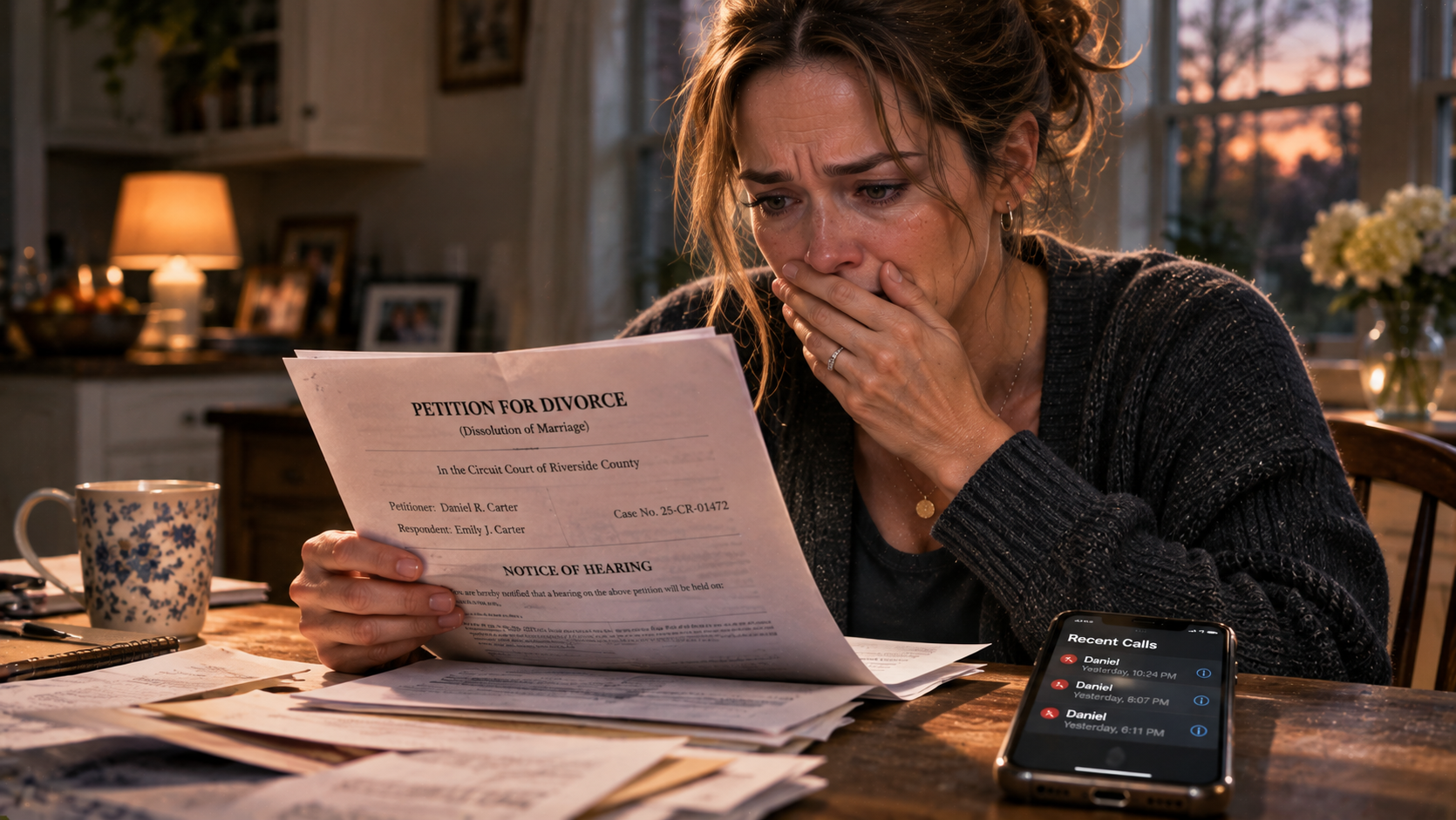
Two months later, on August 22, I received a certified letter from a law firm in Fort Lauderdale. I opened it at the kitchen table, assuming it was a bill or a follow-up from the hospital. Instead, I found a complaint for damages: Richard Callahan v. Nora Callahan-Miller. My father was suing me for emotional distress, claiming that I had “abandoned” him after surgery, that I had “failed to provide the emotional support he was promised,” and that his recovery had been “severely hampered” by my “negligence and indifference.” He was asking for $75,000.
I read the letter three times. Then I called my mother. “Did you know about this?” I asked, my voice shaking.
“What? No,” she said. “Nora, what are you talking about?”
I read her the first paragraph. She was silent for a long moment. “That son of a bitch,” she whispered. “He told me you’d stopped speaking to him. He said you’d hung up on him when he called to thank you.”
“I never got a call,” I said. “I called him three times after surgery. He didn’t answer. I left voicemails. I texted. Nothing.”
I pulled up my phone records and screenshots. There they were: three outgoing calls to his number on June 20, 22, and 25. Two texts. No replies. I sent them to my mother. She called me back ten minutes later, her voice raw. “He’s been lying to everyone,” she said. “He told his brothers you’d ignored him. He told the church you’d ‘taken his kidney and run.’ They’ve been praying for him to forgive you.”
I felt like I’d been punched in the gut. The man I’d given a piece of my body to—the man I’d almost died for—was painting me as a monster.
Fighting Back with the Truth
I hired a lawyer, a sharp, no-nonsense woman named Diane who specialized in frivolous lawsuits. “This is one of the most absurd cases I’ve ever seen,” she said, flipping through the complaint. “But we can fight it. We just need to show a pattern of manipulation.”
She subpoenaed my father’s phone records. They revealed something damning: on June 19—the day after I was discharged—he had called his brother and left a voicemail saying, “She’s already checked out. Didn’t even come by to see me. Typical.” But the records also showed that he had blocked my number on June 18, the day I left the hospital. He had deliberately cut off communication, then used the silence to build his case.
Diane also found that my father had a history of similar stunts. In 2015, he’d sued a former business partner for “emotional distress” after a deal fell through. The case was dismissed. In 2018, he’d filed a complaint against a neighbor for “excessive noise” that turned out to be a lawnmower. He was a serial litigant, a man who used the legal system as a weapon.
The lawsuit made it to court in February 2023. I sat in a Broward County courtroom, my hands folded in my lap, as my father took the stand. He looked thinner than I remembered, his skin gray under the fluorescent lights. He testified that I had “promised” to visit him every day after surgery, that I had “abandoned” him when he needed me most. When Diane cross-examined him, she asked, “Mr. Callahan, did you block your daughter’s number on June 18?”
He blinked. “I don’t recall.”
“Your phone records show you did,” she said, sliding a document across the table. “And they show that she called you three times and texted you twice. You never responded. Isn’t that true?”
He stammered. “I… I was recovering. I wasn’t checking my phone.”
“But you called your brother on June 19 to complain about her,” Diane said. “So you were checking your phone. You just weren’t checking for her.”
The courtroom was silent. My father’s lawyer objected, but the judge overruled. The case was dismissed with prejudice—meaning he couldn’t refile. The judge called the lawsuit “a waste of the court’s time and a cruel manipulation of a family crisis.”
The Aftermath and the Truth About the Kidney
I thought that would be the end of it. But two weeks after the trial, I got a call from my uncle, my father’s older brother, Tom. “Nora, I need to tell you something,” he said, his voice heavy. “Your dad… he didn’t need the transplant as urgently as he said. His doctors gave him two years, not one. He pushed for the surgery because he wanted to get it done before his insurance changed. He lied to you.”
I sat down on the floor of my living room, my back against the couch. “Why didn’t you tell me?” I asked.
“I didn’t know until after the trial,” he said. “He told me he’d asked you, and you’d agreed. I didn’t realize he’d pressured you.”
That was the moment I finally understood. My father hadn’t wanted a kidney. He’d wanted control. He’d wanted to prove that I would still come running when he called, that I would still sacrifice for him, even after everything. And when I didn’t perform the way he expected—when I didn’t visit him on his schedule, when I didn’t play the grateful, doting daughter—he’d punished me the only way he knew how: with a lawsuit.
I didn’t speak to him again. He tried to call once, a few months after the trial, but I let it go to voicemail. The message was three words: “I’m sorry, Nora.” I deleted it without listening to the rest.
It’s been a year now. My scar has faded to a thin white line. I still have moments of anger—usually late at night, when I think about the six weeks of unpaid leave, the pain, the fear. But I also have something else: clarity. I gave my father a kidney, and he gave me a lesson. I learned that some people will take everything you offer and still demand more. I learned that love isn’t a transaction, and that sacrificing for someone who doesn’t see you doesn’t make them see you. It just makes you smaller.
I don’t regret the donation. My kidney is still working, somewhere inside a man who will never appreciate it. But I do regret the years I spent hoping he’d change. Now I don’t hope anymore. I just live. And that, finally, feels like enough.
Recommended Stories
My Husband’s ‘Business Partner’ Was Actually His Secret Wife—I Discovered the Truth at His Funeral When She Handed Me a Photo of Their Three Kids
At my husband's funeral, a stranger handed me a photo of three kids with his smile. 'He was my husband...

My Mother Gave Me a ‘Worthless’ Music Box for My Wedding—Then a Collector Offered Me $75,000 Because of a Hidden Compartment
My mother gave me a 'worthless' music box on my wedding day. Three months later, a collector offered me $75,000...

I Found a Locked Safe in My Late Grandfather’s Attic—What Was Inside Proved My Family Had Been Lying for Generations
A locked safe in my late grandfather's attic held a secret that had been buried for generations—and the truth changed...