I Paid for My Brother’s Cancer Treatment—Then He Won the Lottery and Sued Me for ‘Emotional Distress’
The Phone Call That Changed Everything
I was sitting in my car in the parking lot of my dental practice in Boise, Idaho, when my brother Derek’s number flashed on the screen. It was a Tuesday afternoon in March 2022. I almost didn’t answer—we hadn’t spoken in six months, not since he’d screamed at me for missing his birthday dinner because I was covering a shift for a colleague whose wife had gone into labor. But something in my gut told me to pick up.
“Nora,” he said, his voice cracking. “I need to tell you something. I have cancer. Testicular. Stage 3.”
My hands went cold on the steering wheel. Derek was thirty-four, two years younger than me, and he’d always been the golden child—our mother’s favorite, the one who could do no wrong. But in that moment, he sounded like a scared little boy. He told me his insurance was a joke, that he’d been working freelance as a graphic designer and hadn’t paid premiums in months. The treatments would cost upwards of $80,000. He had maybe $3,000 to his name.
“I’m not asking for a handout,” he said quickly. “But you’re the only family I have left who can help. Mom’s on a fixed income. Dad’s gone. Please, Nora.”
I should have asked more questions. I should have demanded to see the medical records. But he was my brother, and he was dying. So I did what any decent person would do—I drained my savings account, took out a home equity line of credit, and wrote check after check to the oncology center. Over the next fourteen months, I paid $87,400 for Derek’s surgery, chemotherapy, and follow-up care.
He promised to pay me back “the second I’m back on my feet.” I told him not to worry about it. That was my first mistake.

The Lottery Ticket Nobody Knew About
Derek’s treatment worked. By May 2023, he was in remission, and I’d never felt so relieved—or so broke. My dental practice was struggling, and I’d missed two mortgage payments. But I told myself it was worth it. My brother was alive.
Then, in August, I got a text from our cousin Michelle: “Did you see Derek’s Facebook post? I can’t believe it!”
I opened Facebook, and there it was—a photo of Derek holding a giant novelty check for $2.5 million. He’d won the Idaho Lottery. The caption read: “God is good! After the darkest year of my life, the universe finally smiled on me. Time to live the dream!”
I stared at the screen for a full minute, my heart pounding. He hadn’t called me. He hadn’t texted. I found out about his fortune the same way strangers did—through social media.
I waited three days, then sent him a polite message: “Congratulations! So happy for you. When you get a chance, let’s talk about the loan.”
He didn’t respond for a week. When he finally did, it was through a lawyer.
A certified letter arrived at my house on a Friday afternoon. It was a summons. Derek was suing me for “intentional infliction of emotional distress” and “financial exploitation of a vulnerable adult.” He claimed that I had manipulated him into accepting my help, that I had “used his illness as leverage to control him,” and that I had “repeatedly demanded repayment in a way that caused severe anxiety and depression.” He was seeking $150,000 in damages.
I read the letter three times, then threw it across the room.
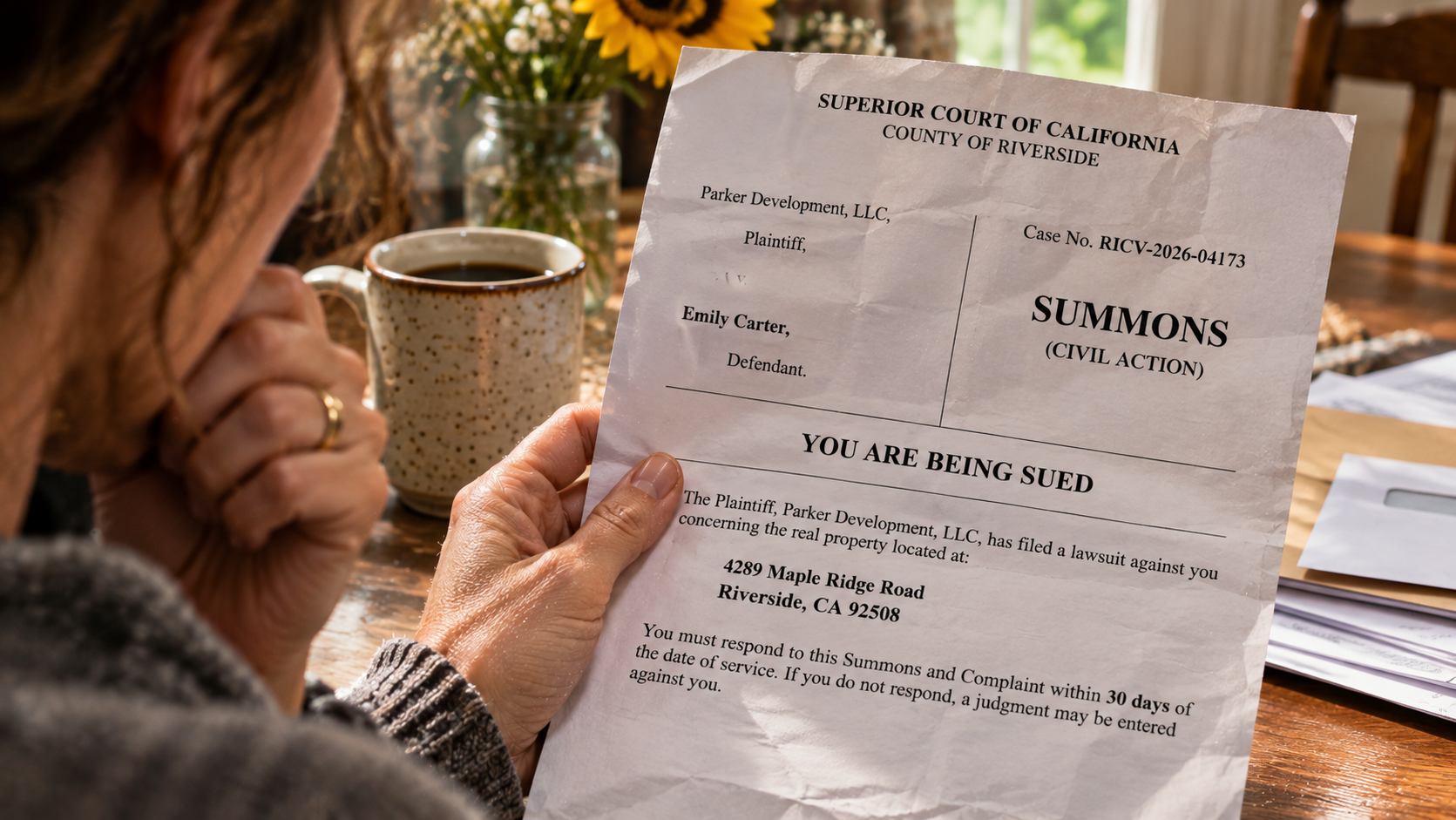
The Evidence I Never Knew I Had
I couldn’t afford a lawyer. My savings were gone, and my practice was barely staying afloat. But my best friend, Karen, who’s a paralegal, told me to start digging. “If he’s lying about one thing, he’s lying about everything,” she said. “Get every text, every email, every receipt.”
I spent a weekend combing through my phone records and bank statements. That’s when I found the first crack in Derek’s story. In February 2022, a month before he told me he had cancer, he had posted a photo on Instagram from a bar in Las Vegas. Nothing unusual—except the caption: “Living my best life! #NoRegrets.”
I scrolled back further. There were dozens of posts from the year he was supposedly “dying”—trips to Mexico, expensive dinners, a new tattoo. I had been so busy worrying about him that I’d never noticed.
Then I found the real bombshell. Derek had a second Facebook account under a fake name—”D. Miller.” He’d used it to join a support group for lottery winners. In a post from July 2023—two months before he won—he wrote: “I’ve got a plan. My sister owes me. She’s been paying for everything anyway. Time to make her pay for real.”
He had been planning this lawsuit before he even won the lottery. The cancer was real, but his “vulnerability” was a performance. He had never intended to repay me. He had intended to use me.
I printed everything—the Instagram posts, the fake account, the messages—and handed it to a lawyer named Patricia Vega, who took my case on contingency. “This isn’t just a counterclaim,” she said. “This is fraud.”

The Courtroom Reversal
The trial was set for April 2024. Derek showed up in a designer suit, flanked by two attorneys. He looked like a man who had never been sick a day in his life. His lawyer painted me as a controlling, manipulative sibling who had “exploited” his illness for my own emotional gain.
Then Patricia stood up. She didn’t raise her voice. She simply presented the evidence, one piece at a time.
First, the Instagram posts. “Mr. Hayes,” she said, “you testified that you were bedridden and unable to work for fourteen months. Can you explain why you were in Cabo in July 2022?”
Derek’s face went pale. “That was a business trip,” he stammered. “A friend paid.”
“A friend,” Patricia repeated. “Was that friend also the one who took this photo of you at a casino in Reno in October 2022, when you were supposedly recovering from surgery?”
The courtroom murmured. Derek’s lawyer objected, but the judge overruled.
Then Patricia brought out the fake Facebook account. She read Derek’s post aloud: “‘My sister owes me. She’s been paying for everything anyway. Time to make her pay for real.’” She paused. “Mr. Hayes, can you explain what you meant by that?”
Derek didn’t answer. He just stared at the table.
The jury deliberated for less than two hours. They ruled in my favor on all counts, dismissed Derek’s lawsuit, and awarded me $87,400 in restitution—the exact amount I had paid for his treatment—plus $50,000 in punitive damages for fraud.
Derek didn’t look at me as he left the courtroom. His designer suit suddenly looked like a costume.
What I Learned About Family
I won’t pretend the money made everything better. I still lost a brother—not to cancer, but to greed. Our mother hasn’t spoken to me since the trial. She says I “humiliated” him and that “family should forgive.” Maybe she’s right. But I’ve learned that forgiveness isn’t the same as allowing yourself to be used.
I used the restitution to pay off my home equity line and rebuild my practice. I’m not rich, but I’m free. And I’ve learned to ask questions—to demand proof, to trust my instincts, and to never let anyone convince me that love means sacrifice without boundaries.
Derek still has his lottery money. He bought a house in Scottsdale and a Tesla. But he also has a fraud conviction on his record, and a family that knows exactly who he is.
Sometimes, the best revenge isn’t revenge at all. It’s the truth, spoken plainly, in a courtroom where everyone can hear it.
Recommended Stories

My Brother Asked Me to Be His Alibi for a ‘Camping Trip’—Then the FBI Showed Up and I Learned He’d Been Running a $2 Million Fraud
When my brother asked me to be his alibi for a 'camping trip,' I said yes. Then the FBI showed...

My Stepmother Gave Me a Cheap Locket for My Birthday—Years Later, a Jeweler Told Me What Was Inside
A stepmother's 'cheap' birthday gift hid a secret that took 20 years to unfold—and a jeweler's revelation changed everything.

My Stepmother Sold My Late Mother’s ‘Costume Jewelry’ at a Yard Sale for $200—Then I Found the Buyer and Learned It Was a $75,000 Cartier Set
Her stepmother sold a box of 'costume' jewelry for $200. Then a stranger revealed the truth: it was a $75,000...