My Stepmother Sold My Childhood Home—Then I Found the Deed in My Late Father’s Toolbox, and It Was Never Hers to Sell
The Day the For Sale Sign Went Up
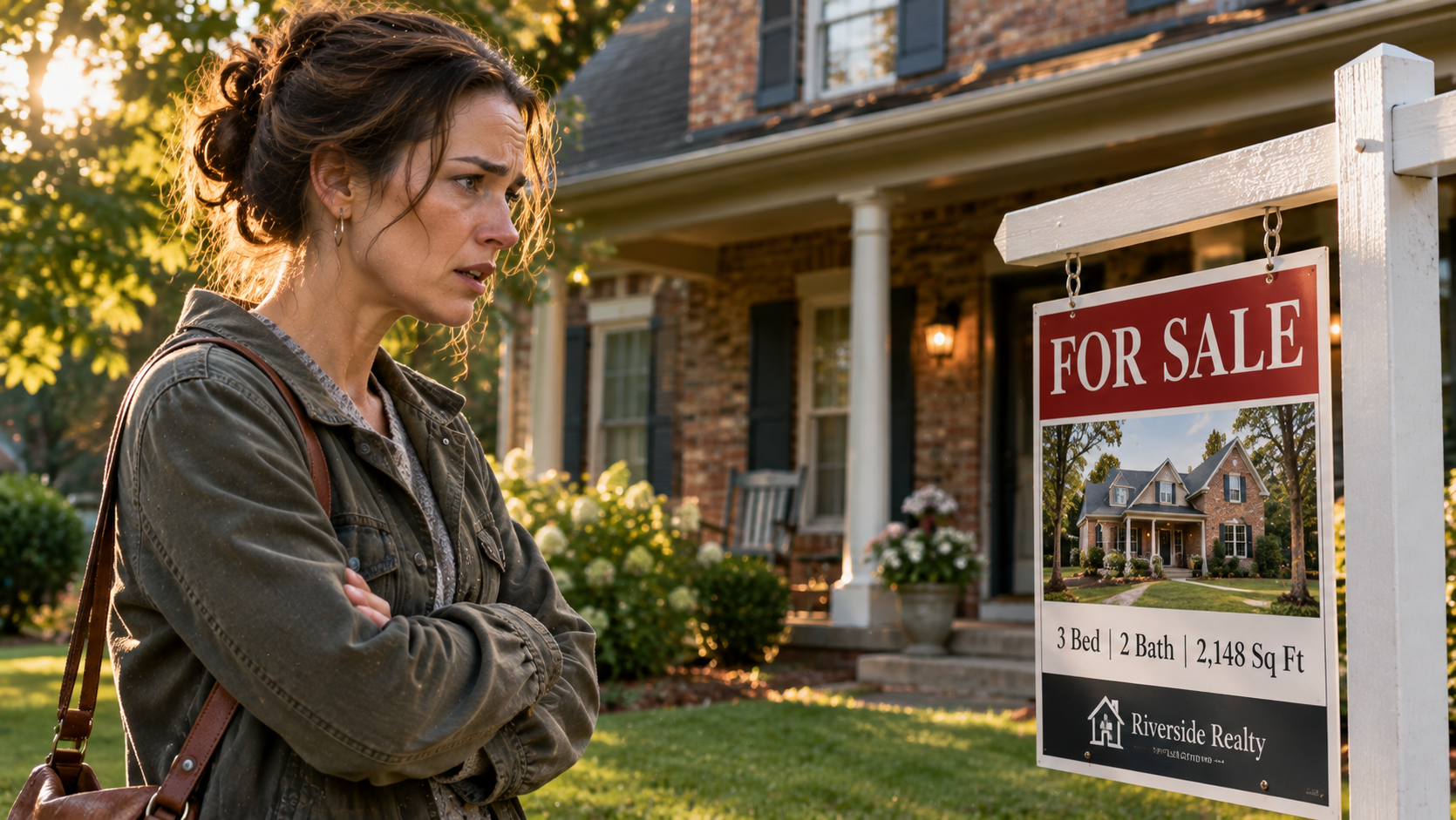
I was driving to my father’s grave on the second anniversary of his death when I saw it: a red-and-white “SOLD” sticker slapped across the sign in front of my childhood home. My hands gripped the steering wheel so hard my knuckles went white. I pulled over, staring at the brick ranch house where I’d learned to ride a bike, where my dad taught me to fix a leaky faucet, where my mother’s rose bushes still bloomed wild along the fence. The sign belonged to a realty company I’d never heard of. And according to the listing, the sale had closed three weeks ago.
I called my stepmother, Diane, from the driveway. She answered on the second ring, her voice light and unconcerned. “Oh, honey, I meant to tell you. I sold the house. It was too much for me to maintain alone.”
“You sold it?” I could barely get the words out. “That house was supposed to stay in the family. Dad always said—”
“Your father said a lot of things.” Her tone sharpened. “He left it to me, Rachel. It’s mine to do with as I please. You have your own life in Chicago.”
She hung up before I could respond. I sat there in the car, the engine ticking as it cooled, and felt something harden in my chest. My father, Frank, had been a carpenter his whole life—a man who believed in doing things right and keeping your word. He’d promised me that house. Not in a will, not in a legal document I’d ever seen, but in the way he’d taken my hand when I was sixteen and said, “This place is yours someday, kiddo. No matter what.”
I didn’t know then that Diane had forged the deed. I didn’t know she’d been planning this since the day he died.
The Will That Wasn’t
I hired a lawyer within the week. Her name was Patricia Okonkwo, a no-nonsense estate attorney who listened to my story without interrupting. When I finished, she leaned back in her chair and said, “Do you have a copy of the will?”
“Diane sent me one. It left everything to her—the house, the savings, the tools in the garage. She said Dad signed it six months before he died.”
Patricia frowned. “That’s unusual. Most people with children from a prior marriage set up a trust or at least leave specific bequests. Did you see the original?”
“No. Just a photocopy.”
“Get me the original. And while you’re at it, find out who notarized it.”
I drove to Diane’s condo that weekend, ostensibly to collect some of my mother’s things she’d promised to give me. Diane was in her early sixties, a former paralegal who’d married my father when I was fourteen—two years after my mother died of breast cancer. She’d always been polite but distant, the kind of woman who kept her emotions locked in a safe. I’d never trusted her, but I’d never had proof.
She handed me a box of my mother’s costume jewelry and a few old photo albums. “I’m sorry we didn’t talk before the sale,” she said, not sounding sorry at all. “But you have to understand—I needed the money. The house was a burden.”
“Dad loved that house. He built the back deck himself. He planted that oak tree when I was born.”
“Sentiment doesn’t pay property taxes.” She crossed her arms. “The will is ironclad, Rachel. I had it reviewed by two different attorneys.”
I left with the box and a growing suspicion. That night, I sat on my apartment floor and went through the albums. Tucked between the pages of a 1998 photo book was a folded piece of paper—a receipt from a notary public in a town two hours away. The date was three weeks after my father’s death.
Notaries don’t notarize wills after the signer is dead. Unless someone forged the signature.
The Toolbox in the Garage
I drove back to the house the next morning. The new owners hadn’t moved in yet, but the lockbox was still on the front door. I called the realtor, spun a story about needing to retrieve a family heirloom from the garage, and she gave me the code with a sympathetic sigh.
The garage smelled like sawdust and motor oil—my father’s scent. His workbench still stood in the corner, covered in a thin layer of dust. I ran my hand along the edge, remembering how he’d let me hammer my first nail when I was seven. The toolbox sat underneath, a heavy steel Craftsman he’d bought in 1985. I opened it, expecting screwdrivers and wrenches.
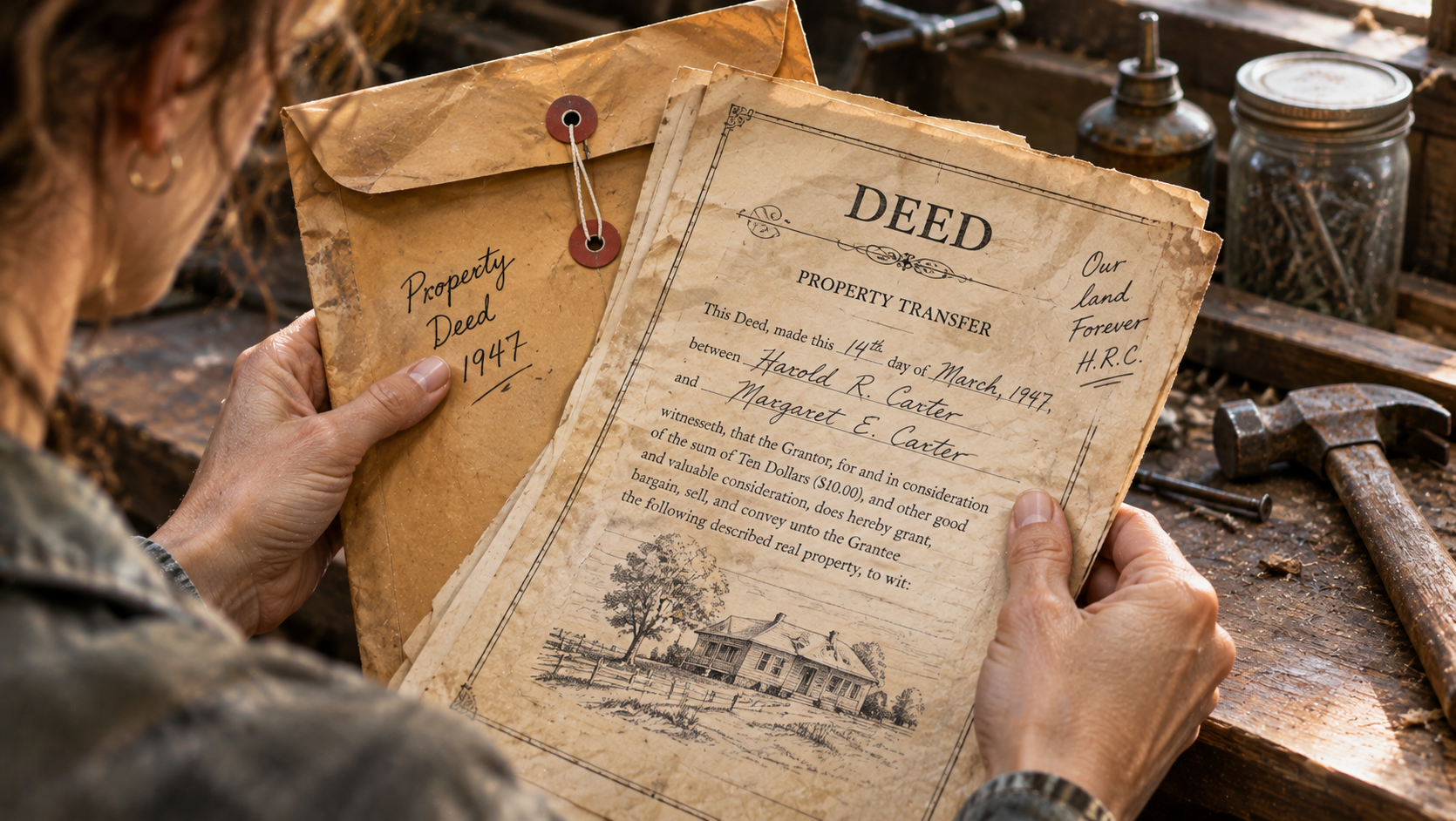
Instead, I found a manila envelope taped to the inside lid. My name was written on it in my father’s handwriting: For Rachel, when the time is right.
My hands trembled as I opened it. Inside was a deed—the original deed to the house—listing my father and me as joint tenants with right of survivorship. And clipped to it was a handwritten letter, dated two weeks before he died.
Rachel, it read. I know Diane has been pushing me to change the will. I haven’t. The house is yours—it’s always been yours. I added your name to the deed in 2010, after your mother died. Diane doesn’t know. I’m telling you now because I don’t trust what she might do after I’m gone. The deed is the truth. The will is just paper. Love, Dad.
I sank onto the garage floor and cried. He’d known. He’d tried to protect me.
The Notary Who Remembered
Patricia was ecstatic. “This changes everything,” she said. “If your name was on the deed as joint tenant with right of survivorship, the house passed to you automatically upon your father’s death. Diane never owned it. She couldn’t sell it—she had no legal title.”
“But she did sell it. The new owners have the keys.”
“Then the sale is void. We can file a quiet title action and demand the buyers vacate. But first, we need to prove Diane knew what she was doing.”
We subpoenaed the notary records. The notary, a retired schoolteacher named Harold Jenkins, testified that Diane had come to him with a will she claimed her husband had signed. “She said he was bedridden and couldn’t come in person,” he recalled. “I told her I couldn’t notarize without seeing the signer. She got upset and left. A week later, she came back with a different document—a power of attorney. That one I notarized.”
Diane had used the power of attorney to sign the will herself, forging my father’s signature. She’d then recorded a fraudulent deed transfer with the county, listing herself as sole owner. The sale to the new buyers was the final step in a scheme she’d been building for two years.
When Patricia confronted her with the evidence, Diane didn’t deny it. “He promised me security,” she spat. “I took care of him for eight years. I deserved that house.”
“You deserved nothing,” I said quietly. “He gave you a home. You stole mine.”
The House That Came Home
The legal battle took nine months. The buyers, a young couple who’d been duped, agreed to vacate in exchange for a full refund from Diane’s insurance. Diane was charged with forgery, fraud, and theft—all felonies. She pleaded guilty to a reduced charge and received five years’ probation, restitution of $240,000, and a permanent restraining order barring her from contacting me.
I moved back into the house last spring. The rose bushes had grown wild, but they still bloomed. I fixed the leaky faucet in the kitchen, using my father’s old wrench from the toolbox. I planted a new oak tree in the backyard, right next to the one he’d planted for me.
Sometimes I sit on the back deck he built and think about how close I came to losing it all. Diane had counted on my grief, my distance, my trust in the paperwork she’d forged. She’d forgotten one thing: my father was a carpenter. He knew how to hide things in plain sight. And he’d loved me enough to leave a trail of breadcrumbs.
The deed is framed now, hanging in the hallway where my mother’s photo used to be. I look at it every morning and remember: some promises are written in ink. Others are carved into the bones of a house—and no forger can ever erase them.
Recommended Stories
I Found a Hidden Will in My Late Father’s Safe—It Left Everything to a Woman We’d Never Heard Of, and My Stepmother’s Reaction Was Even More Shocking
A hidden will names a mysterious woman. My stepmother's reaction? She burned it. But the truth she was hiding was...
My Stepmother Gave Me a ‘Cheap’ Necklace for Graduation—Years Later, a Jeweler Told Me It Was Worth $75,000 and Belonged to a Famous Family
My stepmother gave me a 'cheap' necklace for graduation. Years later, a jeweler told me it was worth $75,000—and belonged...
At My Father’s Funeral, His Secret Second Family Showed Up—Then the Will Was Read and Everything Went to Them
At my father's funeral, a woman I'd never met called him 'Daddy.' Then the will was read—and everything went to...