At My Father’s Funeral, His Secret Second Family Showed Up—Then the Will Was Read and Everything Went to Them
The Strangers at the Grave
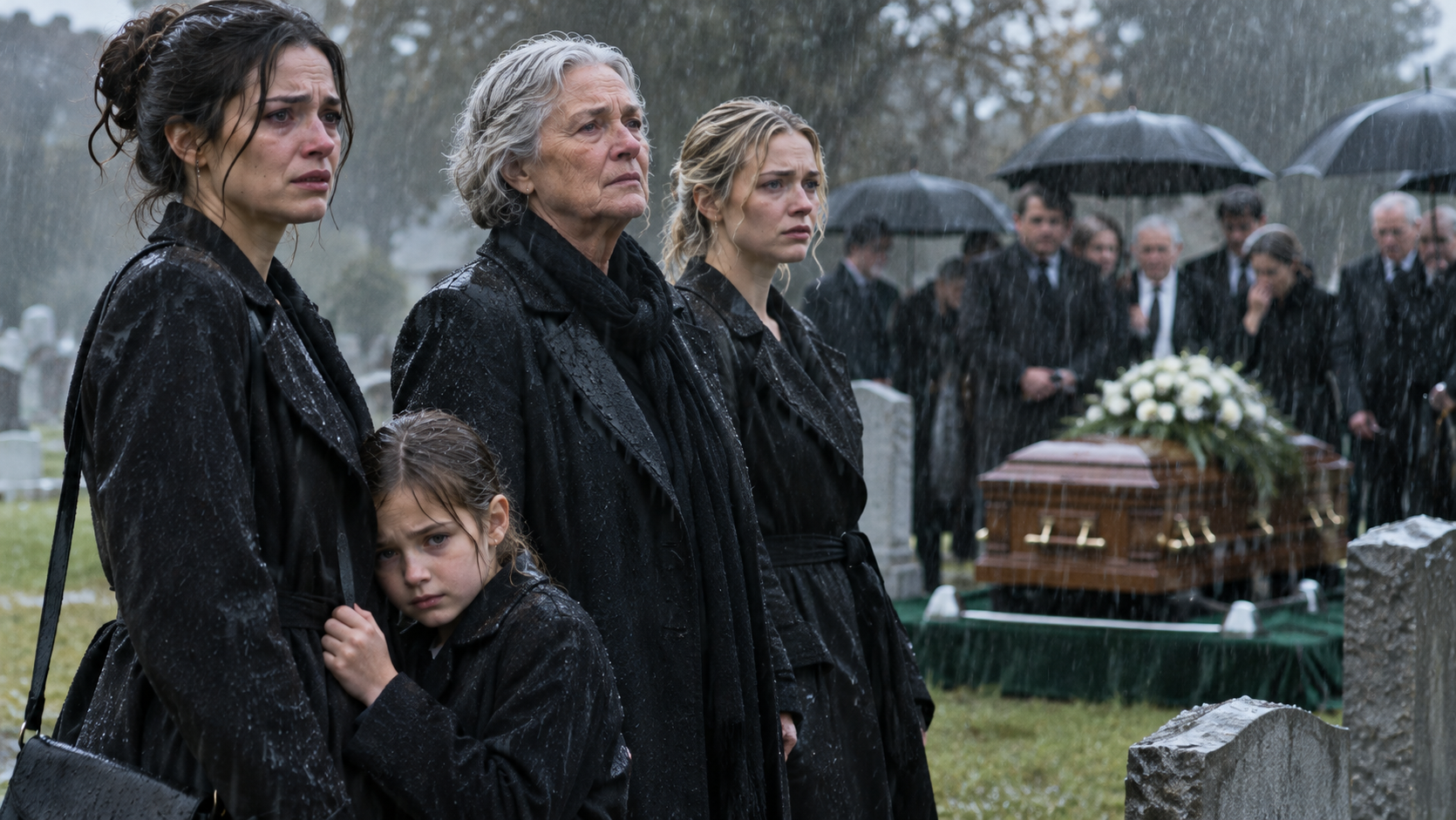
The rain had just stopped when the first stranger appeared at my father’s graveside. She was my age, maybe a year older, holding the hand of a little boy who had my father’s exact shade of blue eyes. Behind her stood a woman in her fifties, dressed in a black coat that looked more expensive than anything my mother had ever owned. I remember gripping the damp edge of the casket, wondering if I was hallucinating. But then the woman stepped forward, laid a single white rose on the lowering casket, and whispered loud enough for everyone to hear: “Goodbye, Daddy.”
My mother’s knees buckled. My brother, Marcus, dropped the funeral program he’d been clutching. And I—I just stood there, frozen, as the woman turned to us with a polite, almost rehearsed smile. “I’m so sorry for your loss,” she said. “I’m Nicole. Your father’s other daughter.”
That was the moment my father’s carefully constructed life began to collapse. And it was only the beginning.
The Man We Thought We Knew
My father, Richard Vance, was a quiet accountant from Columbus, Ohio. He wore the same gray cardigan every Sunday, watched golf on weekends, and never missed my mother’s pot roast dinners. He was the kind of man who faded into the background—until he died, and suddenly everyone wanted to talk about him.
Nicole and her mother, Diane, didn’t leave after the funeral. They followed us to the reception at our church hall, where Diane introduced herself to my mother as “Richard’s partner of twenty-three years.” Twenty-three years. That meant their relationship started when I was twelve. When Marcus was fourteen. When my mother was still packing his lunches and ironing his shirts.
The room went silent. My aunt dropped a plate of sandwiches. My mother, a woman who had never raised her voice in her life, looked at Diane and said, “Get out of my church.”
But Diane didn’t leave. Instead, she pulled out a folded document from her purse. “I think you should see this,” she said. “The will reading is on Monday. You might want to prepare yourself.”
The Will That Broke Us
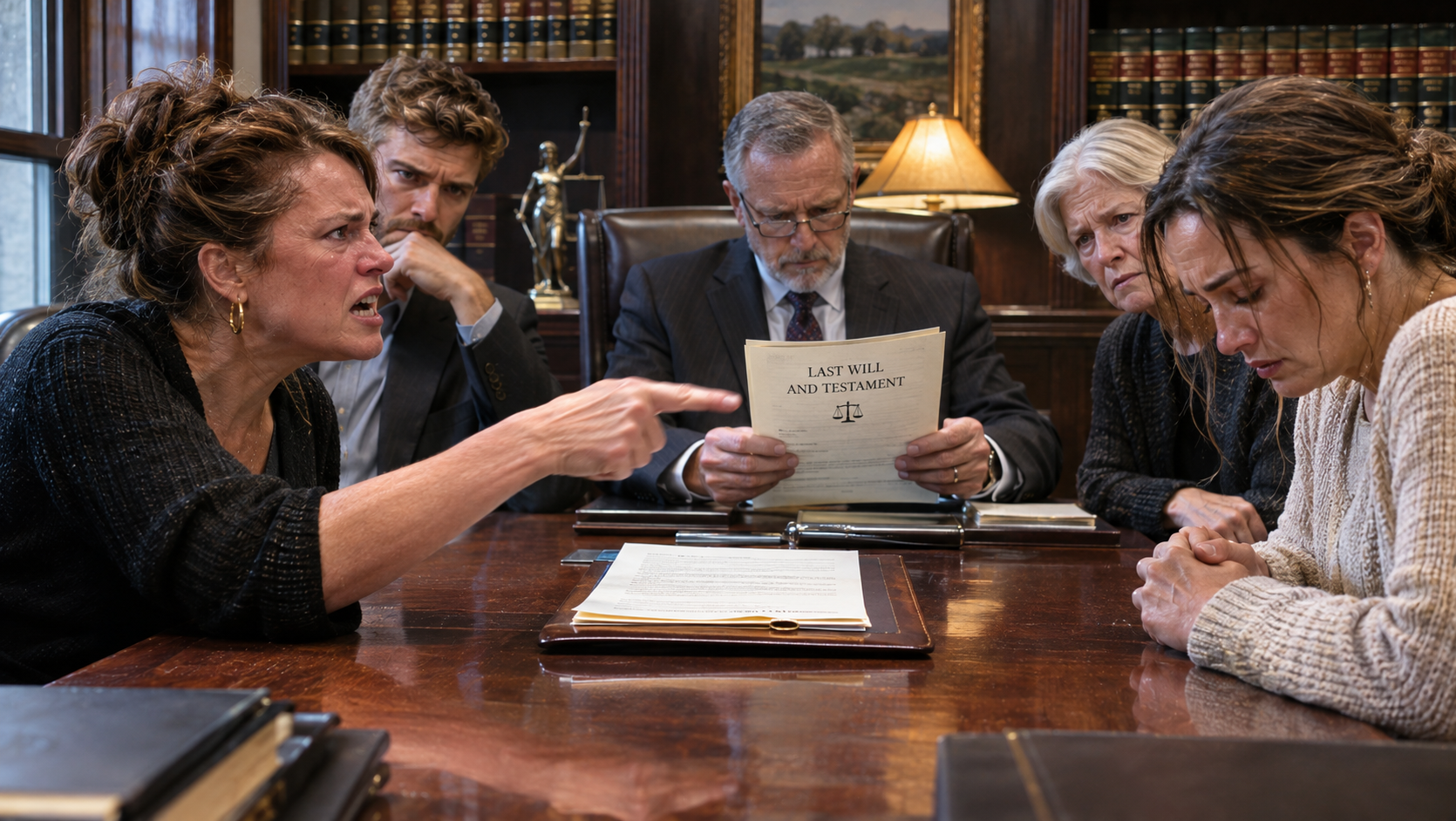
My father’s will was read in a drab lawyer’s office three days later. My mother, Marcus, and I sat on one side of the long table. Diane and Nicole sat on the other. The lawyer, a nervous man named Mr. Hargrove, kept clearing his throat before every sentence.
“To my wife, Margaret,” he read, “I leave the house on Maplewood Drive and the sum of fifty thousand dollars.”
My mother’s breath caught. Fifty thousand. After forty years of marriage. We’d assumed the house was meant to stay in the family—but at least she’d have a roof over her head. Then Mr. Hargrove continued.
“To my daughter, Nicole, and her mother, Diane, I leave the remainder of my estate, including all savings, investments, and the commercial property on High Street.”
I felt the blood drain from my face. “What?” I whispered. “What about us?”
Mr. Hargrove wouldn’t meet my eyes. “To my son, Marcus, and daughter, Elena, I leave the contents of my safe deposit box.” He paused. “Which is currently empty.”
Empty. My father had left us nothing but an empty box. Diane had the decency to look uncomfortable. Nicole didn’t. She just stared at the table, her hands folded neatly in her lap.
Marcus slammed his fist on the table. “This is bullshit. He had a stroke. He wasn’t in his right mind.”
But Mr. Hargrove shook his head. “The will was signed two years ago, witnessed by two independent parties. It’s ironclad.”
The Double Life Unravels
Over the next few weeks, I became obsessed with uncovering the truth. I hired a private investigator—a gruff woman named Rosa who had seen everything and was surprised by nothing. She found the trail quickly.
My father had been living a second life in Dayton, forty-five minutes away. He’d told us he was traveling for work. In reality, he’d been spending weekends with Diane and Nicole in a three-bedroom ranch house he’d bought in 2001. He’d attended Nicole’s dance recitals, her high school graduation, her college move-in day. He’d paid for her wedding. He’d been a father to her in every way he never was to us.
But that wasn’t the worst part. Rosa discovered that my father had taken out a second mortgage on our family home in 2015—without my mother’s knowledge—and funneled the money into a business venture with Diane. That venture had failed, but the debt remained. My mother was now responsible for a $120,000 loan she never knew existed.
When I confronted Diane with this, she didn’t deny it. “Richard loved me,” she said, as if that explained everything. “He said your mother didn’t understand him.”
I wanted to scream. My mother had spent thirty years cooking his meals, raising his children, and keeping his secrets. She understood him better than anyone. He just didn’t want to be understood. He wanted to be adored.
The Fight for What Was Ours
I found a lawyer who specialized in estate fraud. Her name was Priya, and she took one look at the will and the mortgage documents and said, “We have a case.”
The will was indeed signed two years ago—but my father had been diagnosed with early-onset dementia eighteen months before that. His doctor confirmed it. The witnesses to the will were Diane’s brother and his wife. There was no independent verification of my father’s mental state.
We contested the will. It took eleven months. Diane and Nicole fought hard, but in the end, the judge ruled in our favor. The will was invalidated due to lack of testamentary capacity. My father’s estate was divided according to the laws of intestacy—meaning my mother, Marcus, and I inherited everything.
The commercial property on High Street was sold to cover the second mortgage. My mother kept the house. And Diane and Nicole? They got nothing.
But the victory felt hollow. My father was still gone. And the man I’d mourned at that funeral—the quiet, gentle accountant—had never really existed. He was a stranger who had lived a lie for twenty-three years.
The Letter in the Safe Deposit Box
Three months after the trial, I received a call from Mr. Hargrove. “There’s something I need to give you,” he said. “Your father left a letter. He asked me to give it to you only if the will was contested.”
I met him at his office. He handed me a sealed envelope with my name on it in my father’s shaky handwriting. I opened it in the car.
“Elena,” it began. “If you’re reading this, it means I made a mess of things. I’m sorry. I know that’s not enough. But I need you to know the truth. Diane was my escape. Your mother and I were never happy—but I was too much of a coward to leave. So I built a second life instead. I thought I could keep both worlds separate. I was wrong.”
He went on to explain that he’d been planning to divorce my mother and marry Diane, but then he got sick. He panicked. He wanted to make sure Diane and Nicole were taken care of—but he also wanted to punish my mother for what he called her “coldness.” The will was his final act of resentment.
“I know you’ll fight it,” he wrote. “And I hope you win. Because deep down, I know I was wrong. I just couldn’t face you. Any of you. I’m sorry, Elena. I’m so sorry.”
I read the letter three times. Then I folded it and put it back in the envelope. I didn’t cry. I didn’t feel angry. I just felt tired.
My father had spent his whole life running from himself. And in the end, he’d left us all to clean up the mess.
What We Learned
Today, my mother lives in the house she shared with my father for forty years. She’s planted a garden where his vegetable patch used to be. Marcus and I visit every Sunday for dinner. We don’t talk about Dad much. There’s not much left to say.
Diane and Nicole moved to Arizona. I heard through Rosa that they’re doing fine. I don’t wish them ill. They were just as deceived as we were—maybe more.
The one thing I’ve learned from all of this is that secrets don’t stay buried. They fester. They rot. And eventually, they come to light—usually at the worst possible moment.
My father thought he could have it all. He couldn’t. No one can. And the price of his deception was paid by everyone he claimed to love.
I still visit his grave sometimes. I don’t leave flowers. I just stand there and wonder who he really was. And then I go home to my mother, my brother, and the life he never wanted to be part of. It’s not the life he chose—but it’s the life that’s ours.
Recommended Stories
At My Wedding, My Mother Gave a Toast That Exposed My Father’s 30-Year Affair—Then His Mistress Stood Up
At my wedding, my mother exposed my father's 30-year affair during her toast—then his mistress stood up. The truth that...
At My Father’s Funeral, a Woman Handed Me a Letter and Said ‘He Was My Husband Too’—Then the DNA Test Results Arrived
A mysterious woman at my father's funeral whispered, 'He was my husband too,' and handed me a letter. The DNA...
I Gave My Brother My Kidney—He Repaid Me by Stealing My Fiancée
I gave my brother my kidney. Two months later, I came home early and heard his voice in my bedroom....