At My Father’s Funeral, a Woman Handed Me a Letter and Said ‘He Was My Husband Too’—Then the DNA Test Results Arrived
The Stranger in the Back Pew
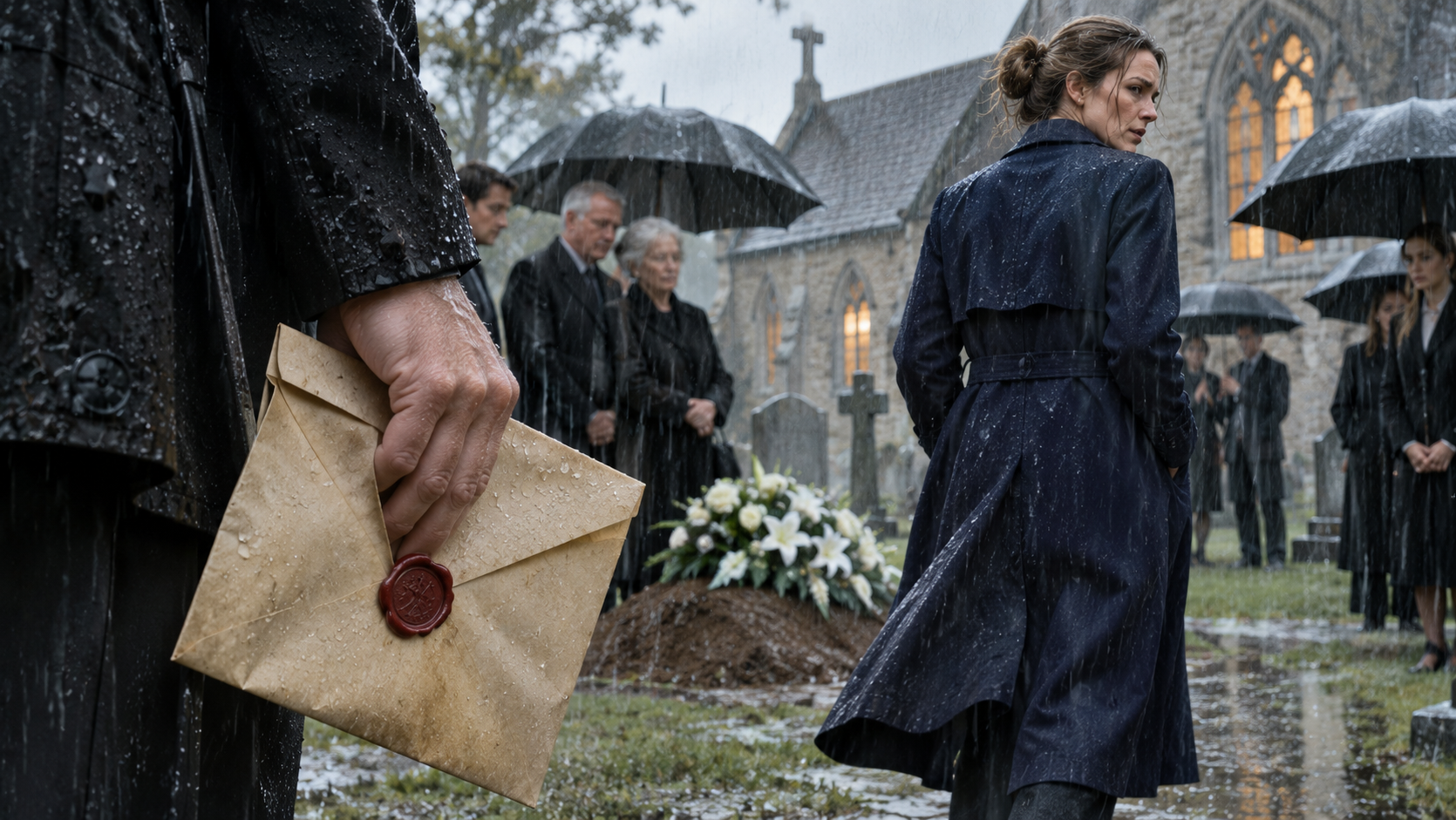
My father’s funeral was the kind of gray, drizzly Ohio morning that made the whole world feel like it was mourning with us. I stood at the front of the church, clutching my mother’s trembling hand, while my older brother, Derek, delivered a eulogy that painted our dad as a saint who never missed a Sunday dinner. But as the last amen faded, a woman I’d never seen slipped into the back pew—and she wasn’t there to pay respects. She was there to drop a bomb.
She was in her late fifties, with sharp cheekbones and a navy coat that looked expensive. When the service ended, she walked straight up to me, pressed a sealed envelope into my palm, and whispered, “He was my husband too.” Then she turned and disappeared into the rain before I could even ask her name.
I shoved the letter into my purse, my heart hammering. My father—Gerald Hayes, a retired high school principal who coached Little League and fixed neighbors’ gutters—had been married to my mother for thirty-eight years. There was no way. But the envelope felt heavy, and the woman’s eyes had held a certainty that scared me more than the words themselves.
The Letter That Rewrote Everything
That night, after my mother had cried herself to sleep, I locked myself in the bathroom and opened the envelope. Inside was a single sheet of lined paper, written in my father’s unmistakable slanted handwriting—the same handwriting that had signed my birthday cards every year.
“To my family,” it began. “If you’re reading this, I’m gone, and Lorraine has kept her promise to deliver it. I owe you the truth. In 1984, before I met your mother, I married a woman named Lorraine Castillo in Akron. We had a son, Marcus. I left them when Marcus was three because I was a coward and I was ashamed. I’ve sent money every month for thirty years. The house on Maple Street is in Lorraine’s name. I’m sorry. I loved you all, but I also loved them. Please don’t hate me.”
I read it four times. My father—the man who taught me to ride a bike, who came to every parent-teacher conference—had a whole other family. A son. A son who was my half-brother, probably in his late thirties by now. And a house on Maple Street? That was two towns over. I’d driven past it a hundred times.
I didn’t sleep. By morning, I’d made two decisions: I would tell my brother Derek, and I would call Lorraine.
The Brother Who Already Knew
Derek showed up at my kitchen table with coffee and a face that told me everything before he said a word. “You got a letter too,” he said flatly. “From that woman.”
My jaw dropped. “You knew?”
He ran a hand through his hair. “Dad told me six years ago. He made me promise not to say anything to Mom. He said he was handling it.”
“Handling it?” I nearly threw my mug. “He had a secret wife and son for three decades, Derek. How do you ‘handle’ that?”
Derek looked at the floor. “He was paying them. Every month. And he asked me to keep paying after he died. From the estate.”
That was when the floor really fell out. My father’s estate—the modest savings, the life insurance, the house my mother still lived in—was supposed to be split between Derek and me. Now Derek was telling me that a chunk of it was already earmarked for a woman and a son we’d never met. I felt sick.
“How much?” I asked.
“Two thousand a month. For as long as Lorraine lives.”
I did the math in my head. That was twenty-four thousand a year, gone. My mother’s retirement fund, gone. I told Derek I needed proof—real proof—before I agreed to anything. That’s when he mentioned the DNA test.
The Test That Changed the Game
Lorraine agreed to meet at a diner off I-77. She was softer in daylight, with tired eyes and hands that shook around her coffee cup. She told me about Marcus—how he’d grown up without a father, how he’d struggled with addiction in his twenties, how he’d cleaned up and now ran a small auto shop. She showed me photos. He had my father’s chin. I couldn’t deny it.
But I still needed science. I ordered a home DNA kit online, swabbed my cheek, and convinced Marcus—after a tense phone call—to do the same. We sent them off on a Tuesday. The results were promised in two weeks.
Those two weeks were the longest of my life. Derek started pushing me to sign paperwork that would release the monthly payments from the estate. My mother, still grieving, kept asking why Derek and I were arguing. I couldn’t bring myself to tell her the truth—not yet.
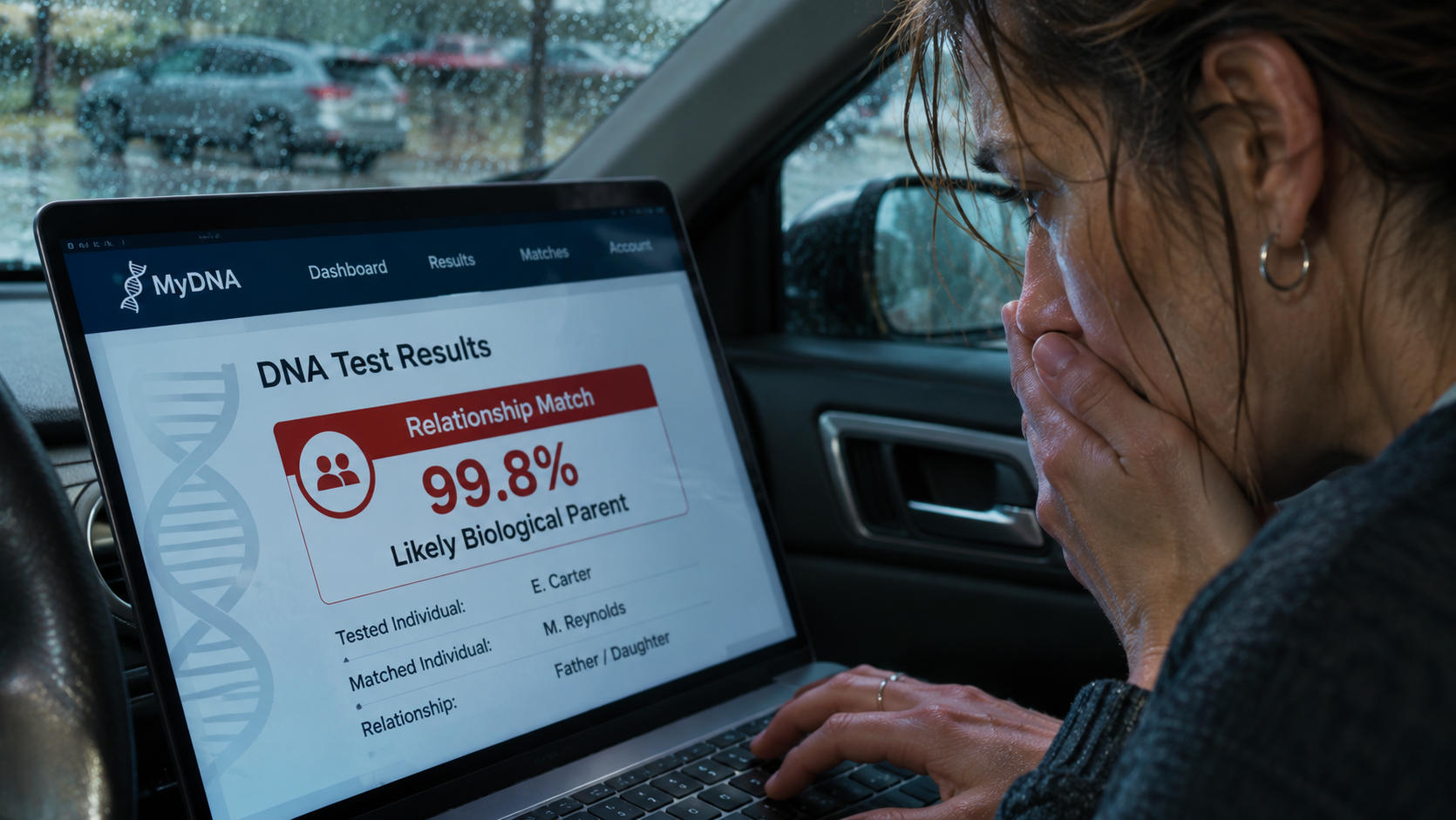
Then the email arrived. I opened it alone in my car, parked outside my office. The results were conclusive: 99.97% probability of shared paternal lineage. Marcus was my half-brother. My father had lied to all of us.
The Confrontation at the Kitchen Table
I called a family meeting—Derek, my mother, and me. I laid out the letter, the photos, the DNA results. My mother went pale, then red, then very, very quiet.
“You knew?” she finally asked Derek, her voice a razor. He nodded. “And you were going to let me live the rest of my life thinking your father was faithful?”
Derek tried to explain—Dad made him promise, Dad said he’d fix it, Dad was scared. But my mother wasn’t listening. She turned to me. “And the money?”
“Two thousand a month,” I said. “From the estate.”
She stood up. “No. Absolutely not. That woman gets nothing. That son gets nothing. Your father’s estate goes to his legal family.”
I understood her rage. But I also thought about Marcus, who’d grown up without a dad while I had one at every birthday party. I thought about Lorraine, who’d kept her promise to deliver the letter even knowing it would blow up her life. And I thought about my father—a man who’d done something terrible and then spent thirty years trying to make it right in the only way he knew how.
“Mom,” I said carefully, “we can fight this. But it’ll be public. The church will know. The neighbors will know. And Marcus—he’s not going away. He’s my brother.”
The Choice That Defined Us
In the end, we negotiated. Lorraine agreed to a reduced monthly payment—fifteen hundred instead of two thousand—for ten years, not life. Marcus signed a waiver giving up any claim to the house or the life insurance. My mother kept her home. Derek apologized to both of us, though things between him and Mom were frosty for a long time.
I met Marcus for lunch a few months later. He was quiet, with my father’s same crooked smile. He told me he’d never wanted the money—he’d just wanted to know who his dad was. I told him about the man I knew: the one who coached my soccer team, who cried at my graduation, who fixed the neighbor’s furnace for free. He listened, and for the first time, I saw my father through someone else’s eyes.
We’re not close, Marcus and I. But we text on holidays. And every year on the anniversary of our father’s death, we meet at the same diner off I-77. We don’t talk about the letter or the money. We just sit, two people who share a name and a complicated truth, and we try to make peace with it.
My father wasn’t a saint. But he was human. And sometimes, that’s the hardest thing to forgive.

Recommended Stories
At My Wedding, My Father Announced He Was Donating My $50,000 Inheritance to Charity—Then My New Husband Stood Up and Revealed the Truth About My Father’s ‘Charity’
At my wedding, my father announced he was donating my $50,000 inheritance to charity. Then my new husband stood up...

I Found a Locked Diary in My Late Father’s Attic—It Revealed He Had a Second Family, and They Were Coming to the Reading of the Will
A locked diary in the attic reveals my father's secret second family—and they're coming to the will reading. What happens...

I Found a Love Letter Hidden in My Late Grandmother’s Bible—It Revealed the Real Reason My Mother Was Given Up for Adoption
When I opened my late grandmother's Bible, a hidden letter fell out—revealing a secret adoption, a lost love, and a...