My Mother Gave Me Her Old Wedding Ring to Pawn—Then the Engraving Inside Revealed She’d Been Married Before and Had Another Child
My mother placed the ring in my palm and closed my fingers around it. “Pawn it,” she said. “We need the money.” I was twenty-six, back in my childhood home in Akron, Ohio, after losing my job at a marketing firm. The ring was a thin gold band, worn smooth, with a small diamond that had long lost its sparkle. I’d seen it on her finger my whole life—or so I thought. She’d stopped wearing it a few years ago, claiming it was too loose. Now I understood: she’d been hiding it, waiting for a desperate moment.
I didn’t question her. My father had died of a heart attack two years earlier, leaving a mountain of credit card debt and a mortgage she couldn’t afford. I’d moved back to help, taking a part-time job at a hardware store. The ring was our last asset. “It’s just a ring,” she said, avoiding my eyes. “Your father gave it to me. But it’s not worth much.”
I took it to a pawn shop on Market Street the next morning. The owner, a gray-haired man named Sal, weighed it and peered at the diamond through a loupe. “Not bad,” he said. “I can give you four hundred.” I nodded, but as he turned the ring under the light, he paused. “There’s an inscription inside. You want me to polish it off?” I hesitated. “No,” I said. “Let me see it first.”
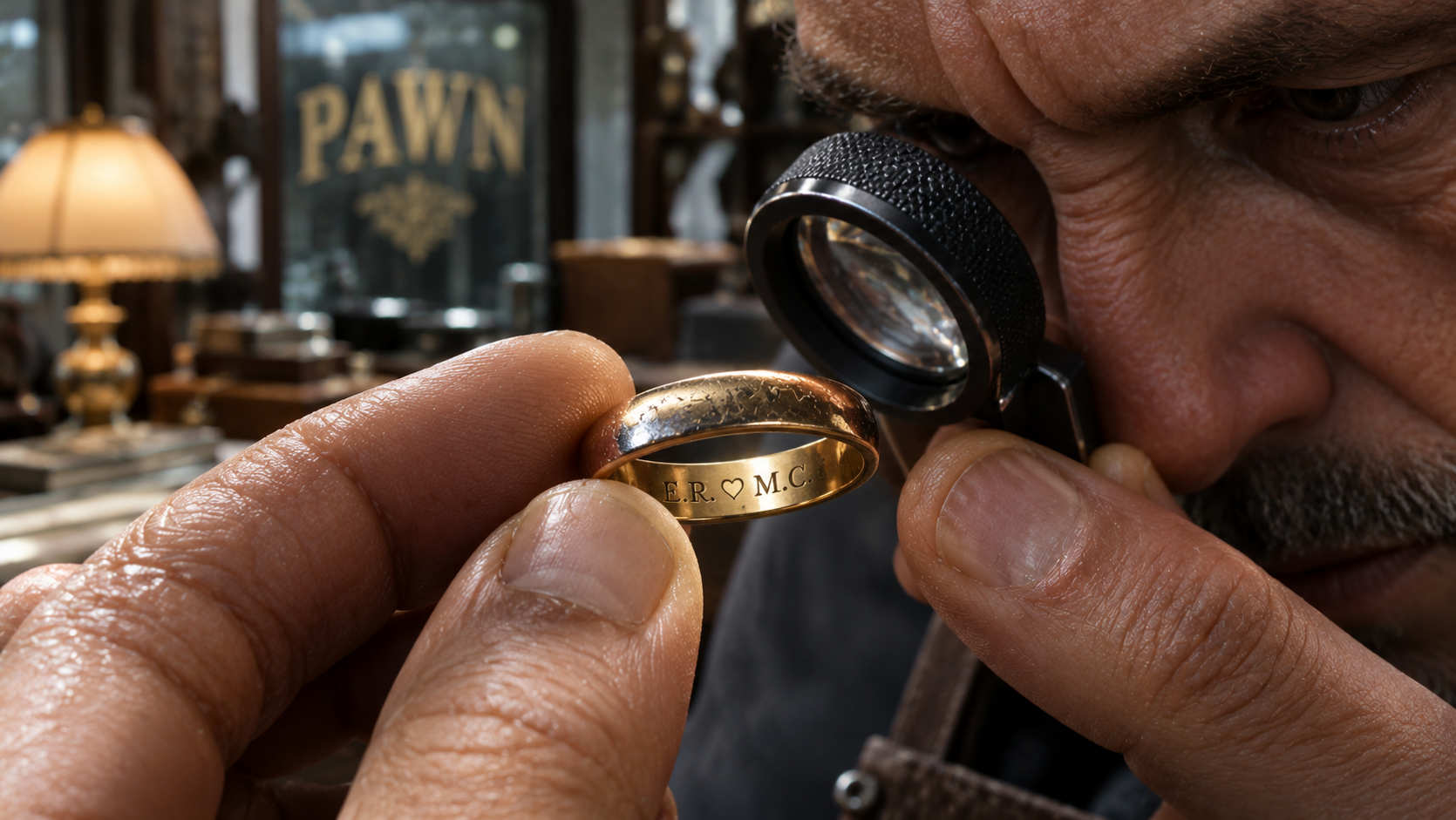
Sal handed me the ring. I tilted it toward the window. The engraving was tiny, almost worn away: To Sarah, my forever. 1968. My mother’s name was Sarah. But my parents were married in 1975. And my father’s name was Robert. The inscription didn’t say Robert. It said David.
The Name That Didn’t Belong
I felt a cold knot in my stomach. I didn’t pawn the ring. I drove straight to my mother’s house, my mind racing. Who was David? Why had she lied about the ring’s origin? And why had she kept it all these years?
She was in the kitchen, stirring a pot of soup. When I placed the ring on the counter and asked about the inscription, her face went pale. She gripped the edge of the stove. “Where did you get that?” she whispered. “You gave it to me,” I said. “You told me to pawn it.” She sank into a chair, her hands trembling. “I didn’t think you’d look inside.”
For a long moment, she said nothing. Then she looked up, her eyes wet. “I was married before,” she said. “Before your father. His name was David. We were young—I was nineteen. It lasted two years.” I stared at her. “Why didn’t you tell me?” She wiped her eyes. “Because it was a mistake. And because there’s more.” She took a shaky breath. “We had a son. A baby boy. I gave him up for adoption.”
I felt the floor tilt. A brother. I had a brother I’d never known about. “Where is he now?” I asked. She shook her head. “I don’t know. I never looked. I couldn’t.”
The Paper Trail
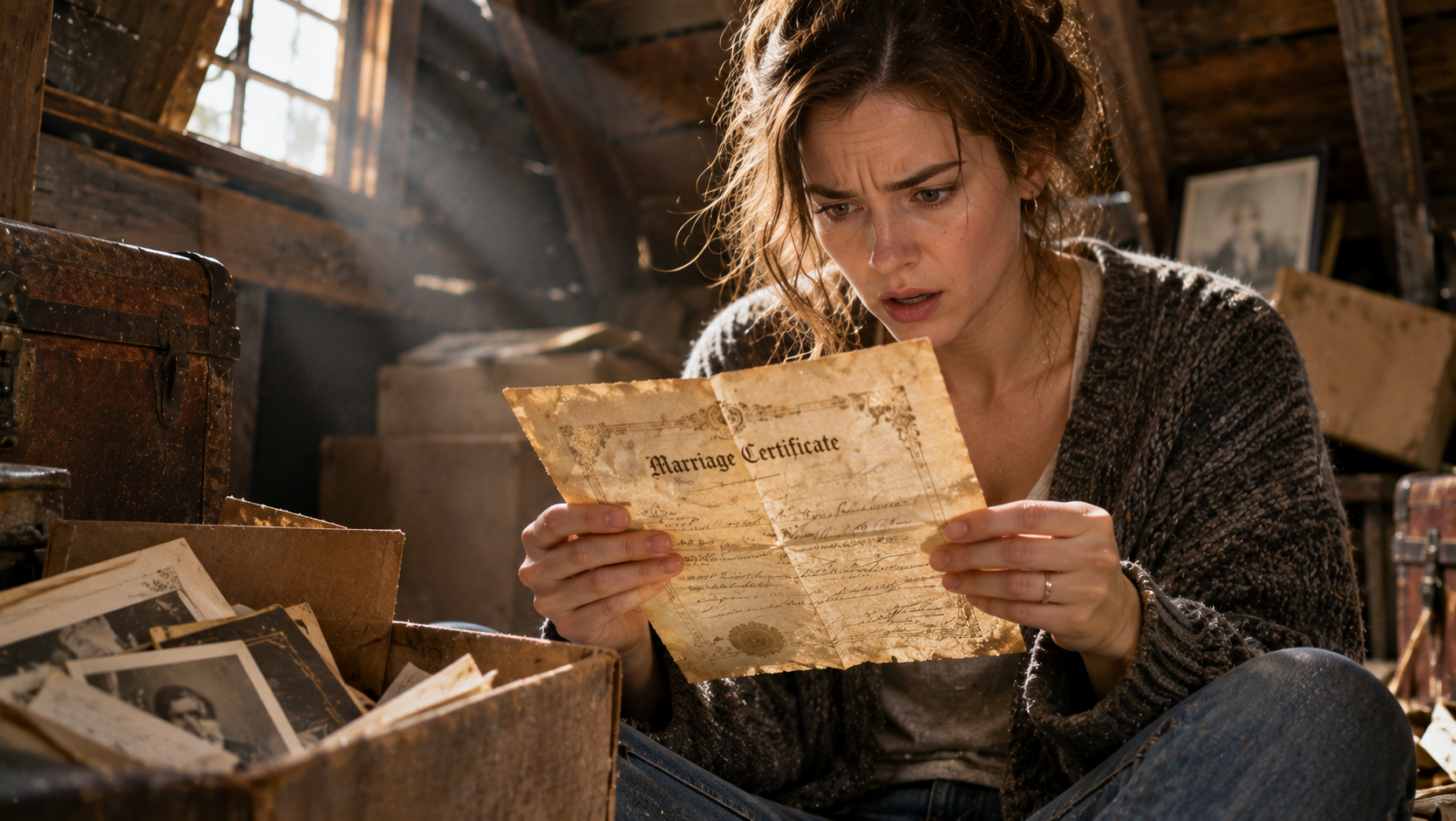
My mother refused to say more. She retreated into silence, and I knew I wouldn’t get anything else from her that night. But I couldn’t let it go. The next morning, I started digging. I found her old marriage certificate in a box of documents she’d kept in the attic—a union between Sarah Elizabeth Hayes and David Michael Connelly, dated June 15, 1968, in Cleveland. And tucked behind it, a adoption record from a Catholic agency: a boy born March 3, 1970, named Daniel. The father’s name was listed as David Connelly. The mother’s as Sarah Hayes.
I sat on the attic floor, the papers in my lap, and tried to breathe. My mother had been married, had a child, and then—what? She must have divorced David, given up the baby, and started over. She met my father, Robert, and never spoke of it again. But why? What had happened?
I needed answers. I called the adoption agency, but they couldn’t release information without my mother’s consent. I tried to find David Connelly online. There were dozens of matches, but one stood out: a David Connelly in Toledo, Ohio, age seventy-four. I found an obituary for his wife, who had died five years earlier. And then I found something else: a Facebook profile for a Daniel Connelly, age fifty-three, living in Columbus. His profile picture showed a man with my mother’s eyes.
I didn’t contact him right away. I was afraid. But I also felt a strange pull—a curiosity that bordered on need. I told myself I was just trying to understand my mother’s past. But deep down, I wanted to know my brother.
The Confrontation
A week later, I sat my mother down in the living room. I laid out the marriage certificate and the adoption record on the coffee table. “You need to tell me everything,” I said. “No more secrets.”
She looked at the papers, and her composure crumbled. “I was so young,” she said. “David was charming, but he was also jealous and controlling. After Daniel was born, things got worse. He started drinking. One night, he hit me.” She paused. “I left. I took Daniel and went to my sister’s. But I had no money, no job. I couldn’t take care of him. So I made the hardest decision of my life. I gave him up. I thought he’d have a better life.”
“And David?” I asked. “He didn’t fight it. He signed the papers. I think he was relieved. After that, I moved to Akron, changed my name back to my maiden name, and started over. I met your father a few years later. I never told him about Daniel. I was ashamed.”
“You should have told me,” I said. “I had a right to know.” She nodded, tears streaming. “I know. I was a coward. I was afraid you’d hate me.”
I didn’t hate her. But I was angry. And I was determined to find Daniel.
The Brother I Never Knew
I sent Daniel a message on Facebook. I kept it simple: “Hi, I think we might be related. My mother’s name is Sarah Hayes. Did you know a David Connelly?”
He replied within an hour. “Who are you?”
We exchanged a few messages, and then he called me. His voice was deep, cautious. He told me he’d been adopted by a family in Columbus and had a good life. He’d known he was adopted since he was a child, but he’d never tried to find his birth parents. “I didn’t want to disrupt anyone’s life,” he said. “But I always wondered.”
I told him about our mother, about the ring, about everything. He was silent for a long time. “I don’t know what to say,” he finally said. “I have a mother. She raised me. But I’d be lying if I said I wasn’t curious.”
We agreed to meet. A week later, I drove to Columbus and sat across from him in a diner. He looked like me—same nose, same stubborn chin. We talked for hours. He told me about his job as a high school teacher, his wife, his two kids. I told him about our mother, about her guilt, about her fear.
“I don’t blame her,” he said. “She was in a terrible situation. I’m not angry.”
But I was. Not at him—at her. For keeping this from me, for letting me grow up an only child when I had a brother all along.
The Ring’s True Worth
I went back to Akron and confronted my mother again. This time, I wasn’t gentle. “You let me believe I was alone,” I said. “You let me think I had no family besides you. And all because you were ashamed?”
She sobbed. “I was trying to protect you. And myself. I thought if I buried it deep enough, it would go away. But it never did.”
“Daniel wants to meet you,” I said. “He’s not angry. He just wants to know you.”
She looked terrified. “I can’t. I don’t deserve to.”
“That’s not your decision to make,” I said. “He deserves to know his mother. And you deserve to stop running.”
It took a month, but she finally agreed. I arranged for Daniel to come to Akron. When he walked into her living room, she stood frozen. He held out his hand. “Hi, Mom,” he said softly. She burst into tears and pulled him into a hug.
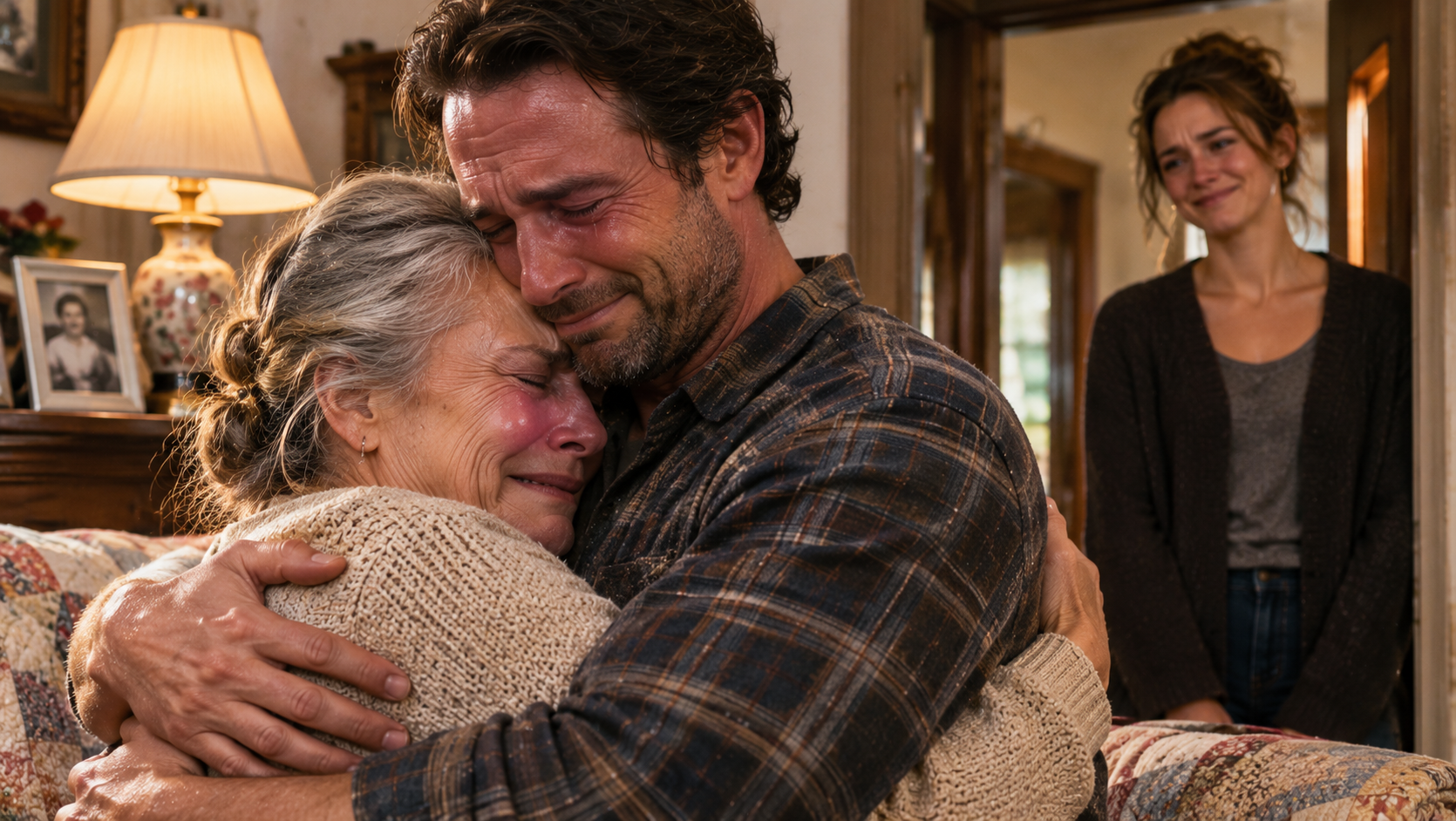
They talked for hours. He showed her pictures of his kids. She showed him old photos of David, of herself when she was young. I watched them, and the anger I’d felt began to soften. She’d made terrible choices, but she’d also suffered. And Daniel—he was kind, forgiving. He didn’t need a mother, but he was willing to let her in.
What the Ring Taught Me
I never pawned the ring. I couldn’t. It was worth more than four hundred dollars—it was worth the truth. My mother and I are still working through the years of silence, but we’re talking. Daniel and I text almost every day. He’s coming for Thanksgiving. My mother is nervous, but she’s also hopeful.
The ring sits on my dresser now. Sometimes I take it out and read the inscription: To Sarah, my forever. 1968. Forever didn’t last for her and David. But maybe it can mean something else now—a reminder that secrets never stay buried, and that the truth, however painful, can stitch together what was torn apart.
I used to think my mother was just a widow struggling to get by. Now I know she’s a woman with a past she thought she could erase. She couldn’t. And in finding her secrets, I found a brother—and a new understanding of what family really means.
Recommended Stories
My Mother-in-Law Gave Me a ‘Fake’ Family Recipe Book—Then I Found a Hidden Letter in the Binding That Revealed Her Secret First Marriage
When my mother-in-law gave me a 'fake' recipe book, I thought it was another snub. Then a hidden letter revealed...
At My Wedding, My Mother Stood Up and Announced My Fiancé Was Already Married—Then His ‘Wife’ Walked In with a Baby
My mother stood up at my wedding and announced my fiancé was already married. Then his wife walked in with...
I Found a Locked Diary in My Late Wife’s Belongings—It Revealed She Had Been Planning to Leave Me for My Best Friend
A grieving widower discovers a locked diary in his late wife's closet—and learns her secret affair was actually a desperate...