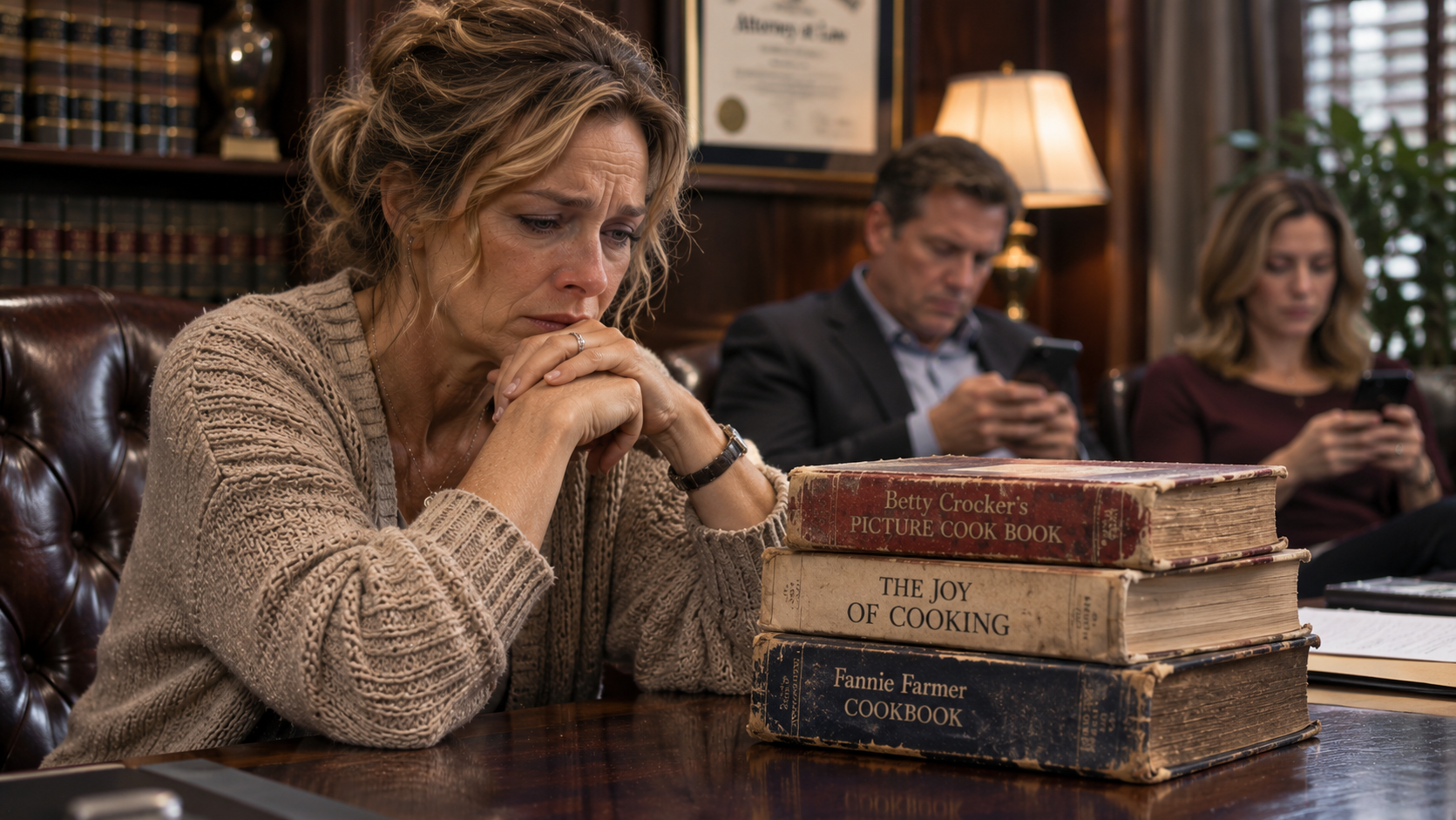
At My Father’s Funeral, His Secret Daughter Showed Up—Then I Found Out He’d Been Paying Her Family $5,000 a Month for Years
The Stranger in the Back Row
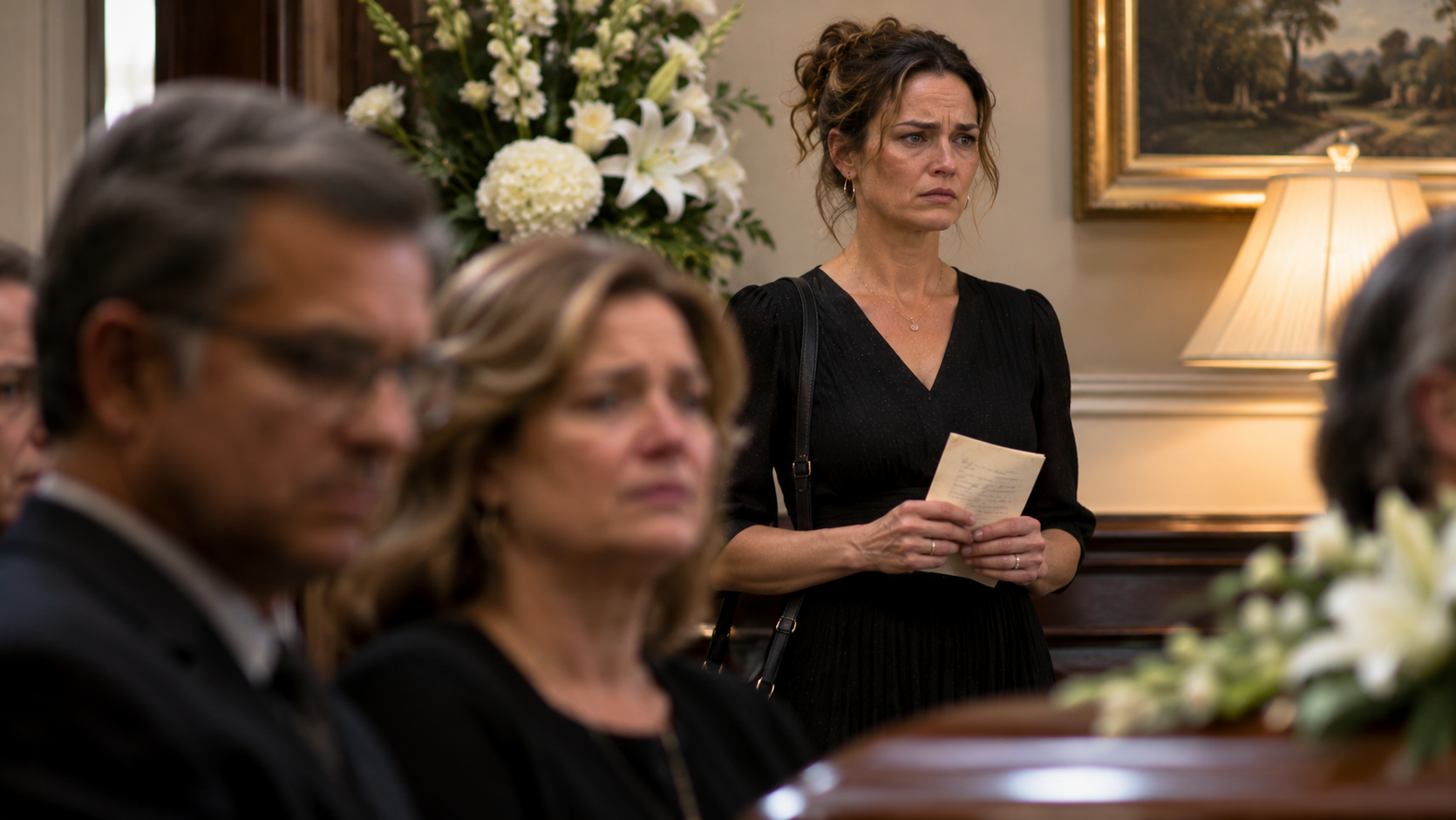
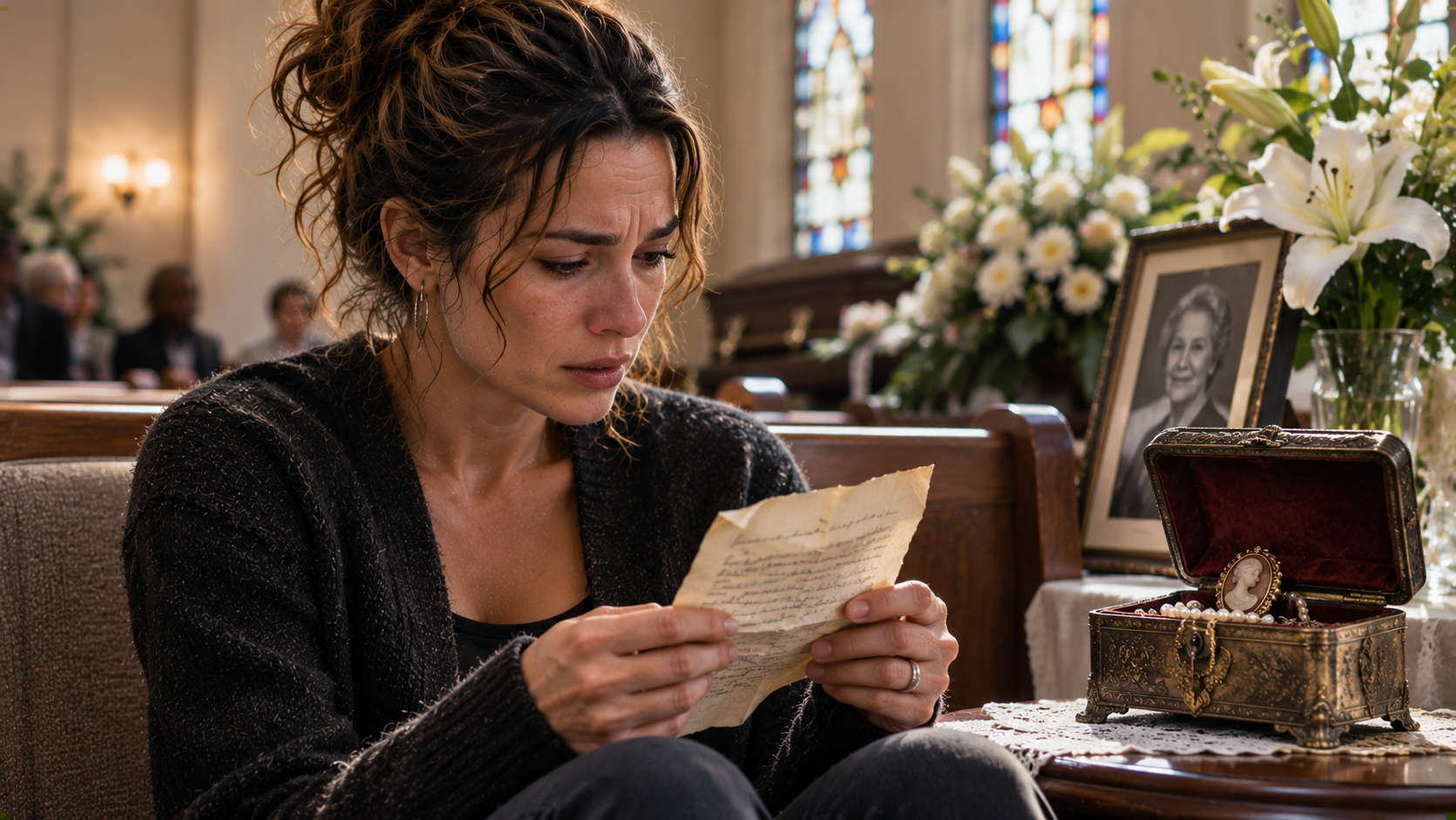
The rain had just stopped when the woman walked into the funeral home. She was maybe thirty, wearing a plain black dress that didn’t quite fit, and she stood in the back row like she was waiting for permission to grieve. I noticed her because she didn’t sign the guest book. She just stood there, hands folded, staring at my father’s casket with an expression I couldn’t read.
I was thirty-four, an only child—or so I’d believed for my entire life. My father, Richard Calloway, had been a quiet man, a civil engineer who spent thirty years designing bridges and came home every night at 6:15 sharp. He died of a heart attack in his garden on a Tuesday morning. My mother, Elaine, had passed eight years earlier. So it was just me, standing in the receiving line, shaking hands with neighbors and colleagues who kept saying the same things: He was such a good man. So steady. So private.
Private. That word would come back to haunt me.
After the service, the woman approached me. Her name, she said, was Danielle. She had my father’s eyes—that same gray-green shade that I’d always thought was unique to our family. She handed me a folded piece of paper.
“I’m sorry to do this today,” she said, her voice steady but soft. “But your father asked me to give you this if anything ever happened to him.”
I opened the paper. It was a bank statement. My father’s account. And there, highlighted in yellow, were twelve monthly transfers of $5,000 each, made out to a name I didn’t recognize: Danielle Reyes.
“Who are you?” I asked, though I already knew.
“I’m his daughter,” she said. “Your half-sister.”
The Numbers Don’t Lie
I didn’t cry. I didn’t scream. I just stood there, holding a bank statement that felt like a bomb. My father—the man who lectured me about saving receipts and balancing my checkbook—had been sending $60,000 a year to a woman I’d never heard of. For how long? The statement only showed the past twelve months, but the transfers were consistent, automated, like clockwork.
I took Danielle to a diner two blocks from the funeral home. She ordered coffee, black, and told me her story. Her mother, Maria, had worked as a receptionist at my father’s engineering firm in the early 1990s. They had an affair. When Maria got pregnant, my father promised to “take care of things” but refused to leave my mother. Instead, he set up a separate bank account and started sending money—first $800 a month, then $1,500, then $3,000, and finally $5,000 as his salary grew.
“He never missed a payment,” Danielle said. “Not once. Even when he got sick. He called me every Sunday night. He came to my college graduation. He paid for my wedding.”
I felt the floor drop out from under me. My father had attended Danielle’s wedding. He had called her every Sunday. But when I’d asked him to help me with a down payment on my first house three years ago, he’d said, “I don’t have that kind of money, sweetheart. You know I’m on a fixed income.”
I’d believed him. I’d taken out a higher-interest loan and worked double shifts at the hospital where I was a nurse. And all along, he’d been sending $5,000 a month to a daughter I didn’t know existed.
The Second Betrayal
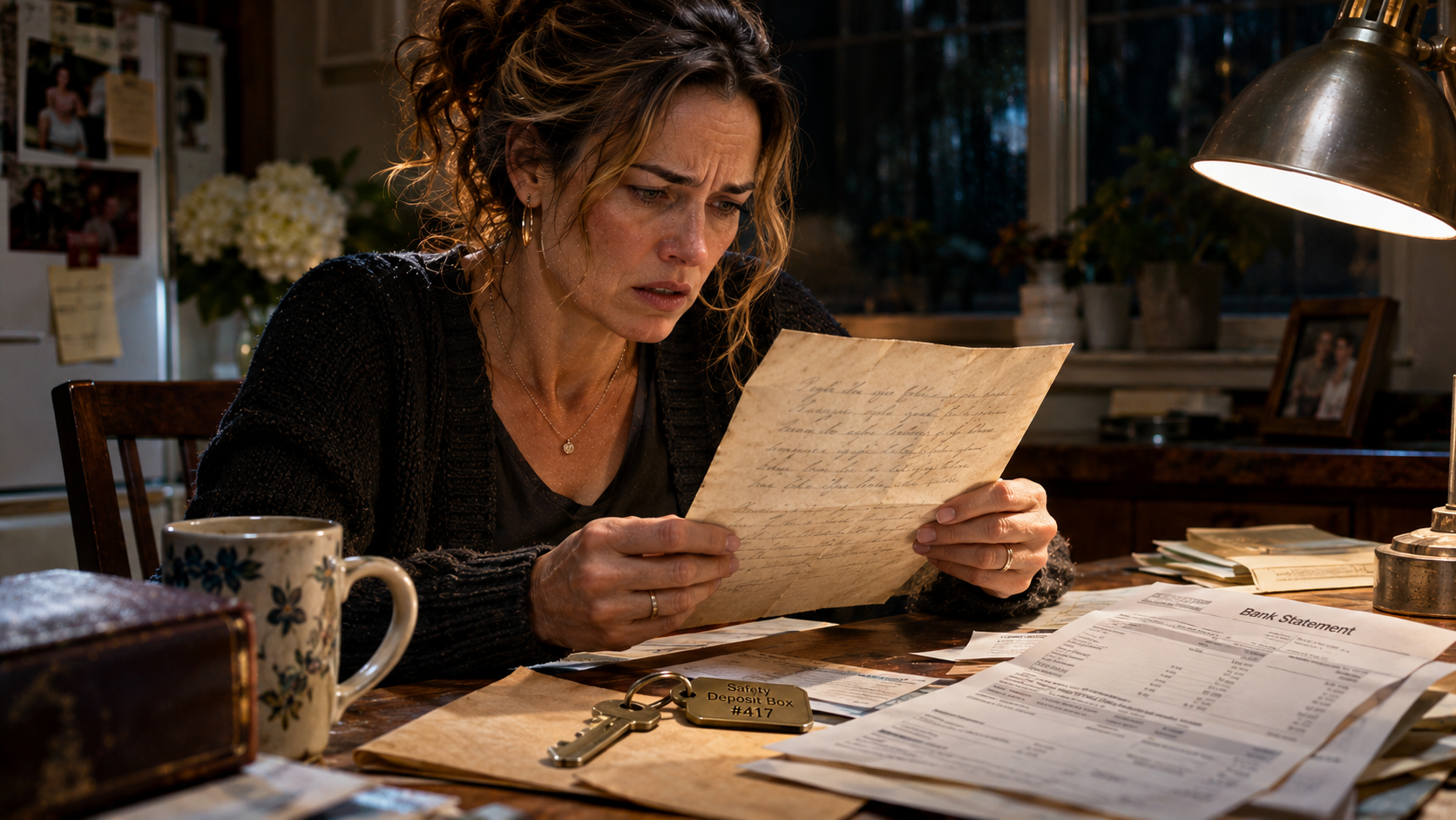
That night, I went through my father’s files. I found a safety deposit box key taped to the back of his desk drawer—a drawer I’d emptied a dozen times, but never thought to check for hidden compartments. Inside the box was a manila envelope. It contained two things: a life insurance policy worth $250,000, with Danielle listed as the sole beneficiary, and a handwritten letter.
The letter was addressed to me.
“My dearest Claire,” it began. “If you’re reading this, I’m gone. I know you’ll be angry. You have every right to be. But I need you to understand something: Danielle is your sister. Not just by blood, but by circumstance. Her mother died when she was sixteen. I couldn’t bring her into our home—your mother would never have forgiven me—but I couldn’t abandon her either. So I made a choice. I chose to be a father to her in secret, and a father to you in public. I know that doesn’t make it right. But I hope you can find it in your heart to forgive me. And maybe, just maybe, to love her the way I did.”
I read the letter three times. Then I called my aunt, my father’s sister, and asked her if she knew.
“Of course I knew,” she said, her voice flat. “Everyone knew. Your mother knew. She just chose to pretend it wasn’t happening. It was the only way she could keep her dignity.”
Everyone knew. Everyone except me.
The Choice
For two weeks, I didn’t return Danielle’s calls. I was too angry—at my father, at my aunt, at the whole charade. But mostly, I was angry at myself. How had I missed it? The Sunday night phone calls he always took in his study. The “business trips” to a town three hours away. The way he’d flinch whenever I asked about his finances.
Then Danielle showed up at my apartment. She didn’t ask to come in. She just stood on the doorstep and said, “I don’t want the insurance money. I never did. I just wanted to know my father. And now I want to know my sister.”
She handed me a check for $250,000—the full amount of the policy. “I’m a high school teacher,” she said. “I don’t need this. But you do. You’re the one who took care of him at the end. You’re the one who was there.”
I stared at the check. Then I looked at her—really looked at her—and saw the same gray-green eyes, the same stubborn set of the jaw. And I realized something: my father had made a terrible choice, but he had also made a choice to love us both. He just didn’t know how to do it honestly.
“I’m not taking this,” I said. “But I will take you up on that coffee.”
We sat on my balcony for three hours, talking about everything and nothing. She told me about her mother, about growing up with a father who was always a phone call away but never a presence. I told her about our father’s terrible jokes, his obsession with crossword puzzles, the way he always burned the Thanksgiving turkey. By the time she left, I didn’t feel like I’d gained a sister. I felt like I’d finally met the other half of a story I’d been living without knowing it.
The Real Inheritance
I never confronted my father. He was already gone, and the dead don’t answer questions. But I did confront my aunt. I told her that secrets don’t protect people—they isolate them. She didn’t apologize. She just said, “That’s the way things were done back then.”
I didn’t accept that. So I did something my father never could: I invited Danielle to Thanksgiving. She brought her husband and her two kids—my nephew and niece, who have those same gray-green eyes. We burned the turkey, just like Dad always did. And for the first time in my life, I felt like I had a family that wasn’t built on secrets.
I still have the bank statement. I keep it in a drawer, not as a reminder of betrayal, but as a reminder of something else: that my father was a flawed man who tried to do the right thing in the wrong way. And that sometimes, the truth doesn’t set you free—it just gives you a choice. I chose to forgive him. I chose to love my sister. And I chose to stop pretending that perfect families exist.
Because they don’t. They never did.
Recommended Stories
My Brother Asked Me to Be His Best Man—Then His Fiancée Found My Name on a ‘Secret’ List in His Phone and Called Off the Wedding
My brother asked me to be his best man. Then his fiancée found a secret list on his phone—with my...
My Aunt Promised Me Her Antique Jewelry Collection—Then She Gave It to My Cousin and Left Me a Note Saying I Was ‘Too Selfish’
Aunt Margaret promised me her $80,000 antique jewelry collection—then left it to my cousin with a note calling me 'too...