My Father Left Me a Cursed Antique—Then I Discovered Its Value and the Family Secret Behind It
My father died on a Tuesday, and by Friday, I was standing in his dusty garage, staring at a wooden crate he’d forbidden me to open for thirty years. “That thing is cursed, Ellie,” he’d say whenever I asked. “Leave it be.” I was forty-two, a high school history teacher in Boise, Idaho, and I’d spent my life obeying his quiet commands. But now he was gone, and curiosity outweighed obedience.
I pried the lid open with a crowbar. Inside, wrapped in a faded quilt, was a bronze oil lamp—ornate, heavy, and cold to the touch. A strange symbol was etched into its base: a serpent eating its own tail. I felt a chill, but not from the metal. From the note tucked beneath it, in my father’s handwriting: “Forgive me.”
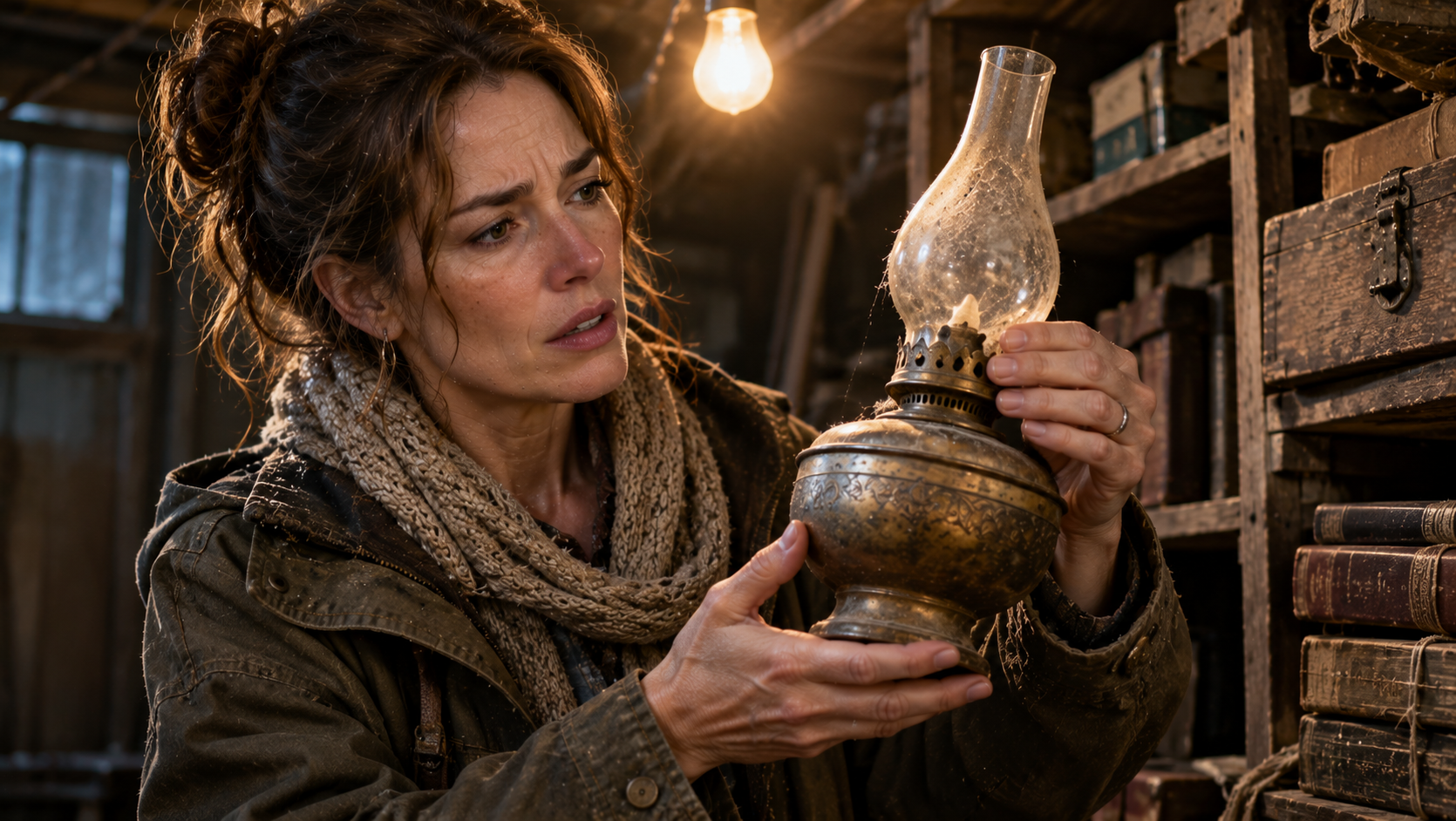
The Cursed Antique Nobody Wanted
I called my older brother, Marcus, hoping he’d know something. He laughed. “Dad’s ‘cursed lamp’? He told me it was a family heirloom from our great-grandfather, but he never let anyone touch it. Said it brought bad luck.” Marcus, a pragmatic accountant in Seattle, suggested I sell it. “It’s probably worth a few hundred bucks. Just get rid of it.”
But I couldn’t shake the note. Forgive me. For what? I took the lamp to an antique appraiser in Boise, a wiry man named Harold with thick glasses and a reverence for old things. He turned it over, examined the serpent, and went very still. “Where did you get this?” he asked, his voice barely a whisper.
“My father left it to me. Why?”
Harold set it down carefully. “This isn’t just any lamp. The serpent symbol is the mark of a secret society—the Order of the Ouroboros. They operated in the Pacific Northwest in the early 1900s. This lamp was supposedly forged from melted-down coins stolen from a Chinese immigrant community in Oregon. It’s said to carry a curse: whoever owns it will face financial ruin until the stolen wealth is returned.”
I laughed nervously. “That’s a myth, right?”
Harold didn’t smile. “The last documented owner died penniless in 1962. Before that, a family in Portland lost everything in the Depression. The lamp was believed to have been destroyed. But here it is.”
He estimated its value at $75,000—if sold to the right collector. But he warned me: “Selling it might be the worst thing you could do. The curse isn’t real, but the history is. This lamp represents a stolen legacy.”
A Father’s Secret Debt
I drove home with the lamp on the passenger seat, my mind racing. My father, a quiet insurance adjuster, had never mentioned any secret society. But I remembered his obsession with paying back debts, his refusal to accept charity, his guilt-ridden silences. I started digging through his old files.
In a locked drawer, I found a manila folder labeled “Ouroboros.” Inside were letters, photographs, and a ledger. The letters were from a woman named Mei Lin Chen, dated 1987. She wrote to my father, pleading with him to return the lamp to her family. “Your grandfather stole it from mine,” she wrote. “It is all we have left of our heritage. Please, do what is right.”
My father had never responded. But the ledger showed something else: for twenty years, he had been sending anonymous checks to a Mei Lin Chen in San Francisco—$200 a month, every month, until his death. He wasn’t a thief. He was trying to repay a debt he didn’t create.
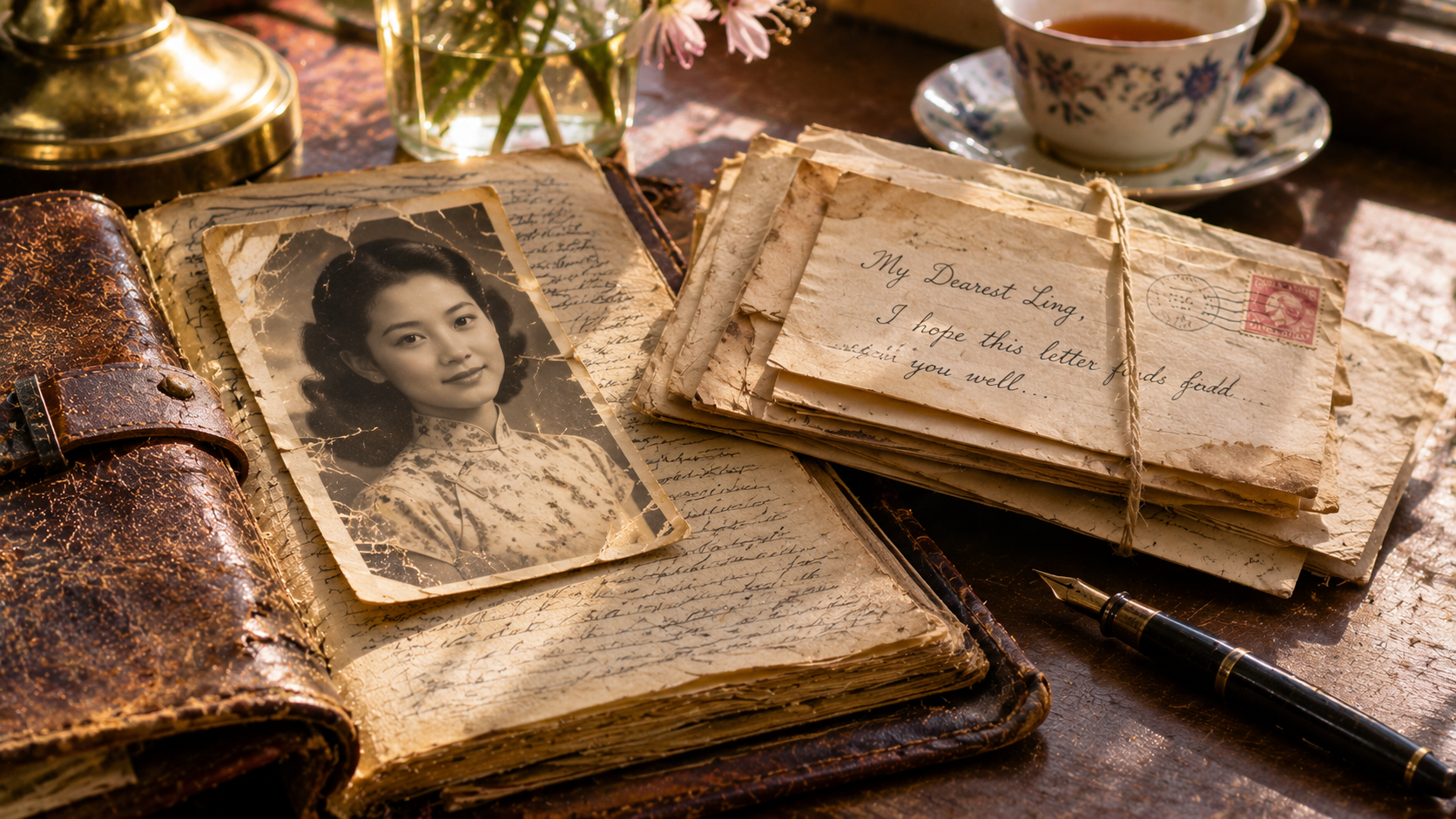
I tracked down Mei Lin’s daughter, Vivian, now a professor of Asian American studies at UC Berkeley. When I told her about the lamp, she burst into tears. “My mother died last year,” she said. “She never stopped hoping your family would return it. She said it was a symbol of her grandmother’s spirit—stolen during the anti-Chinese riots in 1905.”
Vivian explained that the lamp had been made by her great-grandfather, a skilled metalsmith, as a wedding gift. When the Order of the Ouroboros stole it, they also stole her family’s sense of identity. “It’s not about the money,” she said. “It’s about justice.”
The Ethical Dilemma
I was torn. $75,000 would change my life—I could pay off my student loans, fix my roof, finally take a vacation. But the curse, real or not, had already worked its way into my conscience. My father had spent two decades quietly atoning. How could I undo that?
I called Marcus. “We should return it,” I said. “It’s the right thing to do.”
He scoffed. “Are you insane? Dad left it to you. He could have returned it himself, but he didn’t. Maybe he wanted us to have the money.”
“He sent them money for twenty years, Marcus. He was ashamed.”
“Then why didn’t he just give the lamp back?”
I didn’t have an answer. But I remembered the note. Forgive me. Maybe he couldn’t bear to face the family he’d wronged. Maybe he was too proud. Or maybe he was waiting for the right moment—and it never came.
I decided to meet Vivian in person. She lived in a modest house in Oakland, surrounded by books and photographs of her great-grandfather. When I handed her the lamp, she held it like a newborn. “Thank you,” she whispered. “You’ve given my family back its soul.”
She offered to pay me something—anything—but I refused. Instead, I asked if I could interview her for a local history project. She agreed, and over the next few weeks, we pieced together the full story: the stolen lamp, the curse myth, and the quiet redemption of a man who spent his life trying to fix an ancestral wrong.

The Real Value of a Cursed Antique
The lamp is now on display at the Chinese Historical Society of America in San Francisco, with a plaque that tells the story of the Chen family and the Ouroboros Order. Vivian and I became friends. I never got the $75,000, but I gained something more: a deeper understanding of my father, and a sense of peace.
Sometimes I wonder if the curse was real. My father died with a modest savings account, never wealthy, never ruined. Maybe the curse was just guilt. But I like to think that by returning the lamp, I broke it.
Last month, I received a package from Vivian. Inside was a small bronze replica of the lamp, with a note: “For your father. He tried. That’s more than most.”
I placed it on my mantel, next to his photo. And for the first time in years, I felt like he was finally at rest.
Recommended Stories
My Brother Forged Our Dad’s Will—But He Didn’t Know About the Second Copy
When my brother announced he'd inherited everything, I knew he was lying. But I never expected to find a second...
My Mother-in-Law Gave Me a ‘Fake’ Family Heirloom—20 Years Later, a Museum Offered Me $250,000 for It
She called it a fake. Twenty years later, a museum offered $250,000—and I discovered the heirloom was stolen, the secret...
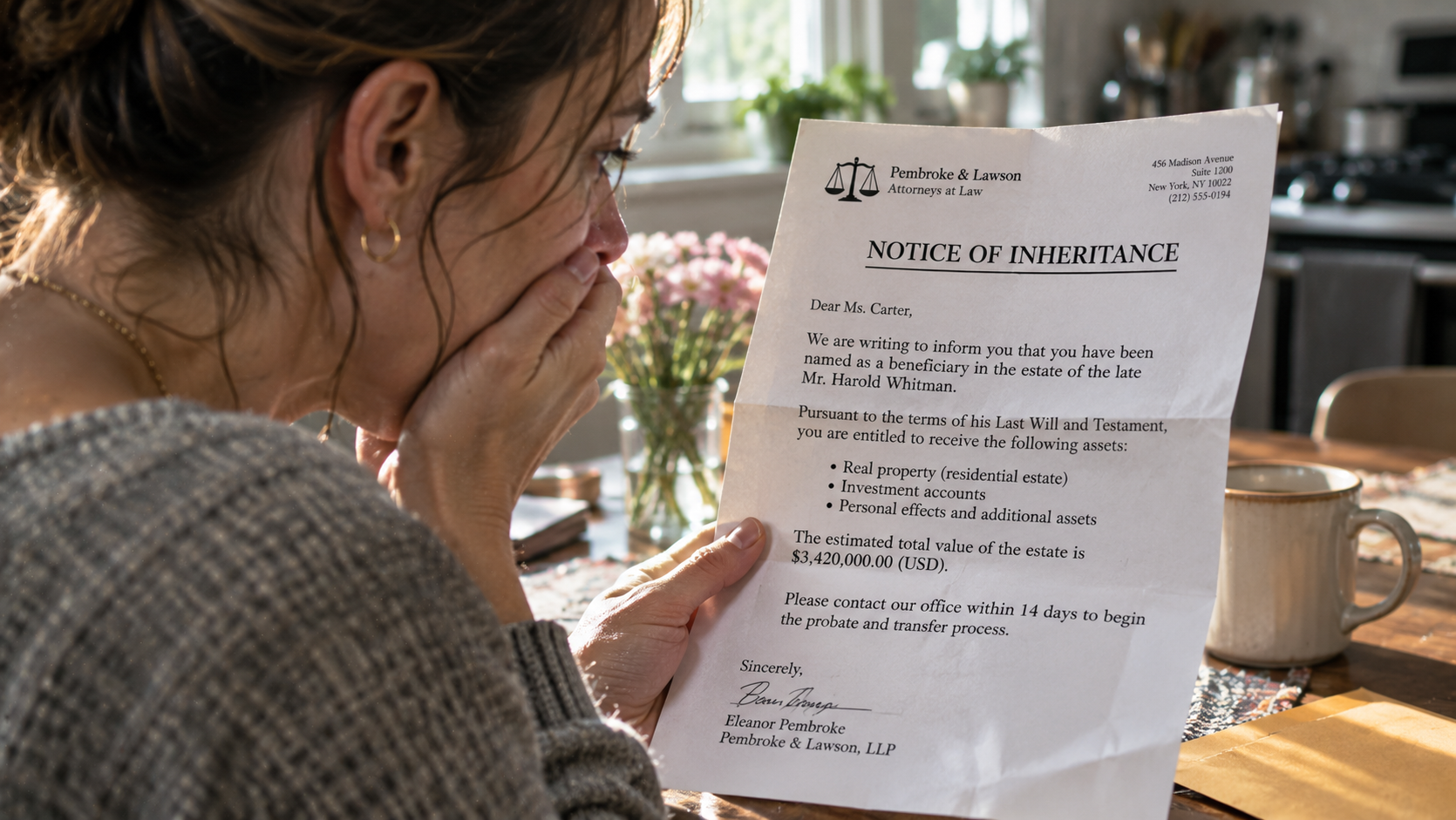
I Inherited a Million Dollars from a Stranger—Then His Family Showed Up with a Shocking Demand
I was a nurse with no connection to a wealthy stranger. When he left me his fortune, his family demanded...