My Brother Sold Our Family’s Heirloom Clock to Pay Off a Gambling Debt—Then the Buyer Showed Up at My Door with a Shocking Confession
The Night My Brother Sold Our Family’s Soul
The clock was the only thing my father left me that my brother couldn’t argue about. A massive, hand-carved walnut grandfather clock that had stood in our family’s foyer for four generations. My father used to say it ticked with the heartbeat of every Hollingsworth who’d ever lived. When he died, my brother Marcus got the house. I got the clock.
I should have known Marcus would find a way to pawn it. He had a gambling problem that had already cost him two cars and his marriage. But I never thought he’d stoop to stealing from our dead father.
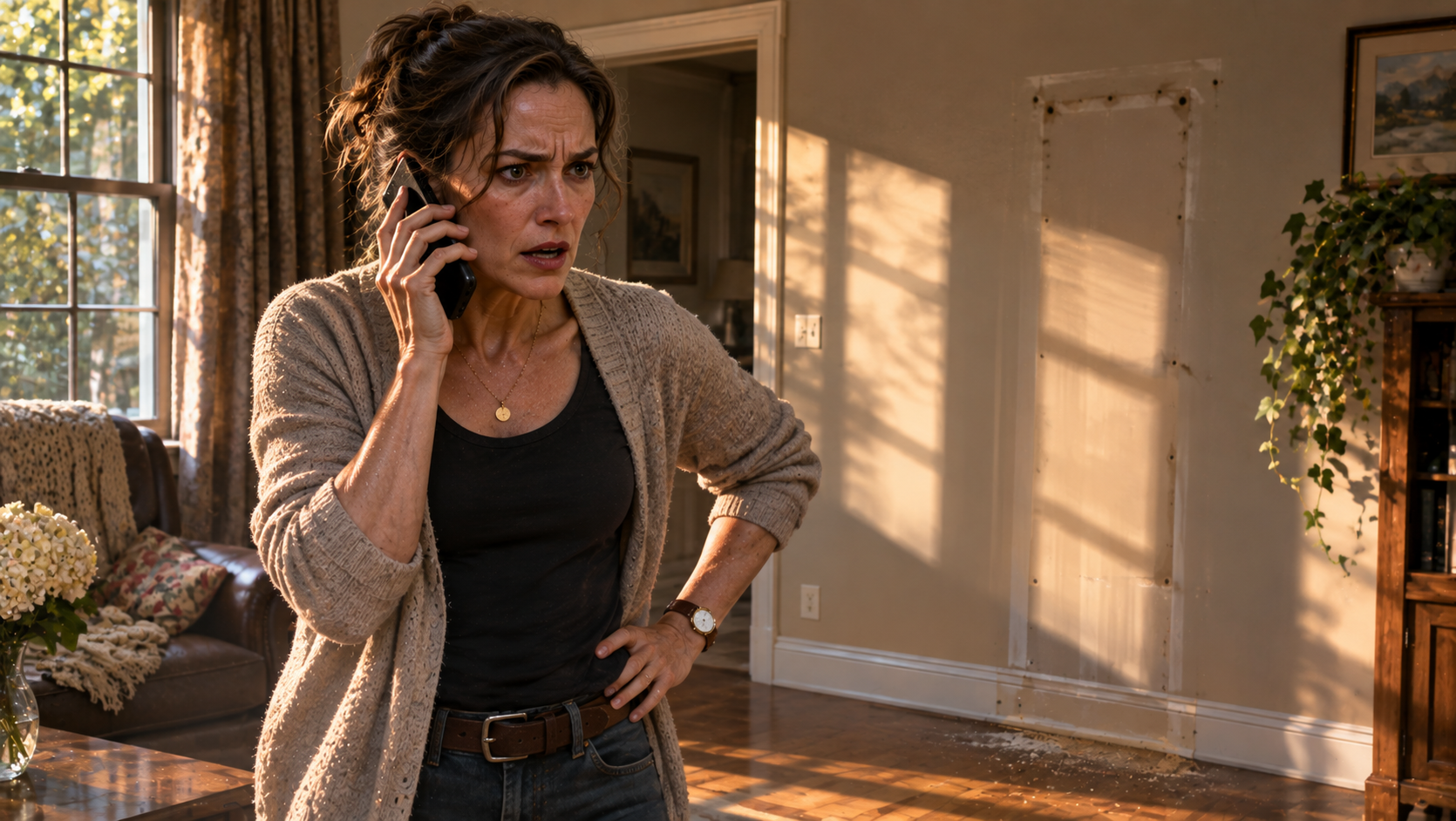
I found out on a Tuesday afternoon in March. I came home from my shift at the hospital to find my front door unlocked and the corner of my living room where the clock had stood for six years completely empty. A note on the kitchen counter read: “Sorry, Em. I needed the money more than you need a piece of furniture. —M”
I called him seventeen times. He didn’t answer once.
I filed a police report. The officer, a tired man named Detective Rourke, told me that since Marcus had a key and there was no sign of forced entry, it would be treated as a civil matter. “Family stuff,” he said, like it was a category of weather. “You’ll have to sue him.”
I didn’t have money for a lawyer. I had a mortgage, a twelve-year-old daughter, and a nursing job that paid just enough to keep us afloat. What I had was a burning, clarifying rage.
Three weeks later, a man knocked on my door.
The Stranger with the Clock and a Confession
He was in his sixties, with silver hair and a linen jacket that looked expensive. He introduced himself as Arthur Pennington. Behind him, on my porch, stood the clock. It looked enormous and out of place in the daylight, its brass pendulum still swinging slightly from the journey.
“I believe this belongs to you,” he said. “May I come in?”
I let him in because I didn’t know what else to do. He sat on my couch and told me he’d bought the clock from a man matching Marcus’s description for three thousand dollars at a flea market in Allentown. He’d recognized it immediately. “I’ve been looking for this clock for forty years,” he said.
That’s when he pulled a manila envelope from his briefcase and laid it on my coffee table.
“Your grandfather, Silas Hollingsworth, stole this clock from my family in 1962,” Arthur said. “Along with something else. Something worth a great deal more.”
Inside the envelope was a photograph of two young men in army uniforms, standing beside the same clock. One of them was unmistakably my grandfather. The other was a stranger with Arthur’s jawline. There was also a yellowed, handwritten document—a deed.
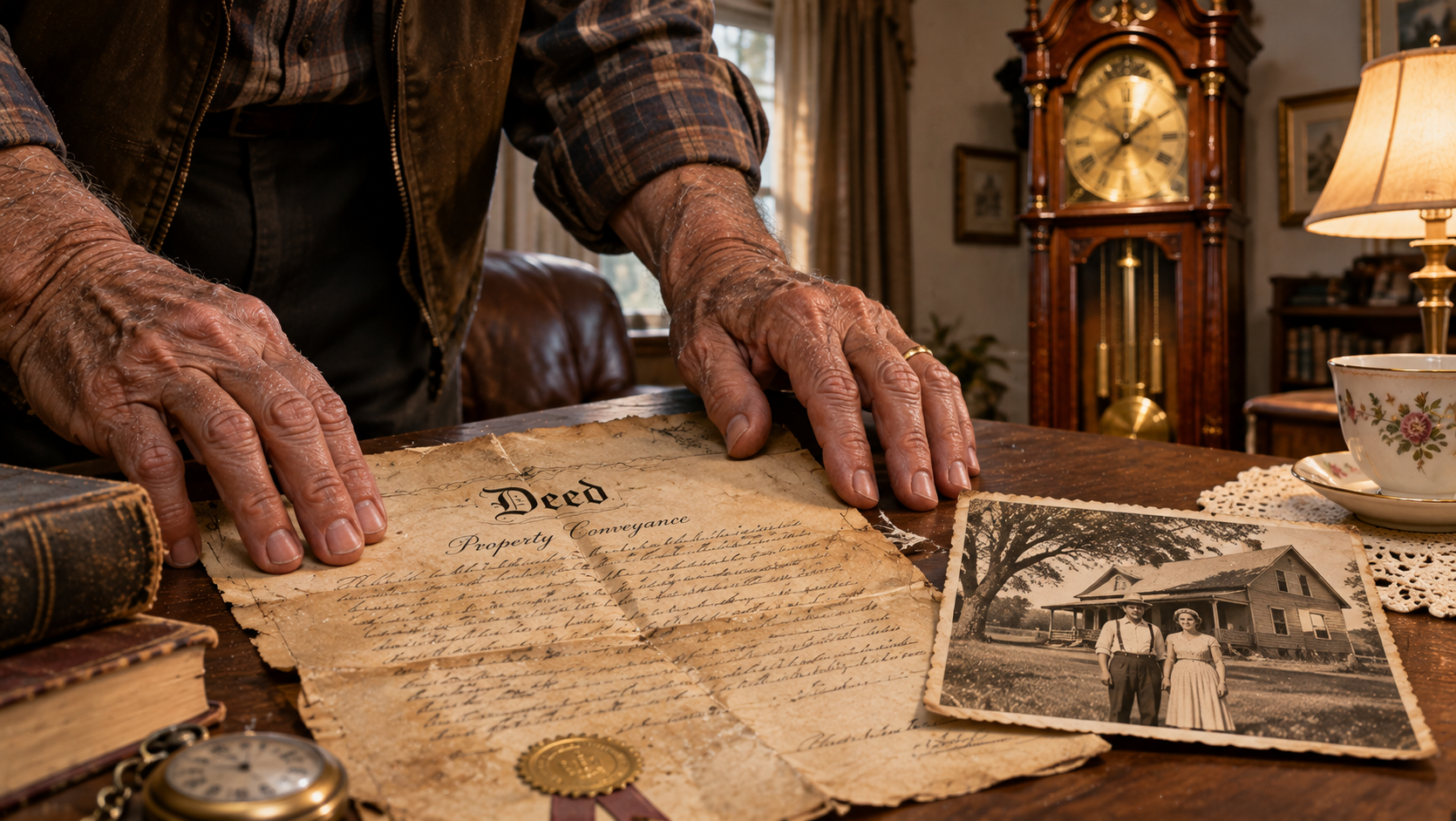
“My father, Henry Pennington, and your grandfather served together in Korea,” Arthur said. “They were like brothers. When they came home, they bought a piece of land together in Bucks County—forty acres. They drew up this deed, naming them both as owners. And then your grandfather forged my father’s signature, sold the land out from under him, and kept every penny. The clock was just a trophy he took from our house the night he did it.”
I stared at the deed. The signature at the bottom was shaky but legible: Henry J. Pennington. Next to it, a notary’s seal from 1958. And below that, a second signature, one I’d seen on every birthday card my grandfather had ever sent me: Silas R. Hollingsworth.
“My father died of a broken heart,” Arthur said quietly. “He never recovered from the betrayal. He spent the last twenty years of his life trying to prove what Silas did, but he never had the money to fight it in court. I’ve spent my whole life trying to find this clock. I knew if I ever found it, I’d find the proof. Your grandfather hid the deed inside the clock’s base. It was there all along.”
The Truth Buried in the Base
We unscrewed the back panel of the clock together. Taped to the inside of the wooden casing was a crumbling envelope. Inside was a second copy of the deed, this one with a letter from my grandfather, written in 1975, the year before he died.
It was a confession.
“I have carried this sin for seventeen years. Henry was my brother in every way that mattered. I stole from him out of jealousy and greed, and I have never known a moment’s peace. If anyone finds this, know that the land at 1147 Ridge Road was never mine to sell. I am sorry. God forgive me.”
I read it three times. My hands were shaking. The grandfather clock—the one I’d polished every Sunday as a child, the one my father had called our family’s soul—was a monument to theft. Every chime I’d heard as a little girl was the sound of a stolen heartbeat.
“I’m not here to take the clock back,” Arthur said. “I’m here because the land at 1147 Ridge Road is now a commercial development. My lawyer says the deed is legally binding. Your grandfather’s forgery meant the sale was invalid. That land still belongs to my family. It’s worth four million dollars.”
I felt the floor tilt. “Why are you telling me this?”
“Because your brother is a thief and a liar, and I don’t want him near this. The law says I have to notify any living heirs of the original owner before I file a claim. You’re the heir. And I think you deserve to know the truth.”
The Confrontation That Split the Family
I called Marcus that night. He showed up at my door with a six-pack and a smirk. “You got your clock back. What’s the problem?”
I showed him the deed. I showed him the letter. I watched the color drain from his face as he realized what our grandfather had done—and what it meant for the inheritance our father had always bragged about.
“This is fake,” Marcus said. “You’re making this up to get back at me.”
“It’s not fake,” I said. “And I’m not the one who stole from our family. You are. You sold the only thing Dad left me for three thousand dollars. You didn’t even call. You left a note.”
Marcus’s smirk came back, but it was brittle. “You think you’re so noble. You think this makes you the good guy?”
“No,” I said. “I think it makes me the one who’s going to testify in court that our grandfather was a thief, because Arthur Pennington deserves his land back. And I think it makes you the one who has to explain to your kids why their inheritance is a crime scene.”
He left without another word. He hasn’t spoken to me since.
The Price of Honesty
The legal battle took eight months. Arthur Pennington’s lawyers were relentless, and they had the deed, the confession, and my testimony. The court ruled in his favor. The land at 1147 Ridge Road—the land my grandfather had stolen with a forged signature and a stolen clock—was returned to the Pennington family.
Arthur didn’t keep all the money. He gave me ten percent as a finder’s fee. “Your grandfather stole from my family,” he said. “You gave it back. That’s worth something.”
I used the money to pay off my mortgage. I didn’t buy anything fancy. I didn’t take a vacation. I just breathed easier for the first time in years.
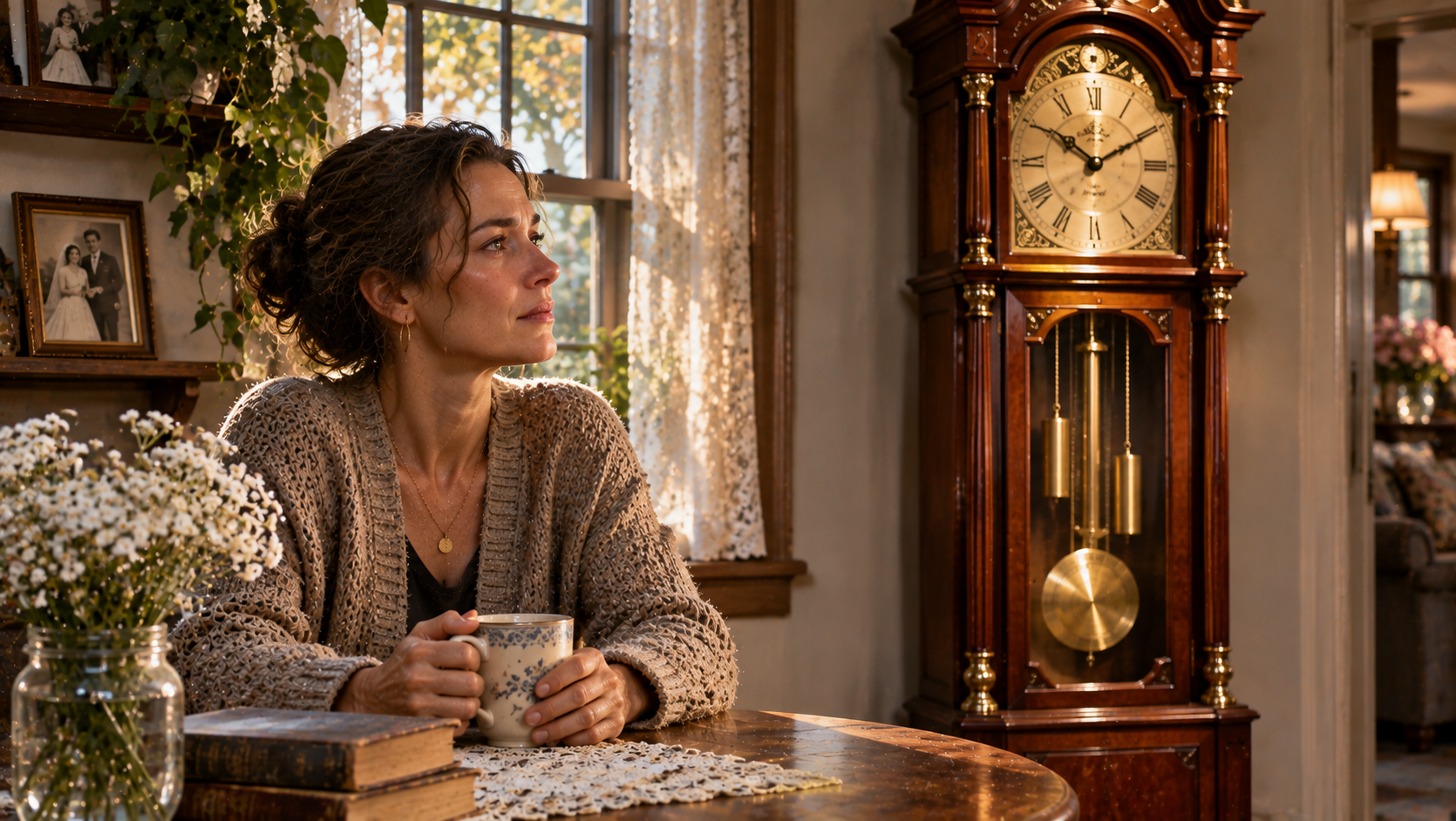
The clock is still in my living room. Arthur offered to take it, but I asked if I could keep it. It’s a reminder now—not of family pride, but of the truth that was buried inside it for sixty years. Every time it chimes, I think of my grandfather’s confession. I think of Henry Pennington, who died of a broken heart. And I think of Marcus, who sold our family’s soul for three thousand dollars and a gambling debt.
Last week, I got a letter from Marcus. He didn’t apologize. He asked if I could lend him five thousand dollars. He said he was in trouble again.
I didn’t write back.
Some inheritances you keep. Some you return. And some—like the brother who stole from you and never looked back—you let go.
The clock still ticks. But it doesn’t beat for him anymore.
Recommended Stories
I Found a Hidden Room in My Basement—Inside Was a 50-Year-Old Letter from My ‘Dead’ Uncle, and a Map to His Fortune
A hidden room. A letter from an uncle who supposedly died 50 years ago. A map to a buried fortune—and...
My Mother-in-Law Gave Me a ‘Cheap’ Necklace for My Birthday—A Year Later, a Jeweler Told Me It Was a $200,000 Family Heirloom She’d Reported Stolen
She called it 'cheap.' A year later, a jeweler revealed it was a $200,000 heirloom—and that my mother-in-law had reported...
My Brother Stole My Identity to Buy a House—Then He Defaulted on the Mortgage, and the Bank Came After Me. But the Judge Noticed Something Odd in the Paperwork
When the bank called about a $385,000 mortgage I never signed, I knew my brother was behind it. But the...