At My Sister’s Wedding, My Father Announced He Was Cutting Me Out of the Will Because I ‘Wasn’t Really His Son’—Then My DNA Test Results Arrived
The Toast That Shattered Everything
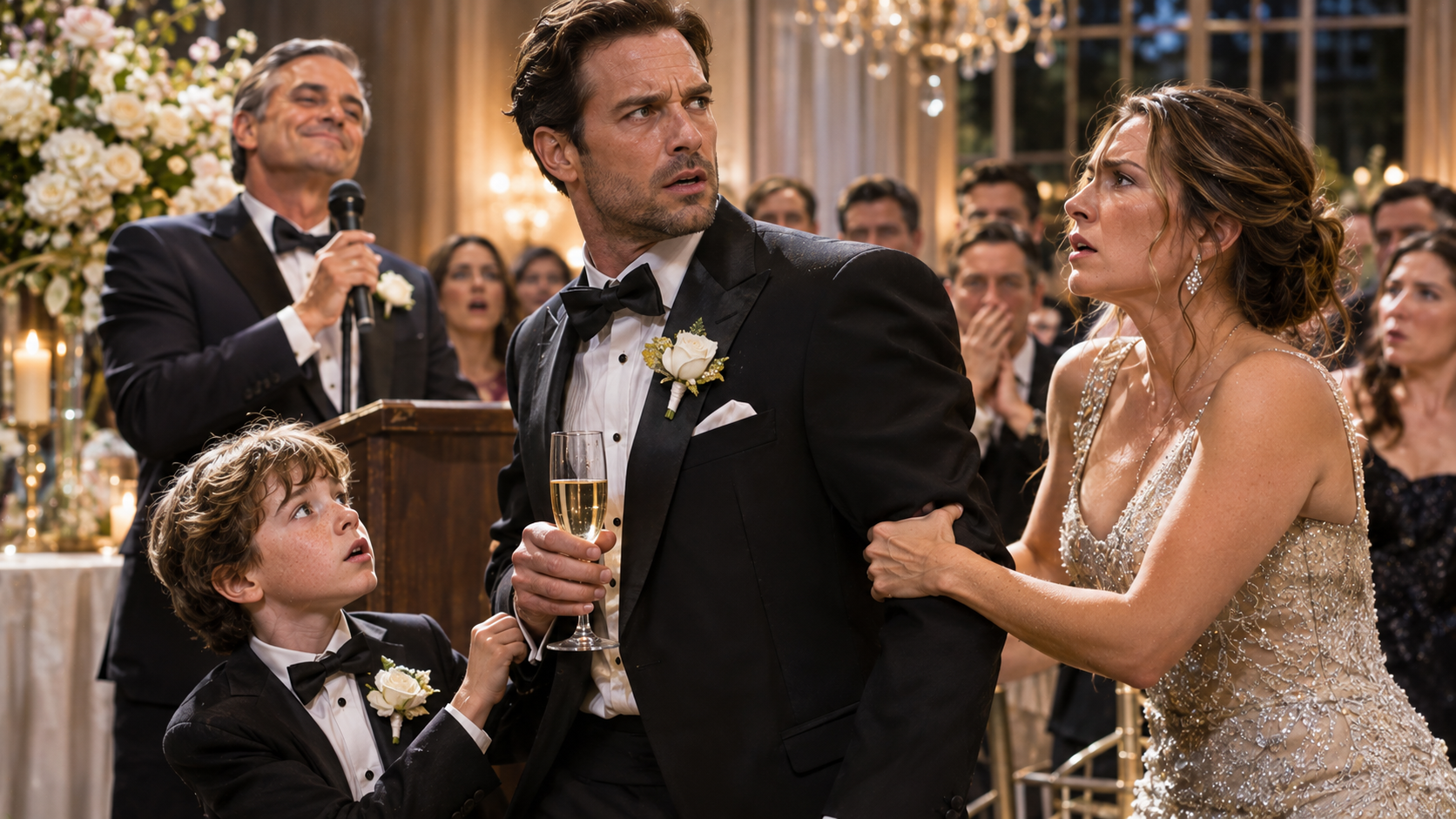
The clinking of champagne glasses had barely faded when my father, Richard, took the microphone at my sister Melissa’s wedding. His face was flushed with wine and self-importance as he beamed at the crowd of two hundred guests. I was sitting at the head table, my wife, Elena, beside me, our six-year-old son, Mateo, fidgeting with his bow tie. I thought my father was about to give a charming, slightly tipsy speech about how proud he was of Melissa and her new husband, Greg.
Instead, he cleared his throat and said, “Before I toast my beautiful daughter, I have something to get off my chest. Something I should have said years ago.” He turned to me, his eyes cold. “David, you’ve been living a lie. You are not my son. You never were. I’m cutting you out of the will. You get nothing.” The room went silent. Elena gasped. Mateo looked up at me, confused. I felt like the floor had opened up beneath me. My mother, Patricia, stared at her plate, her knuckles white around her napkin. Melissa’s smile froze. And my father just stood there, holding the microphone like a trophy.
I didn’t remember leaving the table. I remembered Elena’s hand on my arm, pulling me toward the exit. I remembered the whispers, the pitying looks, the way my father’s voice followed me out the door: “That’s right, run. You’re not one of us.”
The Aftermath and the Accusation
That night, Elena and I sat in our kitchen in Austin, Texas, trying to make sense of it. I was a high school history teacher, forty-two years old, and I had spent my entire life believing I was Richard’s son. He had never been warm, but I had always chalked it up to his own difficult upbringing. Now, his words echoed in my head: “You are not my son.”
I called my mother the next morning. She answered on the first ring, her voice shaky. “David, I’m so sorry. He had no right to do that.”
“Is it true?” I asked. “Am I not his?”
A long pause. “I don’t know,” she whispered. “I never cheated on him, but he’s been convinced for years. He did a home DNA test last month. It said you weren’t his. He’s been furious ever since.”
“What?” I felt the blood drain from my face. “Why didn’t you tell me?”
“He threatened to leave me if I did. I was scared, David. I’m so sorry.”
I hung up, my hands trembling. A home DNA test? Those things are notoriously unreliable. But my father had already made up his mind. He had humiliated me publicly and cut me off financially. For what? A piece of paper he probably ordered online.
Elena, ever practical, said, “Get a real test. A legal one. Prove him wrong.”
I nodded. But part of me was terrified. What if the test confirmed his accusation? What if my entire life was a lie?
The Test That Changed Everything
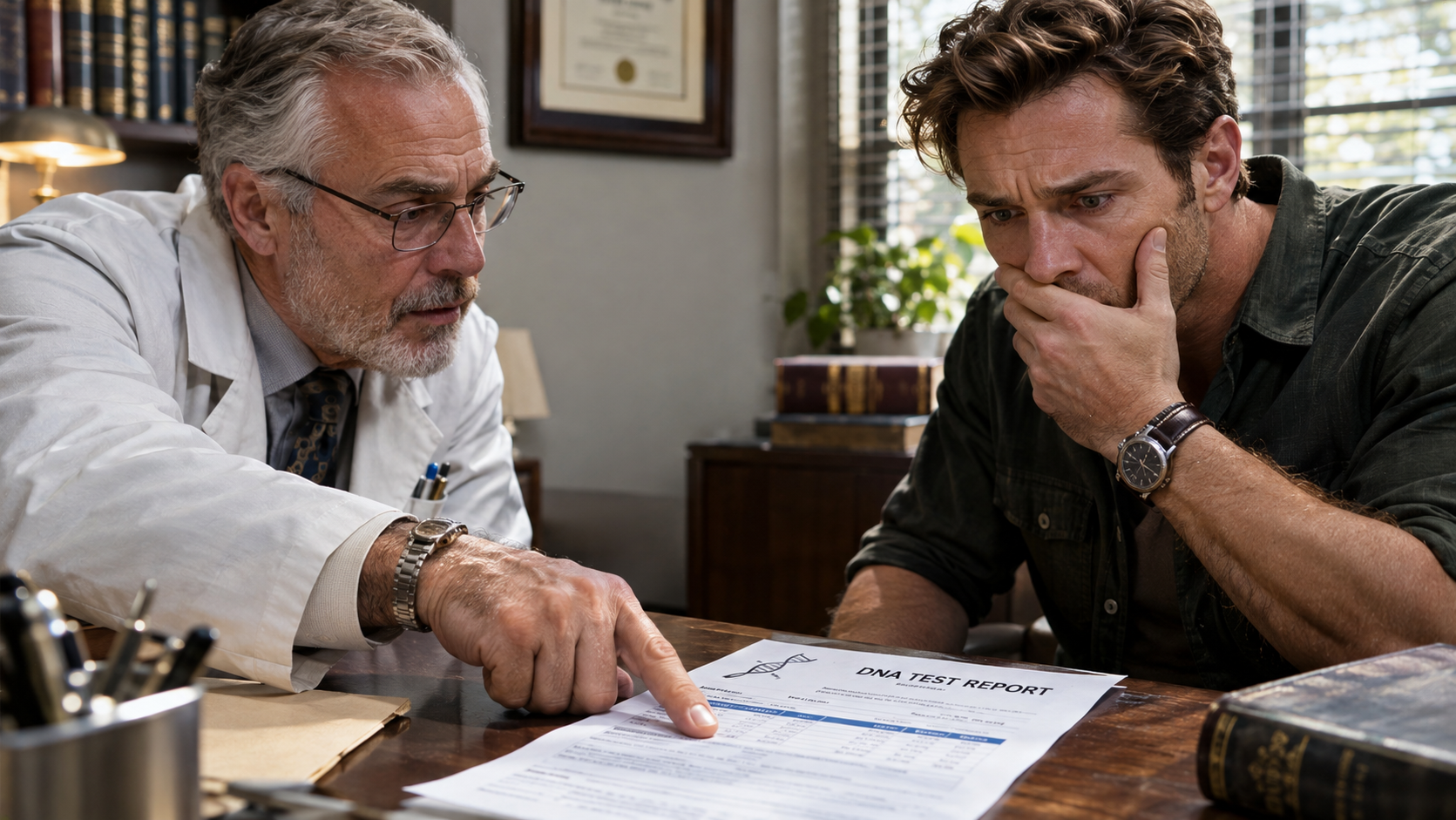
Two weeks later, I received the results from a certified lab in Houston. I opened the envelope alone in my classroom after the last bell. My hands shook as I scanned the page. The conclusion: Richard was not my biological father. My heart sank. But then I read further. The report noted that the sample I had submitted—a cheek swab—showed a close familial match to another sample in their database. A sample submitted by my sister, Melissa, as part of a separate case. The lab had flagged it as a potential sibling match. But the details were wrong. Melissa and I shared only 25% of our DNA—not the 50% expected for full siblings. And the paternal markers didn’t match Richard either.
I stared at the paper, my mind racing. If I wasn’t Richard’s son, and Melissa wasn’t either, then who was? And why had my father’s home test only flagged me?
I called the lab and asked for clarification. The technician explained that Melissa’s sample had been submitted by a third party—a man named Thomas Hale. That name meant nothing to me. But a quick search revealed that Thomas Hale was a retired police officer in San Antonio, and he had been investigating a closed adoption case from the 1980s. My adoption case.
I drove to San Antonio the next day. Thomas Hale was a kind, weathered man in his seventies. He told me he had been hired by my birth mother, a woman named Linda, who was dying of cancer and wanted to find the son she had given up. She had hired him five years ago, but the trail had gone cold. Recently, he had gotten a hit on a DNA database—Melissa’s sample, submitted by her for a genealogy website. He had reached out to her, and she had agreed to help, but then she had stopped responding.
“Wait,” I said, my head spinning. “Melissa knew? She knew I was adopted?”
Thomas nodded. “She did. She was trying to find you—well, she was trying to find her own birth family. She’s adopted too. Your parents adopted both of you, but they never told you.”
The Truth My Father Couldn’t Face
I drove home in a daze. Melissa was adopted too. And my father had known all along. But why had he singled me out? Why had he pretended I was his biological son for forty years, only to humiliate me at Melissa’s wedding?
I confronted my mother that evening. She broke down. “Your father never wanted to adopt,” she sobbed. “I couldn’t have children. He agreed to adopt you, but he always resented you. He treated you differently, you know that. When Melissa came along, he adored her because she was a girl, and he could pretend she was his. But you—you were a reminder of his failure.”
“But the DNA test?” I asked. “He said it proved I wasn’t his.”
She wiped her eyes. “He ordered one of those cheap kits. It said you weren’t his, but it also said Melissa wasn’t his. He ignored that part. He wanted an excuse to cut you off. He’s been planning this for months. He wanted to make a scene at the wedding so everyone would think you were the problem, not him.”
I felt sick. My father had orchestrated a public humiliation to cover up his own shame. He had known I was adopted. He had known Melissa was adopted. But he had chosen to destroy me to save face.
The Reckoning
The next week, I received a call from Melissa. She was crying. “David, I’m so sorry. I didn’t know he was going to do that. I only found out about the adoption a few months ago. I was trying to find my birth mother. I never meant to hurt you.”
“Why didn’t you tell me?” I asked.
“I was scared. Dad said he would cut me off too if I said anything. He said you were the one who didn’t belong. I believed him.”
I forgave her. She was a victim too.
But I couldn’t forgive my father. I sent him a letter with the certified DNA results, explaining that he had known all along that neither of us was his biological child. I told him that he had no right to humiliate me, and that I was done with him. I also informed him that I had contacted a lawyer about the will. He couldn’t legally disinherit me based on a lie—especially since he had known the truth for decades.
His response was a single line: “You’re not my son. You never were. Good riddance.”
I didn’t fight the will. I didn’t need his money. I had my wife, my son, and my dignity. But I did fight for something else: the truth. I wrote a letter to every family member who had been at the wedding, explaining what had happened. I included the DNA results and my mother’s confession. I didn’t ask for sympathy. I just wanted them to know that I hadn’t lied—he had.
The Unexpected Inheritance
Six months later, I received a call from a lawyer in San Antonio. Linda, my birth mother, had passed away. She had left me a small inheritance—enough to pay off our mortgage and start a college fund for Mateo. But more importantly, she had left me a letter. In it, she wrote: “I gave you up because I was young and scared. I spent my whole life regretting it. I hope you can forgive me. You were never unwanted. You were loved from afar.”
I cried for the first time since the wedding. Not for my father, but for the mother I never knew, and for the son I was still learning to be.
My father never apologized. He died two years later, alone in a nursing home. Melissa and I attended the funeral, but we didn’t speak. We had both been his victims, but we had also both survived.
Today, I tell my students that family isn’t about blood. It’s about the people who choose you, who stand by you, who love you without conditions. My father chose to humiliate me. My birth mother chose to find me. And I chose to be a better man than he ever was.
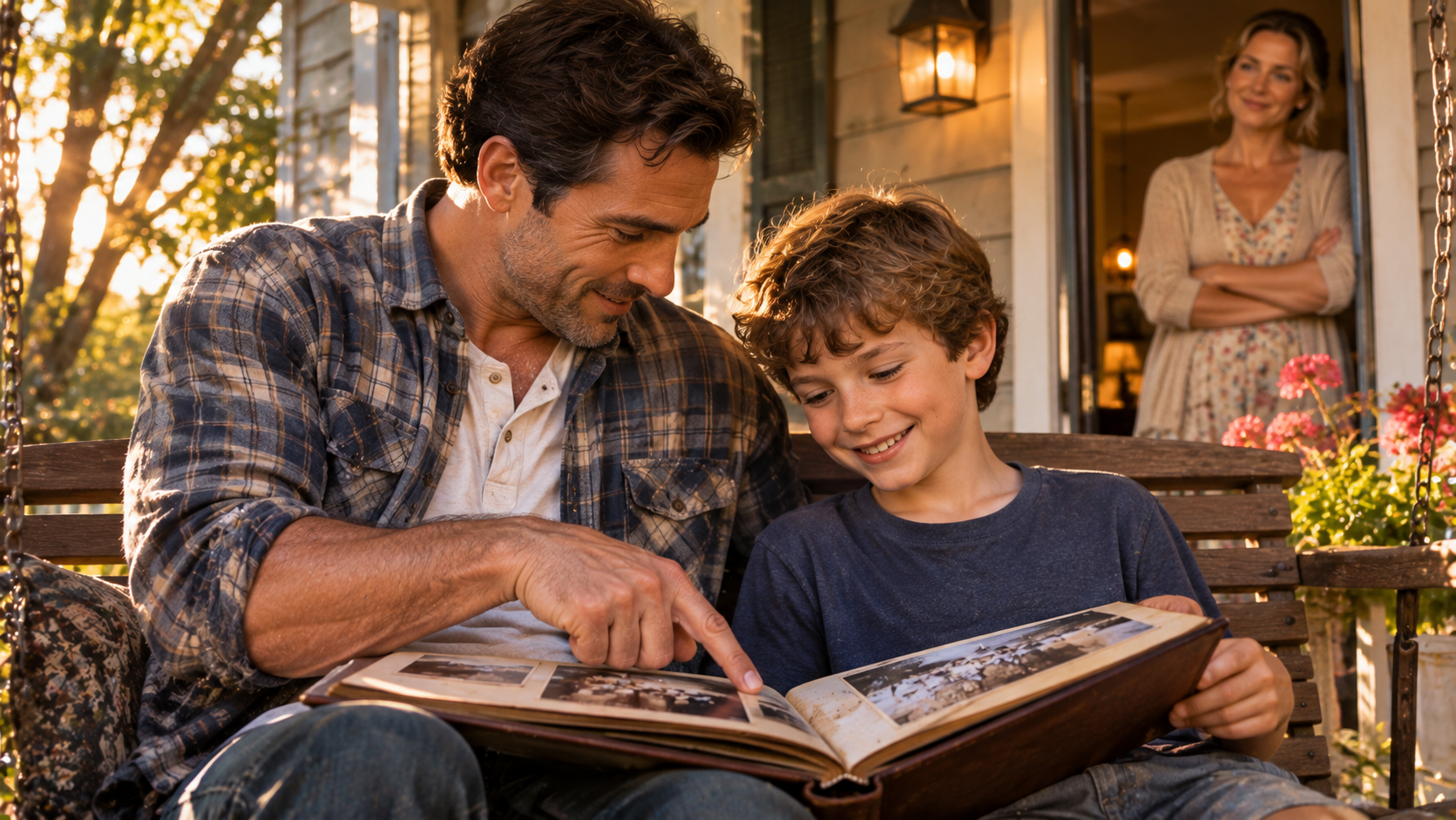
Sometimes, the truth doesn’t set you free—it just clears the rubble so you can build something new.
Recommended Stories
At My Wedding, My Mother-in-Law Announced She Was Pregnant—Then My Father Stood Up
A wedding toast turns into a confession: my mother-in-law is pregnant, and my father is the father. The fallout shatters...
I Paid for My Sister’s Dream Wedding—Then She Eloped with My Fiancé and Posted the Photos on My Birthday
She paid $22,000 for her sister's dream wedding—then found the bride kissing her fiancé on her birthday. The receipts that...
At My Brother’s Wedding, His Best Man Announced He Was Actually Our Half-Brother—Then My Father Collapsed, and the Family Secret Unraveled
A wedding toast turns into a bombshell when the best man reveals he's the groom's half-brother—and the rightful heir to...