At My Father’s Funeral, His ‘Best Friend’ Gave a Eulogy That Revealed They’d Been Secretly Married for 20 Years—Then He Showed Me the Will Leaving Him Everything
The Eulogy That Shattered Everything
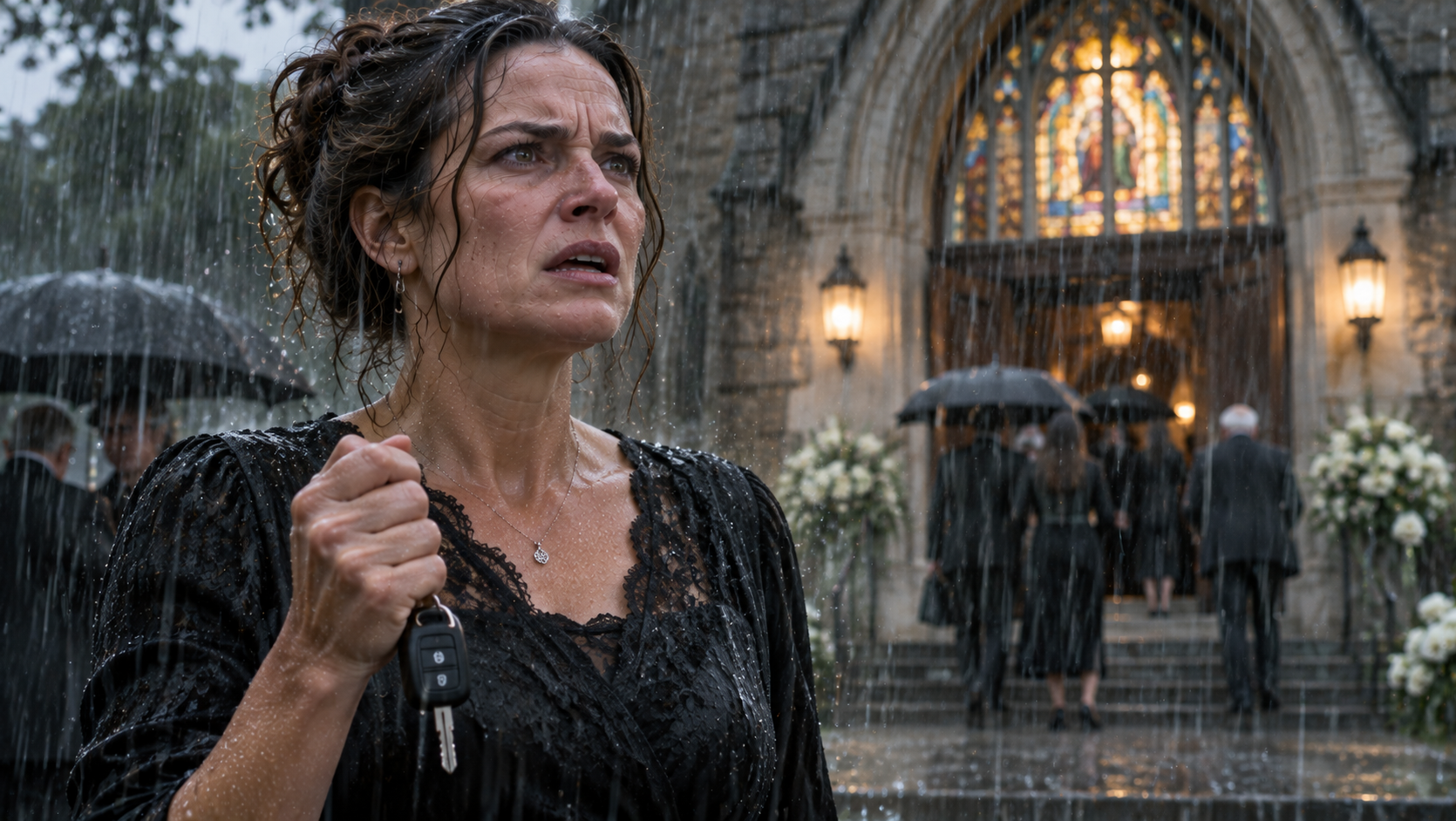
The rain fell in steady gray sheets against the stained-glass windows of St. Bridget’s Church, but I barely noticed. My father, Richard Callahan, was gone—a massive heart attack at sixty-eight, in the middle of a Tuesday, while I was three hundred miles away closing a deal for my architecture firm. Now I sat in the front pew, my mother’s hand cold and lifeless in mine, watching strangers file past the open casket of a man I thought I knew.
Then Graham Pierce stepped up to the pulpit. My father’s “best friend” and business partner for as long as I could remember. Tall, silver-haired, always impeccably dressed. He adjusted the microphone, cleared his throat, and looked directly at me.
“Richard and I met twenty-two years ago,” Graham began, his voice steady. “But what most of you don’t know is that we didn’t just share an office. We shared a life. Twenty years ago last June, Richard and I stood before a judge in Vermont and made it legal. He was my husband. And I was his.”
A collective gasp rippled through the church. My mother’s hand went rigid. I heard my sister, Dana, whisper, “What the hell?” But Graham wasn’t finished. He reached into his jacket and pulled out a folded document.
“Richard also wanted you to know,” he said, his eyes still locked on mine, “that he updated his will six months ago. Everything—the house, the firm, the investments—goes to me. He left a letter for you, Nora. I have it here.”
I stood up so fast the pew creaked. “You’re lying,” I said, my voice echoing off the vaulted ceiling. “My father was not gay. He was married to my mother for forty years.”
Graham’s expression didn’t flicker. “He was married to both of us, Nora. And he loved you. That’s why he wanted me to give you this.” He extended the letter. I didn’t take it. I walked out of the church into the rain, my heels sinking into the muddy grass, and I didn’t stop until I reached my car.
The Man Who Was Always There
For three days, I refused to answer Graham’s calls. My mother retreated to her bedroom and wouldn’t speak. Dana, always the pragmatist, started Googling Vermont marriage laws and estate attorneys. I just kept replaying every memory of my father, searching for a clue I’d missed.
Graham Pierce had been at every Thanksgiving. Every Christmas Eve. He’d taught me to fish at the lake house, had co-signed my first car loan, had sat beside my father at my wedding while my mother dabbed her eyes. I’d always thought he was just a lonely bachelor—a workaholic who had no family of his own. Now I wondered if I’d been blind.
On the fourth day, I drove to my father’s office. The firm—Callahan & Pierce, Architects—occupied the top floor of a renovated brick building downtown. Graham was at his desk, surrounded by blueprints and coffee cups. He looked like he hadn’t slept.
“I’m not here to fight,” I said, closing the door behind me. “I’m here for the truth.”
He nodded and gestured to a chair. “Your father was terrified of what you’d think. He grew up in a time and a place where being gay was a death sentence. He met your mother in college, and he did love her—in his way. But when he met me, everything changed. We kept it secret because he couldn’t bear to lose you and Dana. He said you were the best thing he ever did.”
“Then why cut me out of the will?” I asked, my voice cracking. “Why leave everything to you?”
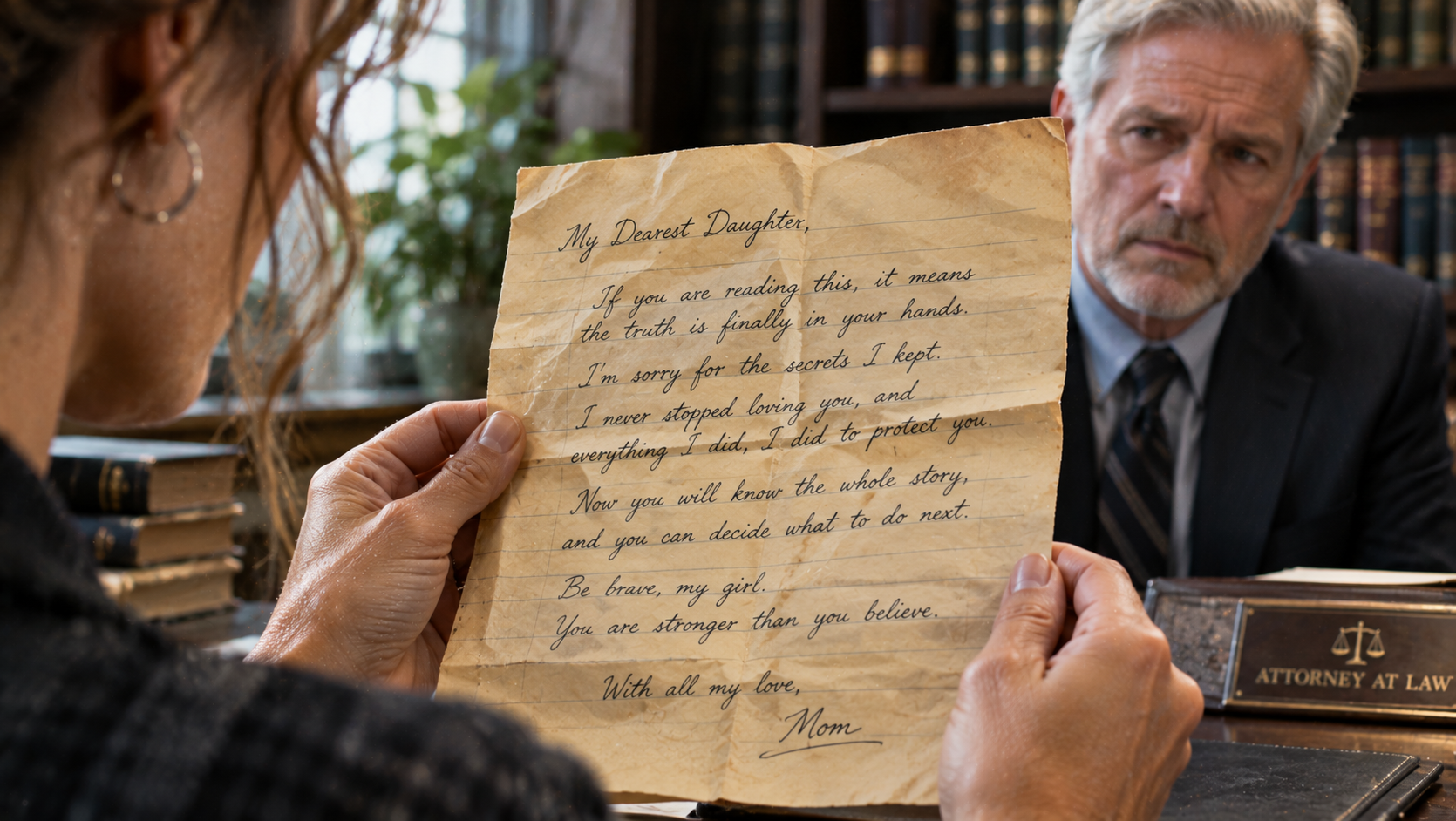
Graham slid a thick envelope across the desk. “Read the letter, Nora. And then read the second page. The one he wrote for you alone.”
The Letter and the Second Will
I opened the envelope with shaking hands. The first page was a formal letter, notarized, explaining that Graham was to receive the estate in trust. But the second page—handwritten on my father’s favorite legal pad—was different.
Nora, it began. I know this will hurt you. But I need you to understand something. Graham isn’t just my husband. He’s the reason you have a career. Ten years ago, when your firm was about to go under, he quietly invested two hundred thousand dollars to keep it afloat. He did it because he loved me and because he loved you. He never wanted you to know.
As for the will—I had to protect him. Your mother’s family has been threatening to contest everything for years. If I left the estate to you outright, they’d drag Graham through court and destroy him. But if I left it to him, with a provision that he must transfer half to you within six months, the legal challenge falls apart. The letter you’re reading is the proof of my intent. I’m sorry I couldn’t tell you in person. I was a coward. But I hope you can forgive me.
I love you. Dad.
I read it three times. Then I looked up at Graham, who was watching me with tired, red-rimmed eyes. “You paid for my firm?” I whispered.
“I’d have paid for anything to make him happy,” he said. “He was the best man I ever knew. And he was so proud of you, Nora. He talked about your buildings like they were his own.”
I sat there for a long time, the letter trembling in my hand. Then I did something I never expected. I cried. Not for the father I’d lost—but for the father I’d never really known.
The Battle for the Estate
My mother’s family didn’t go quietly. Within a week, my uncle—a lawyer himself—filed a motion to contest the will, claiming undue influence and fraud. He demanded a DNA test to prove Graham and my father were never married, and he subpoenaed the Vermont records.
The records were real. The marriage certificate was dated June 14th, twenty years earlier, signed by a judge who had since retired. The DNA test was irrelevant—but the court allowed it anyway, and it came back confirming what I already knew: Richard Callahan was my biological father.
The legal battle dragged on for eight months. My mother, to her credit, eventually admitted she’d known about Graham for years. She’d chosen to look the other way because she loved the life my father provided. But she refused to testify against him. “He was a good man,” she told me one night, her voice hollow. “He just loved two people. And he tried to take care of us all.”
In the end, the judge ruled in favor of the will. Graham received the estate and, as promised, transferred half to me within sixty days. The firm was sold, the lake house went to Dana, and Graham and I split the rest.
What Graham Gave Me
I didn’t speak to Graham for a year after the funeral. Not because I was angry—but because I didn’t know how to fit him into my life. He wasn’t my father. He wasn’t my stepfather. He was something in between, a ghost of a relationship I’d never known existed.
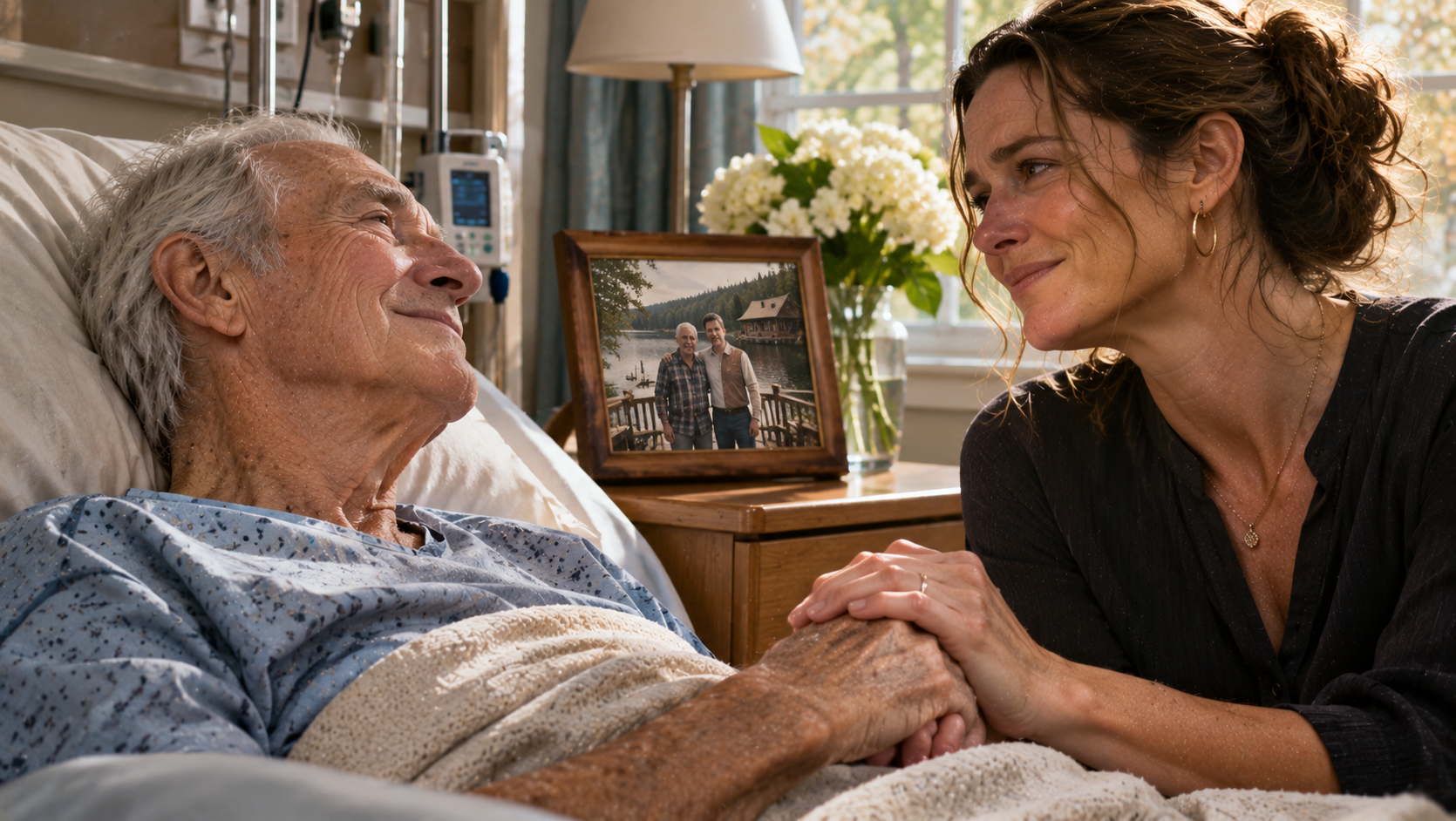
Then, last spring, I got a call from the hospital. Graham had had a stroke. He was alive, but his speech was gone, and he needed someone to make decisions for him. I drove to the hospital that night and sat by his bed, holding his hand.
He couldn’t speak, but his eyes said everything. I pulled out the letter—my father’s letter—and read it to him. When I finished, he squeezed my hand and a single tear rolled down his cheek.
I visit him every week now. He lives in a small apartment near my office, and I’ve hired a nurse to care for him. We don’t talk about the past much. We don’t have to. Sometimes, late at night, I think about my father—the man who loved two people and tried to protect them all. And I realize that the greatest inheritance he left me wasn’t the money or the house. It was the truth. And the chance to know the man he really was.
Graham keeps a photo of my father on his nightstand. In it, they’re standing on the deck of the lake house, both of them laughing, the sun setting behind them. I used to think that photo was just two friends on a summer evening. Now I know it was a love story that lasted a lifetime—one that my father was finally brave enough to share.
Recommended Stories
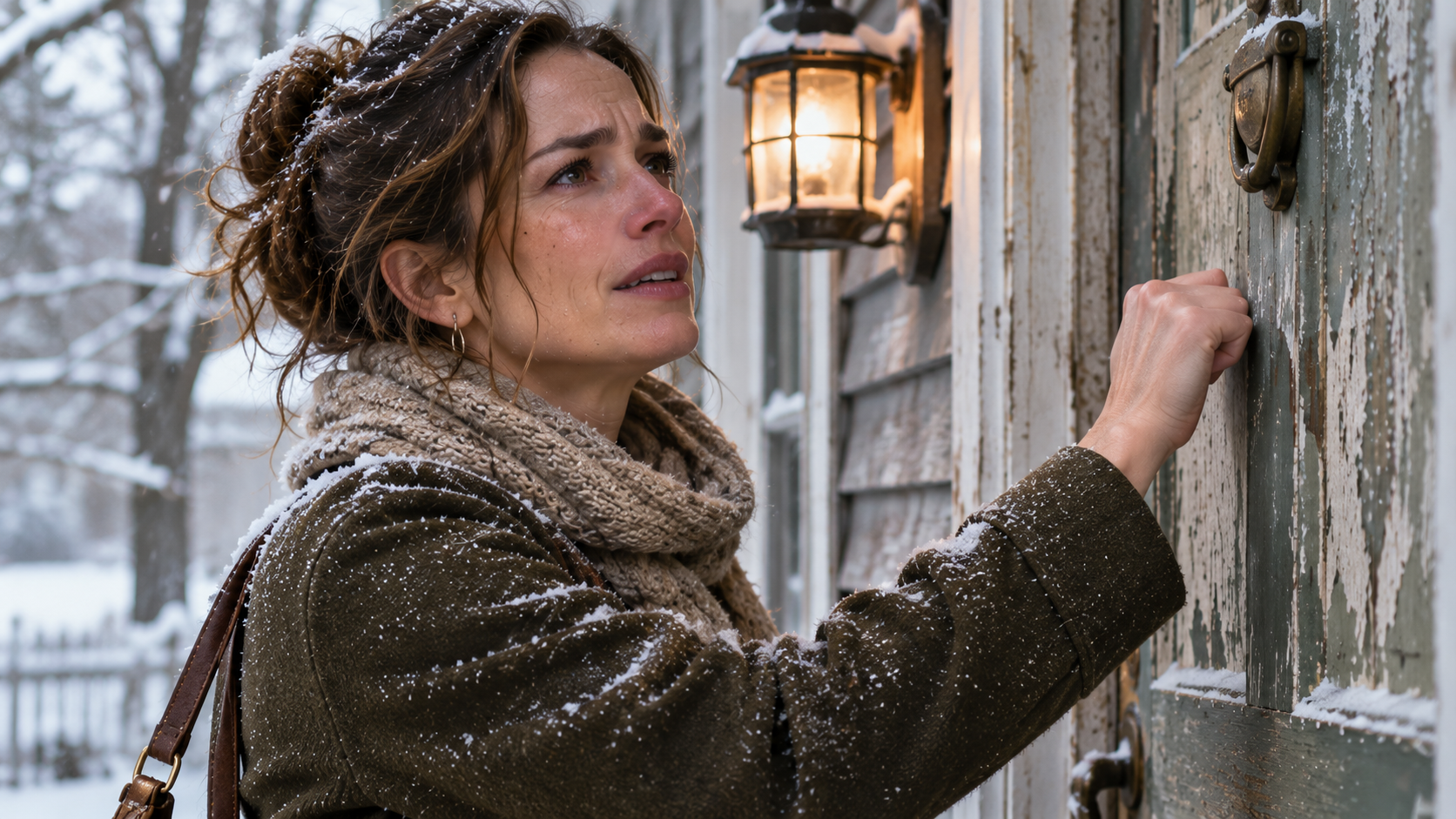
I Found My Birth Mother After 40 Years—She Slammed the Door in My Face, Then Sent a Letter That Changed Everything
She slammed the door in my face. Three weeks later, a letter arrived that revealed the truth about my birth...
My Father Disowned Me for Marrying a Man of a Different Race—Ten Years Later, His Will Named Me Sole Heir, and My Brother Wasn’t Having It. Then I Found a Letter That Explained Everything
Disowned for marrying a man of a different race, I never expected to inherit anything. But when my father's will...
My Mother-in-Law Gave Me a ‘Fake’ Family Heirloom—20 Years Later, a Museum Offered Me $250,000 for It
She called it a fake. Twenty years later, a museum offered $250,000—and I discovered the heirloom was stolen, the secret...