At My Grandmother’s Funeral, My Aunt Announced She Was Contesting the Will—Then a DNA Test Revealed a Shocking Family Secret
The Funeral Bombshell
The scent of lilies and old wood polish hung heavy in the air at St. Michael’s Episcopal Church in Savannah. I stood near the back, clutching a crumpled tissue, watching my grandmother’s casket draped in white roses. Eleanor Whitfield had been the matriarch of our family for ninety-two years—a woman of iron will and secret kindness. I thought I knew everything about her. I was wrong.
Just as the priest began the final blessing, my aunt, Margaret, rose from her pew. Her heels clicked against the marble like gunshots. She turned to face the mourners—two hundred people, including half the Savannah bar association—and announced in a voice that carried to the rafters: ‘I am contesting the will. Mother was not of sound mind. And I have proof.’
A collective gasp rippled through the church. My mother, Claire, grabbed my arm so hard I felt her nails through my sleeve. My cousin David dropped his hymnal. And I—I just stared at Margaret, a woman I’d worshipped as a child, now transformed into something cold and calculating.
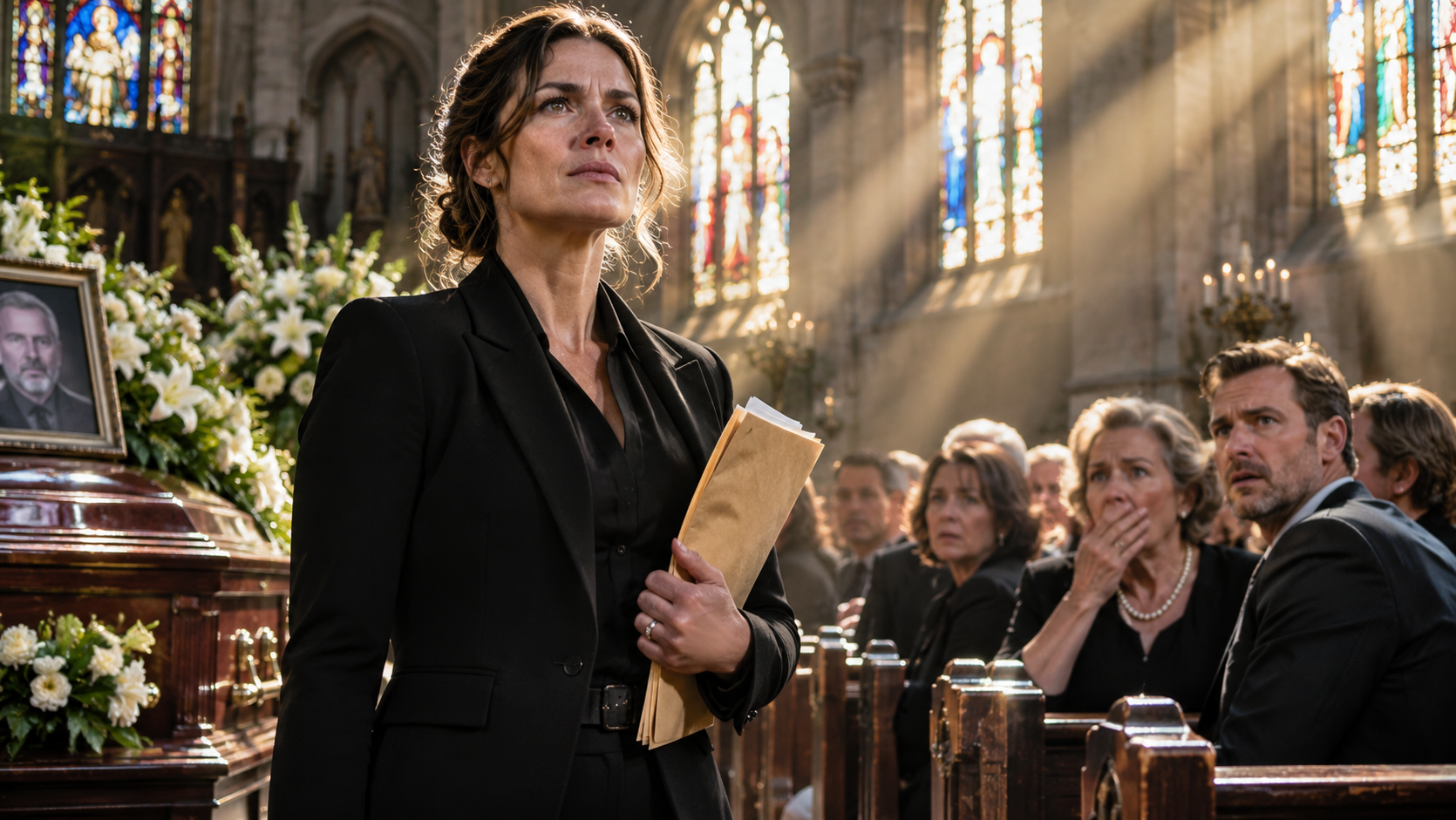
Margaret had always been the ambitious one. She’d married a real estate developer, moved to Atlanta, and visited only when she needed something. But this? Contesting the will at the funeral itself? That was a new low. I didn’t know then that her announcement would unravel everything I believed about my family—and lead me to a truth buried for over forty years.
The Will and the War
Grandmother Eleanor’s will was read three days later in the offices of Hargrove & Associates. I sat between my mother and my brother, James, a high school teacher who’d driven down from Charlotte. Margaret arrived late, flanked by her lawyer, a slick man named Preston Cole who looked like he’d never lost a case.
The estate was modest by Savannah standards: the family home on East Jones Street, a small trust, and a collection of antique jewelry. But to us, it was everything. The house had been in the Whitfield family since 1912. Grandmother had promised it to my mother years ago—a promise she’d finally put in writing.
‘The will is clear,’ said Mr. Hargrove, adjusting his glasses. ‘The house goes to Claire. The trust is divided equally among the three children. The jewelry is to be distributed according to a separate letter.’
Margaret slammed her palm on the table. ‘That letter is a forgery! Mother was confused in her final months. She didn’t know what she was signing.’
My mother’s face went pale. ‘How dare you. I was there every day. You visited twice—both times to ask for money.’
The room erupted. Preston Cole produced a stack of medical records, claiming Grandmother had been diagnosed with mild cognitive impairment. Mr. Hargrove countered with a letter from her physician stating she was sharp as a tack until the end. It was my brother James who finally spoke up, his voice quiet but firm.
‘There’s one way to settle this,’ he said. ‘A DNA test. If Margaret thinks she’s entitled to more, let’s prove she’s even a Whitfield.’
I didn’t understand what he meant. Neither did anyone else. But Margaret’s face flickered—just for a second—with something that looked like fear.
The Test Nobody Wanted
James had been researching our family tree for years. He’d traced the Whitfields back to 18th-century Virginia and had become obsessed with genealogy. What he’d found, he told me later, was a discrepancy. Grandmother’s birth certificate listed her father as ‘unknown.’ Her mother, my great-grandmother, had been a young widow when she’d had Eleanor in 1931.
‘I always assumed it was a clerical error,’ James said. ‘But then I found a letter in Grandmother’s desk—hidden behind a false drawer.’
The letter was from a man named Thomas Ashford, a wealthy cotton merchant. He wrote of his love for my great-grandmother and his regret that he could not acknowledge their child. He promised to provide for Eleanor ‘in ways that would not raise questions.’
Suddenly, the pieces clicked. Grandmother’s trust—the one that had paid for our educations, our weddings, our emergencies—wasn’t from her late husband. It was Ashford money. And if Margaret wasn’t a Whitfield by blood, she had no claim to any of it.
But the DNA test revealed something none of us expected.
Margaret wasn’t the one with the secret. My mother was.
The Secret in the Blood
The results came back on a rainy Tuesday in April. I was at my mother’s kitchen table, drinking coffee I didn’t taste, when James opened the envelope.
He read the report twice. Then he looked at me, his eyes wide. ‘Claire is not Eleanor’s biological daughter.’
I laughed. It was absurd. My mother had Grandmother’s eyes, her stubborn chin, her love of gardening. ‘That’s impossible.’
James shook his head. ‘The test compared mitochondrial DNA—the maternal line. Claire’s doesn’t match Eleanor’s. Or Margaret’s.’
My mother walked in then, saw our faces, and sat down heavily. ‘I wondered when you’d find out,’ she whispered.
What she told us shattered everything. In 1955, Grandmother Eleanor had given birth to a stillborn daughter. The loss nearly destroyed her. A month later, a young woman in the church community—a girl of nineteen named Ruth—died in childbirth. Her family was poor, the baby’s father gone. Eleanor and her husband took the child in, raised her as their own, and never spoke of it again.
That child was my mother.
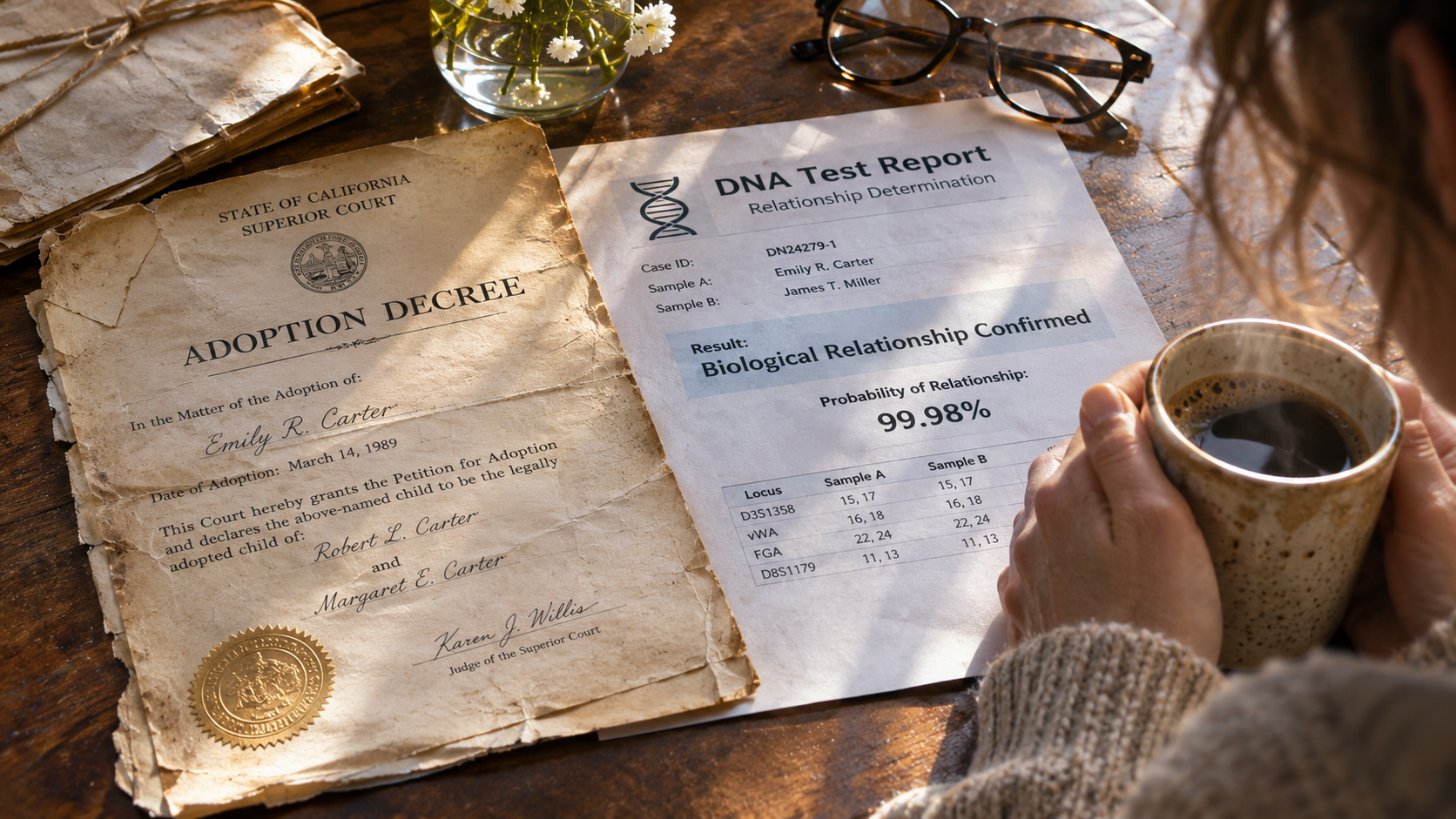
‘I didn’t know until I was thirty,’ my mother said. ‘Your grandmother told me on her deathbed. I wanted to tell you, but I was afraid.’
Afraid of what? That we’d love her less? That Margaret would use it against her? The irony was brutal: Margaret had been contesting the will based on a lie, while the real secret had been hiding in plain sight.
The Fallout
When Margaret learned the truth, she didn’t react with shock. She reacted with fury. ‘You mean to tell me that Claire isn’t even a Whitfield? That she’s some orphan’s child? Then she has no right to the house!’
But she was wrong. Legally, my mother was Eleanor’s daughter—adopted, yes, but legally recognized. The will was valid. The house was hers. And the trust, funded by Ashford money, was distributed according to Eleanor’s wishes.
Margaret tried to sue anyway. She hired a forensic document examiner to challenge the will’s signature. She spread rumors that my mother had forged the adoption papers. She even contacted a tabloid. But the evidence was against her. The DNA test proved what we’d always known: we were a family, bound by love, not just blood.
The legal battle dragged on for eighteen months. Margaret’s lawyer eventually withdrew, citing ‘lack of evidence.’ Her husband, embarrassed by the public spectacle, filed for divorce. And Margaret—proud, bitter Margaret—moved to a condo in Buckhead and stopped speaking to us entirely.
What the House Taught Me
I live in the family home now. My mother moved in with James in Charlotte, saying she couldn’t bear the memories. But I couldn’t leave. The house on East Jones Street is more than a building. It’s a testament to a woman who chose love over convention, who took in a stranger’s child and gave her everything.
Last month, I found another letter in the false drawer, one James had missed. It was from Ruth, my mother’s birth mother, written just days before she died. ‘Dear Eleanor,’ it read. ‘I know you will raise my daughter as your own. Tell her I loved her. Tell her I wanted her. And tell her that sometimes, the families we choose are stronger than the ones we’re born into.’
I cried for an hour. Then I framed the letter and hung it in the hallway, next to a photo of Grandmother Eleanor.
Margaret still doesn’t speak to us. But last Christmas, she sent a card. It just said, ‘I’m sorry.’ I don’t know if I’ll ever forgive her. But I understand now that secrets can tear a family apart—or, if you’re lucky, they can show you what really matters.
And sometimes, the most shocking revelation isn’t about who you’re not related to. It’s about who chose you anyway.
Recommended Stories
I Paid for My Parents’ Retirement Home—Then They Left It to My Brother in Their Will, Saying I ‘Owed’ Them. When I Found Their Bank Statements, I Realized They’d Been Hiding a Fortune
I paid $4,200 a month for my parents' retirement home for eight years. Then they left their house to my...
My Father Left Me a ‘Worthless’ Coin Collection—Then a Numismatist Offered Me $500,000 and Asked Where I Got It
My father left me a box of 'worthless' coins. A numismatist offered $500,000—then asked where I got them. The answer...
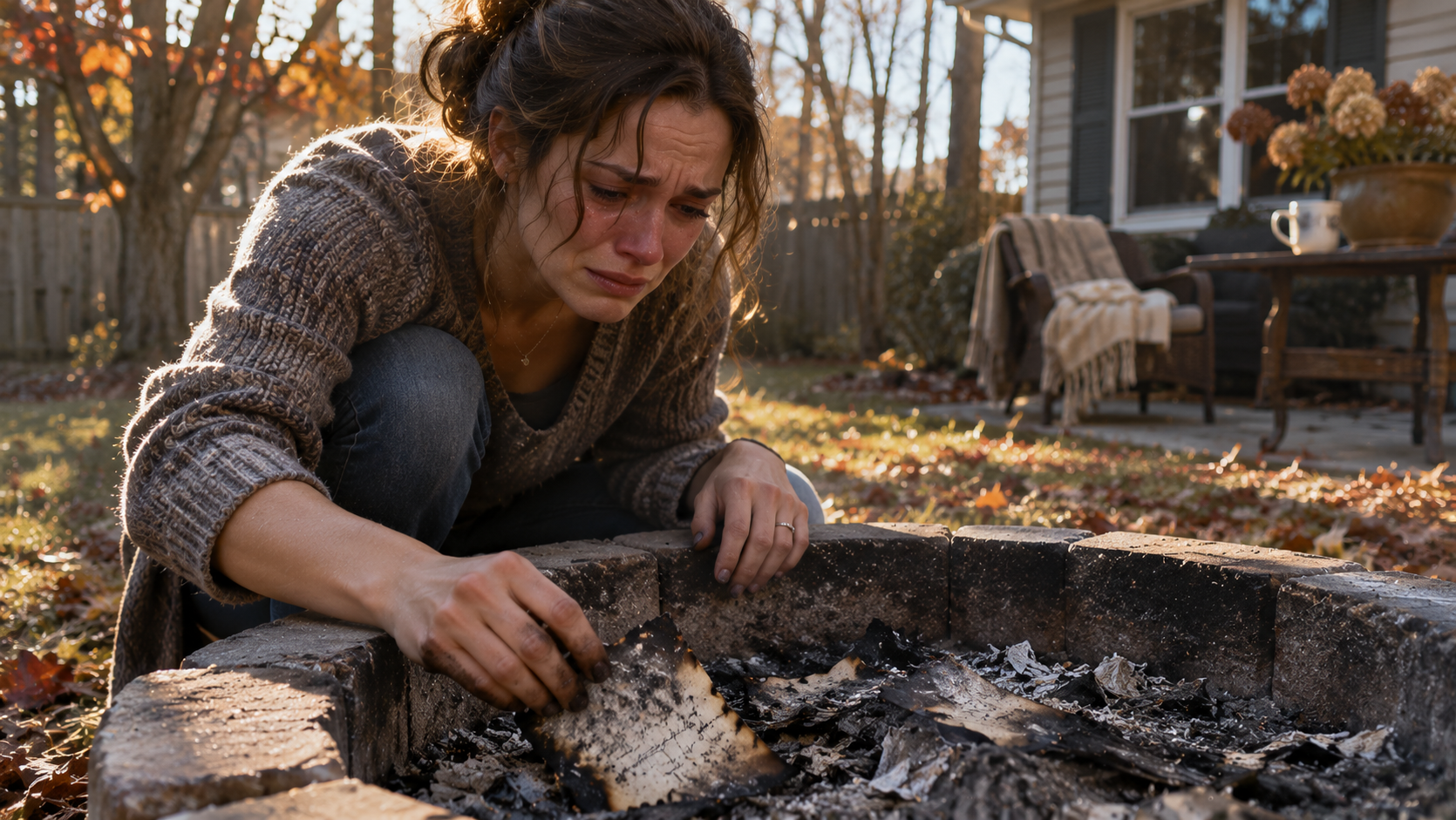
My Stepmother Burned My Late Mother’s Letters—Then I Found One She Missed, and It Named My Real Father
She burned every letter my mother ever wrote—except one. Hidden in a book, it named my real father. What I...